- Duration
- 11 days
- Pace
- Moderate
- Hotel changes
- 6
- Best months
- Jun, Jul, Aug, Sep
- From
- $1,870 per person
Eleven days, two separate summer pastures, five working families and a deliberate amount of unstructured time, because the good moments here happen when nothing is scheduled.
Who it suits: travellers who read about a country before they go, and who would rather spend an afternoon in a kitchen than at a viewpoint.
Your specialist: Osnat Angerman or Paz Prosianoy, our Southeast and Central Asia specialists, working with our long-standing partner in Bishkek.
A word on authenticity. Some of what you will see is arranged: the family knows you are coming and there is a fee, which we insist is paid properly and directly. That is not the same as staged. The eagle is a working eagle, the felt is the felt they sell, and the milking happens whether or not you are watching. Where something is genuinely a show put on for visitors, we say so in your document and you can decide.
Day by day
Day 1: Arrive Bishkek. Late arrival, hotel, a slow start. Afternoon in the State Historical Museum, which has been reworked in recent years and is the right place to begin, then Ala-Too square and dinner.
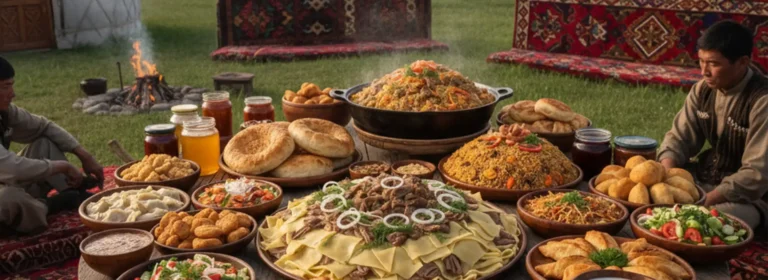
Day 2: Bishkek, food and the bazaar. A morning in Osh bazaar with a guide, working through the things you will meet for the next ten days: kurut, the dried yoghurt balls; the dozen kinds of bread; horse sausage; and the Dungan and Uighur stalls. Then a cooking session in a family kitchen making laghman noodles by hand, which is harder than it looks. Afternoon free.
Day 3: Bishkek to Kochkor, via Burana. Two hours to the eleventh-century minaret and the field of balbal, the carved grave markers that mark the pre-Islamic layer of the country’s history. Then two more hours to Kochkor. Afternoon with a shyrdak-making cooperative: the wool is washed, dyed, rolled, cut and stitched, and you will do the rolling, which is done with the feet and takes hours. Night in a guesthouse.
Day 4: Kochkor to the Kyrchyn jailoo. Two hours up to about 7,200 feet (2,200 m). This valley is where the horse games have been held, and the afternoon is given to them: kok-boru, which is the goat carcass game and is genuinely rough, plus the wrestling on horseback and the girl-chases-boy race. Then an eagle hunter, a burkutchu, with a working golden eagle, and an honest conversation about the fact that the hunting season is winter and this is a demonstration. Night in a shared yurt.
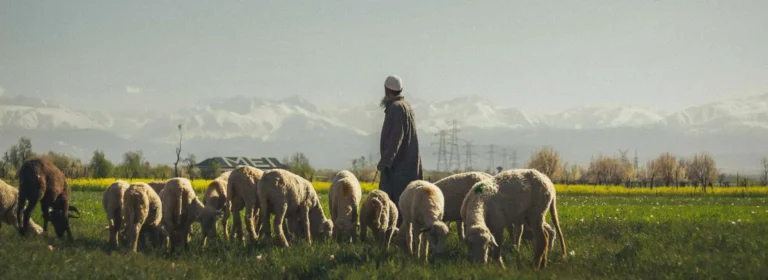
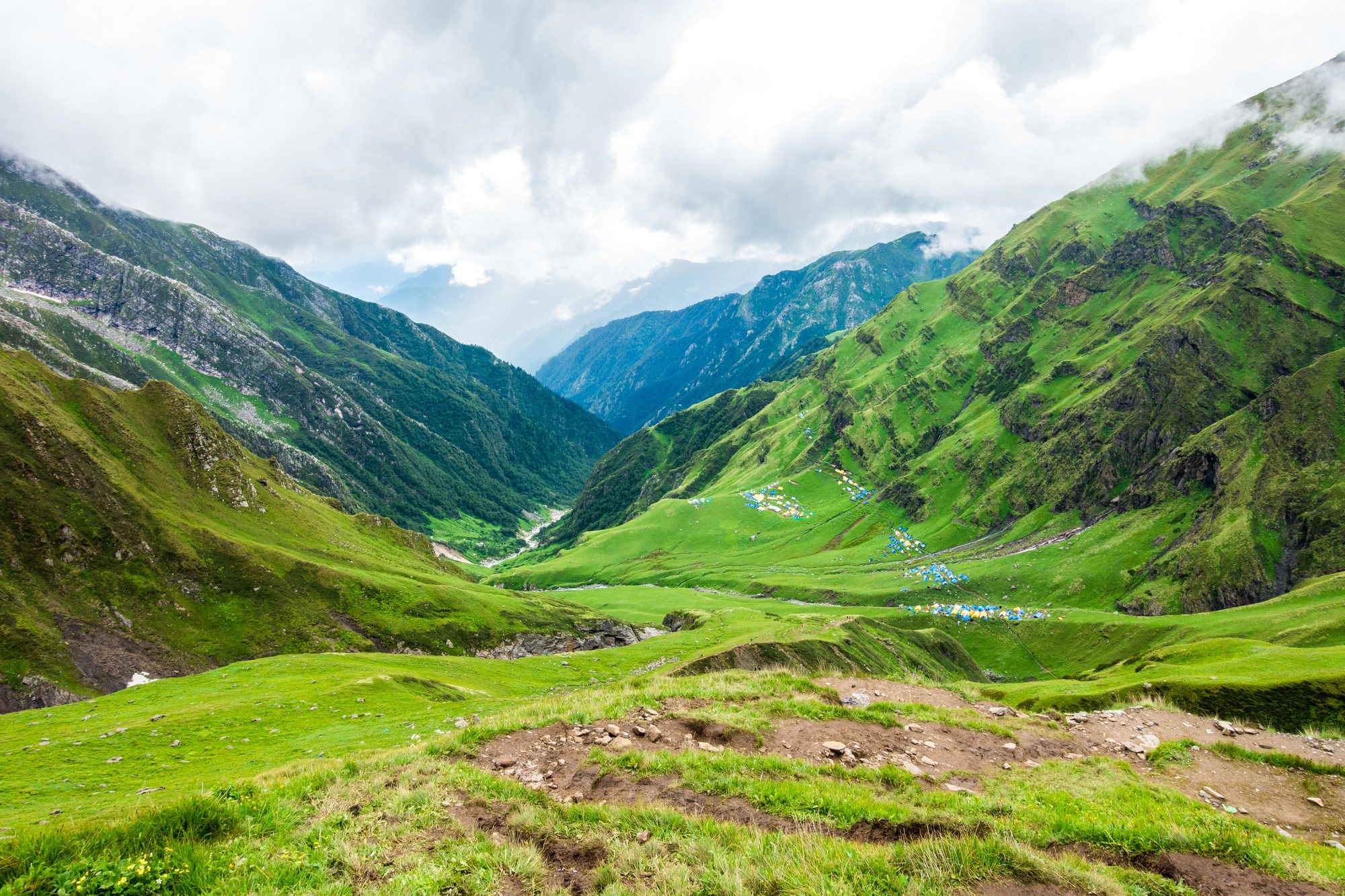
Day 5: Kyrchyn to Song-Kul. Four to five hours south and up over the Kalmak-Ashuu pass at around 11,300 feet (3,450 m), onto the Song-Kul pasture at about 10,000 feet (3,000 m). Arrive early afternoon. Nothing arranged: the family are moving animals and you are welcome to help or watch. Kymyz, the fermented mare’s milk, will be offered and you should try it. Night in a shared yurt.
Day 6: Song-Kul, a full day with the family. Milking at dawn if you are willing to get up, then the whole day at the pace of the camp. A herder will take you out on a horse for as long as you want. In the evening, a manaschi, a reciter of the Manas epic, which runs to half a million lines and is one of the longest oral poems anywhere, performed in the yurt in the way it has always been performed. Second night in the yurt.
Day 7: Song-Kul to Naryn. Four hours down the southern side to Naryn, a long town in a river gorge at about 6,600 feet (2,000 m). Afternoon at the university and the bazaar, and a komuz lesson, which is the three-stringed lute you will have heard in every vehicle. Night in a guesthouse.
Day 8: Naryn to Tash Rabat. Two and a half hours south, the last stretch up a side valley to about 10,500 feet (3,200 m). Tash Rabat is a stone caravanserai of some thirty domed chambers, fifteenth century or earlier, and the only serious stone building on the Kyrgyz stretch of the Silk Road. It is dark, cold and unrestored inside, and it is the best hour in this itinerary. Night in the yurts beside it.
Day 9: Tash Rabat to Issyk-Kul south shore. Five to six hours north and east, with the Skazka canyon at the end of the drive in good light. Two nights at the lake, in a hotel with a shower, which by now is welcome.
Day 10: Karakol, the Dungan day. Ninety minutes east. The Dungan are Chinese Muslims who fled here in the 1870s, and Karakol is their town: a mosque built like a Chinese temple with no nails in it, a wooden Orthodox cathedral built the same way for the Russian settlers, and ashlan-fu, the cold spicy noodle dish, eaten at the stall in the market where it is made. Lunch with a Dungan family. If it is Sunday, the animal market starts at five in the morning and is worth the alarm. Back to the lake.
Day 11: Issyk-Kul to Bishkek, departure. Four hours west along the north shore, with the Cholpon-Ata petroglyph field on the way, a Bronze Age open-air site with several thousand carvings. Afternoon in Bishkek and the late flight.
What is included
Accommodation throughout, hotels and guesthouses where they exist and shared yurts at Kyrchyn, Song-Kul and Tash Rabat, breakfast daily and full board at every yurt camp, a private vehicle and driver throughout, an English-speaking guide for the whole route, every workshop and family visit paid directly to the family, the horse games and the eagle demonstration, the manaschi performance, the cooking session and the komuz lesson, all entries, airport transfers, a day-by-day document with real drive hours, and a WhatsApp group with your specialist and our Bishkek partner where there is a signal.
What we would change, and when
- Three yurt nights is too many? We keep Song-Kul and Tash Rabat and turn Kyrchyn into a day visit from Kochkor, sleeping in the guesthouse.
- Travelling in early September? The families begin coming down off the pastures. We confirm the camps and the herds are still up before we commit, and we will move dates rather than sell you an empty jailoo.
- Want the World Nomad Games? The event has moved between countries and venues, so we treat the schedule as guidance, confirm the current host and dates, and build around it if it lands in your window. Accommodation nearby needs booking many months ahead.
- Interested in the south? Add four days for Osh, Arslanbob’s walnut forest and the Uzbek half of Kyrgyz culture, which is a different country in most respects.