Cambodia beyond Angkor is a small, flat, slow country of provincial towns, river valleys, pepper farms and a coastline that has changed more in ten years than almost anywhere in Southeast Asia. This article is about where those days should go once you have decided, correctly, that two or three days at Angkor is enough.
Battambang, and why it breaks the drive
Phnom Penh to Siem Reap on National Road 6 is about 200 miles (320 km) and five to six hours. Very few people enjoy that drive in one piece. Battambang sits roughly in the middle, two and a half to three hours from each end, and it converts a bad transfer day into two good days.
The town itself is the best-preserved French colonial architecture in Cambodia: shophouses, a market hall, a riverfront that has not been rebuilt, and a working provincial life that Siem Reap lost some time ago. Nothing here is a sight in the Angkor sense, which is exactly the point.
What we build into two nights:
- Phare Ponleu Selpak. The circus and arts school that trains the performers who go on to run the Siem Reap show. Watching a performance here, in the school where the students live, is a different experience from watching it as a ticketed evening in Siem Reap.
- The countryside by bicycle or tuk tuk. Rice paper drying on racks, fish paste fermenting in vats, a family making bamboo sticky rice on charcoal. This is the day people remember.
- Wat Banan and Phnom Sampeau. A hilltop temple and a cave that is a killing-fields memorial, with a bat exodus at dusk that runs for close to an hour.
- The bamboo railway. Honestly: it is now a purpose-built tourist ride on a relocated track rather than the improvised local transport it once was. It is fun for children and it is not what the guidebook photograph implies. We tell people that before they book it.
Two nights. Not one, because one means arriving at four and leaving at eight.
Kampot and Kep, our default answer for the coast
If you have a week in Cambodia and four days of it are Angkor and Phnom Penh, the remaining days almost always belong here.
Kampot is a small river town beneath the Bokor plateau, with a stretch of colonial shophouses, a slow brown river and a genuine sunset boat culture. The countryside around it grows Kampot pepper, which has protected geographical status and which is the single best thing to bring home from Cambodia. A morning at a pepper farm, with a proper explanation of green, black, red and white from the same vine, is a legitimately interesting half day.
The salt fields between Kampot and Kep are worked by hand in the dry season and are worth stopping for. Bokor Hill Station, up on the plateau, is a strange and slightly bleak place: an abandoned French hill town, a large modern casino development, and cloud most afternoons. Worth the drive once, with realistic expectations.
Kep is smaller again, twenty five minutes down the coast. A crab market where the crabs are pulled out of baskets in the shallows and cooked with green Kampot peppercorns still on the stalk. A small, quiet swimming beach. The overgrown ruins of 1960s modernist villas burned in the war. A boat across to Koh Tonsay, which is basic and pleasant.
Neither Kampot nor Kep is a resort strip, and that is the reason we send people there. Three nights across the two, based in one and visiting the other, works well. Our classic nine-day route does exactly that.
Drive times, since they are what people ask: Phnom Penh to Kampot is now about three hours, Kampot to Kep twenty five minutes, Phnom Penh to Sihanoukville about two hours on the expressway.
Sihanoukville, and what actually happened
We should be direct about this, because it is the most common source of out-of-date expectations in Cambodian planning.
Sihanoukville was, until around 2016, a relaxed and slightly scruffy beach town with cheap guesthouses on Otres and Serendipity. Over the following few years it was transformed by an enormous casino and construction boom driven largely by foreign investment. Dozens of towers went up, much of the beachfront was rebuilt or built over, the character of the town changed completely, and a subsequent downturn left a considerable amount of unfinished construction standing.
Parts of it continue to be rebuilt and there are functioning hotels and beaches. What there is not, for a traveller who read about Sihanoukville in an older guidebook, is the town they read about.
So we mostly do not send people there. Not as a moral position, but because Kampot, Kep and the islands do the job better for almost every brief we receive. The exception is transit: the fast boats to the southern islands leave from the Sihanoukville port, so many travellers pass through it for an hour, and that is generally the whole of their relationship with the place.
If a client specifically wants Sihanoukville, we will book it and we will describe it accurately first.
Where we send people on the coast instead
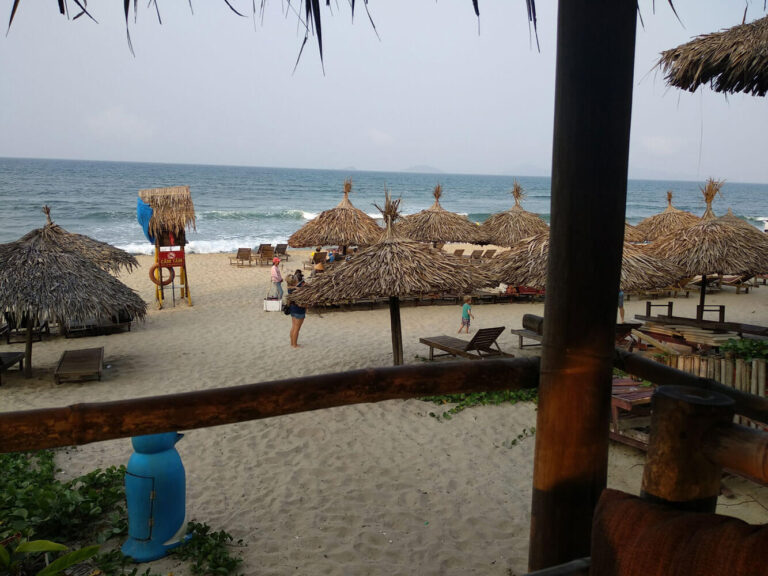
Koh Rong Sanloem. The island we book most. White sand, clear water, low-rise accommodation, and a small number of genuinely good places to stay. Saracen Bay is the main arc, with quieter bays on the far side reachable by a jungle path or a boat transfer. Thirty to forty five minutes by fast boat from the Sihanoukville port.
Koh Rong. The larger sister island, livelier, with a party stretch at the main pier and quiet beaches at the far end. Less appealing to most of the travellers we work with, though the northern beaches are excellent if you choose the right property.
Koh Ta Kiev and the smaller islands. A handful of rustic and eco properties, some without mains electricity around the clock. Right for the right person and worth being honest about before booking.
Kep and Kampot, again, for anyone who would rather have a river, a market and a countryside than a beach.
A practical note that matters: boat crossings to the islands are weather dependent and services cancel more often from June to October. We never put an island transfer on the day before an international flight, and our Hanoi office holds the alternative.
Two more places worth the days
The eastern highlands, Mondulkiri and Ratanakiri. Forest, waterfalls, Bunong villages, and an elephant sanctuary near Sen Monorom where the animals are retired and observed rather than ridden. We do not book riding camps anywhere. These are long drives on rough roads and they belong in a twelve-day trip rather than a nine-day one. Our wild Cambodia route is built around them.
Kratie, on the Mekong. The place to see Irrawaddy dolphins, and we would rather set expectations properly: the population in this stretch of river is very small and shrinking, sightings are usually distant dorsal fins in flat evening water, and the boat trip is quiet rather than dramatic. If you go expecting a peaceful hour on the Mekong you will enjoy it. If you go expecting a wildlife spectacle you will not.
How to fit it together
| Trip length | Shape we would build |
|---|---|
| 6 days | Siem Reap and Angkor, Phnom Penh. An add-on rather than a Cambodia trip. |
| 9 days | Siem Reap, Phnom Penh, then Kampot and Kep or two nights on Koh Rong Sanloem. |
| 11 to 12 days | The above without compression, plus Battambang, or the east, or a longer island stretch. |
| 14 days | Cambodia slowly and completely, or Cambodia paired with southern Vietnam across the Mekong by boat. |
The number that governs all of this is not total days, it is hotel changes. Cambodian roads average 30 to 35 miles an hour outside the expressway, and above one move every two and a half days a trip becomes a series of drives.
Plan this trip
Tell us your dates and the places you want to see, and we build your trip as a $39 day-by-day plan, with recommended hotels by level and every transfer set out step by step.
Keep reading
- Cambodia, the complete guide to planning your trip
- Classic Cambodia in 9 days
- Wild Cambodia in 12 days
- Angkor in two days, three days, or five
- Tailor-made Cambodia trips