We build a lot of family trips to India. Here is what actually works, what does not, and the six changes we make to a standard route when there are children in the party.
Where we start a family, and why
Kerala, almost always, for a first family trip.
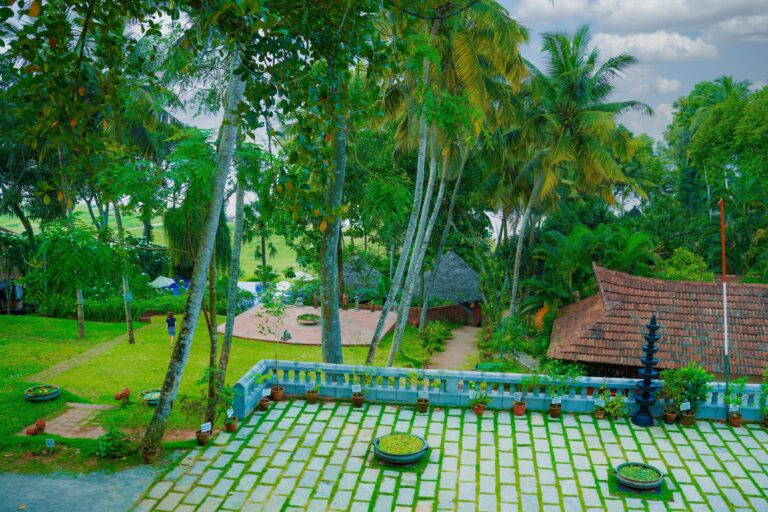
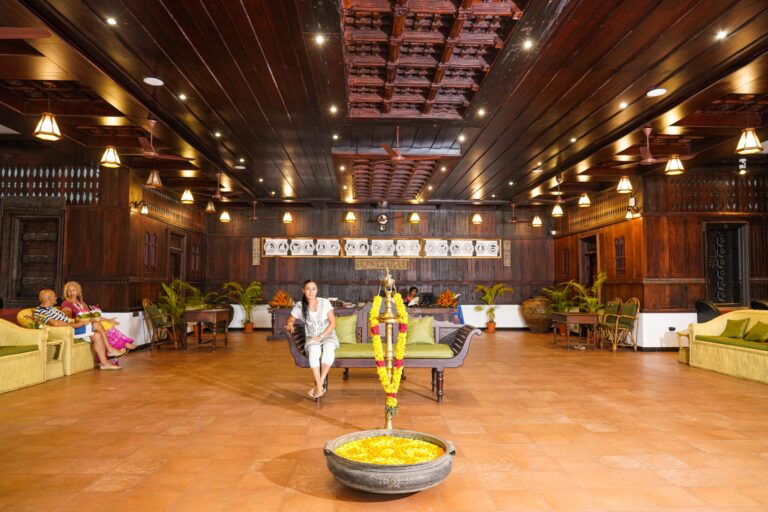
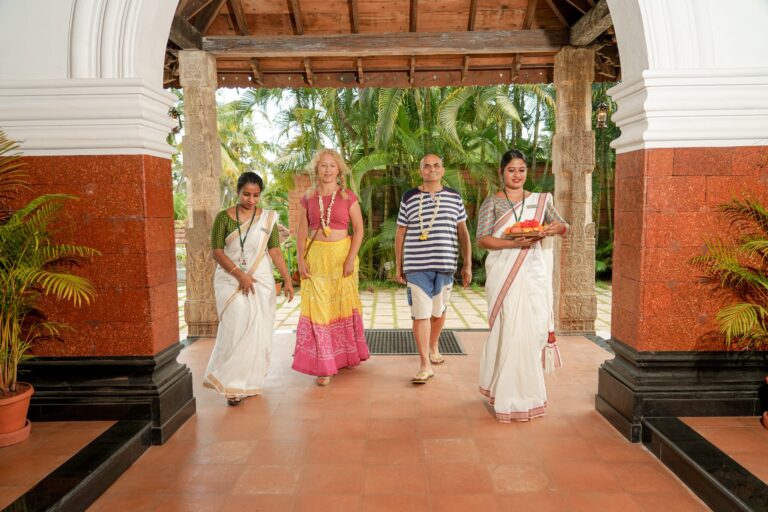
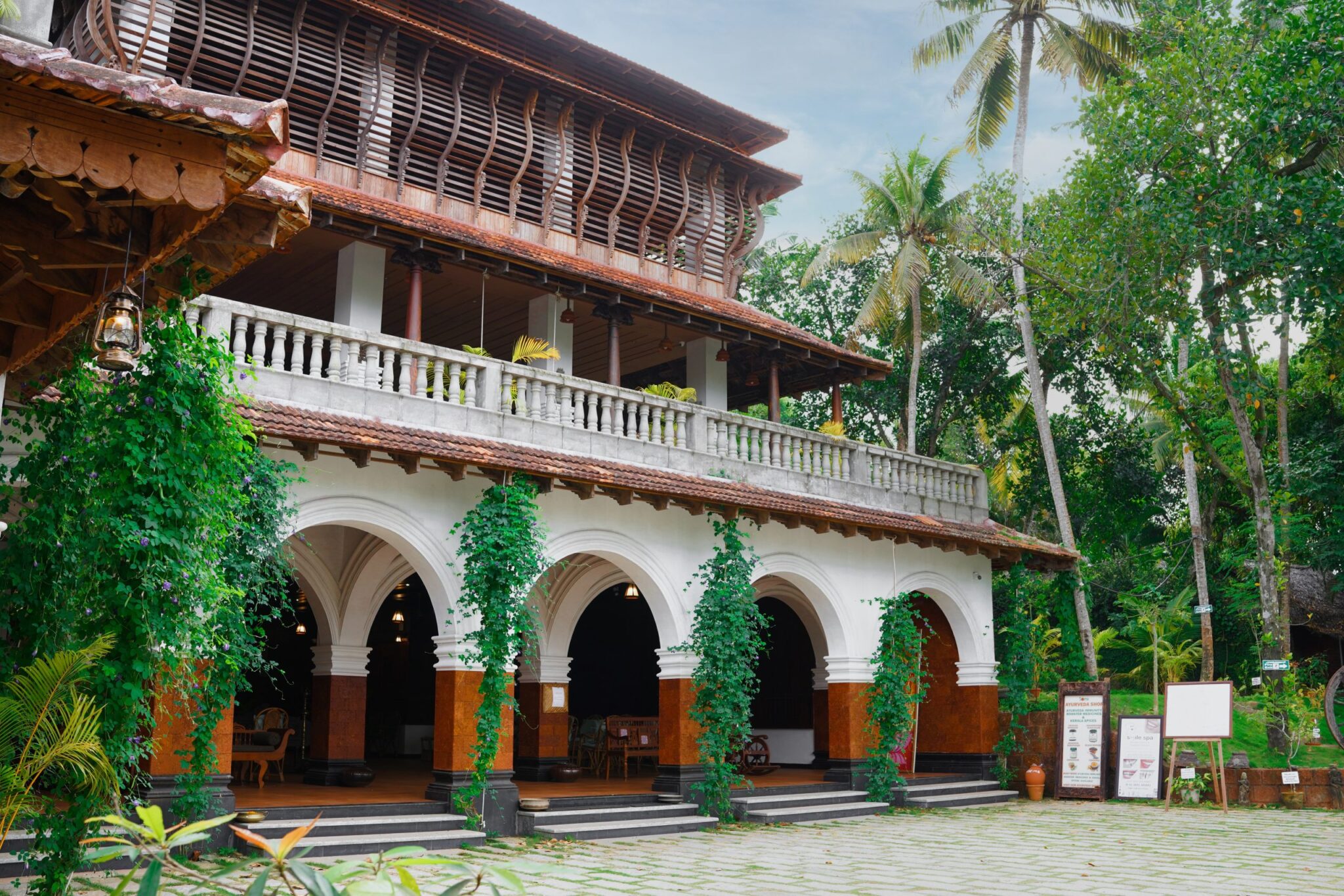
Kerala is the gentlest introduction to India that exists. The roads are shorter, the hills are cooler, the coast is genuinely restful, the food has a large mild category built around coconut and rice, and the volume is a fraction of the north. A family that would find Jaipur in February overwhelming has a lovely time in Fort Kochi, Munnar and the backwaters. That route is Kerala and the south in 14 days, which we shorten and slow for younger children.
Rajasthan works from about eight or nine, and it works well, because forts are the best playgrounds ever built and children who have been promised a fort get a fort. Under that age the driving hours are the problem, not the country.
The tiger parks work from about six, with the honest caveat that a three-hour drive with no sighting is a very long time for a small child, and nobody can promise a sighting. Two morning drives with a pool afternoon between them is our usual shape, and we choose lodges for the pool as much as the naturalists. More on the parks in which tiger park.
Ladakh, no, for children under about twelve. It is high enough that the acclimatisation matters, and altitude in children is harder to read than in adults.
The six changes we make
- Halve the driving. Two hours is the working ceiling for a day with young children, three for teenagers. The route gets cut, not the days. We would rather remove Jodhpur than deliver it after six hours in a car.
- One hotel change every three days, not every two. Packing is the invisible cost of a family trip and it lands on the parents.
- A pool in the afternoon, most days. This is not indulgence, it is the mechanism that makes the mornings work. Sightseeing from eight until noon, back to the hotel, out again at four.
- Two guided mornings, not eight. A guide who is good with children changes a fort completely, and eight of them is too many. We ask for the guides who tell stories rather than dates, by name.
- Trains where they exist. Children who are bored in a car are entertained on an Indian train, which is a social event with a food service. Delhi to Agra is about two hours and better than the road in every respect.
- A room configuration confirmed in writing. Indian hotels vary enormously in what a family room means. We confirm the actual bed arrangement rather than a category name, and we say when a property genuinely cannot take four in one room.
Food, which is easier than parents fear
Indian menus have a large mild category and every kitchen understands the request. The words that work are “no chilli, for children”, said at the start of the meal rather than after the first bite, and nobody is offended.
What children eat happily, in our experience: plain naan and roti, butter chicken and korma, dal, curd and rice, idli and dosa in the south, plain rice, omelettes, paneer in any form, and fresh fruit juice everywhere. Southern Indian breakfast is a particularly easy win because dosa is essentially a pancake.
The illness rules are the same as for adults and they matter more: filtered or sealed water including for teeth, hot food cooked in front of you, care with salad, ice and cut fruit in the first few days, and rehydration salts started at the first sign rather than the second day. We put a food walk in most family itineraries too, at a child-friendly hour, because children who have eaten well on day two eat well for the rest of the trip. The whole approach is in what to eat in India.
The things that surprise families most
Your children will be photographed by strangers. Constantly, and mostly by other families, and it is friendly rather than sinister. Fair-haired children in particular will be asked for selfies at every monument. Most children find this funny for two days and tiresome by day five, so agree a family answer in advance. A polite no is entirely acceptable and nobody takes offence.
Poverty, and the questions that follow. Children see it directly and ask directly, usually at a traffic light. We tell families to expect the conversation rather than to plan an answer, and we ask that money is not given to children who are begging, because it keeps them out of school. Where families want to do something concrete, we can point you at a project our Delhi office knows rather than a charity you found in a hotel lobby.
The heat, which is the real limiter. Nobody enjoys a fort at two in the afternoon in April, and children stop being able to hide it hours before adults do. This is why the mornings and evenings shape everything.
How well it goes. The most common line in our family debriefs is that the children coped better than the parents expected, and that the parents were more tired than the children. Both are usually true.
When to go with children
October to March, and within that, December to February for the north. The school holiday alignment is genuinely good for once.
Two qualifications we make loudly. Delhi’s air quality is poor from roughly November into January, badly so in some weeks, and if you are travelling with a small child or an asthmatic one we shorten the Delhi end and tell you rather than hoping you do not notice. And May and June in Rajasthan regularly pass 104°F (40°C), which we do not build for anyone and certainly not for a family.
Kerala is at its most reliable December to March. It has two monsoons, the heavy southwest one from June to September and a gentler northeast one bringing afternoon rain through October into November, so a mid-October family trip sold as dry season is being sold optimistically.
What we would not do
- A twelve-day Golden Triangle plus Varanasi plus a park with a seven-year-old. It is four holidays for an adult and five for a child.
- Elephant rides. We do not book them, at Amber Fort or anywhere else, in India or in Asia generally. The jeep to the same gate takes the same time.
- Snake charmers, dancing bears, roadside monkey shows or any performance involving an animal. Your proposal will say why.
- A single night anywhere. With children it costs more than it returns.
- The 5am start for the Taj, on day two of the trip. The Taj at opening is worth it and jet lag is real. We put it on day four, after Delhi, with an Agra overnight so nobody is in a car at dawn.
Practical notes from our Delhi office
- Car seats are not standard and are not reliably available. Tell us early if you need one and we will source it and confirm which vehicle it fits.
- Nappies, formula and standard medicines are widely available in cities, and specific brands are not. Bring what your child insists on.
- Vaccinations. Talk to a travel clinic six to eight weeks out about your route, which matters more with children than adults.
- Mosquitoes. Cover up at dusk and use a repellent your children tolerate. This is more about being sensible than being anxious.
- Toilets. Carry tissue and hand gel. Hotel and restaurant facilities are fine. Roadside ones are the reason we plan the stops.
- We open a WhatsApp group with your consultant here and our Delhi office there for the whole trip, which for a family is mostly used for the small things: a doctor, a pharmacy, a lunch that is genuinely mild.
Plan this trip
Tell us your dates and the places you want to see, and we build your trip as a $39 day-by-day plan, with recommended hotels by level and every transfer set out step by step.
Keep reading
- India: the complete guide to planning your trip
- India with children, 12 days
- India for the first time: a realistic first itinerary
- What to eat in India, and how not to get ill
- Asia with children: which countries are easiest
- India, planned by people who are actually there