The third day is not a bonus day. It is the day that makes the other two work, and it is the structural reason every Tibet route we build starts here rather than moving on. Doing this in two days means climbing the many flights of stairs inside the Potala Palace on your second morning at nearly 12,000 feet, which is exactly the thing we design routes to avoid.
So the order below is not a sightseeing preference. It is an ascent profile with monasteries in it.
Everything here assumes the arrival day sits before these three. You land, you go to the hotel, you drink a great deal of water, you eat something plain and you sleep badly, which is normal.
The three days in one table
| Day | What you do | Physical demand |
|---|---|---|
| 1 | The Barkhor circuit, the old town, tea houses, sitting and watching | Flat walking, at your own pace, nothing else |
| 2 | The Jokhang, the old town lanes, the Sera debating courtyard in the afternoon | Flat, with about an hour standing |
| 3 | The Potala Palace in the morning, Drepung or the Norbulingka in the afternoon | A serious climb, on your third full day for a reason |
Day one: the Barkhor, and nothing that is scheduled
The first full day is slow on purpose and it is not empty. In our experience it is also the day most travellers name afterwards as their favourite, which is not what anyone expects from a day labelled acclimatisation.
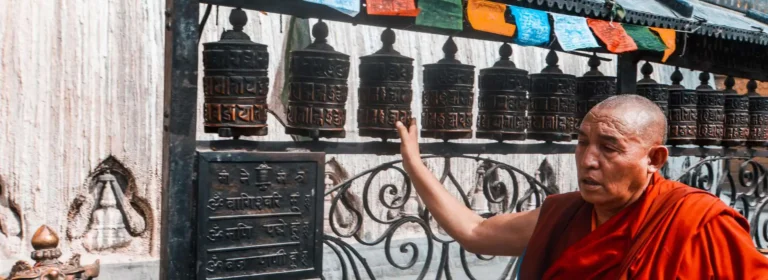
The Barkhor is the pilgrimage circuit around the Jokhang temple, walked clockwise, and it is the living centre of the city. Pilgrims from across the plateau walk it continuously, some of them prostrating the full length. Prayer wheels turn along the walls. The market runs beside it. You walk one circuit, or three, or you sit at the edge and watch, and either is a legitimate use of the morning.
Around it, the old town lanes: whitewashed buildings with black window surrounds, small chapels, workshops, and tea houses where a flask of sweet tea costs almost nothing and nobody minds how long you sit. Butter tea is salty rather than sweet, almost nobody likes it at first, and it genuinely helps at this altitude. Tibetan food, what to eat covers the rest.
The rule for the day is simple: walk slowly, and mean slowly. Drink far more water than feels necessary. No alcohol. Eat, even without appetite. If you have a headache, take a simple painkiller and rest, and tell your guide.
Day two: the Jokhang, and the debates at Sera
The Jokhang is the oldest and holiest temple in Tibetan Buddhism, founded in the seventh century, and it holds the Jowo Shakyamuni, the statue that is the reason pilgrims cross the plateau on foot. The interior is dark, thick with butter lamp smoke, and full of people who have travelled a very long way to be in it. It is not a museum and it does not feel like one.
Visiting hours for foreign visitors are set locally, change from year to year and are sometimes restricted at short notice around religious dates. Your guide books the slot and tells you the morning before. Photography inside the chapels is either charged for or forbidden depending on where you are standing.
Afterwards, the old town properly, at a walking pace, with a long lunch in it.
The Sera debates are the afternoon. In a walled courtyard of gravel and old trees, monks debate points of doctrine in pairs and groups, the questioner standing and driving each argument home with a sweeping clap, the respondent seated. It is loud, physical, and entirely unlike any other religious practice most visitors have seen.
Three practical points. The debates run in the afternoon on most days but not every day, and they are suspended around certain festivals and periods of study, so it is confirmed rather than assumed. Photography of the courtyard is usually permitted and of the chapels usually not. And Sera is at the edge of the city on flat ground, which is why it sits on day two rather than day three.
Day three: the Potala, and then Drepung
The Potala Palace is the building the city is arranged around, thirteen storeys on the Marpo Ri hill, the White Palace of the administration and the Red Palace of the chapels and the tombs of the Dalai Lamas.
The visit works differently from anywhere else in Tibet and it is worth knowing how before you arrive.
- Entry is by timed ticket and the daily number is limited. Tickets are obtained by your licensed guide against your passport and permit details, usually a day or so ahead. This is one of the things you are paying a licensed operator to do, and in the busy months it is not a formality.
- You are given a time slot and a limited window inside, commonly around an hour once you are into the ceremonial rooms. It is enforced. This is not a place to linger over one chapel and then hurry the rest, and your guide will pace you.
- It is a climb. Many flights of stone stairs, rising from the level of the city to the palace above it, at an altitude where a flight of stairs is already harder than it should be. Go slowly, stop when you want to, and let the group ahead go past. This is the single reason the Potala sits on the third full day.
- Photography is forbidden inside the chapels, bags and liquids are restricted, and there are no toilets once you are inside the route.
The exterior deserves its own time. The view from the Chakpori hill opposite, and the kora that circles the whole palace with its prayer wheels, are free, unhurried and for many people better than the interior.
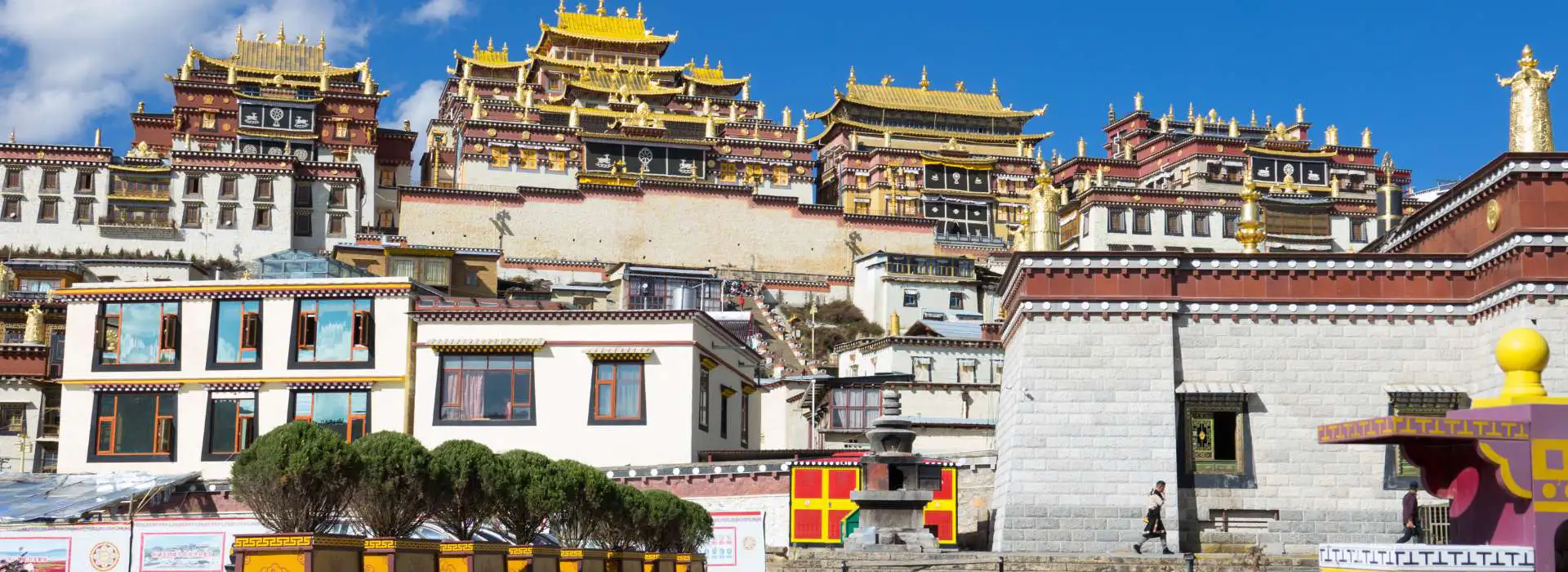
Drepung is the afternoon. Once among the largest monasteries in the world, a white town of chapels and colleges stacked up a hillside outside the city, with the Ganden Palace where the early Dalai Lamas lived before the Potala existed. It involves a climb on uneven ground and it is quieter than Sera.
If the Potala has taken more out of you than expected, which is common, the alternative is the Norbulingka, the summer palace and its gardens, which is flat, shaded and pleasant, and honest about being the lesser sight.
What we would leave out of three days
A third large monastery. Sera and Drepung in the same day is one too many, and Ganden, which is genuinely superb, is an hour and a half out of the city over a high pass and belongs to a longer trip.
The Potala on day one or two. We will decline to schedule it there.
A packed evening. Sleep is already poor at this altitude and the evenings are better spent at a low table with a bowl of thukpa.
Shopping the Barkhor for antiques. Almost nothing sold there is what it is described as, and export rules on religious objects and anything genuinely old are strict.
Where three days sits in a whole trip
Three days in Lhasa is the front half of every route we build. Six days is Lhasa alone and is the minimum trip we will construct. Eight days adds Yamdrok Lake, Gyantse and Shigatse and is our standard first trip: see classic Tibet in 8 days. Ten adds Everest, fourteen adds room. The full ladder is in how many days you need in Tibet and the fourteen-day argument is in the best two-week route through Tibet.
Where you sleep matters more here than anywhere else on the plateau, because this is the one place where spending more buys something real: proper heating, reliable hot water, a restored courtyard building in the old town, and in some properties an oxygen-enriched room, which genuinely helps in the first two nights. Our boutique Tibet route is built around exactly that.
What it costs
Land only, per person, based on two people sharing, excluding international flights and the flight or train into Lhasa. There is no budget tier in Tibet: the permit, the licensed guide and the private vehicle are mandatory and fixed from the first day.
| Style | Per day | 6 days, Lhasa only |
|---|---|---|
| Comfortable: good Lhasa hotels, licensed guide and vehicle throughout | $210 | $1,260 |
| Boutique: the best rooms in the city, restored courtyard houses | $330 | $1,980 |
| Luxury: top-tier, oxygen-enriched rooms, the most experienced guides | $560 | $3,360 |
Entry tickets for the Potala, the Jokhang, Sera and Drepung are set by the authorities and change year to year, so we confirm the current figures for your dates rather than printing numbers that age.
Plan this trip
Tell us your dates and the places you want to see, and we build your trip as a $39 day-by-day plan, with recommended hotels by level and every transfer set out step by step.
Related
- Tibet: the complete guide to planning your trip
- How many days do you need in Tibet?
- Classic Tibet in 8 days
- Tibet for the first time
- Tibetan food, what to eat