Here are the six things we make sure clients understand before they book, written the way we would say them on the phone.
1. A ger camp is not a hotel, and the bathroom is the question
This is the thing we are asked about most and the thing brochures answer worst, so here it is in full.
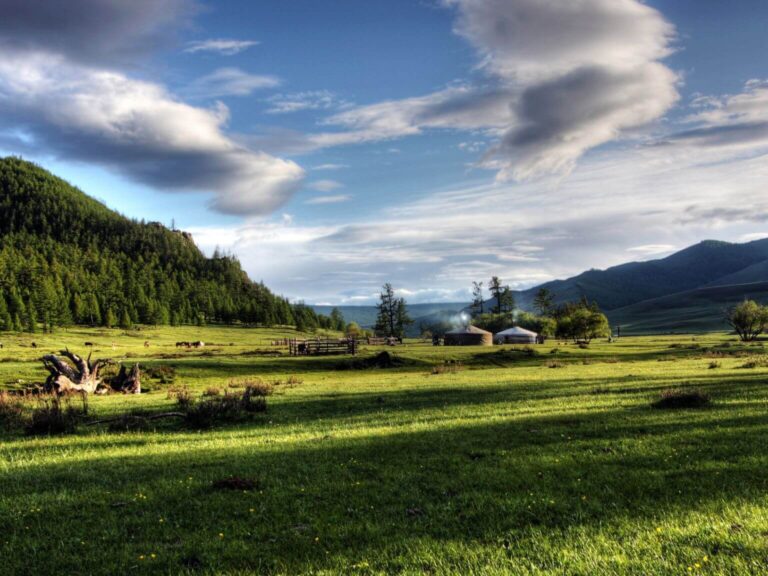
A tourist ger camp is a fixed set of gers, the round felt tents Mongolians live in, pitched in a permanent arrangement around a central dining building. Your ger has two or three beds, a wood or dung stove, a small table, a painted wooden frame and a door you cannot lock. The camp staff light your stove at dusk and often come back to relight it before dawn, because it goes out at around two in the morning and the temperature drops fast.
Bathrooms. In many camps they are shared: a separate block with showers and toilets, a short walk from your ger, with hot water at set hours because it is heated by a generator or a boiler running on a schedule. A smaller number of camps have a private bathroom built onto each ger. Those cost more and to many people they are worth it. A stay with a herder family has no shower at all and a long drop outside.
We tell you which arrangement applies on every single night of your itinerary before you book. If a camp on your route has a shared block, the proposal says so. Clients tell us more often than anything else that this was the paragraph that mattered. The boutique route is built around the camps that have bathrooms in the ger, where the geography allows it.
Power. Solar and generator, usually running for a few hours in the evening. Charge everything then, and bring a head torch.
Noise. Felt is not soundproof, wind on the steppe is constant, and rain on a ger roof is loud. Most people sleep well anyway.
2. Outside the paved corridors there are no roads
There is a decent paved road running west from Ulaanbaatar towards Kharkhorin and a paved route south towards the Gobi that eventually runs out. Beyond that, there are tracks: multiple parallel lines across open ground, chosen on the day by your driver based on the conditions.
Average speed on those is around 20 to 30 miles an hour (30 to 50 km/h). That is why 200 miles (320 km) is a full day, and why we publish drive hours rather than distances.
It is bumpy in a way that is genuinely hard to convey in advance: continuous corrugation, for hours at a time. If you have back or neck problems, tell us before we build the route and we will change the vehicle, the seat and the daily distances.
The driver matters as much as the guide, which surprises people. Navigation out there is by landmark and experience, and the ability to fix a vehicle in the middle of nowhere is not optional. We use drivers we know by name.
3. The season is four months long and it is not negotiable
Mongolia’s travelling season runs roughly mid-June to mid-September. Outside it the ger camps close, domestic flights thin out, the tracks freeze or turn to mud, and most of what you have read about is not available.
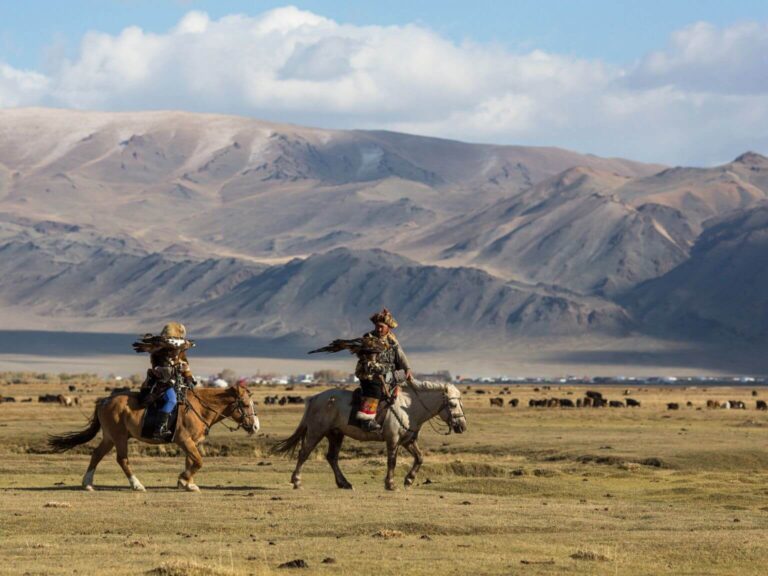
November to April is winter, and it is a completely different product: Ulaanbaatar, the Tsagaan Sar lunar new year, ice festivals and the eagle hunters in the snow they actually hunt in. The countryside routinely sits below minus 4 Fahrenheit (minus 20 C). We will build that trip and we will be clear about what it involves.
May and October are shoulder months with limited camps, cold nights, possible snow and real weather risk. The Golden Eagle Festival near Olgii on the first weekend of October is the one genuine reason to travel outside the season. The full calendar is here.
If you are imagining green grass and horses and your only dates are in January, we will say so rather than sell you the wrong month.
4. It is cold at night in every single month
Ulaanbaatar sits at about 4,300 feet (1,310 m) and is the coldest capital city in the world. The countryside is higher in most of the places you go.
Daytime temperatures in the central provinces in summer run around 68 to 80 Fahrenheit (20 to 27 C), the Gobi runs hotter and can pass 100 F (38 C) in July, and nights everywhere are cold. Freezing at night in the Gobi in June is normal. Camps at Terkhiin Tsagaan lake at about 6,700 feet (2,040 m) are colder still.
Bring a fleece, a windproof layer and a hat, in August. A sleeping bag liner adds warmth over thin camp bedding and most people are glad of it.
5. Naadam fills every bed in the country
The national festival falls on 11 to 13 July: wrestling, horse racing and archery, with an opening ceremony at the national stadium in Ulaanbaatar that is a genuine spectacle.
Two things to know before you plan around it. The Ulaanbaatar version is crowded, ticketed and hot, and much of the day is spent watching from a distance. And it fills every bed in the country: city hotels sell out months ahead, rates rise, and the effect ripples out to countryside camps because domestic travel peaks in the same week.
If you want it, book six to nine months out. If you want empty countryside, travel in late August or early September and the same trip costs less.
Many of our clients prefer the countryside version: provincial towns hold their own naadams in the days around the national one, at a scale where you stand at the edge of the wrestling and the horses come past close enough to hear.
6. The food repeats, and that is the honest version
Camp cooking is built around mutton, noodles, potatoes, carrots, soup and dumplings, and after ten days it repeats. It is not bad food and it is not varied food.
Vegetarian is workable with notice and it will be monotonous. Say so early and we brief the camps in advance. Bring snacks you actually like, which is advice we give for Mongolia and almost nowhere else. What to eat in Mongolia covers what is worth seeking out and what is not.
What we would do differently on a first visit
Fly one leg. On a ten day trip, the domestic flight to Dalanzadgad for the Gobi buys back two full driving days for the price of a fare. It is almost always the right call.
Give the Gobi four nights rather than two. It is the reason most people come and it is routinely under-served in itineraries.
Spend the first afternoon in the National Museum. It is genuinely good, it takes two hours, and it makes everything you see for the next week legible.
Ask about the bathrooms before you sign anything. Any operator who cannot tell you the arrangement for each night is not looking at the same detail we are.
Consider travelling as four. Mongolia is priced on the vehicle, so two couples sharing a van and a guide pay substantially less per head. This is one of very few countries where that is true. The cost article shows the tiers.
Do not build a route that crosses the whole country. What we would skip in Mongolia is the honest argument for cutting.
Practical notes
- Cash. Ulaanbaatar has cards and ATMs. The countryside has neither. Carry togrog in cash for the whole trip.
- Connectivity. Good in and near towns, patchy to absent in the Gobi and the west. Tell people at home you will be out of contact for stretches.
- Dust. There is dust everywhere and showers are not always available. Wet wipes are the most useful thing in your bag.
- Baggage. Domestic flights usually allow around 15 kg. Repack in Ulaanbaatar.
- Airag, fermented mare’s milk, is offered often and is an acquired taste. Refusing politely is fine.
- Visas. Many nationalities travel visa-free and others use an e-visa. The rules changed in recent years and they differ by passport. We confirm the current requirement for your specific passport and dates before quoting rather than repeating something that was true last season.
Who runs your trip
Worth saying plainly, because we would rather be clear than imply a presence we do not have. Mongolia is not a place where we have our own office. We work there through a long-standing local partner in Ulaanbaatar whose guides and drivers we know and use repeatedly. We have dedicated local offices in Vietnam and India, our team in Japan, and local representatives in the Philippines.
What that means in practice: the itinerary, the camp choices and the routing are ours, written by Osnat Angerman or Paz Prosianoy, our Southeast and Central Asia specialists. The vehicles, guides and ground operations are our partner’s. If something goes wrong at three in the morning in the Gobi, the person who solves it works for them and answers to us.
Plan this trip
Tell us your dates and the places you want to see, and we build your trip as a $39 day-by-day plan, with recommended hotels by level and every transfer set out step by step.
Keep reading
- Mongolia: the complete guide to planning your trip
- Mongolia month by month
- What does a trip to Mongolia really cost?
- What to eat in Mongolia
- Classic Mongolia in 10 days
- All our Mongolia trips