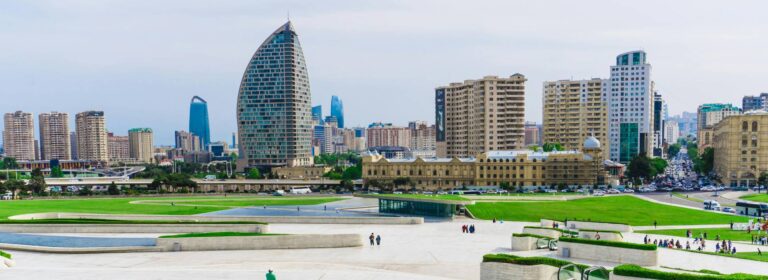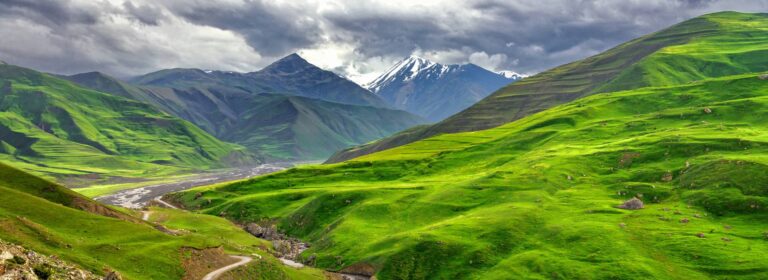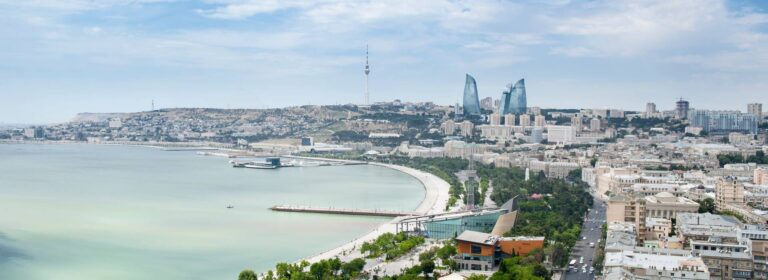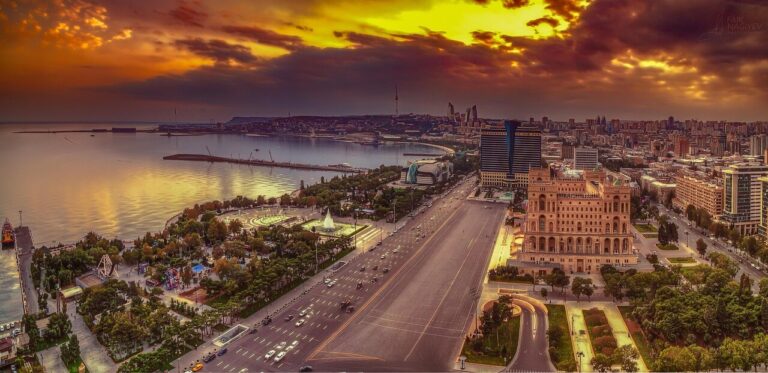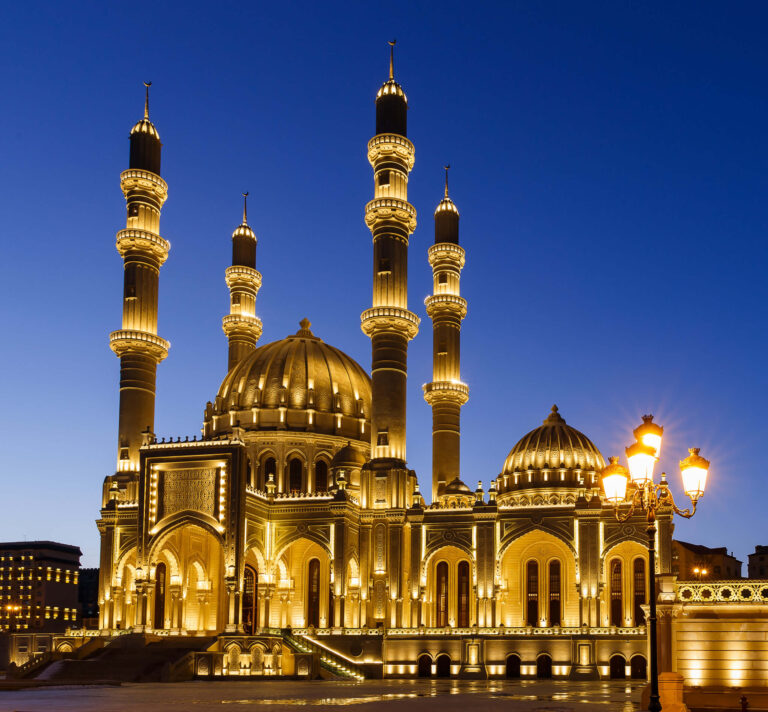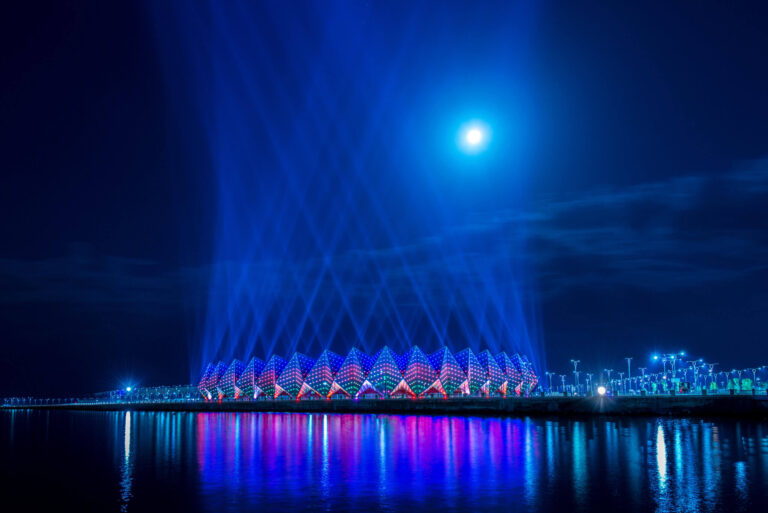
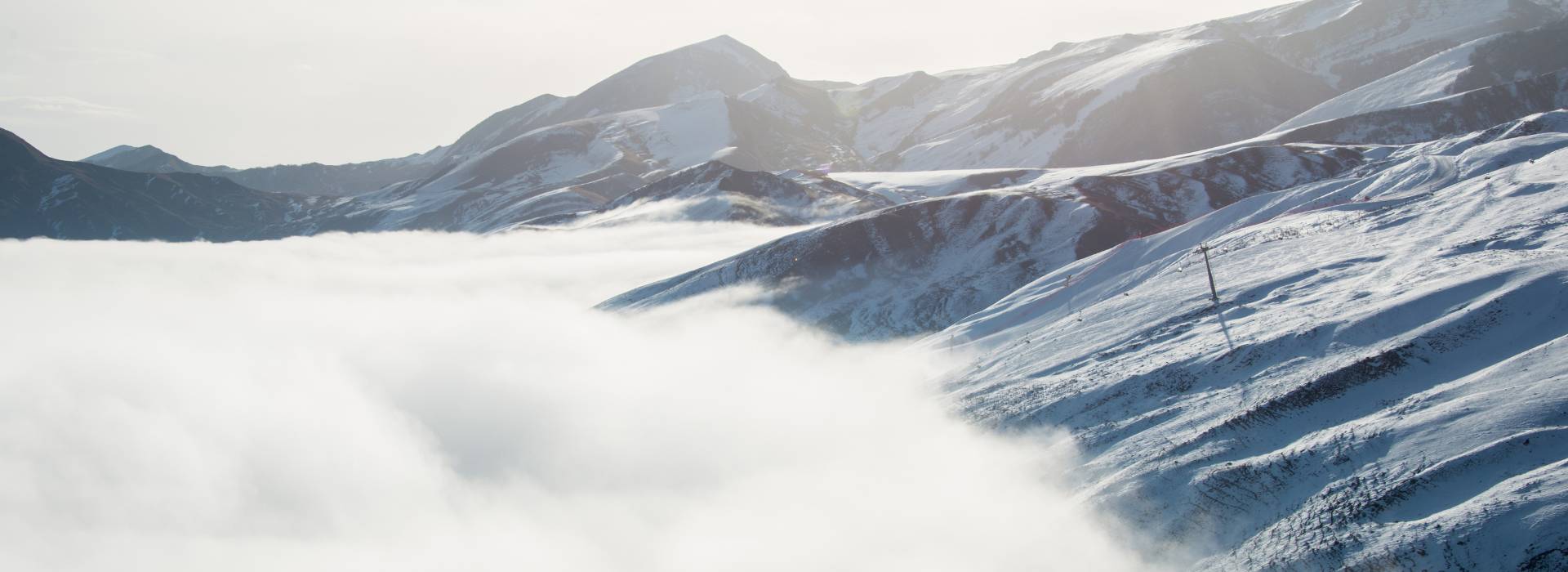
Here is the honest shape of it. Baku is a wealthy, restored, well-run capital on the Caspian, with a walled old city, a serious modernist building or two and one of the better restaurant scenes in the region. The rest of Azerbaijan is not polished, has not been given the same money, and is where almost everything memorable happens: an eighteenth-century khan’s palace in Sheki with stained glass assembled without nails, a copper-beating village on a gorge road, and a mountain settlement at 7,500 feet (2,300 m) that speaks its own language.
Travellers who understand that trade before they book have a very good week. Travellers who expect Baku standards in Ismayilli do not. This guide is written to get you into the first group.
Azerbaijan at a glance
| Best months | April to June, and September to October |
| Comfortable trip length | 7 to 10 days |
| Entry | Visa-free or e-visa for many nationalities, confirmed per passport |
| Getting around | Private car with a driver, with a 4×4 for the mountain days |
| Land budget, per person per day | 115 to 530 US dollars |
| Our presence | A long-standing Baku partner, not an office of our own |
Azerbaijan is about 33,400 square miles (86,600 km2), a little larger than Ireland or roughly the size of Maine. It runs from a subtropical tea-growing south on the Iranian border to permanent snow on the Russian frontier in the north, with semi-desert and the Caspian in between.
When to travel
Spring, April to June
Our first recommendation. April is green, the northern foothills are in blossom, the semi-desert around Gobustan has a short window of flowers, and the temperature in Baku sits in the sixties and seventies Fahrenheit (high teens to low twenties Celsius). May and early June are the best weeks of the whole year: everything is open, the mountain roads are clear, and the coast has not yet turned humid.
Two dates to know. Novruz, the spring new year, falls around 20 to 21 March and is a genuine national holiday with bonfires and a country largely on the move, which is atmospheric and also the week domestic travel fills up. And the Formula 1 street race in Baku closes central roads for the better part of a week and puts hotel rates up two or three times. We plan around both rather than through them.
Summer, July to August
Be clear-eyed here. Baku in high summer is around 90°F (32°C) with heavy humidity off the Caspian, and the city’s famous wind is warm rather than cooling. The old city stone holds the heat. Sightseeing between noon and five is not enjoyable.
There are two good answers. The first is to go up: Qabala, Sheki, Lahic, Quba, Laza and Xinaliq are between 2,000 and 7,500 feet (600 to 2,300 m) and are ten to twenty degrees cooler, and July and August are the only reliable months for the high villages. The second is to treat Baku as an early-morning and after-dark city, which is what its residents do. What we do not recommend is a Caspian beach holiday. The beaches on the Absheron peninsula are functional at best.
Autumn, September to October
The equal of spring and, in some years, better. September is warm and dry with the humidity gone, the fruit and nut harvest is running in Quba and Ismayilli, and the light in the northern foothills is the reason people come back. October is cooler and quieter, and the first half of it is still comfortable everywhere. By late October the high road to Xinaliq is unreliable.
Winter, November to March
A short, cheap, city-shaped trip. Baku in winter is mild, rainy and windy, around 45°F (7°C), and the museums and the food are unaffected. Shahdag and Tufandag are functioning ski resorts with modern lifts and prices well below Europe. What you lose is the north: Xinaliq and Laza become uncertain, the Lahic road is unpleasant in ice, and several provincial hotels close. We build winter itineraries around Baku, Gobustan, Quba and Qabala and we say plainly what is not in them.
How many days do you actually need?
- Under 5 days. Baku and the Absheron peninsula, with Gobustan as a day out. A good long weekend, and not the country.
- 7 days. The classic first visit: Baku, Gobustan, Shamakhi, Sheki, Lahic and back. This is the shape most first trips take and it does not feel rushed. Our 7-day route is here.
- 10 days. The above plus the north properly, meaning Quba, Laza and Xinaliq with a night up there rather than a day trip.
- 14 days. Azerbaijan thoroughly plus Georgia over the land border. The 14-day route.
- 21 days. Both countries at a pace that includes the Georgian mountains. The 21-day route.
The number that matters is not total days but hotel changes. Azerbaijan is compact enough to tempt people into one-night stops in Shamakhi, Ismayilli, Qabala, Sheki and Quba in sequence. That is five beds in five nights and it is a bad week. We build three bases and drive out from them.
Entry requirements
Azerbaijan is straightforward for most of the passports we deal with. A number of nationalities enter without a visa, and many others use the online e-visa system, which is a short application, a modest fee and a document that arrives by email within a few working days.
We do not publish the eligible list or the fee here, because both are set by government decree and change. We confirm the current rule for your exact passport in writing before we quote, and we send you the correct link with your final documents.
One practical note that does not change: travel to Nakhchivan, the Azerbaijani exclave, is by air from Baku only, because the land route crosses closed frontiers.
Getting around
Private car and driver
This is how we run essentially every Azerbaijan trip. The main highways out of Baku are good and the secondary roads are not. Driving standards on the two-lane roads are assertive, livestock on the carriageway is normal outside the cities, and the signage in the mountains is thin. A driver here costs less than in most countries we work in and removes the largest single source of stress.
The roads that need describing
To Xinaliq. From Quba the road runs about 35 miles (57 km) up a gorge to a village at roughly 7,500 feet (2,300 m). Much of it has been surfaced in recent years and it is no longer the expedition it once was, but it is narrow, exposed in places, subject to rockfall, and it takes about two hours each way. It is a 4×4 day with a driver who does it regularly. In poor weather we move it or cancel it, and we tell you that at the quoting stage rather than on the morning.
To Lahic. About 12 miles (19 km) off the main road up the Girdimanchay gorge, single track in places with drops and no barrier, roughly forty-five minutes each way. Shorter than the Xinaliq road and, for some people, more alarming. Worth it.
To Laza. A rough track in the Qusar district under Shahdag, reached by 4×4, with waterfalls at the head of the valley and some of the best short walking in the country.
Baku to Sheki. About 200 miles (320 km), four and a half to five hours if you drive it straight. We never drive it straight. Shamakhi, the Diri Baba mausoleum at Maraza and a wine estate turn it into a good day rather than a lost one.
Rail and flights
There is a decent rail line west from Baku to Ganja and on towards the Georgian border. The Baku to Tbilisi sleeper runs overnight and is a real option on a two-country trip: it saves a full driving day and it is comfortable enough in a two-berth compartment, though not luxurious. We will price rail against a driver on any route where it competes. The only internal flight ever relevant is Baku to Nakhchivan.
Self-drive
We advise against it. The main highways are manageable; the mountain roads are not the place to learn local driving conventions, and no rental agreement covers the track to Laza.
What a trip to Azerbaijan costs
Figures below are land only, per person, based on two sharing, and exclude international flights. They cover accommodation, food, ground transport with a driver, entries and the guiding we would normally include.
| Style | Per day | 7 days | 10 days | 14 days |
|---|---|---|---|---|
| Careful: guesthouses, family tables, minimal guiding | $115 | $805 | $1,150 | $1,610 |
| Comfortable: good 3 to 4 star and the better guesthouses | $185 | $1,295 | $1,850 | $2,590 |
| Boutique: design hotels in Baku, wine estates, private cellars | $310 | $2,170 | $3,100 | $4,340 |
| Luxury: the best rooms in the country, guided throughout | $530 | $3,710 | $5,300 | $7,420 |
Three things move that number more than anything else.
- How many nights are in Baku. The gap between a good Baku hotel and a good Sheki hotel is larger than in any other country we run in the region. A trip with five Baku nights costs meaningfully more than one with three, and it is a worse trip.
- The mountain vehicles. Xinaliq and Laza need a 4×4 and a specialist driver and cost roughly twice a highway transfer day.
- The week. Formula 1 week and Novruz are the two expensive windows. Late September delivers a better trip for less than either.
What is cheaper than visitors expect: food, taxis, entries and guiding. What is more expensive: the top of the Baku hotel market, which is priced for business and for the race.
The regions worth your time
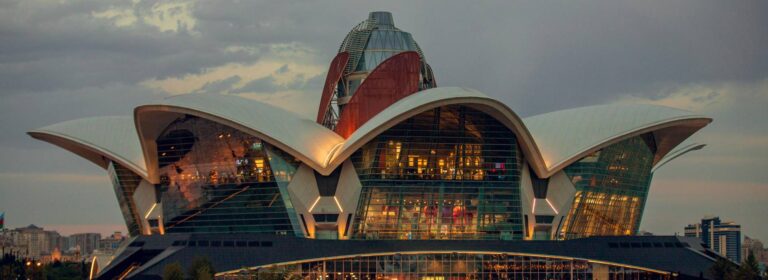
Baku. Three days. The walled old city, Icherisheher, with the Maiden Tower and the fifteenth-century Palace of the Shirvanshahs, is a morning on foot and best early. The Heydar Aliyev Center, Zaha Hadid’s white curved building, is worth a proper half day and is the best modern building in the Caucasus. Add the Carpet Museum, which is better than it sounds and explains a craft you will see for the rest of the trip, and the streets around Fountain Square for eating.
The Absheron peninsula. A full day out of Baku. Ateshgah, the fire temple at Surakhani, built around a natural gas vent and used by Zoroastrian and Hindu ascetics, and Yanar Dag, a hillside that has been burning continuously for as long as anyone recorded it. Both are small and both are genuinely strange. The peninsula is also industrial, and we will not pretend the drive is scenic.
Gobustan. An hour south of Baku. The petroglyph reserve holds thousands of rock carvings and is on the UNESCO list, with a well-made site museum. Nearby, a field of mud volcanoes bubbles cold grey mud out of the ground, reached by a rough track. Half a day.
Shamakhi and Ismayilli. The old Shirvan capital on the road west, with the Juma mosque and the Yeddi Gumbez mausoleums, and beyond it the wine country around Ismayilli. Not a wine region on the scale of Kakheti next door, but the estates are modern and the tastings are honest.
Lahic. A coppersmith village on a cobbled street in the Girdimanchay gorge, where the Tat language is still spoken and men still beat metal in open workshops. The middle of the day is busy. Staying the night, in a simple guesthouse, is the difference between a photograph and an evening.
Sheki. The best town in Azerbaijan and the one we would defend spending two nights in. The Palace of the Shaki Khans, an eighteenth-century summer residence, has shebeke windows: coloured glass held in a wooden lattice assembled without nails or glue. The caravanserai in the town is still a working building. Kish, just above, has a church associated with Caucasian Albania, the early Christian kingdom that preceded the Islamic period here. And the food is the best in the country: piti, a mutton and chickpea stew baked in a clay pot, and Sheki halva.
Qabala. A modern resort town with a ropeway up Tufandag, a lake, and a waterfall walk at Yeddi Gozel. Comfortable hotels, good for families, and not a place with much atmosphere.
Quba, Laza and Xinaliq. The northern mountains and, for us, the reason to come. Quba is an orchard town on a gorge with a long-established Mountain Jewish quarter at Qirmizi Qesebe across the river. Above it, Laza sits under Shahdag with waterfalls at the head of the valley, and Xinaliq sits at about 7,500 feet (2,300 m) with its own language, stone houses stacked on a ridge and a transhumance route to the summer pastures that UNESCO listed in 2023. Two nights in the north, not one.
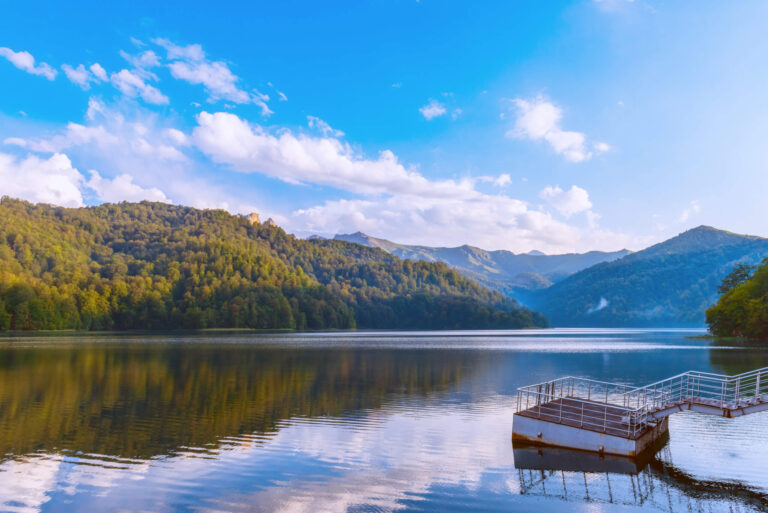
Ganja and Goygol. The second city, with the mausoleum of the poet Nizami and, an hour beyond, the lake at Goygol formed by an earthquake in 1139. We will say plainly that on a first trip of seven or eight days we would skip it. It is a long westward drive for something the north does better.
Lankaran and the Talysh. The subtropical south: tea plantations, citrus, the Hirkan forest, and lavangi, a walnut and onion stuffing baked into chicken or fish that is the best dish in Azerbaijani cooking. Four and a half hours from Baku, so it needs a trip of ten days or more to justify.
Food and drink
Azerbaijani food sits between Turkish, Persian and Central Asian cooking and takes something from all three. Plov here is a wider family than in Uzbekistan, often with the rice and the topping cooked separately. Dolma covers grape leaves, aubergine, pepper and quince. Dushbara is a soup of very small dumplings. Qutab is a thin folded flatbread with greens, pumpkin or meat, and it is the best cheap food in the country. In Sheki, order piti. In Lankaran, order lavangi.
Tea is the constant: black, in a pear-shaped armudu glass, with jam eaten from a spoon alongside rather than stirred in.
Wine is a genuine and quiet improvement. The estates around Ismayilli and Shamakhi have modern equipment and outside expertise, and the reds made from Madrasa, a local grape, are worth your attention. Nobody should come to Azerbaijan primarily for the wine, and everybody should drink some while they are here.
Practical notes
- Cash. Cards work in Baku and in the larger provincial towns. In Lahic, Laza and Xinaliq, carry manat.
- Accommodation outside Baku. Sheki and Qabala have several good hotels. Ismayilli, Lahic and the northern villages have simple, clean, family-run rooms and that is the whole market. We tell you which nights those are before you book.
- Language. Azerbaijani is Turkic and close to Turkish. Russian is widely understood, especially by older people and in Baku. English is common among young people in the capital and thin outside it.
- Photography. Avoid photographing military installations, border infrastructure and government buildings. This is taken seriously.
- Mosques and shrines. Working religious sites. Shoulders and knees covered, shoes off, and a headscarf for women at some.
- Altitude. Nothing on a normal itinerary is high enough to cause altitude problems.
- Dogs. Shepherd dogs in the northern pastures are working animals. Do not approach a flock.
How we build an Azerbaijan trip
Your itinerary is written by a named person: our Head of Consulting Mai Est, or our Central Asia and Caucasus specialists Osnat Angerman and Paz Prosianoy. Groups go to Daniella Eitan. Our founder Doron Reichman has led trips in the Caucasus himself, and the notes on the northern roads are his.
On the ground we work through a Baku partner we have used for years rather than an office of our own. We have dedicated local offices in Vietnam and India, our team in Japan, and local representatives in the Philippines, and we would rather tell you that than let you assume otherwise. In practice it means the driver who meets you, the mountain 4×4 team and the person who answers at two in the morning are theirs, briefed by us, with your consultant on the same WhatsApp thread from take-off to landing.
Your $39 plan is written for you rather than pulled from a template, and if you want us to book the trip, the quote is free and carries no obligation.
Ready to plan it?
Tell us the shape of the trip you have in mind and we will build you a first outline. A plan written for you, and a free, no-obligation quote if you want us to book.
Keep reading
- The eight Azerbaijan itineraries we build most often
- Azerbaijan month by month
- Baku in three days
- The road to Xinaliq, honestly