
Accessible Japan: wheelchair-friendly trips at your pace
Private Japan trips for travellers who use a wheelchair or have limited mobility, and the people travelling with them, planned with our local partner in Japan who specialises in accessible travel.
Japan works well in a wheelchair when the details are settled before you land: which room has a roll-in shower, which train holds your reserved space, which temple path has no steps. Go East plans private Japan trips for independent travellers with disabilities, together with our local partner in Japan, a team that specialises in accessible travel. It starts with free trip planning built around what you tell us.
Who this is for: travellers who use a manual or power wheelchair, or who walk with difficulty, travelling with family, friends or a carer. A private trip on your own dates, at your own pace.
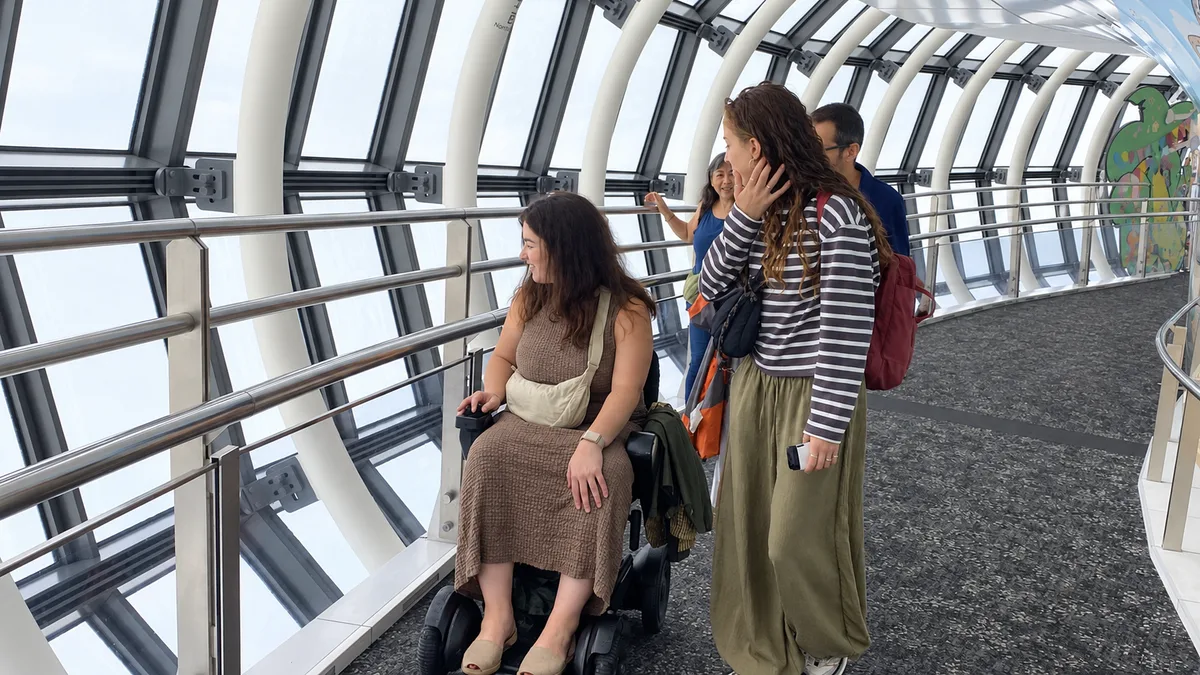
What our partner in Japan arranges
- Hotel rooms checked in person. Our partner has visited more than 75 hotels in Tokyo, Fuji and Hakone, Kanazawa, Kyoto, Osaka and Hiroshima. For each accessible room they record what decides a stay: door widths, bed height, space to move and transfer, the type of shower and shower chair, and whether an extra bed or a connecting room can be added without blocking the wheelchair route.
- Wheelchair accessible vehicles. Lift-equipped vehicles for airport transfers, journeys between cities and private sightseeing days, arranged with accessible taxi partners in Japan.
- The Shinkansen, with assistance. Tickets with reserved wheelchair spaces, and boarding assistance from station staff.
- Equipment. Hoists and other specialist equipment sourced in Japan, delivered to your hotel and collected after you leave, with the hotel checked first so the equipment fits the room.
- Sights checked for access. Step-free routes, accessible toilets, and the places where surfaces or crowds make a visit hard, so each day is built around what you can reach.
How it works
- Get free trip planning. Choose Japan, your dates and who is travelling. On the step that asks what matters to you, tell us about the wheelchair or your mobility, the pace you enjoy and what your room has to have.
- Your route within 24 hours, usually sooner. A day-by-day plan with recommended hotels by level, in a trip app on your phone. We keep hotel changes and long transfer days down and leave time to rest. Two rounds of changes are included.
- Then, if you want, a quote for the ground services. This is where our partner in Japan checks each room, vehicle and train against your needs and confirms what is possible. You see the exact room type before you book, and you choose what to take.
The plan is your route and your guide. Accessible rooms, vehicles, rail assistance and equipment are confirmed only when we quote and book your ground services, never assumed.
Get free accessible Japan trip planning →
What to tell us
The more we know at the start, the fewer surprises in Japan. These are the questions our partner asks before any accessible trip:
- Your wheelchair. Manual or power. For a power chair, the battery type and whether the battery can be removed.
- In a vehicle. Do you stay seated in the wheelchair, or transfer to a vehicle seat?
- Your room. A roll-in shower or a bath you can transfer into, twin beds or one large bed, bed height, an electric care bed, grab bars, connecting rooms or rooms on the same floor.
- Equipment. Anything you need waiting in Japan, such as a hoist.
- Your party. Who travels with you, and whether one of them is your carer.
- Your pace. How long a sightseeing day can comfortably be, and when you like to rest.
A sample route: Tokyo to Osaka in 14 days
A first trip often follows the classic line: Tokyo, Hakone below Mount Fuji, Kyoto, Hiroshima and Osaka, with a last night in Tokyo before the flight, linked by four Shinkansen journeys. This is the route our partner uses as a starting point, and we reshape it around you. Here is what to know about access along the way, from our partner’s notes on the ground.
Tokyo: 3 nights, and 1 at the end
In Asakusa the main temple courtyard routes are paved, while Nakamise street gets busy and narrow. The Asakusa Culture Tourist Information Center nearby has accessible toilets on floors 1, 4 and 7. One district a day works better than crossing the city.
Hakone, below Mount Fuji: 2 nights
The roads are steep. Choose a Lake Ashi outing or a longer day to Lake Kawaguchi with its own vehicle, not both in one day. A boat ride or an onsen visit needs its own boarding or bathing arrangements.
Kyoto: 3 nights
Kinkaku-ji has a wheelchair route to the pavilion and accessible toilets; the garden beyond has steps, so you return the same way. At Kiyomizu-dera, the upper Chawan-zaka approach leads to the step-free route, with slopes and gravel. Nishiki Market is narrow and crowded. On a day trip to Nara, ask at the Great Buddha Hall ticket desk at Todai-ji for the wheelchair entrance.
Hiroshima: 2 nights
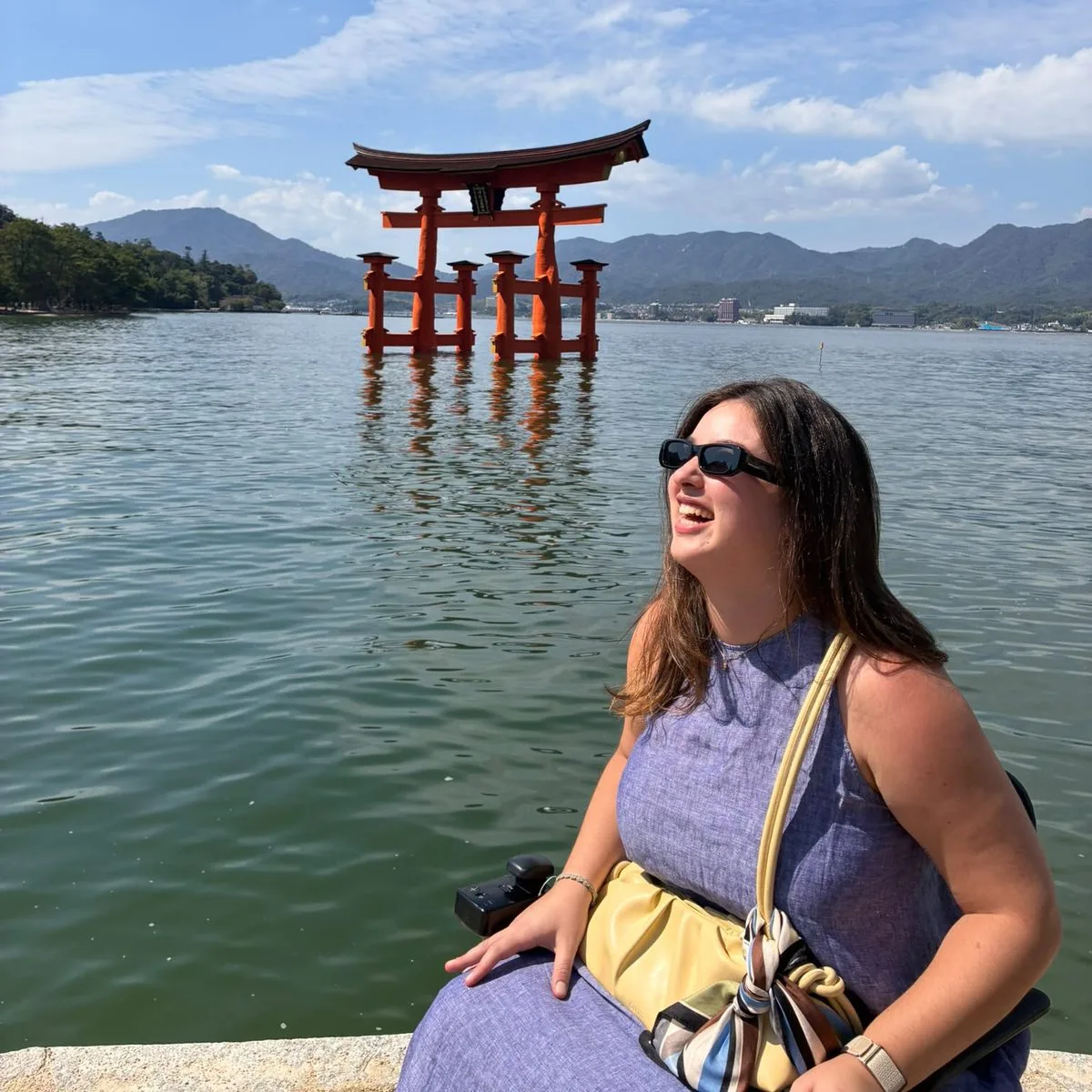
The Peace Memorial Park has paved routes. On the ferry to Miyajima, staff help at the boarding ramp, whose angle changes with the tide, and the Matsudai ferry Aki has wheelchair spaces and an accessible toilet on its lower deck. The shrine has wooden floors with small gaps.
Osaka: 2 nights
At Osaka Castle, staff help wheelchair visitors with the lifts up to the eighth floor, and the park is large, with ramps. Dotonbori is crowded after dark, so an early dinner is more comfortable.
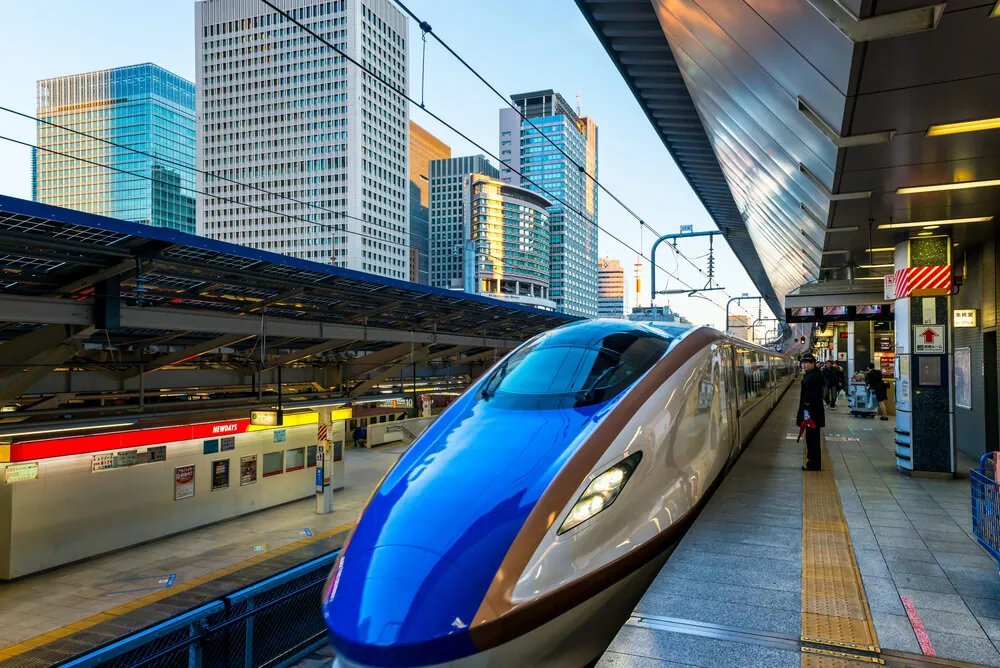
The four Shinkansen journeys are Mishima to Kyoto, Kyoto to Hiroshima, Hiroshima to Shin-Osaka and Shin-Osaka to Tokyo. The ride from the hotel to the station is separate from the train ticket, so we plan that vehicle too and leave time for station lifts. For the standard version of this route, see classic Japan in 14 days.
Accessible rooms are not all the same
In Japan, an accessible room is not one standard. On our partner’s sample route alone, the Kyoto room has a roll-in shower and a separate bathtub, while the Hakone room has a shower over the bathtub, so a bathing transfer is needed. The Hiroshima room has an electrically adjustable bed. Room and bathroom doors on that route measure between 80 and 88 centimetres. That is why each room is checked against your needs before we book it, and why we tell you the room type, not only the hotel name.
What is harder, and how we plan around it
- Old streets and markets. Places like Nakamise in Tokyo and Nishiki Market in Kyoto are narrow and crowded. We keep these visits short and early.
- Temples and gardens. Gravel, slopes and steps often begin where the main route ends. We choose the approach without steps and tell you plainly where it stops.
- Mountains. Hakone’s roads are steep, so we plan one area a day, with a vehicle and breaks.
- Hot springs. An onsen visit needs its own bathing arrangements. If a hot spring matters to you, tell us and we check what is possible.
Why plan it with Go East
We have planned private trips across Asia since 2018, with a team member in Japan alongside our Japan specialists. For accessible travel we work with a local partner who specialises in it: a Japan travel company that arranges wheelchair accessible trips for travel agencies around the world. Trips they have run include a five-week stay in Tokyo for a guest using a power wheelchair and a hoist, in the same room for all 34 nights, with the hoist delivered and collected; and a 15-day trip through Tokyo, Kyoto, Osaka and Hiroshima that combined a conference with a family holiday and was adapted to the rain forecast along the way.
Frequently asked questions
Is Japan wheelchair friendly?
Can you book a hotel room with a roll-in shower?
Can I stay in my wheelchair in the vehicle?
Can I travel with a power wheelchair?
Can you arrange a hoist or other equipment in Japan?
Is a carer or personal care included?
When is accessibility confirmed, in the plan or later?
Plan your accessible Japan trip
Start with free trip planning. Tell us about your wheelchair, your room and your pace in the questionnaire, get your route within 24 hours, usually sooner, and then, if you want, a quote for the ground services with our partner in Japan.
Get free accessible Japan trip planning →
Not ready yet? See a sample plan, or read more on our Japan travel page and in the complete Japan guide.