

The best time to visit Vietnam for a first trip is March and April, when the north, the centre and the south are all in reasonable shape at the same time. October and November are the finest months in the north but the riskiest in the centre, where the rains and the floods arrive. December to April is the dry season in the south. Vietnam is long enough to hold three climates at once, so the real question is not which month, but which month for which region, and where Tet falls.
This is the calendar our consultants work from, written by the team in our dedicated local office in Hanoi. The climate figures are the official 1991 to 2020 averages, and the holiday and visa details were checked in October 2026.
The year at a glance
| Month | North | Centre | South |
|---|---|---|---|
| January | Cold, grey, damp | Cool, showery | Dry and warm, the peak |
| February | Cool, misty, improving | Drying out | Dry and warm |
| March | Mild, crachin drizzle | Good | Hot and dry |
| April | Warm and pleasant | Very good | The hottest month |
| May | Hot, first storms | Very good | Rains begin |
| June | Hot and wet, terraces green | Hot, dry, beach weather | Wet afternoons |
| July | Hot, wet, typhoon risk | Very hot, dry | Wet afternoons |
| August | Hot, wet, typhoon risk | Very hot, dry | Wettest, still workable |
| September | Terraces gold, storms | Flood season begins | Wet, easing |
| October | The best month | Worst of the flooding | Drying out |
| November | Excellent, dry and clear | Still unreliable | Dry season starts |
| December | Cold and grey again | Cool, showery | Dry and warm |
The north: Hanoi, the bays, Ninh Binh, Sapa, Ha Giang, Pu Luong
The numbers tell the story of the north better than any adjective. In Hanoi the average high is about 68 F (20 C) in January and 95 F (35 C) in June, and the rain is concentrated in summer: around 250 to 275 mm a month from June to August, against about 20 mm a month in December, January and February. Winter here is dry but grey; summer is green and wet.
December to February is winter, and visitors from warm countries are consistently caught out by it. Hanoi sits around 57 to 68 F (14 to 20 C) and can stay under 50 F (10 C) for days beneath low grey cloud. The mountains are colder again, occasionally near freezing, and views can be under cloud for a week. Hotels here are not heated to the standard a European expects, and the damp makes it feel colder than the number.
March and April bring the crachin, the fine persistent drizzle that sits on the bays and makes the karst either atmospheric or invisible, depending on the hour. Temperatures climb into the seventies and eighties Fahrenheit (low to high twenties Celsius). A good window, not a perfect one.
May to September is hot and wet, above 95 F (35 C) in July, with humidity that makes the middle of the day unusable. Rain comes in heavy bursts rather than all day. Typhoons cross the Gulf of Tonkin between July and October and close the bays, sometimes for two or three days at a time. The compensation is the far north: the rice terraces are green in June and turn gold in late September, which is the finest fortnight of the year in Ha Giang.
October and November are the best weeks in the north, without argument. Dry, clear, in the seventies Fahrenheit (low twenties Celsius), with reliable mountain roads. This is when we send people to Ha Giang.

The centre: Hue, Danang, Hoi An, Phong Nha
February to August is dry, and genuinely so. April to June is the sweet spot: hot, bright, with the sea warm and the Ancient Town at its best early in the morning. July and August are very hot and the beaches earn their keep.
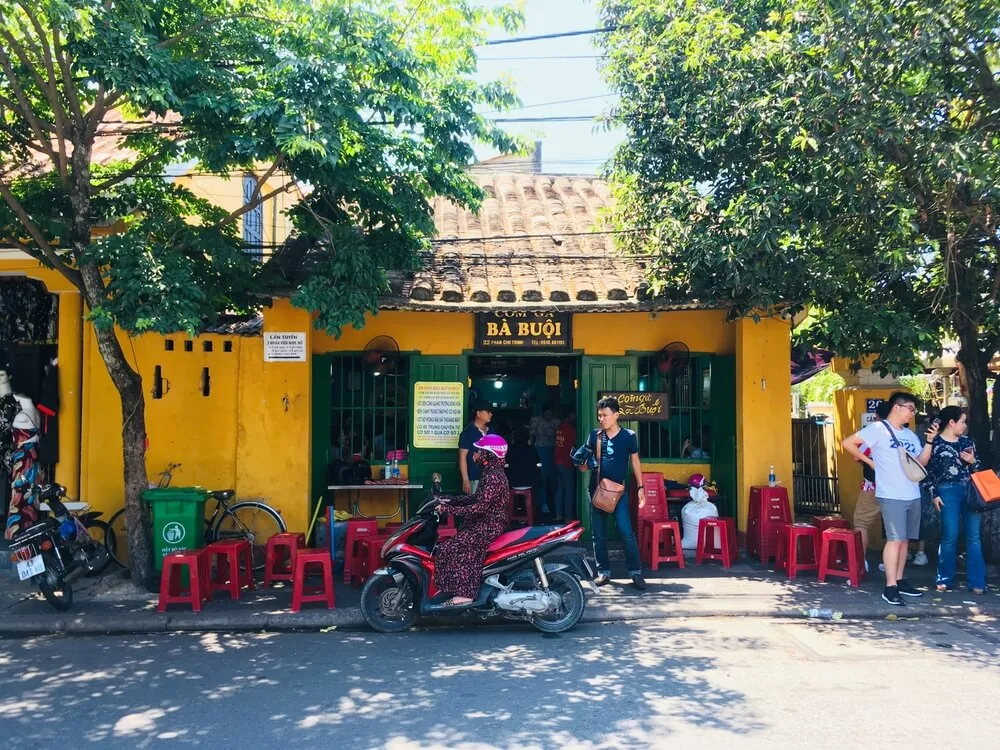
September to December is the problem window, and it is the single most important thing to understand about Vietnamese planning. The central coast takes its rain in one block, typhoons make landfall between September and November, and Hoi An floods. Not metaphorically: the Ancient Town goes under water most years, shops move their stock upstairs and carry on, and boats replace bicycles in the lanes. Roads close and flights into Danang are cancelled. October and November are the worst of it.
This is the awkward fact of the country. The months that are perfect in the north are unreliable in the centre. We handle it by building the central days so they can move, sometimes by putting Hoi An early in the route so a flood has somewhere to go, and by telling you in advance rather than afterwards. More on how the centre works in Hoi An and the centre.
The south: Ho Chi Minh City, the Mekong Delta, Phu Quoc, Con Dao
Warm all year at 82 to 95 F (28 to 35 C), with no cold season at all.
November to April is the dry season and the best time to be here, with March to May the hottest stretch. May to October is wet, though not in the way people fear: a heavy downpour in the late afternoon, then it clears. It rarely wrecks a day, rates are lower and the delta is greenest.
Phu Quoc follows the same pattern. Con Dao runs the other way and is at its best from March to September, which is occasionally useful when nothing else lines up.

Tet, and why it changes everything
Vietnamese Lunar New Year moves each year between late January and mid February, and it is the most disruptive week in the calendar. In 2027, Tet falls on Saturday 6 February. The labour ministry has backed a public holiday from 4 to 10 February 2027, and in practice the slowdown starts a few days before and lasts a few days after.
In the days around it, most family-run restaurants close, many shops shut, museums close for several days, domestic flights and trains sell out months ahead at roughly double the fare, and staff go home to their villages. The country is not shut, exactly, but it is not open for business either.
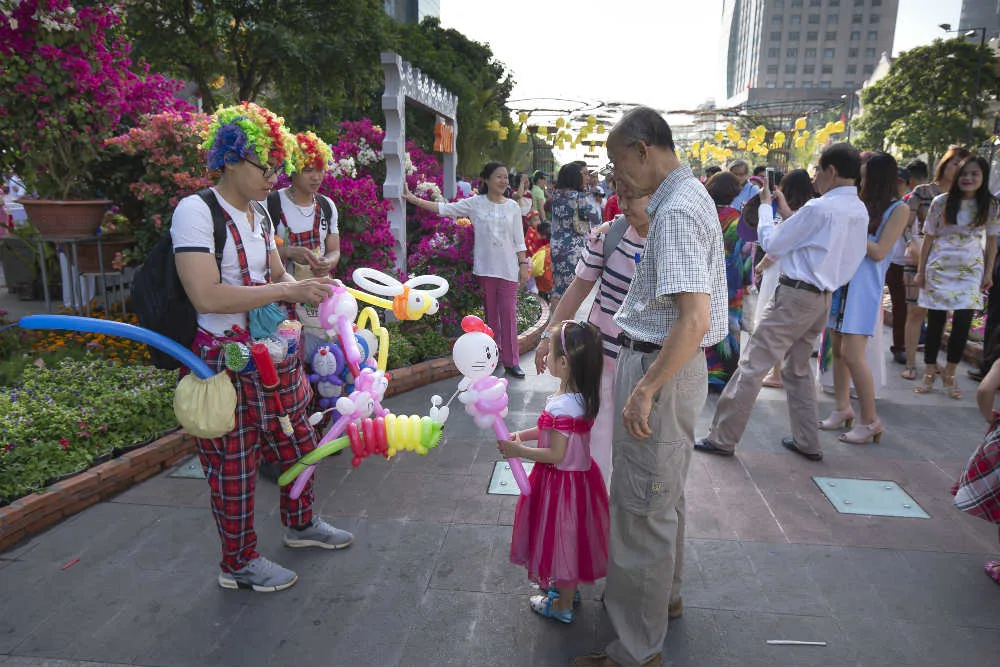
The week before Tet is genuinely worth seeing: flower markets, kumquat trees on the back of motorbikes, a whole country in motion. Travelling through Tet without knowing it is Tet is a bad holiday. Because the date moves with the lunar calendar we always check where your dates fall before quoting, and we say so plainly if they land badly. The other domestic peaks are 30 April with 1 May, and 2 September.
So which month would we pick?
March or April. The fewest compromises anywhere in the country: the north in its shoulder, the centre dry, the south dry. This is our default recommendation for a first two-week trip and it is what sits behind classic Vietnam in 16 days.
October or November. The best possible north, and a real risk in the centre that we route around. If the northern mountains are the reason you are going, take this window and accept that Hoi An may need to move.
June to August. A different trip, and a good one: less city, more coast and mountain, early starts, and the far north when the terraces are green. Rates are lower and the bays are busier with domestic travellers.
December and January. Excellent in the south, cold and grey in the north. If your dates are fixed here we would weight the route southwards rather than pretend Hanoi will be pleasant.
Visas, whatever the month
Some passports can enter Vietnam visa-free for a limited stay; most travellers apply for the e-visa, which is valid for up to 90 days, single or multiple entry, and is issued through the official portal evisa.gov.vn. Allow at least a week before you fly, and longer before Tet. This was correct in October 2026; check again before booking.
Travelling with children, or for the first time?
School holidays usually fall in the hardest months, July and August in the north and December in the centre, so families need the route to bend around the weather more than anyone. We cover that in Vietnam with children. If this is your first trip, Vietnam for the first time explains what actually surprises people.
What the month does to the price
Peak in the south and the centre is roughly December to March, and peak in the north is October and November. The bays and the best small hotels are where the seasonal difference bites hardest, and Tet raises domestic flights sharply. A June trip at the same hotel standard can be twenty to thirty percent cheaper than the same route in March. Our Vietnam cost article works through the whole budget.
Plan this trip
Tell us your dates and the places you want to see, and we build your trip as a $39 day-by-day plan, with recommended hotels by level and every transfer set out step by step.
Keep reading
- Vietnam, the complete guide to planning your trip
- What does a trip to Vietnam cost?
- Hoi An and the centre, honestly
- Ha Long, Bai Tu Long or Lan Ha?
- Vietnam for the first time
- Classic Vietnam in 16 days