The reasoning matters more than the route, because the reasoning is what tells you when to deviate.
The constraint that shapes everything
In most countries a route is a question of what you want to see. Here it is a question of how many times you are willing to go to an airport.
Domestic aviation in the Philippines is a hub network, not a mesh. Almost every island change means flying into Manila or Cebu and out again, and each change consumes five to seven hours of daylight once you count the road transfer, the check-in window, the wait for bags and the boat or van at the far end. Three island moves in a fortnight is roughly two days of your holiday spent moving.
So the route below has two flights, and it spends what it saves on staying still. The full arithmetic is in the internal flight problem.
Manila, 2 nights. El Nido and Palawan, 5 nights. Bohol and Cebu, 6 nights. One buffer night in Cebu or Manila before flying home.
Why Manila first, and only two nights
Manila goes first for the same reason Bangkok does: jet lag. Your first day after a long-haul arrival is not a day you want to spend on a domestic connection to a small island.
Two nights, which is one full day, is the right amount. That day is Intramuros and San Agustin church in the morning, the National Museum of Fine Arts in the middle of the day when it is hot, and a Binondo food walk through the oldest Chinatown in the world in the late afternoon. It is a genuinely good day and almost nobody plans it, because Manila arrives on people’s lists as an airport.
What we would not do is put Manila at the end. It is a better opening than a closing, and the end of the trip needs to be somewhere you can absorb a delay.
Why Palawan second, and five nights
Palawan is the reason most people come, and it holds five nights comfortably because it contains two different places.
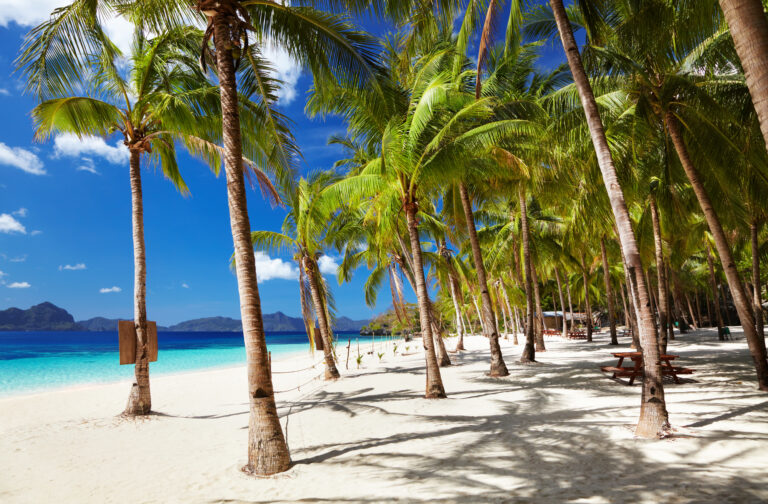
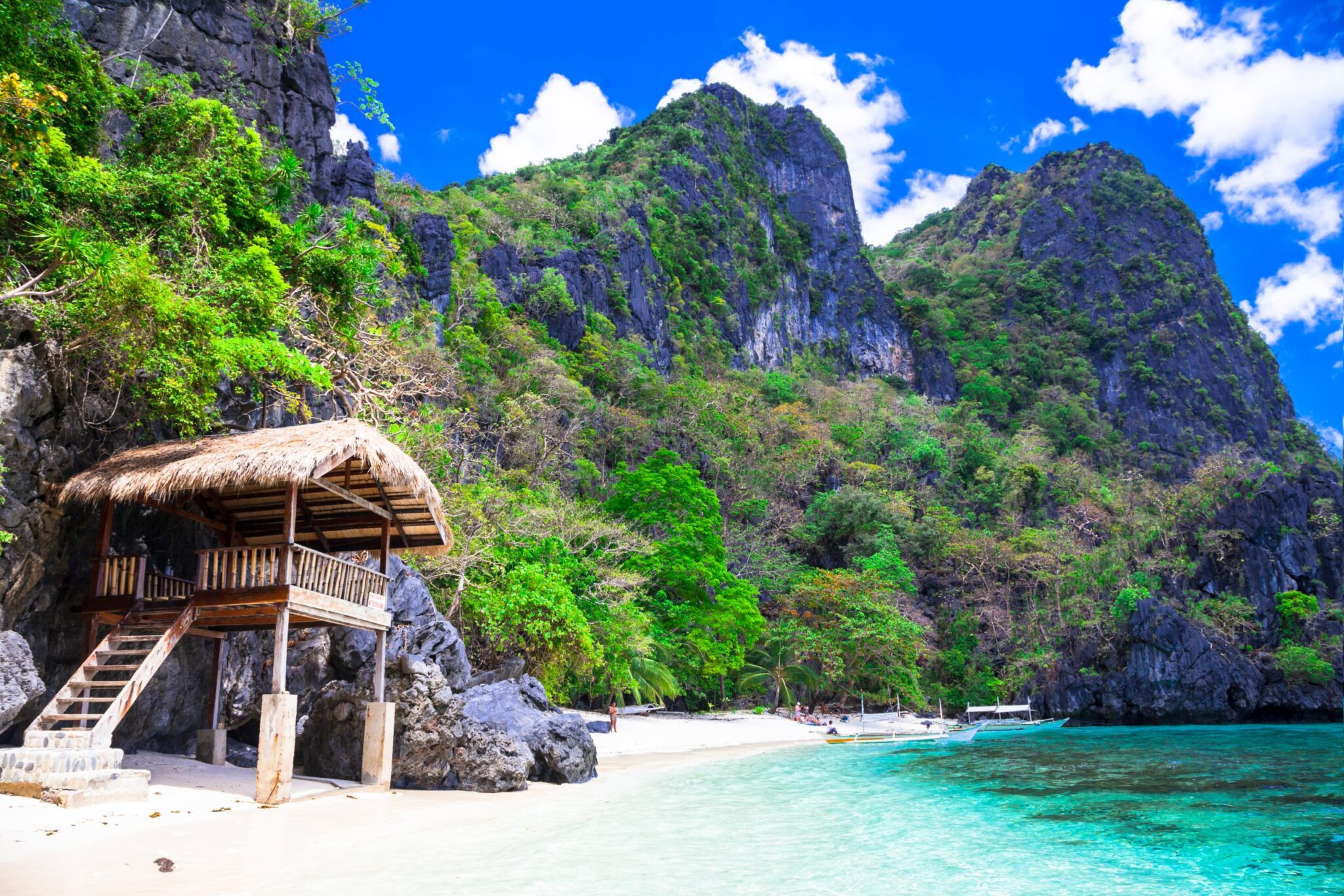
El Nido, where limestone towers rise straight out of Bacuit Bay, and the island-hopping is the best in the country. Three nights. Choose a resort on a beach outside El Nido town, because the town itself is busy and scruffy with a small beach and heavy traffic, and the bay is the reason to be there.
Coron, to the north, quieter, with the Japanese fleet sunk in 1944 on the seabed and the Kayangan and Barracuda lakes, which are among the most striking swims anywhere. Two nights.
The two are connected by a fast craft, three and a half to four hours, or a short flight. That means you get two very different landscapes without touching a hub, which is why Palawan is such an efficient use of five nights. The fast craft is suspended whenever the coast guard declares the sea unsafe, so the alternative is written into your document rather than left to the day.
Take private bangkas rather than joined island-hopping tours. A private boat with crew and lunch runs $120 to $180 for the whole boat against $25 to $45 per person for a joined seat, and you arrive at each stop before or after the flotilla. It is the single biggest quality difference in a Philippines trip.
Why Cebu and Bohol third, and six nights
Because it is the one pairing in the country joined by a ferry rather than a flight. OceanJet between Cebu City and Bohol takes about two hours, it is comfortable, and it beats flying.
That means six nights across two islands costs you one flight rather than two, which is why this pairing appears in so many of our routes.
Bohol, four nights. The Chocolate Hills, tarsiers at the Corella sanctuary rather than the roadside operations, the Loboc river, and Panglao’s beaches with diving off Balicasag. Panglao is the base.
Cebu, two nights, or none if you prefer more beach. Moalboal’s sardine shoal, which is a short swim from shore and one of the easiest good dives in the country, Kawasan canyoneering for anyone who wants it, and the best lechon in the Philippines.
The route, day by day
| Days | Where | What happens |
|---|---|---|
| 1 | Manila | Arrive, recover, an early dinner |
| 2 | Manila | Intramuros, the National Museum, a Binondo food walk |
| 3 | Fly to Palawan | Manila to El Nido or Puerto Princesa, transfer, settle in |
| 4 | El Nido | Private bangka day in Bacuit Bay |
| 5 | El Nido | Nothing scheduled, or a second boat day |
| 6 | Coron | Fast craft or short flight, afternoon in town |
| 7 | Coron | Private boat to the lakes and one wreck |
| 8 | Fly to Bohol | Via Manila or Cebu, arrive Panglao in the afternoon |
| 9 | Bohol | Chocolate Hills, Corella tarsiers, the Loboc river |
| 10 | Bohol | Diving or a beach day, nothing scheduled |
| 11 | Bohol | Nothing scheduled |
| 12 | Cebu | OceanJet ferry, then south to Moalboal |
| 13 | Cebu | Sardine shoal, or canyoneering |
| 14 | Cebu City | Buffer night near the airport, fly home the next morning |
Three bases, two flights and one ferry over fourteen days. Classic Philippines in 14 days is this route written out with the flight numbers and the boat departure times.
The buffer night is not optional
We will not put a domestic Philippine flight on the same day as an international departure. Weather cancels small-aircraft routes at short notice, Manila’s terminals are separate buildings sometimes requiring a road transfer through the city’s traffic, small aircraft on thin routes get bumped, and domestic baggage is rarely through-checked.
One night in a hotel near the airport converts a category of disaster into an inconvenience. When a client asks us to remove it, we explain, and then we write into the file that we advised against it.
Three variations we build often
If you want fewer flights. Cebu, Bohol and Siquijor, all connected by ferry, with no domestic flight in the middle at all. Ten to twelve days, three islands, and an unusually good ratio of holiday to transit. This is our recommendation for anyone who hated the sound of the paragraph above.
If you are a diver. The route changes completely, because the dive sites have their own calendar. Malapascua for thresher sharks on a dawn dive, the Coron wrecks, Apo Island for turtles, Anilao for macro, and Tubbataha if your dates fall between mid-March and mid-June. Diving the Philippines, 14 days sequences those around the seasons.
If you want Siargao. It is worth the flight and it costs a full transfer day each way, which means it replaces one of the three bases rather than joining them. Palawan and Siargao, 14 days is the harder route with more airport time, and we would take it at eighteen days rather than fourteen.
The alternatives, named honestly
Adding Boracay. White Beach is genuinely one of the great beaches in Asia. It is also crowded, built up hard behind the sand, and a separate flight. If you want a beach with restaurants, watersports and no effort, it is excellent. If you came for empty coastline, we will send you elsewhere.
Adding north Luzon. The Cordillera rice terraces and Vigan are the part of the country that most changes what people think it is, and they are a long land journey rather than a flight. This is an eighteen to twenty-one day proposition, and it is the best use of a third week. Deep Philippines in 21 days does it.
Four islands in fourteen days. We will build it and we will tell you what it costs, which is two full days plus a shortened stay at every base. Our standing view is that the itinerary with one island fewer is better, and almost nobody who took that advice has regretted it.
Which months this route works in
February to April is the reliable core, with January excellent and cooler and May hot but dry. June and July are good value with some lost boat days. August to October is typhoon peak, and this route holds up better than most because Palawan sits on the sheltered western edge, but we would weight it further west and carry more slack. The full calendar is in the Philippines month by month.
Plan this trip
Tell us your dates and the places you want to see, and we build your trip as a $39 day-by-day plan, with recommended hotels by level and every transfer set out step by step.
Keep reading
- The Philippines: the complete guide to planning your trip
- The internal flight problem nobody warns you about
- Palawan, Siargao or Bohol: which island suits which traveller
- The Philippines month by month
- Classic Philippines in 14 days
- All our Philippines trips