It is the most useful base in the country: a small town at the eastern end of Issyk-Kul with the best food in Kyrgyzstan, three mountain valleys running south from it, an animal market that starts before dawn on Sundays, and enough of its own history to fill a day when the weather closes in. Almost every route we build gives it three nights, and clients almost never ask us to cut one.
The lake it sits on deserves its own decisions, chiefly which shore to stay on, and that decision has a clear right answer that most itineraries get wrong.
Issyk-Kul, and which shore
The second largest alpine lake in the world, about 110 miles (180 km) long, sitting at 5,300 feet (1,600 m), slightly saline and warmed by geothermal activity such that it never freezes. The name means warm lake. It reaches around 68°F (20°C) in August, which is warmer than a lake at that height has any right to be, and it swims well.
The north shore. Developed, and in July and August full. Cholpon-Ata is a domestic beach town with the holidaymakers of Kazakhstan and northern Kyrgyzstan in it, plus a strip of sanatoria, apartment blocks and beach clubs. It also has the petroglyph field, a scatter of Bronze Age and Saka carvings on glacial boulders, which is mildly interesting and takes forty minutes.
The south shore. Quieter, drier, browner and better. Fewer hotels and a handful of good ones. The red canyons at Skazka, eroded into shapes that keep children busy for an hour. Bokonbaevo, where the eagle hunters are. Villages with guesthouses and nothing else. The mountains sit closer to the water on this side and the road is emptier.
Our answer: stay on the south shore, drive the north shore if the route requires it, and stop at Burana Tower on the way through rather than at Cholpon-Ata. The only reason to stay north is if you want the sanatorium experience, and one night in a Soviet-era sanatorium is a genuinely interesting night, in the way that a large decaying building full of mineral baths and 1970s mosaics is interesting.
A note on the water. The lake is deep, cold below the surface layer and can get choppy in the afternoon wind. Swim in the morning and stay in your depth.
Karakol itself
A Russian garrison town founded in 1869 at the eastern end of the lake, which grew with Russian settlers, then Dungan refugees from China, then Uighurs, then Soviet planning, and the mix is the point. It is the most religiously and ethnically layered place in the country and it is small enough to walk across in half an hour.
The Holy Trinity Cathedral. Wooden, Russian Orthodox, rebuilt after an earthquake, painted and shingled, and used. Go in.
The Dungan mosque. Built between 1907 and 1910 by a Chinese architect for the Dungan community, in the form of a Chinese temple: upturned eaves, painted brackets, carved wooden columns, no nails and no minaret in the usual sense. It is the single most surprising building in Central Asia and it takes twenty minutes.
The Przhevalsky memorial. Four miles (6 km) out of town on the lake shore, the grave and museum of the Russian explorer who mapped much of Central Asia and after whom the wild horse is named. A period piece, and it explains a lot about how this region was surveyed and by whom.
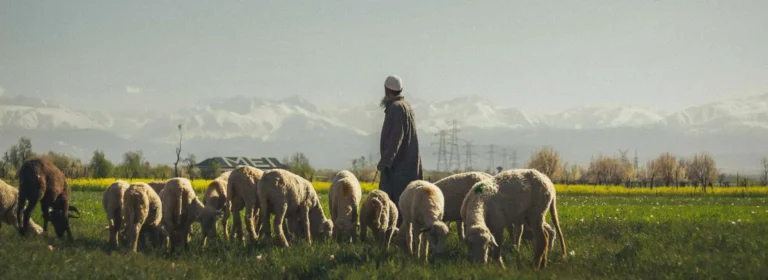
The Sunday animal market. The reason to arrange your Karakol nights around a Saturday. It starts before dawn on the edge of town and runs until mid-morning: sheep, horses, cattle, tack, saddles, felt, hats, and several hundred men in the middle of a serious negotiation. Nothing about it is arranged for visitors. Go at six, take a guide who can explain what a good horse costs, and be finished by nine.
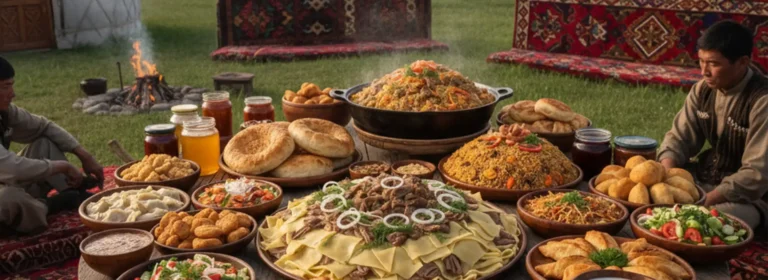
The food. The best in the country and cheap. Ashlan-fu, the Dungan cold noodle dish, at a market stall for a dollar or two. Laghman everywhere. Dungan family restaurants, a couple of good modern places and beer brewed in town. Detail in what to eat in Kyrgyzstan.
The three valleys
This is why three nights rather than two.
Jeti-Oguz. Half an hour from town. Red sandstone ridges, the Seven Bulls and the Broken Heart, a valley running back into the mountains with a rough road up it and walking at the top. Half a day, or a full day if you walk to the Kok-Jayik meadow.
Altyn Arashan. Hot springs in a valley at about 8,200 feet (2,500 m), reached up a track that takes two hours to cover ten miles (16 km) in a Soviet-era vehicle that will make you laugh. That drive is the experience rather than a complaint. There are simple guesthouses and bath houses at the top and you can stay the night, which we recommend for anyone who likes their travel a little rough at the edges. Otherwise a long day.
Ala-Kul. The country’s signature trek: two or three days from Karakol over a pass at about 12,500 feet (3,800 m) to a turquoise lake, usually coming down into Altyn Arashan. It is a real trek, with a serious pass, camping or basic huts, and it is where fit walkers should spend their days. The comparison against other Asian treks is in trekking in Asia compared.
Jyrgalan, an hour east, is the fourth option and the coming one: an old coal-mining village that reinvented itself around trekking, with the best-marked trail network in Kyrgyzstan, guesthouses in the village and day walks that need no camping.
How many nights, and where they go
Three nights in Karakol and two or three on the south shore is the shape we build.
- Two nights in Karakol buys the town and one valley.
- Three nights buys the town, two valleys and the Sunday market if the days line up.
- Four nights is right if you are walking Ala-Kul or basing in Jyrgalan.
On the shore, two nights is a swimming day and a canyon. Three is a swimming day, a canyon and an eagle demonstration at Bokonbaevo, and it is the pace we use for family trips, described in Kyrgyzstan with children.
Getting there from Bishkek is about six hours on asphalt along the north shore, or seven along the south with the Burana stop. Both are full days. From Karakol onward to Song-Kul is seven hours, which is the longest leg on a northern route and the argument for going in one direction rather than doubling back. The full fortnight is in the best two weeks in Kyrgyzstan.
When to come
The lake has a longer season than the mountains, which is useful.
June. Green, the rivers high, the water still cold for swimming and the valleys at their best.
July and August. Warm, the water at its best, the north shore full and the south shore fine. The valleys are open and the high trek to Ala-Kul is at its most reliable.
Early September. Our own preference, here as elsewhere. The domestic holiday is over, the light is long and gold and the water is still warm.
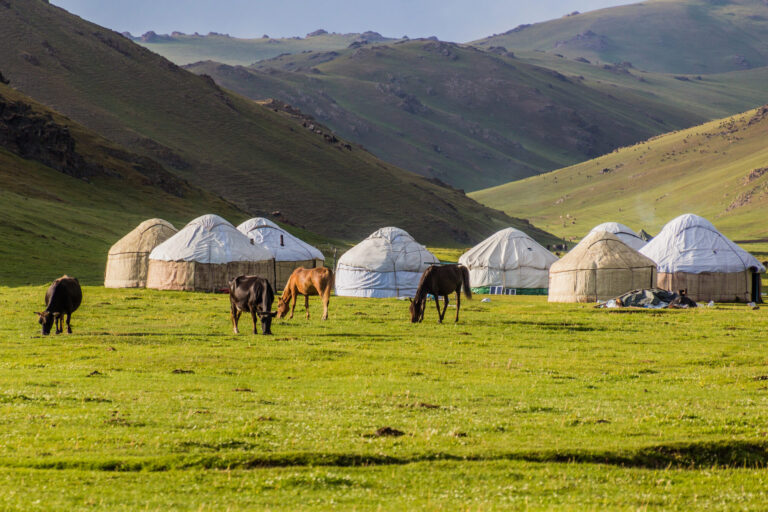
October. Autumn colour in Jeti-Oguz and Altyn Arashan, cold clear days, empty. The yurt camps are down by now, so this is a lake-and-valleys trip rather than a jailoo one, and it is underrated.
November to May. The lake shore stays reachable all winter, the valleys shut down, and Karakol becomes a ski town with genuinely good snow and genuinely old lifts. A different product, and the calendar is in Kyrgyzstan month by month.
What we would skip on the lake
The Cholpon-Ata petroglyphs, unless you are already stopping. A boulder field with carvings you need a guide to find, and forty minutes you could spend swimming.
The north shore beach clubs. Loud, crowded in August, and not what you flew here for.
The lake cruise. A boat, a lake, an hour, no landings. The lake is better from the shore.
Radon baths at a sanatorium. Available, and we do not recommend a course of them to visitors. The building is the reason to go, not the treatment.
Where to stay
Karakol. Comfortable small hotels and good guesthouses, all within walking distance of the market and the food. There is nothing luxurious here and there does not need to be.
South shore. A handful of modern lakeside hotels, one or two genuinely good, plus village guesthouses. These book out for July and August five months ahead.
Altyn Arashan. Basic guesthouses beside the hot springs, shared facilities, a stove and an extraordinary position. One night, for people who will enjoy it.
Jyrgalan. Village guesthouses, simple and warm, run by families who used to work in the mine.
Plan this trip
Tell us your dates and the places you want to see, and we build your trip as a $39 day-by-day plan, with recommended hotels by level and every transfer set out step by step.
Keep reading
- Kyrgyzstan: the complete guide to planning your trip
- The best two weeks in Kyrgyzstan
- What to eat in Kyrgyzstan
- Classic Kyrgyzstan in 10 days
- Song-Kul and horse trekking, honestly
- All our Kyrgyzstan trips