- Duration
- 10 days
- Pace
- Demanding
- Hotel changes
- 5
- Best months
- May, Jun, Sep, Oct
- From
- $2,100 per person
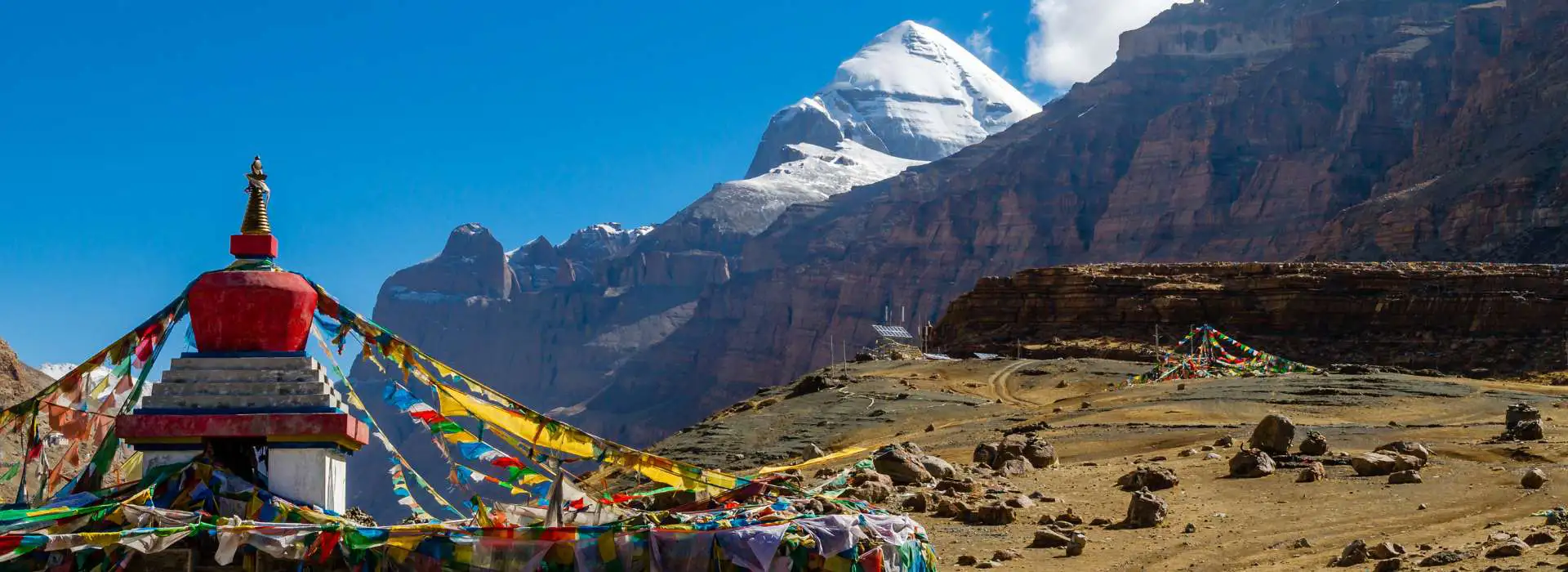
The north side of Everest is reached by vehicle, over passes above 17,000 feet (5,180 m), across two days of plateau driving, to a monastery and a plain of scree where the north face fills the end of the valley. There is very little trekking in it. What there is instead is altitude, distance, cold, and a night in accommodation that is the least comfortable most travellers will ever experience, in exchange for a mountain view that is among the two or three best on earth when the sky is clear.
The two conditions in that last sentence matter. When the sky is clear. We will tell you honestly what the odds are for your dates before you commit, and we will tell you that September and October are the months with the best of them.
Ten days, five hotel changes, two long driving days, and two acclimatisation days at the start that are not removable.
Who it suits: travellers who have handled altitude before or are prepared to find out carefully, and who understand that the reward is a view and a road rather than a summit.
Your specialist: Asaf Zamshtein, who runs our China desk, with your named Tibet specialist and our licensed Lhasa partner team.
A note on who is on the ground. We have dedicated local offices in Vietnam and India, our team in Japan, and local representatives in the Philippines. Tibet is not one of them and could not be, because only a locally licensed operator can hold the permits. Your guide and driver are Tibetan, from a Lhasa partner we have worked with for years.
Day by day
Day 1: Arrive Lhasa. Flight from Chengdu, about two hours and a quarter, met and driven into the city, roughly an hour. Nothing scheduled at all. Water, food, early bed.
Day 2: Lhasa, slowly. A late start, one hour on the Barkhor circuit around the Jokhang, a tea house, and back to the hotel by lunch. Afternoon free, indoors.
Day 3: Drepung and Sera. Drepung in the morning, driven high and walked down. Sera in the afternoon for the debating courtyard. Back by five.
Day 4: The Potala Palace. Timed, capped, about an hour inside, several hundred steps to reach it. Afternoon free. This is the last easy day for a while and we schedule it that way on purpose.
Day 5: Lhasa to Gyantse over Kamba La. Six to seven hours with stops. The Kamba La pass at about 15,700 feet (4,790 m) and Yamdrok Lake below it at about 14,600 feet (4,450 m), then the Karo La glacier at around 16,400 feet (5,000 m), which comes down almost to the road.
Night in Gyantse at about 13,050 feet (3,977 m). This is the first test of how you handle a pass, and your guide is watching for it.
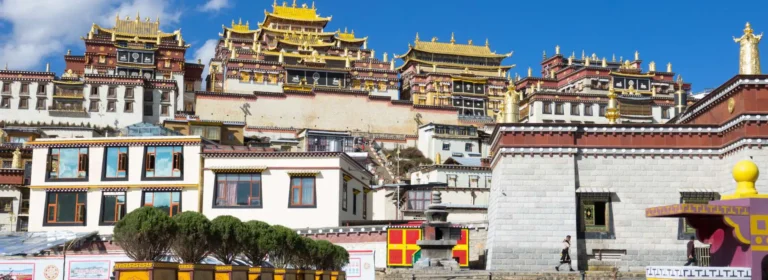
Day 6: Gyantse to Shigatse. A short day, deliberately. Pelkor Chode and the Kumbum stupa in the morning, then ninety minutes to Shigatse and Tashilhunpo monastery in the afternoon. Night at about 12,600 feet (3,840 m), early to bed, because tomorrow is the long one.
Day 7: Shigatse to Rongbuk and base camp. Seven to nine hours on the road, west and then south. The route crosses the Gyatso La pass and then turns off the highway onto the switchback climb to the Gawu La pass at around 17,050 feet (5,200 m), where, on a clear day, four 26,000 foot (7,900 m) peaks including Everest line up along the horizon. It is the single best roadside view in Tibet.
Down and up the last valley to Rongbuk monastery at about 16,340 feet (4,980 m), the highest monastery in the world, and the tourist base camp area a short distance beyond it. Sunset on the north face if the weather gives it to you.
Night at Rongbuk, in the monastery guesthouse or a tented camp. Read the honest notes below before you decide you want this.
Day 8: Sunrise, then back to Shigatse. Out before dawn for first light on the face, which is the better of the two performances. Then the long drive back, seven to eight hours, to a proper hotel, a hot shower and 4,000 feet (1,200 m) less altitude, all of which will feel like a considerable luxury.
Day 9: Shigatse to Lhasa. The northern road along the Yarlung Tsangpo valley, about five hours, lower and gentler. Afternoon free. A last dusk on the Barkhor.
Day 10: Departure. Transfer to the airport, about an hour.
What is included
All permits obtained and delivered before travel, including the Tibet Travel Permit, the travel permits beyond Lhasa and the border permit required for the Everest area. Accommodation with breakfast throughout, described accurately in advance, a licensed English-speaking Tibetan guide and a private four-wheel-drive vehicle with driver throughout, all entries including the timed Potala ticket and the Everest area entry, bottled oxygen in the vehicle and additional supply carried for the Rongbuk night, a written descent plan for every night with distances and driving times, a VPN and the Chinese payment apps set up and tested before you fly, a day-by-day document listing the elevation of every night and every pass, and a WhatsApp group with your consultant and our Lhasa team, with WeChat alongside as a local fallback.
What we would change, and when
- Fourteen days rather than ten? Better in every respect. It adds a night at Tingri to break the drive back, a rest day, and Namtso lake. See Tibet in 14 days.
- December to February? We would not run it. The road is unreliable, the guesthouses at Rongbuk are largely shut and the cold at 16,500 feet (5,000 m) in winter is a different order of thing.
- July or August? The road is usually passable and the mountain is usually in cloud. If your dates are fixed here we will tell you the odds and let you decide, and we will not pretend they are good.
- Not willing to sleep at Rongbuk? Understandable, and there is a version: sleep at Tingri, around 14,100 feet (4,300 m), and drive in for a day visit. Longer in the vehicle, considerably better night, and you lose the sunset.
Honest notes
The Rongbuk night is hard. Basic or shared rooms, thin bedding, no heating beyond a stove, no reliable hot water, pit toilets, and thin cold air at around 16,340 feet (4,980 m). Most people sleep badly and wake with a headache. Nobody who has done it regrets it and nobody describes it as comfortable, and we would rather you knew that from us than found out at the door.
Altitude is the whole risk on this route. Confusion, an unsteady walk, or breathlessness while sitting still means descending immediately, at any hour, and from Rongbuk that means getting in the vehicle in the dark and losing height. Our guide will make that call without asking permission, and if it happens the trip does not go back up.
Two of these days are long. Seven to nine hours in a vehicle on the plateau, with stops, at altitude. The roads are mostly surfaced and in good condition. The distances and the passes are what make the days long, not the surface.
The mountain may not appear. Cloud sits on the north face for days at a time even in a good month. There is no refund for weather anywhere in the industry and we do not pretend otherwise. What we can do is choose your dates well, build the flexibility to wait a few hours, and be straight with you about the odds beforehand.
Permits for this route are more involved, because the Everest area requires a border permit as well as the standard permits, and permits can be suspended at short notice. We monitor it and we tell you as soon as we know.
Built by Asaf Zamshtein, who runs our China desk, and checked with our licensed Lhasa partner before it goes out.