- Duration
- 21 days
- Pace
- Active
- Hotel changes
- 9
- Best months
- Feb, Mar, Apr, May
- From
- $4,410 per person
Planned by: Daniella Eitan, our groups and business manager, who has built this shape of trip repeatedly and who will tell you the thing most three-week Philippines plans get wrong: they try to add islands. This one adds a mountain range instead.
Nine hotels in twenty-one days is more than we normally allow ourselves. Our rule is one move every three days, and this trip breaks it in the north, where the point is a road journey. What we do instead is protect the blocks: three nights in Banaue, four on Panglao, four in El Nido, and no packing inside them. If nine is still too many, the cuts are at the bottom of this page.
Who it suits: travellers with three real weeks, some road-trip tolerance, and an interest in the country rather than only its coastline.
Day by day
North Luzon, days 1 to 10
Day 1: Arrive in Manila. Airport transfer and a hotel in Makati or Bonifacio Global City. Nothing scheduled.
Day 2: Manila. Intramuros and San Agustin church, standing since 1607, then the National Museum of Fine Arts. Late afternoon, a guided food walk through Binondo, the world’s oldest Chinatown, founded in 1594, which is the best introduction to Filipino eating there is.
Day 3: Pampanga, then north to Banaue. A market walk and a private Kapampangan lunch in the province Filipinos treat as their culinary capital, then the long drive up into the Cordillera, seven to eight hours with stops. There is a night bus and we do not use it. Three nights in Banaue.
Day 4: Batad. Down into the amphitheatre: twenty to forty minutes on foot from the saddle above the village, into stone-walled terraces farmed continuously for around two thousand years. Batad is one of the clusters actually inscribed by UNESCO as the Rice Terraces of the Philippine Cordilleras. The Banaue roadside viewpoint most photographs show is not. Walk the irrigation walls with an Ifugao guide, lunch in the village, climb back in the afternoon.
Day 5: Hungduan and Hapao. The quieter western terraces, where you can walk village to village without meeting anyone, ending in the hot springs in the river at the valley floor. Easier than yesterday and, for many of our travellers, better.
Day 6: Banaue to Sagada. Three hours across the mountains through Bontoc. Afternoon in Echo Valley, where coffins hang on the limestone cliffs, a burial practice the Igorot still occasionally use. Two nights.
Day 7: Sagada. Sumaguing cave in the morning, which involves scrambling and cold water and is not for anyone unsteady, or the gentler Lumiang burial cave instead. Afternoon at a weaving workshop and a coffee roastery.
Day 8: Sagada to Vigan. Six hours west over the Bessang Pass and down to the coast, one of the great drives in the country. Calle Crisologo after dark, when the day visitors have gone, is the Vigan worth seeing. Two nights.
Day 9: Vigan. A UNESCO World Heritage town because it is the best-surviving Spanish colonial trading settlement in Asia and because its merchant houses are still lived in. A burnay pottery where jars are thrown and fired as they were in the eighteenth century, an abel weaving workshop on foot-powered looms, and empanada and longganisa at the market.
Day 10: Ilocos Norte, then the flight south. Santa Maria church on its hill and Paoay with its coral-stone buttresses, both on the UNESCO baroque churches list, and the Kapurpurawan rock formation on the coast. Up to Laoag for an afternoon flight to Manila, which is the leg that makes this route work and saves an eight-hour drive. Night in Manila.
The Visayas, days 11 to 15
Day 11: Manila to Cebu, then Bohol. A morning flight, an hour and a half. The old city of Cebu with a guide, and lechon for lunch, which is the thing Cebu is genuinely famous for among Filipinos. Early afternoon OceanJet fast ferry to Tagbilaran, about two hours, then a short transfer to Panglao. Four nights.
Day 12: Inland Bohol. The Chocolate Hills in early light, the Philippine Tarsier Sanctuary at Corella, which is the research sanctuary rather than the roadside operations and the only one we use, the Loboc river and Baclayon church. Private vehicle and guide.
Day 13: Balicasag and Virgin Island. Out before six by private boat. Green turtles on the Balicasag wall in the first hour, the sandbar before the day boats, back for a late breakfast. Daily visitor numbers at Balicasag are capped, so this books months ahead.
Day 14: Free day, or Anda. The beach, a dive day, or the two-hour drive to the quiet east coast. After eleven days of moving, most people stay put, and we think they are right.
Day 15: Bohol to Palawan. A full travel day and there is no shortcut: the morning ferry back to Cebu, then a direct flight west to Puerto Princesa. Night in Puerto Princesa, which is a working city rather than a destination and is treated here as exactly that.
Palawan, days 16 to 21
Day 16: Puerto Princesa to El Nido. Five to six hours north by private vehicle up the length of the island, with a coast stop and lunch. We also offer the Puerto Princesa Underground River on this day, a UNESCO site reached by boat from Sabang, and we will tell you honestly that it costs about four hours in permits and queueing and that roughly half our travellers, having heard that, choose the road and the beach instead. Four nights in El Nido.
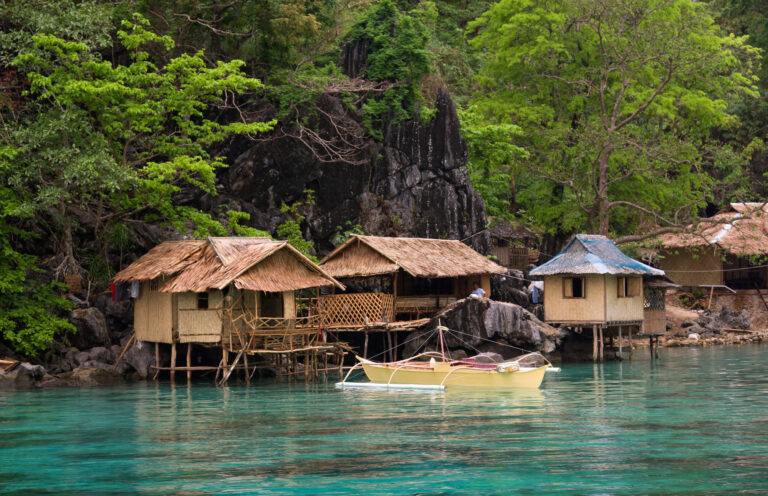
Day 17: Bacuit Bay, the inner islands. Private bangka with crew, out at eight rather than the standard ten. Big Lagoon by kayak at opening, then Small Lagoon, Shimizu and Seven Commandos in whatever order the tide makes sensible.
Day 18: Bacuit Bay, the outer islands. The longer run west to Hidden Beach, Matinloc, Secret Beach and Helicopter Island. The better day of the two and the quieter one.
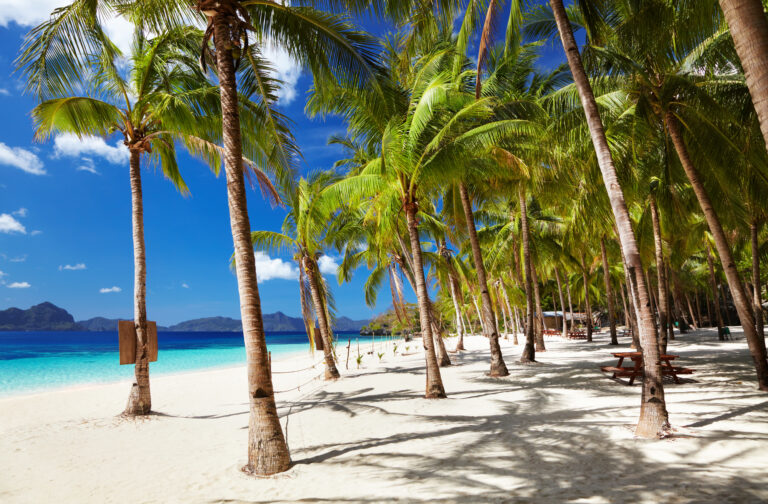
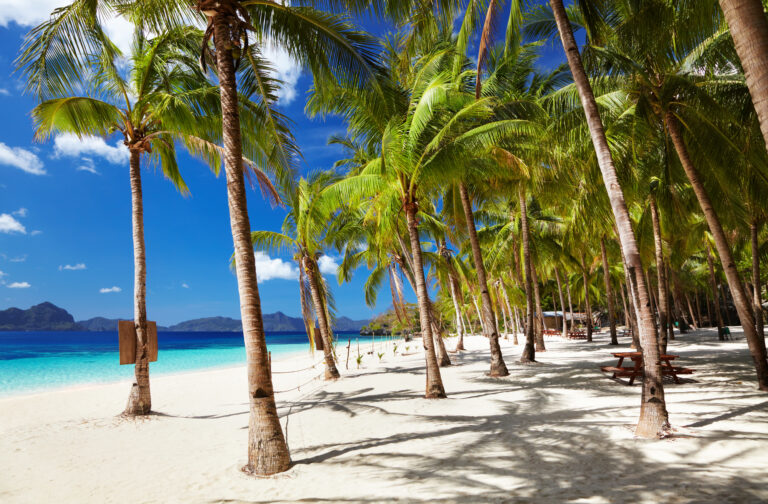
Day 19: El Nido, free. Nacpan Beach, forty minutes north, four kilometres of open sand. Or a dive day, or a kayak morning in the mangroves, or nothing at all after three weeks of doing things.
Day 20: El Nido to Manila. The short flight out of Lio, or the road south to Puerto Princesa if the small aircraft schedule does not work for your dates. Afternoon and a farewell dinner in the capital. This night is not padding: we never put a domestic flight and an international departure on the same day in this country.
Day 21: Departure.
What is included
Accommodation with breakfast throughout, private vehicle and driver for the northern loop and the Palawan road leg, all internal flights, the Cebu to Bohol ferry both ways, three full private boat days with crew and lunch, the Balicasag dawn boat, Ifugao guides in Batad and Hungduan, the Sagada cave guide, the Vigan pottery and weaving workshops, the Kapampangan cooking day, the Binondo food walk, guided days in Manila, Cebu and Bohol, all park, heritage and environmental fees, a day-by-day document with realistic driving times, and a WhatsApp group with your consultant and our local team in Manila for the whole three weeks.
What we would change, and when
- Nine hotels is too many? Cut the Ilocos Norte day and fly out of Laoag on day nine, and cut Puerto Princesa by flying El Nido direct from Manila. That takes it to seven hotels and eighteen days, and it is a better-balanced trip for most people.
- Want the terraces green? February to April, when the crop is up and the walls are flooded. Gold? Late June and early July at harvest, which is beautiful and considerably wetter.
- Want Siargao instead of Bohol? It works, it costs an extra flight and most of a day, and the Visayan half stops being about forests and churches and becomes about surf.
- Travelling August to October? We reverse the halves, do Palawan first while the west settles, and keep the mountains. The Cordillera in the wet season is green, cool, cloudy and largely empty, and it is not a bad trade.