- Duration
- 12 days
- Pace
- Active
- Hotel changes
- 7
- Best months
- Jul, Aug, Sep
- From
- $1,320 per person
This route does both. It is the reason most walkers come to Georgia, and it is a summer trip and nothing else.
Who it suits: walkers who are comfortable with five to seven hours a day on rough paths with a daypack, and who do not need a private bathroom every night. There is no technical difficulty and no altitude problem. There is a great deal of ascent and descent.
Your specialist: a named Georgia specialist here, a licensed Georgian mountain guide with you on every walking day, and our Tbilisi partner running the vehicles and the horse transfers.
Day by day
Day 1: Arrive Tbilisi. Transfer, and nothing. Kit check with your guide in the evening.
Day 2: Tbilisi to Mestia. The long way in: about eight hours by road via Zugdidi, or the small aircraft from Tbilisi in season, which takes an hour and cancels in weather. We book the flight where we can and we build the drive as the fallback, because that flight is not reliable enough to be a plan. Mestia sits at about 4,900 feet (1,500 m). Afternoon at the Svaneti Museum of History and Ethnography, which is small, well done, and the right introduction to what the towers are for.
Day 3: Mestia, acclimatisation walk. Up to the Koruldi lakes on the ridge above the town and back, about six hours and 3,300 feet (1,000 m) of climbing, with Ushba’s two horns opposite for most of it. Or the easier option, the walk out to the Chalaadi glacier, which is four hours and mostly flat. We choose on the day based on how the group is moving.
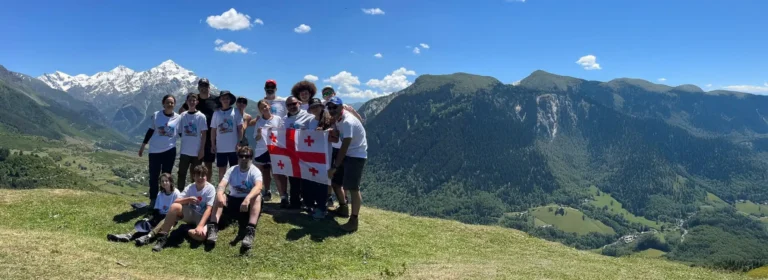
Days 4 to 7: The Mestia to Ushguli traverse. Four days east along the valleys, staying in village guesthouses at Zhabeshi, Adishi and Iprali.
Day four is Mestia to Zhabeshi, about six hours and gentle. Day five is Zhabeshi to Adishi over the Chkhunderi pass at about 8,860 feet (2,700 m), seven hours and the hardest day. Day six is Adishi to Iprali across the Adishi glacier river, which is a genuine river crossing done on horseback with a local horseman for a fee, then over the Chkhutnieri pass, about seven hours. Day seven is Iprali to Ushguli, five hours, arriving at the cluster of four hamlets at about 7,200 feet (2,200 m) under Shkhara, which at 17,040 feet (5,193 m) is the highest mountain in Georgia.
Your bags go by vehicle where the road allows and by horse where it does not. You carry a daypack.
Day 8: Ushguli, and out to Kutaisi. Morning walking up the valley towards the Shkhara glacier, which is flat, four hours return and the best view of the trip. Then the rough road out and the long drive to Kutaisi, about six hours in total. A hotel with a bath.
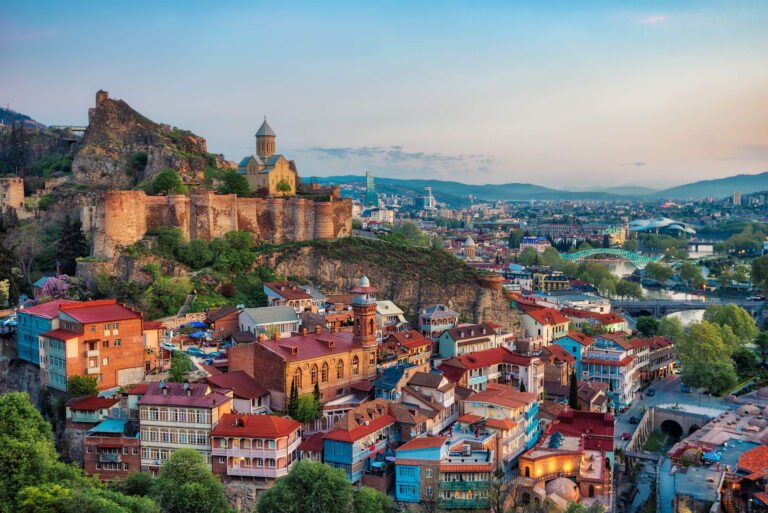
Day 9: Kutaisi to Tusheti is not possible in a day, so: Kutaisi to Telavi. Across the country, about five and a half hours, with the Gelati monastery in the morning to break it. Night in Kakheti at a normal hotel, which is the last one for a while.
Day 10: Telavi to Omalo, over the Abano Pass. The drive. About five hours to cover 45 miles (72 km) in a local 4×4 with a driver who does nothing else, climbing to about 9,350 feet (2,850 m) on a single-track gravel road with drops and no barrier. Arrive Omalo in the early afternoon. Walk up to the Keselo towers above the village in the evening.
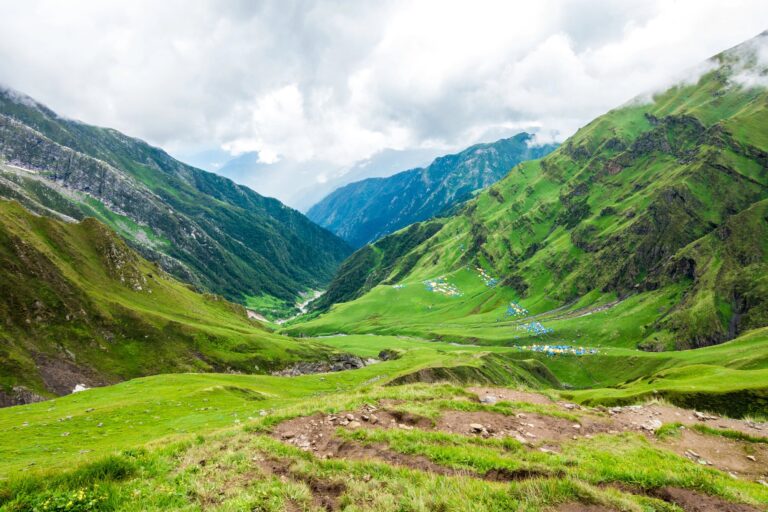
Day 11: Omalo to Dartlo, walking. Six hours along the valley to Dartlo, which is the finest of the Tusheti villages and has been carefully restored in local stone. Guesthouse in the village.
Day 12: Dartlo to Omalo and out, or Dartlo to Tbilisi. Vehicle back over the pass and the drive to Tbilisi, which is a full day, about nine hours in total. We build day twelve as a travel day and put your flight home on day thirteen unless you have a late-night departure, in which case it works.
What is included
A licensed English-speaking mountain guide from day two to day twelve, all village guesthouse accommodation with breakfast and dinner on the trekking sections, hotels with breakfast in Tbilisi, Kutaisi and Telavi, luggage transfer by vehicle and horse across the Svaneti traverse, the horseback river crossing at Adishi, the specialist 4×4 and driver for the Abano Pass in both directions, all other private ground transport, the Mestia flight where it operates with the road transfer as a written fallback, museum and monastery entries, and a WhatsApp group with your consultant and our Tbilisi partner team throughout.
Honest notes
The Abano Pass is the real thing. It is a rough single-track gravel road cut into a hillside, with unprotected drops of several hundred feet, blind corners, and passing places you reverse to. Vehicles go off it in most seasons. We use one operator, we use their drivers, we go in the morning before the weather builds, and we do not go if the road is wet. Some of our travellers find the drive frightening and one or two have told us afterwards they would not do it again. If reading that makes you uneasy, say so and we will build you twelve days in Svaneti alone, which is a very good trip.
Both regions are seasonal and the dates move. Tusheti is usually open from around the middle of June to the first serious snow in early October. Upper Svaneti to Ushguli is reliable from June to September. We will not sell a fixed date in early June or in October without a written alternative attached.
Guesthouse standards are simple, and this is not fixable. A clean twin room, often a shared bathroom, hot water that depends on the boiler and the generator, heating from a wood stove, and no lock on some doors. There is no luxury option in Ushguli or Omalo to upgrade to. The food is home cooking and it is usually very good.
The Adishi river crossing is done on horseback because the meltwater is fast and cold and knee to thigh deep by mid morning. The horsemen charge in cash and the price is set locally. It is included in your quote.
Weather. Rain in the Caucasus in summer is normal and can last two days. Bring proper waterproofs. Snow above 8,000 feet (2,440 m) is possible in any month.
There is no altitude problem here. The highest pass is about 8,860 feet (2,700 m) and the highest bed is about 7,200 feet (2,200 m). Fitness, weather and the road are the constraints, not the air.
Built by your named Georgia specialist, checked against notes our founder made in the field on this exact route.