This is the document our consultants open when a new Georgia file lands on the desk, written out in full. It is not a list of sights. It is the set of decisions that determine whether your trip works.
Georgia at a glance
| Best months | May to June, and September to October |
| Comfortable trip length | 9 to 12 days |
| Entry | Visa-free for a long list of nationalities, and generous on length of stay |
| Getting around | Private car with a driver, and a 4×4 where the road demands it |
| Land budget, per person per day | 110 to 520 US dollars |
| Our presence | A long-standing Tbilisi partner, not an office of our own |
Georgia is about 27,000 square miles, roughly West Virginia. It has a subtropical coast on one side and permanent glaciers on the other, and the drive between them takes a day.
When to travel
Spring, April to early June
Our joint favourite window. The lowlands are green, the wildflowers in Kakheti are at their best in May, Tbilisi is in the seventies Fahrenheit (low twenties Celsius) and the crowds have not arrived. The catch is the mountains: in April and much of May the high roads are still closed and the snow line is low. A spring trip is a Tbilisi, Kakheti, Mtskheta and Kutaisi trip, plus Kazbegi if the pass is behaving.
Summer, July to August
The busiest and the most awkward. Tbilisi in August is hot, regularly into the mid nineties Fahrenheit (about 35°C) and sometimes higher, and the old town has stone and no shade. The Black Sea coast is humid and full. Prices in Batumi go up.
Summer is also, unavoidably, the only season for the high mountains. Tusheti and upper Svaneti are open, the alpine flowers are out, and the walking is the best in the Caucasus. If you want those regions, you travel in summer and you accept a hot capital at either end. We deal with that by scheduling Tbilisi for early mornings and evenings and keeping the middle of the day for the drive.
Autumn, September to October
The best month in Georgia is September, and the best fortnight is the second half of it, when the rtveli, the grape harvest, is running in Kakheti and every village is pressing. Temperatures drop to comfortable, the mountains are still open through September, and the light in the vineyards is what the photographs are of.
October is beautiful and colder, and the mountain roads begin to close in the second half of it. We do not promise Tusheti in October.
Winter, November to March
Georgia in winter is a different and much cheaper trip. Gudauri and Bakuriani are real ski resorts with real snow and prices well below the Alps. Tbilisi in winter is atmospheric, the sulphur baths make sense, and the restaurants are full of Georgians rather than visitors. What you lose is most of the country: the mountain regions are shut, the passes are unreliable, and daylight is short.
How many days do you actually need?
- Under 7 days. Tbilisi, Kakheti and Mtskheta. That is a genuinely good short trip and we build it, but it is not the country.
- 9 days. The classic: Tbilisi, Kakheti, Mtskheta and Kazbegi, with a day of nothing built in. This is the shape most first visits take. Our 9-day route is here.
- 12 days. The above plus one high mountain region, Svaneti or Tusheti, done properly rather than glanced at.
- 14 days. Svaneti, Kutaisi and its canyons and monasteries, and the Black Sea coast. The 14-day route.
- 21 days. Georgia thoroughly plus Armenia over the land border, which is the combination we recommend to anyone making the journey once. The 21-day route.
As everywhere, the number that matters is not total days but hotel changes. Georgia tempts people into one-night stops because the map is small. Resist it.
Entry requirements
Georgia has one of the more open entry policies of any country we work in. A long list of nationalities, including the United States, Canada, the United Kingdom, all EU states and Australia, enters without a visa and is permitted a stay far longer than a normal holiday. There is no advance application and no fee for those passports.
We do not publish the list or the day count here because both are set by government decree and change. We confirm the current rule for your exact passport in writing before we quote. If you hold a passport that does need a visa, tell us early: the process is manageable but it needs lead time.
Getting around
Private car and driver
This is how we run almost every Georgia trip. Distances are short, the roads are variable, and Georgian driving on the main highways is assertive in a way that most visitors find tiring within an hour. A driver costs less here than in most of the countries we work in and removes the single biggest source of stress on the trip.
The mountain roads, honestly
This is the part of Georgian planning where wishful thinking causes real problems, so here it is plainly.
Tusheti. The road from Pshaveli over the Abano Pass at about 9,350 feet (2,850 m) to Omalo is a single-track gravel road cut into a hillside, with drops, no barrier, and passing places you reverse to. It is open only in summer, usually from around June until the first heavy snow in early October, and the opening date moves every year with the snowpack. The drive takes four to five hours to cover about 45 miles (72 km). It is done in a local 4×4 with a driver who does that road for a living and nothing else. It is genuinely rough and a small number of our travellers find it frightening. We describe it in full before you book, and if it is not for you, we build a route without it and nobody minds.
Upper Svaneti. The road from Zugdidi to Mestia is paved and normal, and Mestia is reachable most of the year. The road on from Mestia to Ushguli is a different matter: part surfaced, part rough, about two hours for 30 miles (48 km) in a 4×4, and unreliable outside summer. Winter access to Ushguli is not something we plan around.
The Georgian Military Highway to Kazbegi crosses the Jvari Pass at about 7,815 feet (2,382 m). It is paved and it is the main road to Russia, so it carries heavy freight. It closes in snow and avalanche conditions in winter, sometimes for days. We build a Kazbegi day with an alternative in it between November and April.
Self-drive
We generally advise against it, and we will not put you on the Tusheti road in a rental car. No rental agreement covers it anyway.
Flights and trains
There is a domestic flight between Tbilisi and Mestia in season on a small aircraft, which saves most of a day and cancels in weather, so we treat it as a bonus rather than a plan. Tbilisi to Batumi and Tbilisi to Kutaisi are served by a reasonable train that is a genuine alternative to a long drive. International arrivals are usually into Tbilisi, with Kutaisi and Batumi taking low-cost European routes.
What a trip to Georgia costs
Figures below are land only, per person, based on two sharing, and exclude international flights. They cover accommodation, food, ground transport with a driver, entries and the guiding we would normally include.
| Style | Per day | 9 days | 12 days | 21 days |
|---|---|---|---|---|
| Careful: guesthouses, family tables, minimal guiding | $110 | $990 | $1,320 | $2,310 |
| Comfortable: good 3 to 4 star and the better guesthouses | $180 | $1,620 | $2,160 | $3,780 |
| Boutique: design hotels, wine estates, private cellars | $300 | $2,700 | $3,600 | $6,300 |
| Luxury: the best rooms in the country, guided throughout | $520 | $4,680 | $6,240 | $10,920 |
Three things move that number more than anything else.
- The vehicles. Mountain days need a 4×4 and a specialist driver, and they cost two to three times a highway transfer day. A route with Tusheti in it is materially more expensive than one without, and it is not because of the rooms.
- The season. Tbilisi and Batumi in August, and Kakheti during the harvest, are the expensive weeks. May and late September deliver a better trip for less.
- Where you sleep in the mountains. In Ushguli and Omalo there is no luxury option to buy. The premium you pay elsewhere in Georgia does not exist there, which pulls the average down.
What is cheaper than visitors expect: food and wine. A very good dinner for two with a bottle of interesting wine in Tbilisi is a fraction of what the equivalent costs in Western Europe. Museums and monasteries cost little or nothing.
The regions worth your time
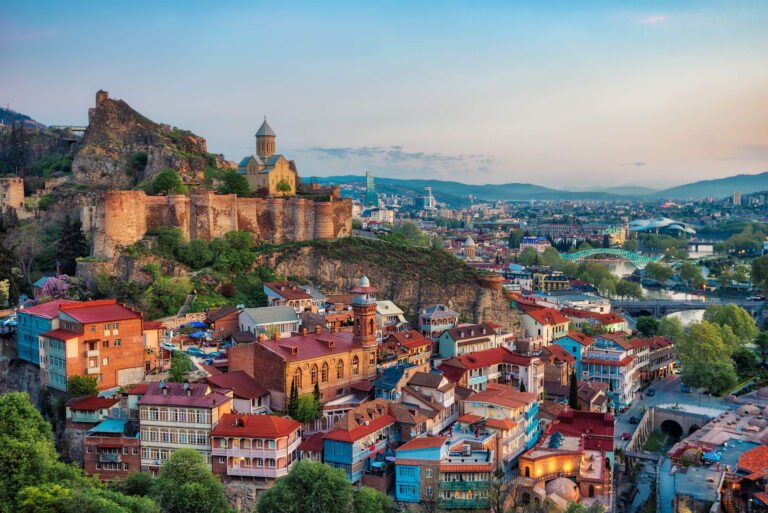
Tbilisi. Three days, not one. The old town with the sulphur bathhouses at Abanotubani, the Narikala fortress on the ridge, the Soviet and art nouveau layers in Sololaki and Vera, the Dry Bridge flea market, and a restaurant scene that has become the reason some people come to Georgia at all. We plan Tbilisi by district and by time of day.
Mtskheta. The old capital, forty minutes from Tbilisi, with Svetitskhoveli cathedral in the town and the sixth-century Jvari monastery on the hill above the confluence of two rivers. Half a day, and the single best half day near the capital.
Kakheti. The wine region, east of Tbilisi. Telavi as a base, Sighnaghi on its wall above the Alazani valley, the Alaverdi monastery which still makes wine in qvevri, the Tsinandali estate, and dozens of family cellars where the tasting takes place in the room where the wine was made. Two to three days.
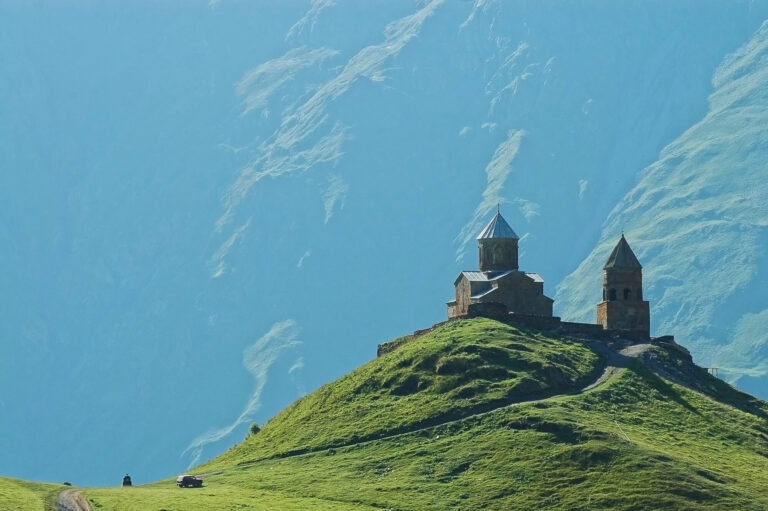
Kazbegi, or Stepantsminda. Three hours north of Tbilisi up the Military Highway, under Mount Kazbek at 16,512 feet (5,033 m). The Gergeti Trinity Church on its shoulder at about 7,120 feet (2,170 m) is the image everyone has seen, reached by a rough vehicle track or a walk of an hour and a half up. Worth two nights so that you get two chances at the weather.
Kutaisi and Imereti. Central Georgia. The Gelati monastery, which is on the UNESCO list and is the finest medieval interior in the country, the canyons at Martvili and Okatse, and the caves at Prometheus and Sataplia. A good base for two nights on the way west.
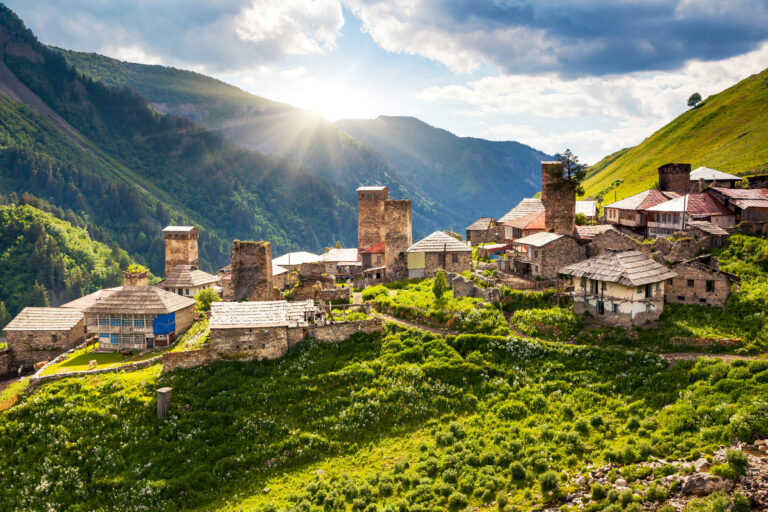
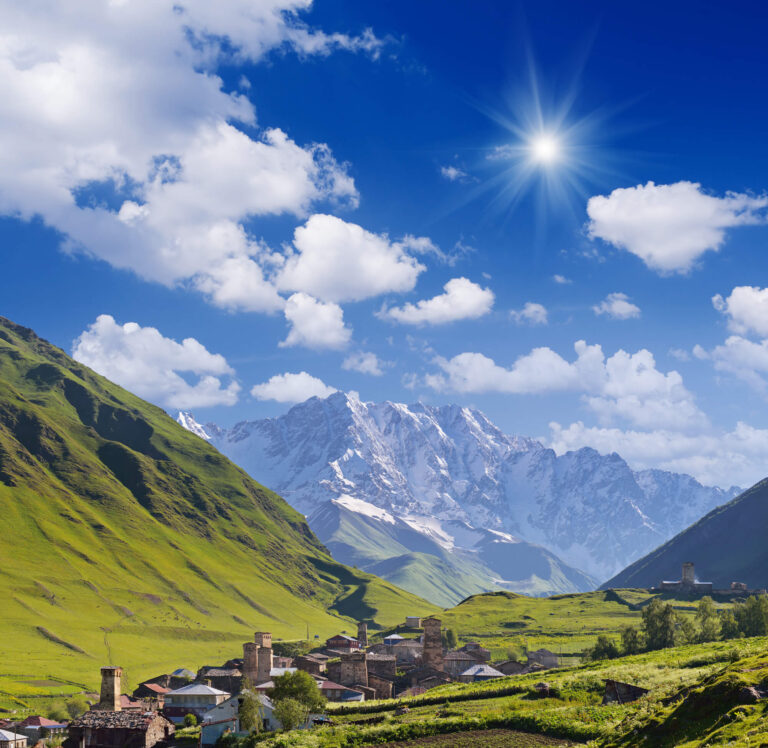
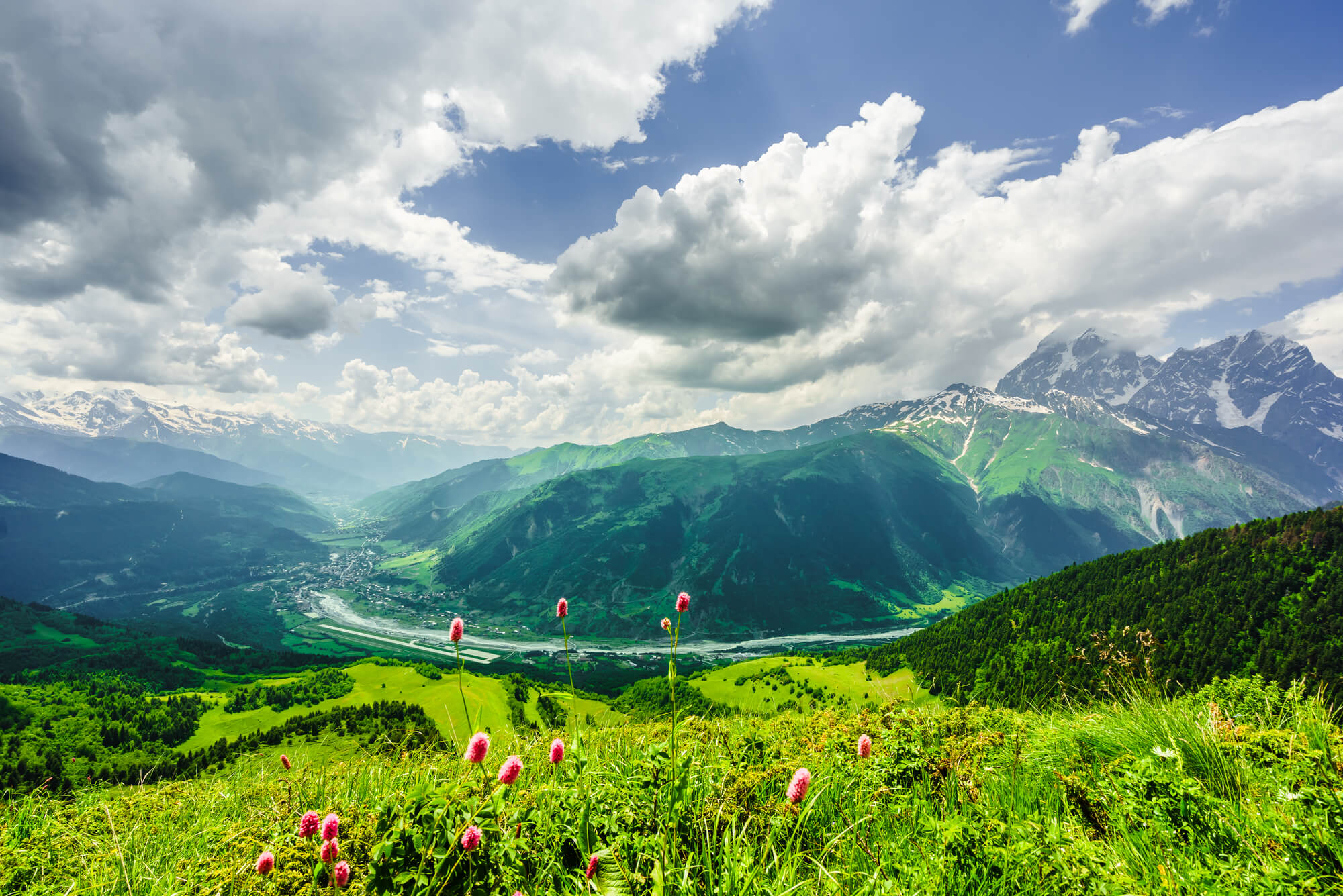
Upper Svaneti. Stone defensive towers, glaciers at the head of the valleys, and Ushguli at about 7,200 feet (2,200 m), which is usually described as one of the highest continuously inhabited settlements in Europe. Three to four days, summer, and the walking is the reason to go rather than the villages themselves.
Tusheti. Harder to reach than Svaneti, emptier when you arrive, and the more memorable of the two if you can cope with the road. Omalo, Dartlo and Shenako, shepherds moving flocks, and almost no infrastructure. Three days minimum because two of them are the drive.
The Black Sea coast. Be careful here. Batumi is a casino and skyscraper city with a pebble beach, and it is interesting for a night as an oddity rather than as a beach holiday. The good part of Adjara is inland: the Machakhela and Khulo valleys, arched stone bridges and green mountains. Mtirala national park is genuine temperate rainforest and rains accordingly.
Vardzia and the south. A twelfth-century cave city cut into a cliff in Samtskhe-Javakheti, plus the Rabati fortress at Akhaltsikhe, which we will note has been rebuilt so thoroughly that it reads as new. Vardzia is a long day from Tbilisi and better with a night at Akhaltsikhe.
Food and wine
Georgian food is one of the two reasons to come. The dishes to know are khachapuri, cheese bread, which comes as a boat with an egg in Adjara and as a flat round in Imereti; khinkali, a soup dumpling you hold by the twisted top and do not eat the knot of; pkhali, vegetable and walnut pastes; badrijani nigvzit, aubergine rolled around walnut paste; and mtsvadi, meat grilled over vine cuttings.
Wine is the other reason. Georgia has been making it in buried clay qvevri for around eight thousand years, which is as far as the archaeological record goes anywhere, and the method is on the UNESCO intangible heritage list. There are several hundred indigenous grape varieties. Saperavi is the red you will meet everywhere. The amber skin-contact whites made from Rkatsiteli, Kisi and Mtsvane are the style that exists nowhere else, and they are not to everyone’s taste, which is worth knowing before you commit a week to them.
The supra, the Georgian feast, is run by a tamada, a toastmaster, and follows an order. Being at one in a private house is the best evening most of our travellers have in the country, and it is the thing our Tbilisi partner arranges that you cannot arrange for yourself.
Practical notes
- Cash. Cards work in Tbilisi and the larger towns. In the mountains, carry lari. Guesthouses in Omalo do not take cards and there is no cash machine.
- Guesthouses. In the high villages, standards are simple: a clean twin room, sometimes a shared bathroom, hot water that depends on the generator, and heating from a stove. The food is usually excellent. This is not a gap we can close by paying more.
- Language. Georgian uses its own alphabet and is unrelated to any language you know. Russian is widely understood by older people, English by younger ones in cities. Outside cities, a guide or driver who translates changes the trip.
- Dogs. Village and mountain dogs are working animals and are not pets. Do not approach the flock guardians.
- Altitude. Nothing on a normal Georgian itinerary is high enough to cause altitude problems. The highest you sleep is around 7,200 feet (2,200 m).
- Sundays and services. Monasteries are working religious sites. Shoulders and knees covered, women wear a headscarf at some, and photography inside is often not allowed.
How we build a Georgia trip
Your itinerary is written by a named person: our Head of Consulting Mai Est, or our Central Asia and Caucasus specialists Osnat Angerman and Paz Prosianoy. Our founder Doron Reichman has led trips in Georgia himself, and the mountain sections carry his notes.
On the ground, we work through a Tbilisi partner we have used for years rather than an office of our own. We have dedicated local offices in Vietnam and India, our team in Japan, and local representatives in the Philippines, and we would rather tell you that than let you assume otherwise. What it means in practice is that the driver who meets you, the mountain 4×4 team and the person who answers at two in the morning are theirs, briefed by us, with your consultant on the same WhatsApp thread from take-off to landing.
Your $39 plan is written for you rather than pulled from a template, and if you want us to book the trip, the quote is free and carries no obligation.
Ready to plan it?
Tell us the shape of the trip you have in mind and we will build you a first outline. A plan written for you, and a free, no-obligation quote if you want us to book.
Keep reading
- The eight Georgia itineraries we build most often
- Georgia month by month
- Qvevri wine explained
- The Tusheti road, honestly