- Duration
- 10 days
- Pace
- Relaxed
- Hotel changes
- 3
- Best months
- May, Jun, Sep, Oct
- From
- $1,800 per person
This route spends five days in Kakheti with the people who make it, two days in the west where the wine is different and the food changes with it, and three in Tbilisi, which now has a restaurant scene worth the trip on its own.
Who it suits: people who want to understand a wine culture rather than tick off tasting rooms, and who like a long lunch. No walking beyond a vineyard.
Your specialist: a named Georgia specialist here, and our Tbilisi partner team, who know which families are pouring well this year and which have started buying in fruit.
Day by day
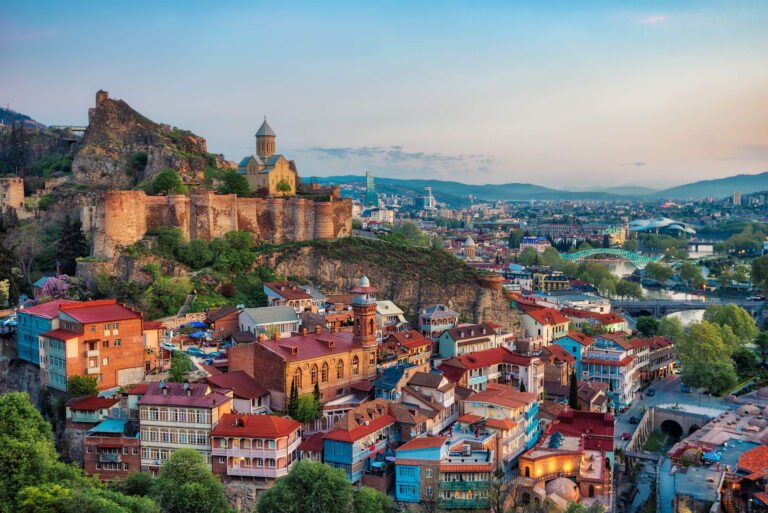
Days 1 and 2: Tbilisi. Arrive, and a dinner we have chosen. Day two is the food day: the Dezerter bazaar in the morning with a cook, buying what the day is going to be made from, then a private kitchen and four hours making khinkali, pkhali and a proper khachapuri from scratch. Evening free in the natural wine bars of Vera and Sololaki, with a list from us that separates the serious ones from the ones with good lighting.
Days 3 to 7: Kakheti. Two hours east, and five nights split between Telavi and the Kvareli or Napareuli side, so you are never driving more than forty minutes to a cellar.
Day three: Alaverdi cathedral and its monastery cellar, where monks have made qvevri wine on the same site for a thousand years, then the Tsinandali estate, which is where nineteenth-century Georgian aristocracy met French winemaking and where the bottled tradition in this country starts.
Day four: three family cellars in the villages around Telavi, small growers making a few thousand bottles, tasting in the room the wine was made in. Lunch at the second one, cooked by the family, which is how this works.
Day five: Sighnaghi and the southern side of the valley. The walled town in the morning, the Bodbe convent, and a marani lunch that takes four hours. Afternoon at a cellar working with the rarer whites, Kisi and Khikhvi and Mtsvane, which are the varieties that repay attention.
Day six: a day about production rather than tasting. A qvevri workshop where the vessels are still thrown by hand and fired in a pit, of which there are very few masters left in the country, then a churchkhela and tkemali afternoon in a village, making the walnut and grape-must strings and the sour plum sauce that is on every Georgian table.
Day seven: free at your base, or, in the second half of September and early October, a full day at the rtveli, the harvest, picking and treading and eating with everybody else. If your dates fall in that window we build the whole week around it.
Day 8: Kakheti to Kutaisi. Across the country, about four and a half hours, into Imereti, where the wine is made differently, in smaller vessels and with less skin contact, and lighter. Lunch stop on the way. Evening at an Imeretian table, which is more vegetable, more herb and more walnut than the east.
Day 9: Imereti and Gelati. A morning cellar, then the Gelati monastery, which is the finest medieval interior in Georgia and is on the UNESCO list. Afternoon at the Kutaisi market, which is the best food market in the country and not remotely arranged for visitors. Back east to Tbilisi in the evening, three and a half hours, or a night in Kutaisi and the drive in the morning.
Day 10: Tbilisi, departure. A last morning, a bakery breakfast at a tone oven, and out.
What is included
Accommodation with breakfast throughout, a private car with an English-speaking driver every day, which matters on a route like this, licensed guides on five days, a market and private cooking day in Tbilisi, ten cellar visits with the winemakers rather than with a host, four long lunches at family maranis, the qvevri workshop, the churchkhela and tkemali afternoon, all monastery and estate entries, a written list of Tbilisi restaurants and wine bars with reservations made, and a WhatsApp group with your consultant and our Tbilisi partner team throughout.
What we would change, and when
- Coming for the harvest? The rtveli runs roughly from the second week of September into early October and the exact dates are set by the fruit. We book it as a floating day and confirm two weeks out.
- Prefer reds? Say so and we will weight the cellars towards Saperavi and the Kindzmarauli side of the valley. The amber whites are the famous thing here and they are not for everyone.
- Want less driving? Cut Imereti and stay in Kakheti for seven nights. You lose a genuinely different wine culture and gain two slow days.
- Add the mountains? Two nights at Kazbegi at the end adds two days and gives the trip a different ending.
Honest notes
Georgian amber wine is tannic, dry and oxidative, and it tastes nothing like a white wine from anywhere else. Some people fall for it immediately and some never do. If you are in the second group, this route is still worth doing, and we would rebuild the cellar list.
Not every producer is good. Georgia has excellent family growers, a handful of very good modern wineries and a lot of large commercial operations selling semi-sweet wine to a Russian and Chinese market. The difference is not visible from the road. We choose, and we change the list as producers change.
The supra is a marathon. A full Georgian feast is twenty toasts, a tamada who controls the table, and a great deal of wine, and it is not something you can leave halfway through politely. We schedule one, not four.
The Kakheti to Kutaisi drive is long and dull for the first half. There is no better road.
Kakheti in July and August is hot, into the mid nineties Fahrenheit (about 35°C), and cellar work stops in the afternoon. May, June and September are the months.
Built by your named Georgia specialist, checked against notes our founder made in the field.