- Duration
- 21 days
- Pace
- Moderate
- Hotel changes
- 9
- Best months
- Jun, Jul, Aug, Sep
- From
- $3,780 per person
Three weeks is what it takes. Twelve days in Georgia, a land border crossing, and eight in Armenia, with the drive between them broken by two monasteries that are worth the day on their own.
Who it suits: travellers with time, an interest in medieval architecture and food, and the patience for a land border. One walking day of five hours, otherwise moderate.
Your specialist: a named Georgia specialist here, with our long-standing Tbilisi partner running the Georgian ground and their Yerevan counterpart running Armenia. One WhatsApp group across both.
Day by day
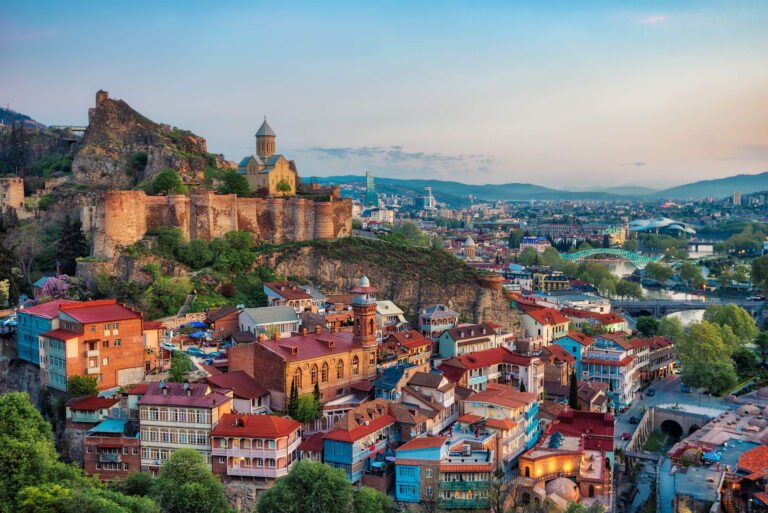
Days 1 to 4: Tbilisi and Mtskheta. Arrival and nothing. Then a guided day through the old town, the sulphur quarter at Abanotubani and Narikala. A day at Mtskheta, the old capital, with Svetitskhoveli cathedral and the sixth-century Jvari monastery above the river confluence. A free day: the National Museum, the flea market at the Dry Bridge, a bathhouse, the wine bars in Vera.
Days 5 to 7: Kakheti. East into the wine country. Alaverdi cathedral and its working monastery cellar, family qvevri cellars around Telavi, Sighnaghi on its walls above the Alazani valley, the Bodbe convent, and a marani lunch that takes four hours. In late September this is the rtveli, the harvest, and it is the best week of the Georgian year.
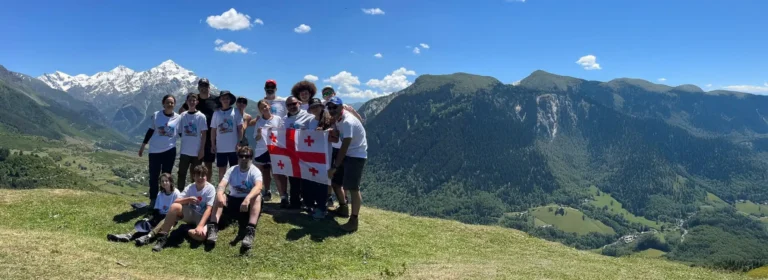
Days 8 and 9: Kazbegi. Up the Georgian Military Highway, over the Jvari Pass at 7,815 feet (2,382 m), with Ananuri fortress on the way. Two nights at Stepantsminda under Mount Kazbek, 16,512 feet (5,033 m), with the walk or the drive to the Gergeti Trinity Church at about 7,120 feet (2,170 m) and an afternoon in the Truso valley.
Day 10: Kazbegi to Kutaisi. West across the country, about six hours, with a stop for lunch.
Day 11: Imereti. The Gelati monastery, on the UNESCO list and the finest medieval interior in Georgia, then the Martvili canyon by boat or the Okatse walkway, and the Kutaisi market in the afternoon, which is the best food market in the country.
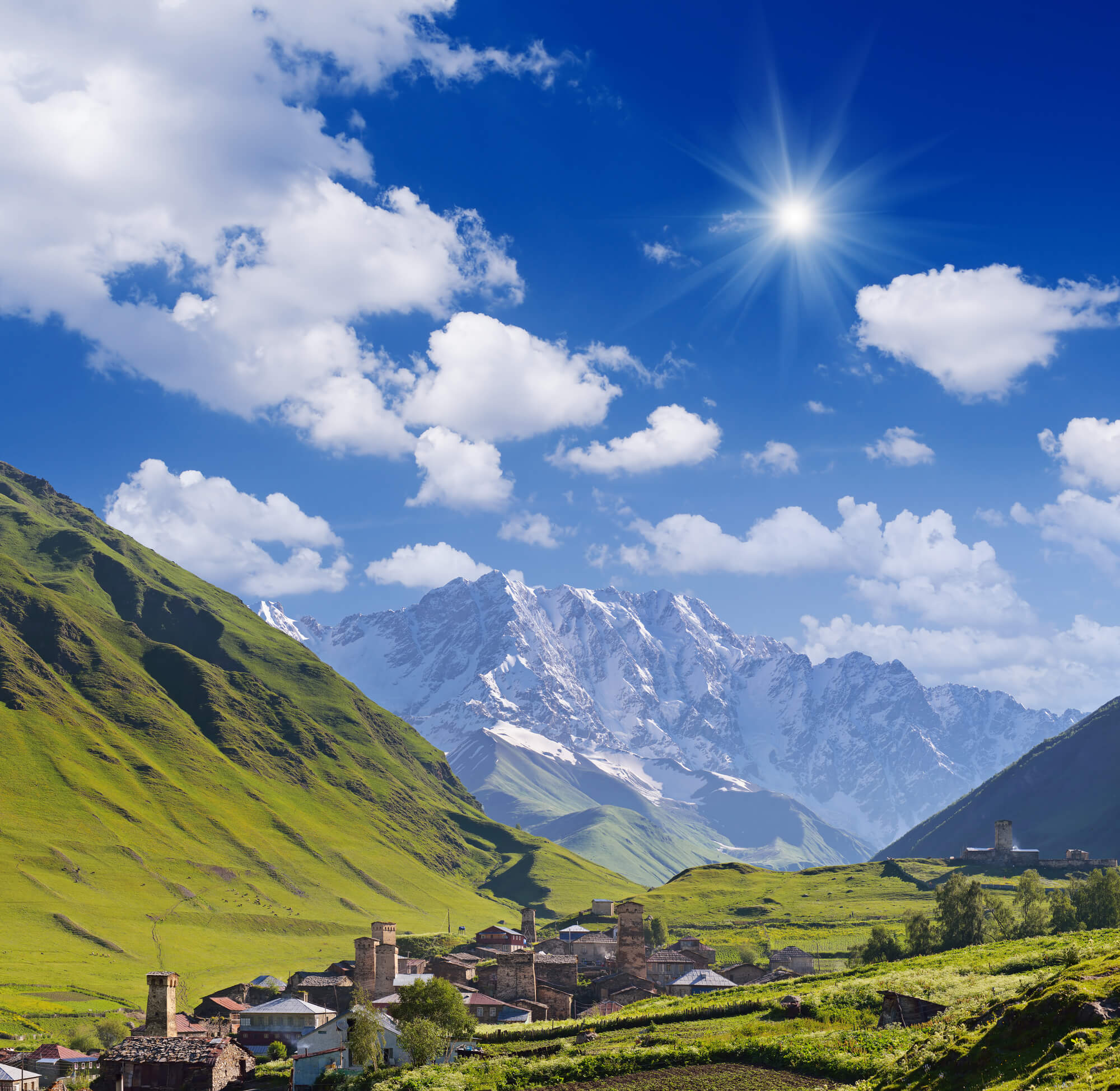
Days 12 to 14: Upper Svaneti. Four hours north into the mountains. Three nights at Mestia: the ethnographic museum, the tower villages, the day out to Ushguli at about 7,200 feet (2,200 m) under Shkhara, and a walking day to the Chalaadi glacier or the Koruldi lakes.
This section is open from roughly June to September. Outside that window we replace it with Vardzia, the twelfth-century cave city in the south, and Akhaltsikhe, which is on the way to Armenia anyway.
Day 15: Svaneti to Tbilisi. The long drive back, about eight hours, or the small aircraft from Mestia if it is running and if the weather allows, which it does not always. Night in Tbilisi.
Day 16: Tbilisi to Dilijan, across the border. South to the Sadakhlo and Bagratashen crossing, which takes between twenty minutes and an hour and a half depending on the queue and on nothing you can predict. Then the Debed canyon and the monasteries of Haghpat and Sanahin, both tenth to thirteenth century, both on the UNESCO list, and both largely unrestored, which after Georgia is a noticeable change. On to Dilijan, in the forested part of Armenia, for the night. About seven hours with the stops.
Day 17: Dilijan and Lake Sevan. The old street in Dilijan, the Haghartsin monastery in the woods, then over the pass to Lake Sevan at about 6,200 feet (1,900 m), which is nearly a sixth of Armenia’s surface area, and the Sevanavank churches on the peninsula. On to Yerevan, about three hours in total.
Days 18 and 19: Yerevan and around. Yerevan is a pink tufa city built to a Soviet plan on a much older site, and it is a better city than most visitors expect. The Cascade and its sculpture collection, the Matenadaran, which holds one of the world’s great manuscript libraries, the Vernissage market at the weekend, and the genocide memorial and museum at Tsitsernakaberd, which is difficult and should not be scheduled at the end of a long day.
Day nineteen goes out of the city: the Garni temple, which is Hellenistic and the only one of its kind left in the region, the basalt columns in the gorge below it, and the Geghard monastery, half of which is cut into the rock, where you should ask your guide to arrange the singing.
Day 20: South to Areni and Tatev. Down the Yerevan to Goris road with Khor Virap on the way, which sits on the closed Turkish border with Ararat filling the sky behind it on a clear morning. Noravank in its red gorge. The Areni wine caves, where a wine press dating to around 4000 BC was excavated, which is the other end of the same story you have been drinking in Kakheti. Then the Tatev cable car, which runs about 3.5 miles (5.7 km) across a gorge to a ninth-century monastery on a promontory. Night at Goris or Tatev.
Day 21: Back to Yerevan, departure. Four and a half hours north, and out. Most flights from Yerevan leave in the middle of the night, which we will tell you before you book, not after.
What is included
Twenty nights of accommodation with breakfast, private vehicles with English-speaking drivers in both countries, licensed English-speaking guides on eleven days, a licensed mountain guide on the Svaneti walking day, the Svan 4×4 for the Ushguli day, the border crossing handled with both partner teams in contact on the day, family cellar visits and a marani lunch in Kakheti, all monastery, museum and site entries in both countries, the Tatev cable car, the Martvili boat, and one WhatsApp group with your consultant, our Tbilisi partner and their Yerevan counterpart for three weeks.
Honest notes
The border. Sadakhlo to Bagratashen is a normal land crossing and it works. You get out of the Georgian car, walk through with your bags, and get into the Armenian car on the other side. It takes twenty minutes on a good day and considerably longer on a bad one, and we build the day with slack in it. Both partner teams are in contact while you are between the two.
Two countries, two ground operations. We have dedicated local offices in Vietnam and India, our team in Japan, and local representatives in the Philippines. Georgia and Armenia are both run through long-standing local partners rather than people we employ, and we would rather say that plainly. Your consultant here is on the thread the whole time.
Armenia is higher and drier than Georgia and the transition is noticeable. Yerevan sits at about 3,200 feet (990 m) and the roads south cross passes over 8,000 feet (2,440 m). Nothing here is high enough to cause altitude problems.
Yerevan in July and August is hot, frequently above 100°F (38°C) in the afternoon, which is hotter than Tbilisi. The southern road towards Tatev is hotter still. June and September are much better months for this combination.
Svaneti is seasonal and Ushguli more so. If your dates are outside June to September we will restructure the Georgian half rather than sell you a mountain section you cannot use.
The genocide museum in Yerevan is not an optional stop for understanding the country, and it is hard. We put it on a morning with a free afternoon after it.
Three weeks is nine hotel changes. That is more movement than we would normally build. The alternative is to cut Svaneti or cut the Armenian south, and we think both are worth the moves. If you would rather travel slower, tell us and we will drop one of them.
Built by your named Georgia specialist, checked against notes our founder made in the field.