- Duration
- 14 days
- Pace
- Active
- Hotel changes
- 9
- Best months
- Jul, Aug, Sep
- From
- $2,380 per person
This route runs Bishkek, Song-Kul, Naryn, Tash Rabat, Kel-Suu, then flies to Osh and finishes in the Alay valley looking at the north face of Peak Lenin. Nine changes of bed in fourteen days, which is a lot, and there is no shorter way to do it.
Who it suits: second-time Central Asia travellers, or first-timers who would rather cover ground than settle. Not a gentle itinerary.
Your specialist: Osnat Angerman or Paz Prosianoy, our Southeast and Central Asia specialists, working with our long-standing partner in Bishkek.
Two things to know before you read the days. Kel-Suu and the Alay both sit in border zones, and border zone permits take days rather than hours to issue, so this route needs to be committed to roughly six weeks out. And Kel-Suu is weather-dependent: the track in is a river valley and heavy rain can close it. We build a fallback into the plan rather than discovering the problem on the day.
Day by day
Day 1: Arrive Bishkek. Night landing, hotel, late start. Afternoon walk, dinner, and altitude at a comfortable 2,600 feet (800 m).
Day 2: Bishkek to Kochkor, via Burana. Two hours to the eleventh-century minaret and the balbal field, two more to Kochkor. Afternoon at a felt workshop. Night in a guesthouse at about 5,900 feet (1,800 m), which is the first step up.
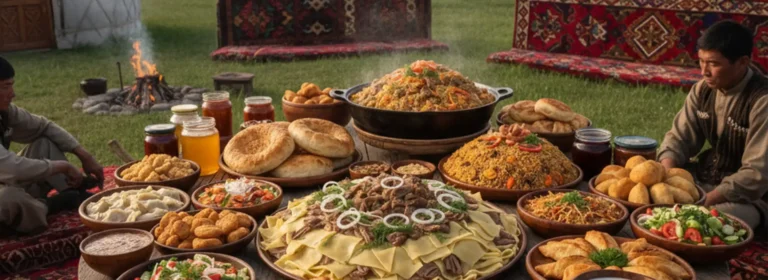
Day 3: Kochkor to Song-Kul. Three to four hours, ending with gravel switchbacks over the Kalmak-Ashuu pass at around 11,300 feet (3,450 m). Arrive early afternoon on a pasture at about 10,000 feet (3,000 m) with no permanent building on it. Ride, walk, or sit. Night in a shared yurt: mattresses on the floor, an outdoor long-drop, no shower.
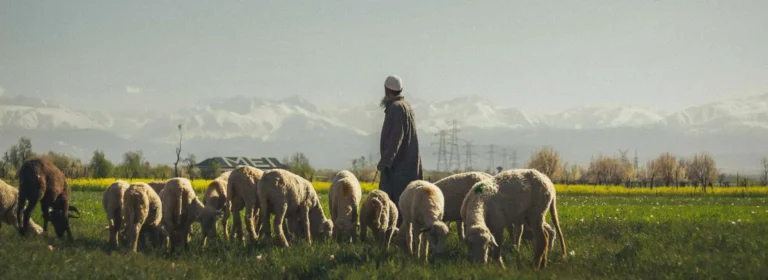
Day 4: Song-Kul. A full day, which is what makes it worth the drive. Milking at dawn if you want it, a long ride up onto the ridge, and an evening that is entirely unstructured. Cold at night, below freezing on a bad one, even in July. Second night in the yurt.
Day 5: Song-Kul to Naryn. Four hours down the southern side over the Moldo-Ashuu pass to Naryn, a long town in a gorge at about 6,600 feet (2,000 m). A shower, a bazaar, and a night in a good guesthouse.
Day 6: Naryn to Tash Rabat. Two and a half hours south, the last part up a side valley to about 10,500 feet (3,200 m). Tash Rabat is a stone caravanserai of thirty-odd domed chambers, probably fifteenth century and possibly built on something older, half-buried in the hillside. Unrestored, dark and cold inside, and the single best hour on this route. Afternoon walk up to the pass behind it. Night in the yurts alongside.
Day 7: Tash Rabat to Kel-Suu. Five to six hours east and south into the border zone, on rough track much of the way. Kel-Suu is a long lake below vertical cliffs at about 11,500 feet (3,500 m), formed by a landslide and drained through underground channels, so the water level moves substantially through the season. Camp in yurts at Kel-Suu village. Permits required and applied for in advance.
Day 8: Kel-Suu. Two hours on horseback or on foot up to the lake itself, which is the only way in. A full day out and back. It is the most remote place on any of our Kyrgyzstan routes and there is nothing at all there, which is the appeal. Second night in the yurts.
Day 9: Kel-Suu to Naryn. Six to seven hours back north. A long day and there is no way around it. Hot shower, real bed, a proper dinner in Naryn.
Day 10: Naryn to Bishkek, and fly to Osh. Five hours to Bishkek, then the one-hour flight south to Osh, which saves the twelve-hour Bishkek to Osh road and is the single most useful internal flight in the country. Arrive Osh in the evening. It is hotter here, often above 90°F (32°C) in July, and it feels like a different country. Night in Osh.
Day 11: Osh. Sulaiman-Too, the sacred mountain in the middle of the city and the country’s one UNESCO cultural site, climbed early before the heat. Then the Jayma bazaar, which is one of the great Central Asian markets and runs for over a mile along the river. Osh is older than Bishkek by a very long way and it is substantially Uzbek: the food, the bread and the language on the street all change. Second night.
Day 12: Osh to the Alay valley. Four hours south, over the Taldyk pass at around 12,000 feet (3,650 m), to Sary-Mogol at about 10,000 feet (3,000 m). The valley opens and the whole Trans-Alay range stands across the southern horizon, with Peak Lenin at 23,406 feet (7,134 m) in the middle of it. Night in a village guesthouse or a yurt camp.
Day 13: Tulpar-Kul and the Peak Lenin base camp. An hour by 4×4 up to the lakes at about 11,500 feet (3,500 m), then a walk of three to five hours up towards the first base camp for the closest view of the north face you can get without climbing gear. Back down for the night. This is a hard walk at real altitude and we will not pretend otherwise.
Day 14: Alay to Osh, departure. Four hours back over the pass, and the flight from Osh, either onward to Bishkek for an international connection or direct to Tashkent or Istanbul where the schedule allows. We check the connection carefully, because a missed Osh to Bishkek flight is an expensive problem.
What is included
All accommodation, hotels and guesthouses where they exist, yurts at Song-Kul, Tash Rabat, Kel-Suu and the Alay, breakfast daily and full board at every yurt camp, a private 4×4 and driver in the north and a second in the south, the Bishkek to Osh internal flight, an English-speaking guide throughout, all border zone permits applied for in advance, horse hire at Song-Kul and Kel-Suu, all entries, airport transfers, a day-by-day document with real drive hours, road surfaces and pass heights, and a WhatsApp group with your specialist and our Bishkek partner where there is a signal.
What we would change, and when
- Weather closes the Kel-Suu track? The fallback is two extra nights at Tash Rabat with the At-Bashy valley and the Chatyr-Kul salt lake, which is a real trip rather than a consolation.
- Only twelve days? Cut Kel-Suu. It costs three days and two of them are driving, and everything else in this route survives without it.
- Prefer the walnut forest to the Alay? Swap days 12 and 13 for Arslanbob, the largest natural walnut forest in the world, and Sary-Chelek. Lower, greener and far easier.
- Travelling in June? The Taldyk pass and the Kel-Suu track may not be open. We move this route to late July or August, and we will say so rather than sell you June dates.