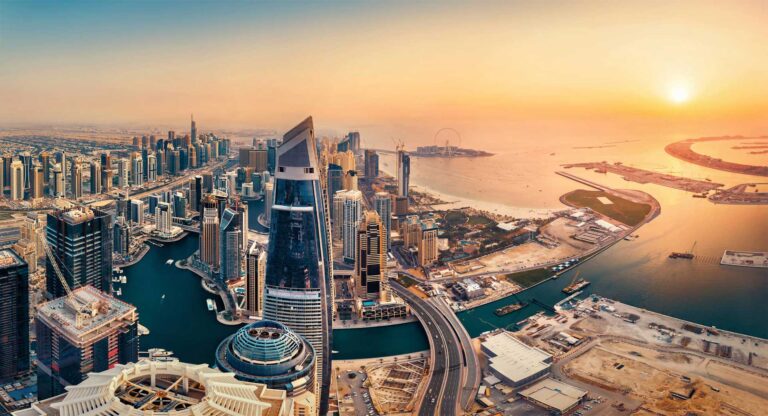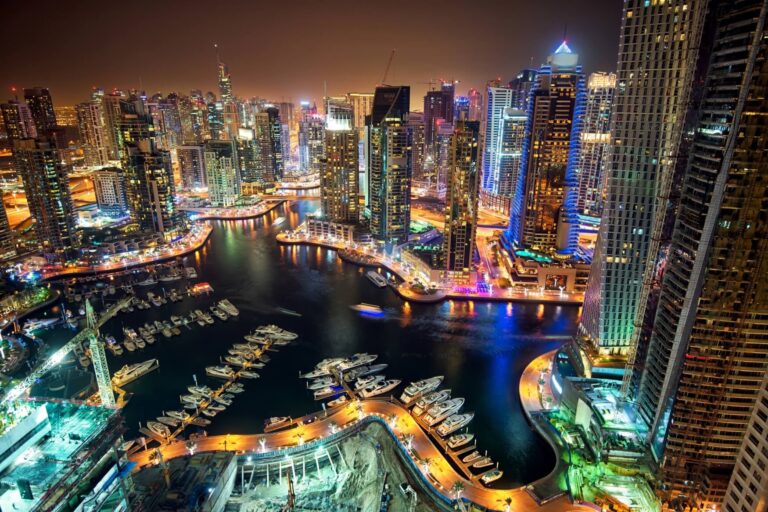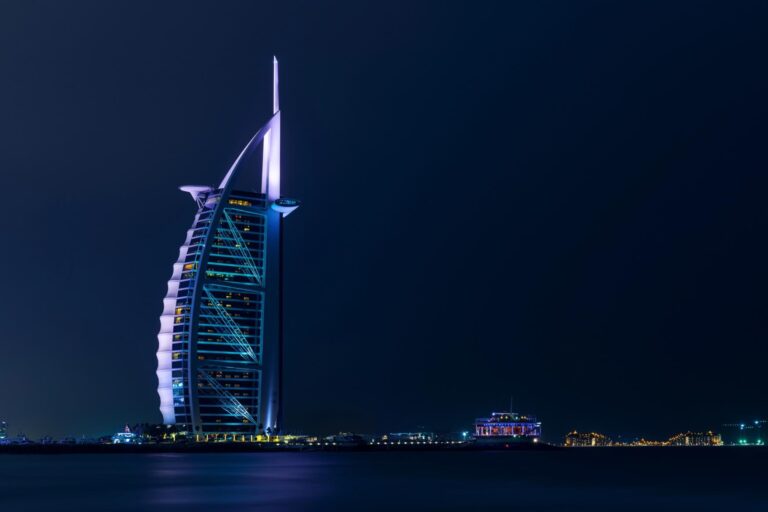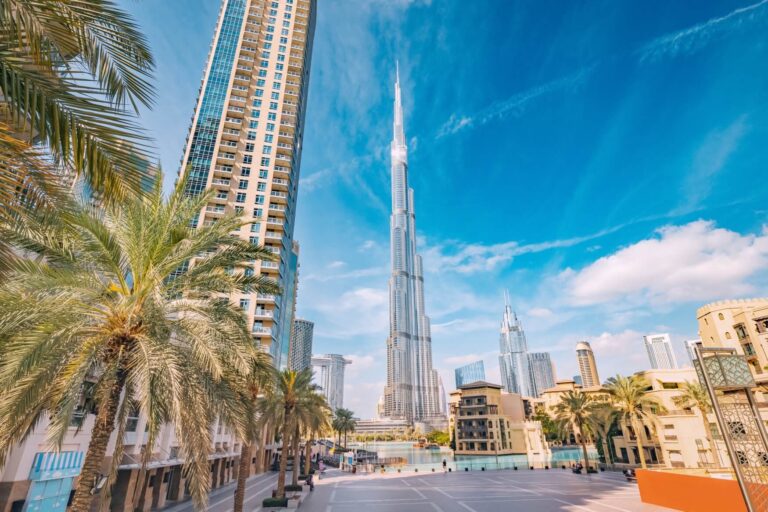
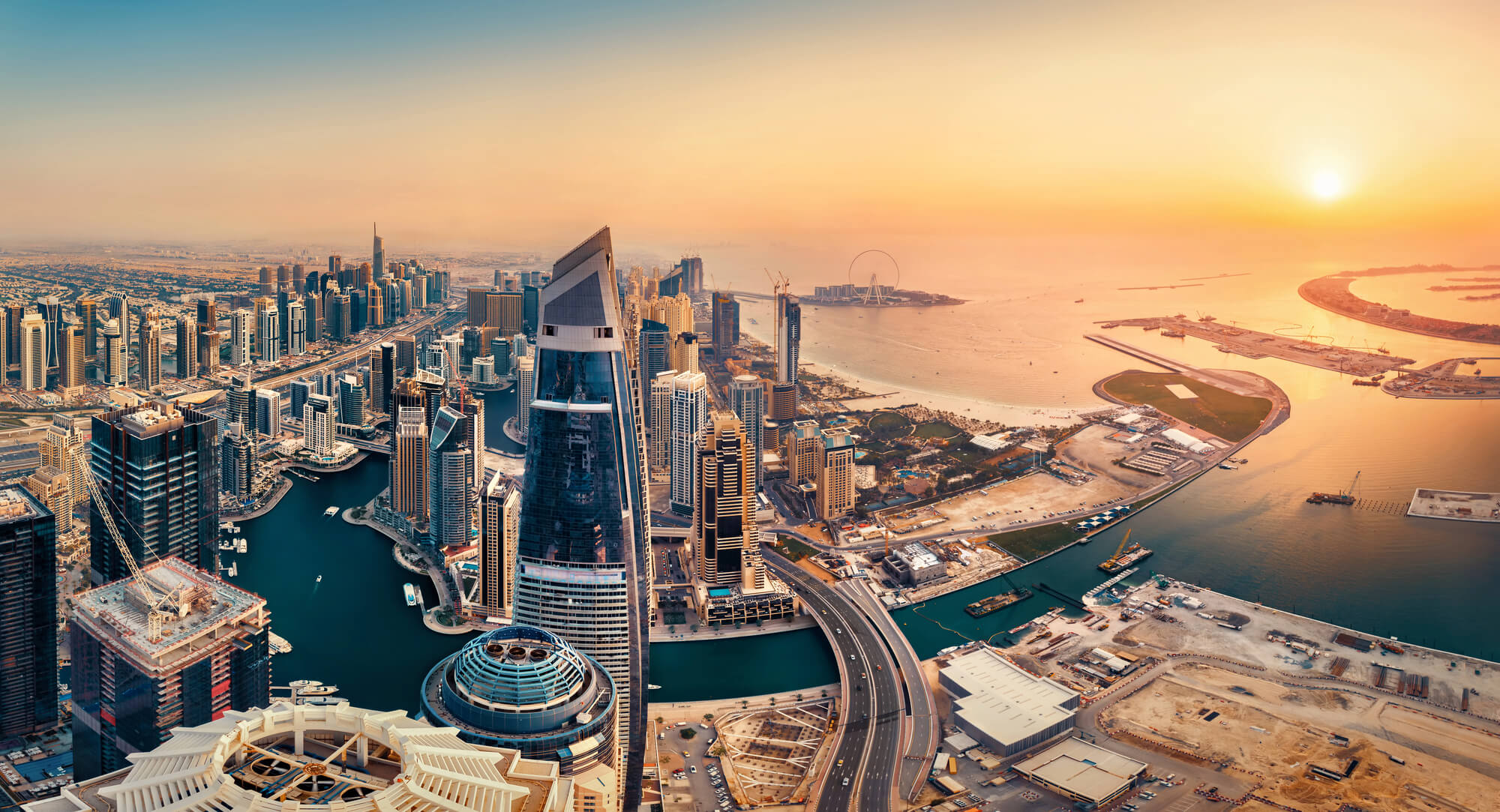
Dubai is genuinely good at a specific set of things. It is a short, easy, extremely well connected few days, it has one of the widest ranges of food of any city its size, it has an old quarter and a creek that almost nobody bothers with, and it has desert twenty minutes from a motorway. It is also a place where a large amount of expensive, heavily marketed activity is forgettable, and where the weather is unusable for a third of the year.
This is the document our consultants work from when a Gulf file lands on the desk. It covers the season, the length, the money, and the parts we would skip.
Dubai and the Gulf at a glance
| Best months | November to March |
| Worst months | June to September |
| Comfortable trip length | 4 to 6 days, or 2 to 3 as a stopover |
| Entry | Visa-free or visa on arrival for most nationalities |
| Getting around | Private car, with the metro on a few routes |
| Land budget, per person per day | 200 to 900 US dollars |
| Our presence | Long-standing local partners in Dubai and Muscat, not our own office |
We have dedicated local offices in Vietnam and India, our team in Japan, and local representatives in the Philippines. The Gulf is run through partners we have worked with for years, whose guides and drivers we know by name, with one named specialist here owning your file. We would rather say that plainly than imply a presence we do not have.
When to travel
The Gulf has two seasons and only one of them works for most travellers.
November to March, the real season
This is when the region is pleasant. Daytime highs run from around 75F (24C) in January to the mid eighties Fahrenheit (around 29C) in November and March. Nights in December and January can drop to around 60F (15C) inland and in the desert, which surprises people who packed for a beach. Humidity is low, the sea is swimmable, and it is possible to walk around outside in the middle of the day without planning your route between air-conditioned buildings.
December and January are the reliable core, and they are also the most expensive weeks of the year. The regional holiday period around Christmas and New Year, and again during the Gulf’s own long weekends, pushes hotel rates to their annual peak. February and March are our own preference: the same weather, materially lower prices, and fewer people.
April and October, the shoulder
Both are workable. April warms quickly and by the end of the month the middle of the day is uncomfortable again. October cools slowly and the first half still carries summer humidity on the coast. Rates in both are noticeably lower than in the peak, and for a two or three night stopover they are good value.
June to September, honestly not
Daytime highs sit around 105F (41C) and can go higher, and on the coast the humidity makes it worse rather than better. Night temperatures frequently stay above 85F (30C), so there is no cool part of the day. A summer trip to Dubai is a trip between air-conditioned interiors: malls, hotels, indoor attractions, and a hotel pool that is heated by the sun to the temperature of a bath.
Hotel rates in July and August are the lowest of the year, and that is not a bargain, it is a market clearing. We will build a summer trip if your dates are fixed, we will build it around early mornings, indoor days and water parks, and we will tell you clearly what you are giving up.
Ramadan
Ramadan moves through the calendar by about eleven days a year, so its position relative to the season changes. Travelling during it is entirely possible and in some ways more interesting, but the day works differently: eating and drinking in public during daylight is restricted, some restaurants and attractions change their hours, and nightlife is limited. The evening meal that breaks the fast is one of the better food experiences in the region. We tell you where the dates fall for your window and let you decide.
How many days do you need?
- 2 to 3 nights. A stopover, and this is the shape we build most often. It splits a long flight to Asia, it gives you the creek and the old town, one good dinner and a desert evening, and it does not outstay itself.
- 4 to 5 days. A first visit done properly. Old Dubai, the modern city, a night in the desert or in Abu Dhabi, and a day that is deliberately free.
- 6 days. The above plus Abu Dhabi as an overnight rather than a day trip, or the east coast and the mountains.
- 7 days and up. At this point we would usually be pushing you across the border. Seven days in the UAE alone is a stretch for most travellers. Seven days split between Dubai and Oman is one of the best weeks in the region.
Anyone selling you ten days in Dubai is selling you their margin. We do not build them.
The Oman conversation
We have this conversation with almost every client and it costs us bookings, so take it as meant.
If what you want from a Gulf trip is landscape, old towns, forts, mountains, wadis, empty desert and a slower country where people are not primarily working in hospitality, Oman does all of it better than the UAE and costs less. Muscat is a low, white city on a coast between mountains. Nizwa has a real fort and a real market. Jebel Akhdar and Jebel Shams are proper mountains, the latter rising to about 9,900 feet (3,009 m). The Wahiba Sands are a two-hour drive from a motorway and go on for a hundred miles. Green turtles nest at Ras al Jinz.
Dubai is better than Oman at exactly three things: it is a better short break, it is a far better stopover because of the flight network, and it has better food. Those are not small things, and they are the reason we still build Dubai trips.
The honest answer for most people with a fortnight is both, in one route, which is why Dubai and Oman in 14 days is the itinerary we build most often on this desk.
Entry requirements
Most nationalities enter the UAE either visa-free or with a visa issued on arrival, for a stay that is commonly 30 or 90 days depending on the passport. There is usually no advance application and no fee for those passports. Oman operates a separate system, with an online visa required for many nationalities and visa-free entry for some.
Both systems have changed more than once in recent years, in both directions. We confirm the current rule for your specific passport and your specific dates before we quote, and we say so rather than publishing a table here that will be wrong within a year. If you hold a passport that needs an advance visa for either country, tell us early, because the lead time is the constraint.
One practical note that catches people: if your route crosses the land border into Oman in a hire car or a private vehicle, the vehicle needs its own paperwork and cover for the crossing. We handle that on the routes where it applies, and on some routes we use two vehicles and a driver change at the border because it is simpler and cheaper.
Getting around
Private car with a driver. This is what we use for most days. Dubai is spread out, the districts are far apart, and for a good part of the year walking between them is not realistic. A car and driver removes the single biggest friction in the day.
The metro. Genuinely good on the corridor it serves, which runs along Sheikh Zayed Road through the business districts to the marina in one direction and to Deira in the other. If your hotel is near a station and your day is on that line, it is faster than driving. It is not a network that reaches most of what you will want to see.
Taxis and ride apps. Plentiful and reasonably priced by international standards. Fine for evenings and short hops.
The abra. The small wooden boat that crosses Dubai Creek between Deira and Bur Dubai costs a few coins and is the best value transport in the country. It is also, unglamorously, one of the better twenty minutes of the trip.
Driving yourself. Possible and straightforward on the main roads, and we do arrange it for mountain and east coast routes where a self-drive genuinely adds something. In the city we would not bother.
Between emirates. Dubai to Abu Dhabi is about 85 miles (140 km) and roughly ninety minutes by road. Dubai to Hatta is about 80 miles (130 km). Dubai to Muscat is about 270 miles (435 km) by road, five to six hours plus the border, or a ninety-minute flight.
What a Gulf trip costs
The figures below are land only, per person, based on two people sharing, and exclude international flights. They cover accommodation, food, ground transport with a driver, entries and the guiding we would normally include.
| Style | Per day | 5 days | 7 days | 14 days |
|---|---|---|---|---|
| Careful: good 4 star, some independent days | $200 | $1,000 | $1,400 | $2,800 |
| Comfortable: strong 4 to 5 star, driver, some guiding | $330 | $1,650 | $2,310 | $4,620 |
| Boutique: design and beach hotels, private guiding | $520 | $2,600 | $3,640 | $7,280 |
| Luxury: top-tier hotels, guided throughout | $900 | $4,500 | $6,300 | $12,600 |
Three things move that number more than anything else.
The month. The same room can cost two and a half times as much in the last week of December as in the second week of February. If your dates are flexible by even a fortnight, that is the single most valuable flexibility you have.
The hotel district. Beachfront on Jumeirah or Palm Jumeirah is the expensive answer. Downtown and the marina are mid. Deira and Bur Dubai, next to the old city and the best cheap eating, are the cheapest and are where we put people who want to be near the interesting half of Dubai.
The attractions. A family of four can spend several hundred dollars in a day on tickets without seeing anything they will remember. This is the part of the budget we cut hardest.
What is cheaper than people expect: food, if you leave the hotels. A very good Pakistani, Keralan, Filipino, Iranian or Lebanese meal in Deira, Satwa or Al Karama costs a fraction of a hotel restaurant and is usually better. The local currency is pegged to the US dollar, so exchange rates are stable and easy to plan against.
What we think is worth it, and what we would skip
This is the section people actually want, so we will be direct. These are opinions, held by people who go regularly.
Worth it. Dubai Creek and the abra crossing. The Al Fahidi historical district early in the morning, before the tour groups. The gold and spice souks in Deira, walked rather than shopped. The Museum of the Future, which is a genuinely well made building and exhibition rather than a gimmick. Alserkal Avenue in Al Quoz, the warehouse gallery district, which is the most serious contemporary art you will see in the Gulf. Eating in the neighbourhoods. A night in the desert at a small camp. In Abu Dhabi: the Sheikh Zayed Grand Mosque, which is worth the trip on its own, the Louvre Abu Dhabi, and Qasr Al Watan.
Worth it if it is your thing. The Burj Khalifa observation decks, at sunset, on a timed slot booked in advance. The aquarium and the indoor ski slope with children who want them. A dhow cruise, on a small private boat rather than a large one.
We would skip. Most of the ticketed attractions around the theme park districts, which are expensive, hot in the queue and interchangeable. The coach-based desert safaris, which put sixty people in a camp with a buffet and a stage show. The helicopter tours. The mall as a destination rather than as shelter from the afternoon. And any itinerary with two observation decks in it.
Where to go beyond Dubai
Abu Dhabi. Ninety minutes away and a different city: lower, quieter, more spread out, with the Grand Mosque, the museums on Saadiyat Island and better beaches. A day trip does not do it justice. One night there is much better.
Sharjah. Twenty minutes from Dubai and almost entirely ignored by visitors. It has the best museum of Islamic civilisation in the region, a serious art foundation, and a restored heart of the old town. It is also dry, meaning no alcohol anywhere, which is why the hotels are cheaper and quieter.
Hatta. A Dubai exclave in the Hajar mountains, with a dam you can kayak on, walking trails and cooler air. A good day, or a night if you want the hills.
Ras Al Khaimah and Jebel Jais. The UAE’s highest road climbs to around 6,345 feet (1,934 m). It is ten to fifteen degrees cooler at the top and it does not feel like the same country.
The east coast. Fujairah, Dibba and the diving around the offshore rocks. Two hours from Dubai, on the Gulf of Oman rather than the Arabian Gulf, and a good deal quieter.
Musandam. The Omani exclave north of the UAE, reached by road from Dubai, with steep inlets and dhow trips. The most striking landscape within a half-day drive of the city.
Liwa and the Empty Quarter. In the far south of Abu Dhabi emirate, at the edge of the Rub al Khali. Real desert, with dunes several hundred feet high, and it makes the camps near Dubai look like what they are.
Practical notes
- Dress. Shoulders and knees covered in malls, souks and public buildings. Swimwear at the beach and the pool only. Carry a scarf for mosque visits, and note that the Grand Mosque in Abu Dhabi provides robes.
- Alcohol. Served in licensed hotels, restaurants and bars. Sharjah is dry. Public drunkenness and drinking in public places are offences and are treated as such.
- Behaviour. Public displays of affection beyond hand-holding, rude gestures and photographing people without permission all cause real problems.
- Medication. Some common prescription and over-the-counter drugs are controlled in the UAE. If you take anything regularly, tell us and bring the prescription.
- The week. The working week runs Monday to Friday, with Friday a half day and prayers around midday. The weekend is Saturday and Sunday, and opening hours follow it.
- Cash and cards. Cards work almost everywhere. Carry a little cash for the abra, the souks and the smaller restaurants.
- Heat, even in season. Between roughly 11am and 4pm even in February the sun is strong. We build the day around it.
How we build a Gulf trip
Your file is owned by one named person here. Our groups and business travel manager Daniella Eitan builds most of the Gulf routes on this desk, and our Southeast and Central Asia specialists Osnat Angerman and Paz Prosianoy handle the Oman combinations and the longer Asia routes that use Dubai as a hinge. On the ground, the work is done by partners in Dubai and Muscat we have used for years.
Your $39 plan is written for you rather than pulled from a template, and if you want us to book the trip, the quote is free and carries no obligation. You will see actual hotels, actual districts, and the reasoning, including which days we deliberately left empty and which attractions we left out on purpose.
When you travel, we open a WhatsApp group with your consultant here and our partners there. It stays open until you are home.
Ready to plan it?
Tell us the shape of the trip you have in mind and we will build you a first outline. A plan written for you, and a free, no-obligation quote if you want us to book. If we think you should be going somewhere else, we will say that too.
Keep reading
- The eight Gulf itineraries we build most often
- Dubai and Abu Dhabi in 5 days
- Dubai and Oman in 14 days
- Why we send most people to Oman
- What a week in Dubai really costs