What follows is what actually works, what does not, and the six specific changes we make to a standard Korea route when there are children in the party. It is the thinking behind Korea with children in 11 days.
Why Korea is easy
Distances are short. Seoul to Busan, one end of the country to the other, is around 200 miles (325 km) and takes two and a half hours by KTX. Nothing on a family route needs more than two hours of travel in a day, which removes the single biggest source of misery on an Asian family trip.
The trains are a pleasure rather than an endurance test. Reserved seats, clean toilets, a snack trolley, space for luggage, and a window. Children who complain about a two-hour car journey are generally fine on a KTX.
It is safe in a way that changes how you travel. Street crime is very low, and Korean children travel independently on the subway from a young age, which tells you something about the environment. Late evenings out with children are normal, and the food streets are busiest at exactly the hour a tired family wants dinner.
The infrastructure exists. Baby-changing facilities, nursing rooms in department stores and stations, high chairs, and clean public toilets nearly everywhere. Convenience stores are on every corner and are genuinely useful for snacks, drinks and emergency supplies at any hour.
Family rooms exist, which is not true everywhere in Asia. Korean hotels increasingly offer rooms with two double beds or an ondol room, which is a traditional heated-floor room where the family sleeps on mattresses on the floor. Children usually prefer the ondol room and it is often cheaper.
What actually works
Seoul, more than people expect
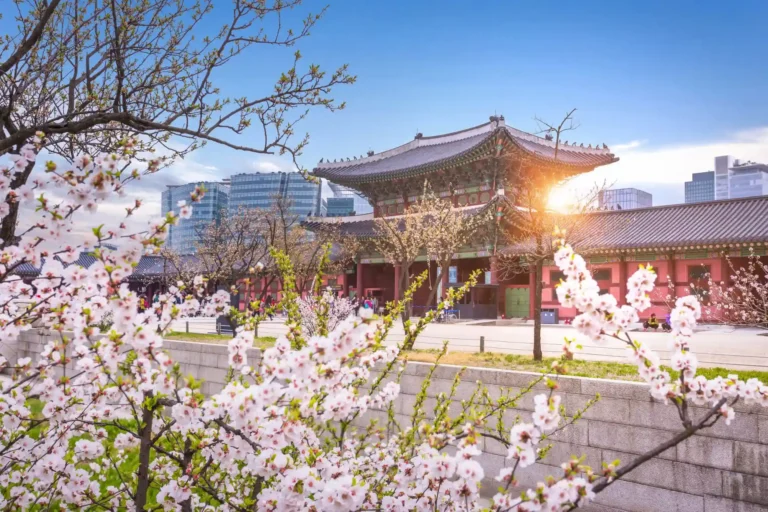
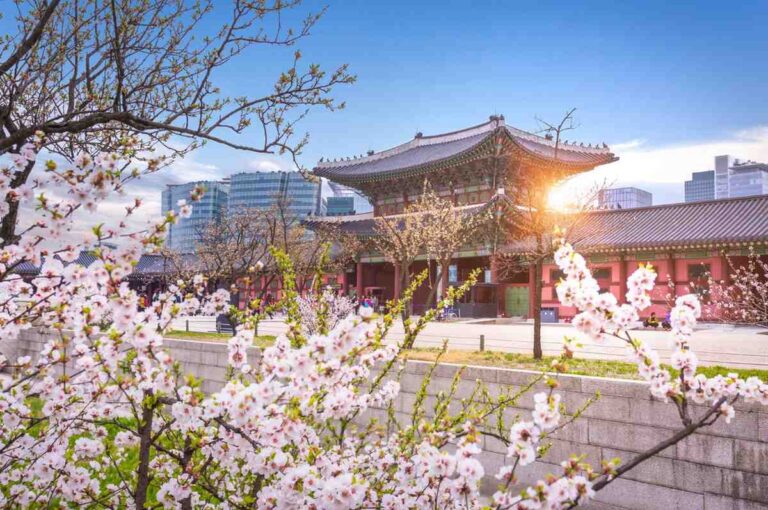
The palaces are a harder sell than the guidebooks suggest, and there is a trick: hanbok rental. Anyone wearing traditional dress enters the palaces free, the shops are clustered around Gyeongbokgung, and a child who has chosen an outfit will walk around a palace complex for two hours without complaint. It is the single most effective thing we recommend to families in Seoul.
Namsan and the tower, reached by cable car, gives a view over the whole city and a walk down through the park.
Bukchon and Ikseon-dong are for wandering, and Ikseon-dong’s converted alleys are full of small food shops that suit children better than a sit-down restaurant.
The Han river parks on a warm evening are where Seoul families actually go: bike hire, scooters, convenience store picnics, and fried chicken delivered to the grass. It is the most normal thing in the city and children love it.
The National Museum of Korea has a children’s museum attached that is genuinely good and free, and the main museum is large, cool and quiet when the weather is against you.
Gyeongju, the surprise
Gyeongju works better with children than any other historical site in the country, because the ancient royal tombs are enormous grass hills in the middle of a small town, and children treat them as hills. The town is flat, bicycles are everywhere, and the whole thing is walkable.
Two nights, ideally in a hanok with a heated floor.
Busan, the release valve
Busan is where the trip loosens. The beach at Haeundae or Gwangalli, the aquarium, the Gamcheon hillside with its painted houses and its treasure-hunt map for children, and a fish market where things are alive in tanks and children stare at them for an hour.
Busan is also where the seafood is, and the barbecue, and the ice cream, and the eating gets easier.
Jeju, if you have the days
Jeju is a good family island: lava tubes, a horse ride, a beach, waterfalls, and a manageable stretch of the Olle coastal path. It costs two internal flights and three days minimum to be worth it. Add it to an eleven-day trip, not a nine-day one.
What does not work
We would rather say this than have you discover it.
The DMZ. Most operators set a minimum age and the day is long, heavily scripted and militarily themed. Older teenagers who have studied the twentieth century get a great deal from it. Children under about twelve get a coach.
Long temple stays. A temple stay is one of the best things in Korea and it involves a three in the morning wake-up, silence and vegetarian food. Some children love it. Most do not, and a bad night in a temple costs you the following day. We build a day visit instead.
Serious mountain days. Ulsanbawi at Seoraksan is over 800 metal steps and a four to five hour return. Not for young children. The Biseondae valley walk in the same park is flat, riverside and excellent.
August in the cities. Seoul in August is in the high eighties Fahrenheit (around 30 to 32 Celsius) with humidity to match, and the July jangma rains are heavy for days at a time. Family trips in July and August should go to the mountains and the coast, or move dates. The full seasonal picture is in South Korea month by month.
Too many cities. The temptation in a fast-train country is to add stops. Three bases in eleven days is the right number with children. Four is one too many.
The food question
Korean food is easier for children than its reputation suggests, because a large part of it is not spicy at all.
Reliable and mild: gimbap, japchae, grilled meat of every kind, tteokgalbi, mandu dumplings, kalguksu noodles, bibimbap served with the chilli paste on the side, seafood pancakes, and the entire fried chicken tradition. Korean pears, tangerines and strawberries are exceptional.
To approach carefully: kimchi jjigae and the red stews, tteokbokki, which children like the look of and often find much hotter than expected, and anything described as maeun.
Practical notes. Restaurants will make dishes without chilli if asked in Korean, and we write the phrase into your document. Banchan is free and refilled, so a hungry child can be fed while the main dish cooks. Convenience stores and department store food halls solve the difficult evenings. And Korean restaurants are generally relaxed about noise and movement, considerably more so than in Japan.
The wider food advice is in what to eat in South Korea.
Six changes we make to the route
- Three bases in eleven days, not five. Seoul four nights, Gyeongju two, Busan three, and a buffer.
- Nothing scheduled before nine in the morning. Korean sites open late and there is no reason to fight it.
- One physical thing every day. A park, a beach, a bike, a hill. Museums and palaces do not count.
- Family rooms or ondol rooms booked specifically, with the sleeping arrangement confirmed rather than assumed, because a Korean twin room is small.
- A guide on two days rather than three, and briefed to talk to the children rather than the parents. The good ones are excellent at it.
- Laundry built in. Every hotel we use for families either has it or is next to it, which sounds trivial and shapes how much luggage you carry.
Ages, roughly
Under five. Workable and easy, and the trip is about parks, trains and food rather than sites. Strollers are manageable in Seoul, less so on Bukchon’s hills and in older subway stations without lifts.
Five to ten. The sweet spot. Old enough for the trains, the markets and the palaces in hanbok, young enough to find the tombs and the fish market genuinely thrilling.
Eleven to fifteen. Korea starts to sell itself. The music, the food, the gaming culture and the design are all things this age group arrives already interested in, and the country delivers on them. Add the DMZ.
Sixteen and over. Treat as adults, and expect them to lead the food choices.
For how Korea sits against the other countries we build family trips in, see Asia with children.
Plan this trip
Tell us your dates and the places you want to see, and we build your trip as a $39 day-by-day plan, with recommended hotels by level and every transfer set out step by step.
Keep reading
- Korea with children, 11 days
- Asia with children, country by country
- What to eat in South Korea, and where
- Seoul in four days, neighbourhood by neighbourhood
- South Korea: the complete guide