The Maldives is one of the four or five best places in the world to dive, and the reason is structural rather than scenic. Twenty-six atolls sit in the open Indian Ocean with deep water on both sides, and through the channels in each atoll rim the ocean pours in and out twice a day. That moving water carries plankton, and plankton brings everything that eats it. Almost every good dive site here is a place where current meets structure.
It is also why the diving demands more of you than the photographs suggest, and why some people should not book a diving trip at all.
The three kinds of site
Kandu, the channels. The signature Maldivian dive. A channel through the atoll rim, dived on the incoming current where the water is clearest, with the group hooked in behind coral blocks on the corner watching the traffic: grey reef sharks in numbers, eagle rays, schools of jack, occasionally a hammerhead early in the morning. This is the site type that most requires experience.
Thila, the submerged pinnacles. A coral tower rising from the atoll floor to within diving depth, usually between 30 and 100 feet (10 to 30 m), covered in soft coral and swept on both sides. More sheltered than the channels and often more beautiful. A giri is the same thing but shallower, topping out just under the surface, which makes it excellent for snorkellers too.
House reefs. The reef ring around a resort island, dived and snorkelled unguided from the beach. On the right island this is the best value diving in the country.
Snorkelling, which is the majority sport
Most people who come here snorkel and never put on a tank, and that is a completely reasonable trip. But snorkelling in the Maldives is determined almost entirely by one thing: the house reef.
Where an island is ringed by living coral you can reach by walking into the water, you will snorkel three or four times a day, see turtles most days and enough fish that you stop photographing them by Wednesday. Where the island sits on a sand shelf with the reef edge four hundred yards out, or the coral has died back, snorkelling becomes a scheduled boat trip you pay for.
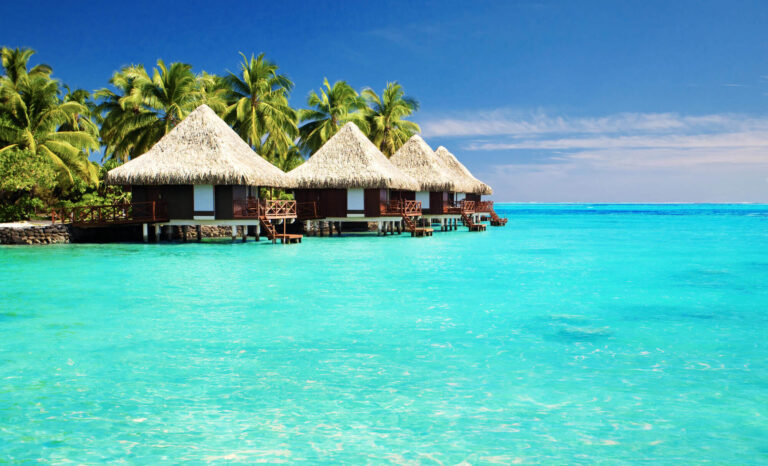
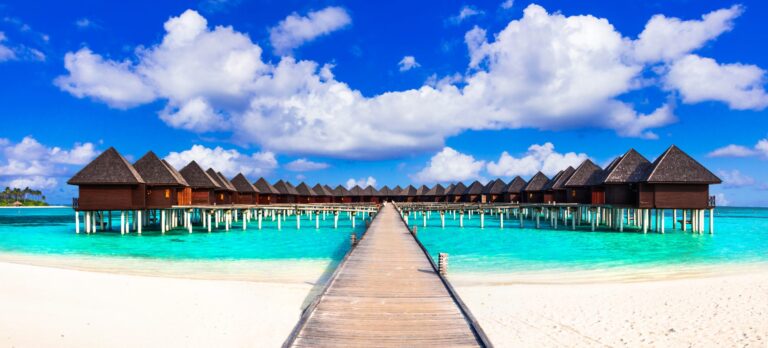
Those two islands look identical from a drone. This is the single largest source of disappointment in the Maldives, and we write the house reef description into every proposal, including when it is poor.
For snorkellers, the best sites are giris, sandbank reefs and the manta and whale shark sites below, all surface accessible. You do not need to dive to have the best animal encounters here.
Mantas and whale sharks
Whale sharks, South Ari Atoll, year round. A resident population of juveniles feeds along the southern rim of South Ari, and this is the most reliable place on earth to snorkel with them. Boats work the outer reef looking for a shadow, and when one is found you enter quietly and swim alongside. A snorkelling activity, not a diving one, with no closed season. Guesthouses on Dhigurah and Maamigili run the same trip as the nearby resorts for a fraction of the price.
Mantas at Hanifaru Bay, Baa Atoll, roughly May or June to November. When the south-west monsoon current pushes plankton into this small bay and cannot flush it out, mantas arrive to feed, sometimes in dozens, and whale sharks with them. It is a UNESCO biosphere reserve and access is regulated: snorkel only, limited boats, limited numbers, limited time. The aggregation follows the lunar cycle rather than the calendar, so give it several days rather than one.
Manta cleaning stations, all year, on whichever side is working. Mantas do not leave the country outside the Baa season, they change sides with the monsoon. From May to November they are cleaned on the eastern rims of the atolls. From December to April the current reverses and the western stations in North and South Ari, Rasdhoo and Lhaviyani become reliable. Choosing the right atoll for your month matters more than choosing the right month. See the Maldives month by month.
Turtles are on good house reefs all year, and reef sharks on almost every channel.
Current, which is the honest part
Maldivian diving is drift diving. You are dropped up-current, you fly along a wall or hold position on a channel corner, and the boat picks you up wherever you surface. Done well it is effortless. Done badly it is frightening.
What that means practically:
- You must be comfortable being carried by moving water rather than fighting it. The instinct to swim against current is the most common cause of trouble here.
- Buoyancy control has to be genuinely good. You will hold position at 80 feet (25 m) beside a wall with water pushing you, sometimes in mild up or down currents on a channel corner.
- A reef hook, a short line that anchors you to dead coral while the current runs past, is standard on channel dives. Learn to use it before you need it.
- A surface marker buoy you can deploy from depth is not optional.
Not every dive is a ripping channel. Thilas, house reefs and sheltered inside sites are calm. But if you cannot dive in current you cannot dive the sites this country is famous for.
Certification, and what is actually required
| You have | What you can do |
|---|---|
| No certification | Snorkelling everywhere, including whale sharks and Hanifaru, plus a discover-scuba dive in a lagoon. That is most of the best animal encounters |
| Open Water | House reefs, most giris and shallow thilas, some easy channels at the dive centre’s discretion. Depth limited to about 60 feet (18 m) |
| Advanced Open Water | Most channel dives and thilas, and the wrecks. The useful certification here |
| Advanced plus 30 to 50 logged dives | The full menu, and the minimum many liveaboards accept |
| Nitrox | Worth having. Repetitive dives on a liveaboard week are the profile nitrox is for. Most boats offer it and charge for it |
Three practical points. Dive centres ask for your logbook and many run a check dive on the house reef before taking you into a channel, which is a good sign rather than an insult. A medical questionnaire is standard, with a doctor’s clearance required for a range of conditions. And you must leave eighteen to twenty-four hours between your last dive and your flight, which on a seven night trip removes the final day from the water.
You can certify here, but a course spends three or four days in a lagoon rather than on the sites you came for. Qualify at home and come here to dive.
Liveaboard or resort
The two ways to dive this country, and they are genuinely different products.
| Resort diving | Liveaboard | |
|---|---|---|
| Sites reached | Whatever is within about an hour of one island, typically 15 to 25 | Three or four atolls in a week, including channels no day boat reaches |
| Dives per day | Two, sometimes three, plus unlimited house reef on good islands | Three, plus night dives |
| Cost per day | The resort rate plus $80 to $130 per two-tank day | Often less than a comparable resort, all in |
| Who it suits | Mixed groups where not everyone dives, families, anyone who wants a beach too | Divers travelling with divers, people who want volume |
| The catch | Site fatigue after five days, and the good channels may be a long boat ride | No beach, small cabin, no escape from the group, and green season sea state |
Our position: if diving is the reason for the trip, take the liveaboard and put two or three nights on an island at the end rather than the beginning. See diving and liveaboards in 10 days. If diving is one of several reasons, or you travel with a non-diver, take a resort island with a good dive centre and a strong house reef, and accept that you will dive the same eight sites more than once. See classic Maldives in 7 days.
There is a third option few people consider. A guesthouse with a dive centre attached costs a fraction of the resort version and dives the same water, particularly on Dhigurah and in the Malé atolls. See local islands and Malé in 8 days.
Water temperature sits between 82F and 84F (28C to 29C) all year, so a 3mm suit is enough and a full one is worth it for reef protection rather than warmth. Visibility runs to around 100 feet (30 m) in the dry season and drops to 50 feet (15 m) or less in the green season. The water that brings the mantas is the water you cannot see through.
Who should not book a diving trip here
We would rather say this now.
People who have not dived in over two years without a refresher. Channel diving is not where you rediscover buoyancy control.
People who are anxious in open water or uncomfortable with current. The diving here is drift diving in blue water with no bottom in sight. If that makes you tense, there is a very good snorkelling holiday available instead.
People booking a diving trip to please someone else. A liveaboard is seven days on a boat with no way off it: a wonderful week for a diver and a long one for anyone else.
People with fewer than about 25 logged dives who want the famous channels in one week. You will be limited to the gentler sites for several days, correctly, and may leave feeling you missed the thing you came for.
Related
- Diving and liveaboards in 10 days
- The Maldives: the complete guide to planning your trip
- The Maldives month by month
- What we would skip in the Maldives
- All our Maldives trips