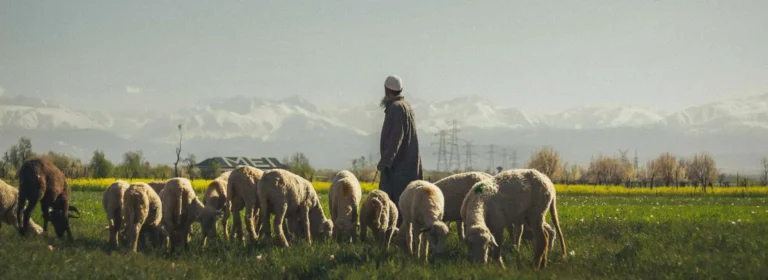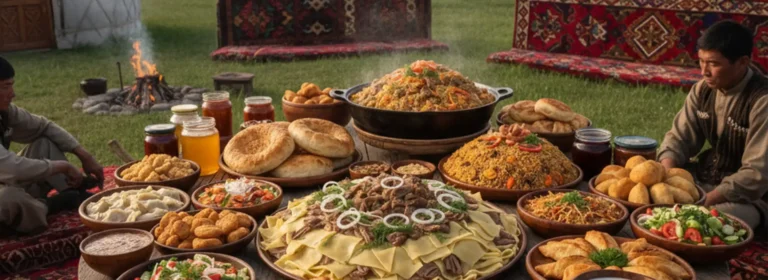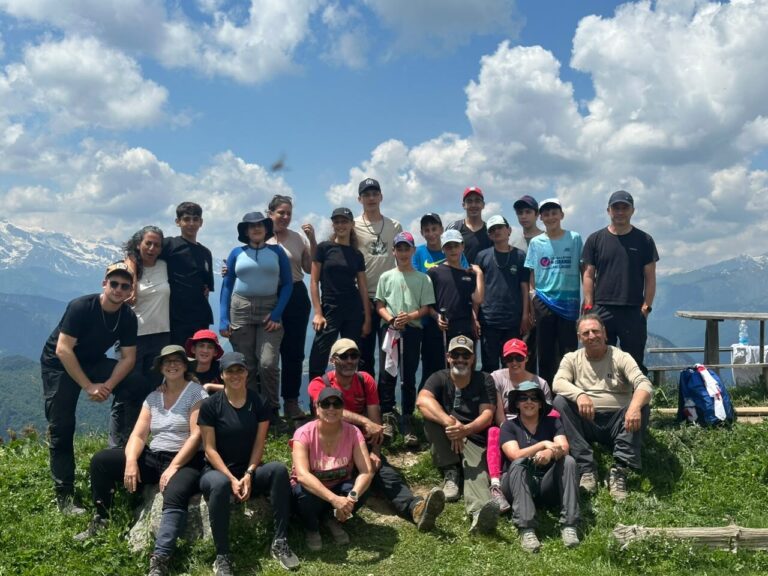
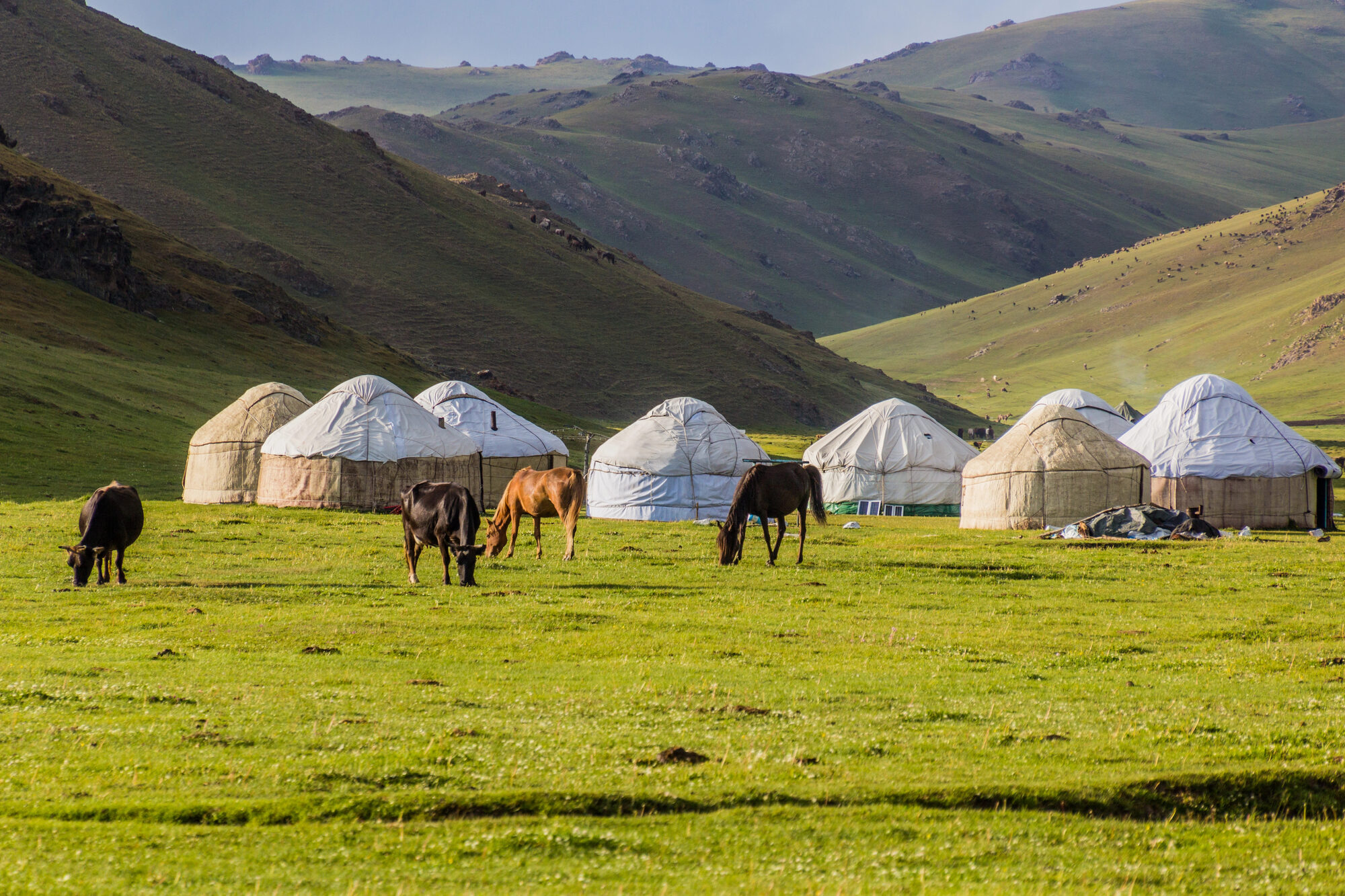
The photograph is true. This article is about everything the photograph leaves out, because the gap between what people expect and what they get is the main reason a Kyrgyzstan trip disappoints, and it is entirely avoidable by saying it in advance.
What Song-Kul actually is
A high lake in a bowl of pasture in the centre of the country, roughly 18 miles (29 km) long, frozen for much of the year and surrounded from June to September by the jailoo, the summer pasture, where herding families bring their animals up to graze.
There is no village. There is no permanent structure of any kind on the shore. There is no phone signal at most camps. What there is, in summer, is a scatter of yurt clusters a few miles apart, several thousand sheep and horses, and a great deal of sky.
Getting there is five to seven hours from Bishkek or Karakol, the last two on gravel switchbacks over a pass at around 11,300 feet (3,450 m). A 4×4 is not a preference on that track, it is the vehicle it requires.
The yurt night, in full
Here is the truth, and we would rather you read it now than discover it at nine at night in the dark.
The yurt. A wooden lattice frame under felt, about 18 feet (5.5 m) across, with four to eight mattresses on the floor under heavy quilts and a stove in the middle. Unless you have paid a supplement for a private yurt, you are sharing with whoever else is at the camp.
The toilet. An outdoor long-drop: a wooden cubicle over a pit, a short walk from the camp, not lit. Bring a head torch. Every client mentions this afterwards.
The shower. There is no shower. Washing is a bowl of water heated on the stove, for face and hands.
Electricity. A solar panel that runs a light and may charge a phone slowly. Bring a power bank.
The cold. This is the part that surprises people most. A July day at Song-Kul runs to about 75°F (24°C) at noon and drops below freezing by four in the morning in some years. The stove is lit at dinner and is out by two. The quilts are heavy and warm and you will still want a hat in bed. A down or synthetic jacket is not optional whatever the dates say.
The food. Simple, plentiful and mostly excellent, with kymyz, fermented mare’s milk, offered and worth trying.
The night sky. At 10,000 feet (3,000 m) with no light for thirty miles (48 km), and this is the reason to stay two nights rather than one. The first night most people sleep badly from the altitude. The second they are outside at midnight.
We do not call this roughing it, because that framing suggests something has gone wrong. It is the accommodation of the summer pasture and it is what the families live in themselves. It is the reason people who love Kyrgyzstan love it. But it is not a hotel with a yurt-shaped roof, and every year somebody arrives expecting one. Our proposals name the camp, say whether the yurt is shared and say where the toilet is, for every night.
Two nights, never one
The most important piece of advice in this article.
One night at Song-Kul means arriving at five in the afternoon after six or seven hours in a vehicle, eating, sleeping badly at altitude, and leaving at nine the next morning. You will have been to Song-Kul. You will not have seen it.
Two nights buys a full day on the pasture: a ride out with a horseman, a walk along the shore, an afternoon watching a family milk mares and make kymyz, and a second night when your body has adjusted enough to sleep. It is the difference between the country working and not, and it is why our routes hold two nights here even when they are tight elsewhere. The trip-length arithmetic is in how many days do you need in Kyrgyzstan.
Riding, honestly
Kyrgyzstan is a riding country in a way almost nowhere else is. Children ride before they can properly walk, the national sports are played on horseback, and the horse is a working animal rather than a hobby.
That has consequences for a visiting rider.
The horses. Small, tough, sure-footed mountain horses. They know the route. They will follow the horse in front whatever you do with the reins, which is reassuring for a beginner and mildly insulting for an experienced rider.
The riding style. Far less rein contact than Western or English riding. Neck reining, a loose rein, and a horseman who will correct your horse rather than your position. Nobody will teach you a seat.
The tack. Wooden-framed saddles with a blanket or a pad, sometimes a Western-style saddle at the better camps. They are less comfortable than what you are used to. Padded shorts are not a joke.
The pace. Mostly walking, with trots and the occasional canter across flat pasture. Trekking here is about covering ground and looking at the country, not about schooling.
What a riding day involves
An hour or two at a camp. Anyone can do this, including people who have never been on a horse. A horseman walks or rides beside you, the ground is flat pasture, and it is the right way to find out whether you want more. We put one of these into most standard routes.
A half day, four to five hours. Genuinely tiring if you do not ride at home. Expect to be sore. A full day, six to seven hours, is for people who ride regularly: lunch out of a saddlebag, a pass crossed and a different camp at the end.
A multi-day supported trek. Three to six days in the saddle, camp to camp across the pastures with pack horses, a cook and a horseman for every two riders, sleeping in yurts or under canvas. A different holiday from a vehicle trip with rides attached, and a better one for the right traveller. Ours is horse trekking, 13 days.
If you have never ridden
Start with an hour at a camp, take a half day later in the trip, and commit to the multi-day version only if you are still keen. We build the route so that decision can be made on the ground. If you have a bad back or a knee that objects, say so: six hours in a wooden saddle finds every weakness you have.
Walking, as the alternative
Not everybody wants to ride, and Song-Kul is good walking country: flat shoreline, low ridges and short climbs to a view over the whole bowl. Nothing technical, and the altitude makes an easy walk feel moderate.
For serious walking, the country’s best is elsewhere: the Ala-Kul trek out of Karakol over a pass at about 12,500 feet (3,800 m), Altyn Arashan, the marked trails at Jyrgalan, and the Alay valley under Peak Lenin at 23,406 feet (7,134 m). Where Kyrgyz trekking sits against Nepal, Japan, Georgia and Bhutan is set out in trekking in Asia compared.
Altitude at Song-Kul
Ten thousand feet (3,000 m) is not Himalayan and it is high enough to matter. A proportion of perfectly healthy travellers get a headache, sleep badly the first night and find themselves breathless walking up a low ridge.
The fix is sequencing rather than medication. Sleep at Bishkek’s 2,600 feet (800 m), then the lake at 5,300 feet (1,600 m), then Kochkor or Naryn at 6,000 to 7,000 feet (1,850 to 2,150 m), and only then go up. Drink more water than seems necessary, eat dinner, and go easy on the first evening.
If you have a heart or lung condition, tell your specialist at the outset. If you are travelling with young children, we would use Kyrchyn instead, which is lower and gentler and a real substitute rather than a consolation prize.
The season, which is absolute
The camps go up in late May or early June and come down around the second week of September, moving with the snow line each year. Outside that, Song-Kul is a frozen lake with nobody on it and the passes are shut.
As guidance the season is June to mid-September, and we confirm current dates with the specific camps on your route before we quote, because a mid-September trip can be fine one year and short of a camp the next. The full calendar is in Kyrgyzstan month by month.
What it costs
A shared yurt with dinner and breakfast runs about $30 to $50 per person a night, a private yurt $60 to $100. Horses are about $20 to $35 a day plus $25 to $40 for a horseman. The line that dominates the budget is the vehicle to get there, and it is a fixed cost rather than a per-person one. Full figures in what a trip to Kyrgyzstan costs.
Plan this trip
Tell us your dates and the places you want to see, and we build your trip as a $39 day-by-day plan, with recommended hotels by level and every transfer set out step by step.
Keep reading
- Kyrgyzstan: the complete guide to planning your trip
- Horse trekking, 13 days
- Kyrgyzstan month by month
- Trekking in Asia compared
- What does a trip to Kyrgyzstan cost?
- All our Kyrgyzstan trips