Australia is close to 2,500 miles (4,000 km) from the east coast to the west, and roughly 2,000 miles (3,200 km) from the tropical north to Tasmania. It is comparable in size to the mainland United States, or to Europe without Russia. Sydney to Uluru is about three hours in the air. Sydney to Cairns is about three hours. Melbourne to Perth is over four. There is no train that solves this and no drive that is worth the days.
So the first thing we do with an Australia brief is subtract. Two weeks realistically covers two or three regions. Three weeks covers four. Anyone selling you five regions in fourteen days is selling you airports.
This guide is the document our consultants open when a new Australia file lands on the desk, written out in full.
Australia at a glance
| Best months | April to June, and September to November |
| Comfortable trip length | 14 to 21 days |
| Entry | Advance authorisation required for almost everyone |
| Getting around | Internal flights between regions, hire car within them |
| Land budget, per person per day | 220 to 850 US dollars |
| Our presence | Long-standing local partners, not our own office |
How we run Australia, and why we say so
We have dedicated local offices in Vietnam and India, our team in Japan, and local representatives in the Philippines. Australia is not one of them. It runs through partners we have worked with for years: an operator in Sydney, reef operators in Cairns and Port Douglas we selected boat by boat, and ground handlers in the Northern Territory and Tasmania.
Australia and New Zealand sit furthest from our own footprint, and most of the Australia trips we build are one of two things. Either they are the second half of an Asia trip, Japan or Vietnam or Singapore and then south, which is a genuinely good way to travel and splits an enormous flight. Or they come from people who have already travelled with us somewhere else and would rather have this planned by someone they know than by a stranger. We are comfortable with both. We would not claim more.
When to travel, by season and by region
Australia does not have one season. It has at least three climates running on different calendars, and the reason April to June and September to November are the answer is that those are the only windows when all three behave at once.
Remember that the seasons are reversed. December is high summer. July is winter.
The tropical north: Cairns, Port Douglas, the Daintree, Darwin, Kakadu
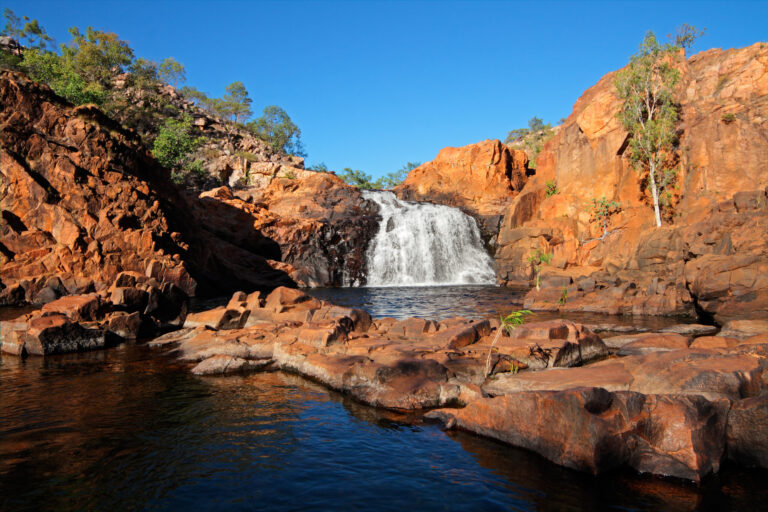
The dry season runs roughly May to October. Warm, clear, low humidity, and the only sensible time to be in Kakadu or on the Gibb River Road.
The wet season runs roughly November to April. Heavy rain, high humidity, cyclone risk, and roads and lodges that close. It is also stinger season in the sea: box jellyfish and Irukandji are present in coastal tropical waters roughly November to May, which means netted swimming enclosures and full stinger suits on the boats. The outer reef is generally considered lower risk and operators supply suits either way, but if you have come for casual beach swimming, that is the season that takes it away.
The red centre: Uluru, Kata Tjuta, Kings Canyon, Alice Springs
April to September. That is the whole answer.
December and January in the red centre are dangerously hot. Daytime highs regularly pass 104°F (40°C) and go higher. National park authorities close the main walks from mid-morning once the forecast reaches around 97°F (36°C), which in December and January is most days, so the Kings Canyon rim and the longer Uluru and Kata Tjuta routes are simply not available to you after breakfast. We will build you a red centre trip in January if your dates are fixed, but it becomes a sunrise-and-sunset trip with a long air-conditioned middle, and we will say so before you pay for it.
Winter, June to August, is close to perfect for walking there and genuinely cold at night, occasionally below freezing. Bring layers that people do not expect to need in a desert.
The southern cities and coasts: Sydney, Melbourne, Adelaide, the Great Ocean Road
Best in spring, October and November, and autumn, March to May. Summer is hot, busy and expensive, and Melbourne in particular has a reputation for four seasons in a day that is entirely earned. Winter in Sydney is mild and underrated. Winter in Melbourne and Tasmania is cold and wet.
Tasmania
December to March for walking and for daylight. Tasmania in summer has long evenings and the weather is workable. Outside that window the Overland Track becomes a serious undertaking rather than a holiday, and several lodges close.
The reef, specifically
Two separate questions: when the coral and the water are good, and when the boats can get out.
June to November is the broad window. Within it, the southeast trade winds blow hardest around June to August, which can make the outer reef choppy and uncomfortable even on a clear day. The calmest water is usually late September to early December, and again in April and May. Visibility is generally better in the dry season than the wet.
If you get seasick, tell us. It changes which port, which boat and which site we choose, and on a bad wind day it changes whether we recommend going at all.
How many days do you actually need?
- Under 10 days. One region, or Sydney plus one. Sydney and the reef, or Sydney and the red centre. Not all three.
- 12 to 14 days. The standard three: Sydney, the red centre and the reef. Four internal flights. It works and it is not rushed if it is built properly.
- 15 to 17 days. The above plus Melbourne and the Great Ocean Road, or the above plus a proper week in Tasmania instead of the reef.
- 21 days. Four regions with room to breathe, or a genuinely different Australia: the southern half, the west, or the Top End in the dry.
The number that matters is not total days, it is how many mornings you spend at an airport. On a fourteen day route we will not put more than four internal flights, and we will not put a domestic flight on the same day as your international departure.
Entry requirements
Almost nobody arrives in Australia without pre-approved authorisation. There is no meaningful visa on arrival for tourism.
Broadly, two schemes cover most visitors. An Electronic Travel Authority, usually written as ETA, covers many nationalities and is applied for through the official app, with a service charge. An eVisitor authorisation covers most European passports and is applied for online. Both are electronic, both are linked to your passport, and both need to exist before you board the aircraft, not when you land. Neither is issued at the airport.
The scheme that applies to you depends on your nationality, and the fee has changed more than once. We confirm the current requirement, the current fee and the correct application route for your specific passport and your specific travel dates before you book anything, and we send you the official link rather than a copy of the rules that might be a year old.
One more thing that catches people. Australian biosecurity is strict and enforced with real fines. Declare all food, plant material, wooden items and anything that has been on a farm. Hiking boots with soil on them are a genuine issue. Clean them before you fly.
Getting around
Internal flights
This is the spine of every Australia itinerary. Sydney, Melbourne and Brisbane connect to almost everything. Cairns and Ayers Rock Airport, which serves Uluru and the Yulara village, connect to fewer places than people assume.
The leg that catches most self-planners is Cairns to Uluru. A direct service exists only in some seasons and on some years. When it does not, the connection goes through Sydney or Brisbane and costs you most of a day. If your route needs both the reef and the red centre, the order matters, and we build it around whichever direct services actually operate on your dates rather than assuming.
Domestic security and check-in are quick, bags are usually included on the main carriers and not on the low-cost ones, and the low-cost carriers cancel more. On a route where a delay would cost you a reef day or a flight home, we pay for the better airline.
Hire cars
Excellent within a region. Australians drive on the left.
Three warnings that matter. Distances between fuel stops in the centre and the north are long, and phone coverage disappears entirely between towns. Kangaroos and wombats are most active at dawn and dusk and a strike at speed is a serious accident, so most rental agreements restrict or forbid driving outside daylight in remote areas, and we build itineraries that respect that. And most standard hire car agreements exclude unsealed roads, which rules out several routes people find on maps.
Trains and coaches
The long-distance trains, the Ghan and the Indian Pacific, are experiences rather than transport. They are slow, expensive and genuinely enjoyable if the journey is the point. They are not a way to save money or time. If you want one, we will build a route that earns it rather than bolting it on.
What a trip to Australia costs
Land only, per person, based on two people sharing, excluding international flights. These cover accommodation, food, ground transport, entries, reef and desert activities, and the guiding we would normally include.
| Style | Per day | 12 days | 14 days | 21 days |
|---|---|---|---|---|
| Careful: good mid-range hotels, mostly independent | $220 | $2,640 | $3,080 | $4,620 |
| Comfortable: strong 4 star, selected private days | $340 | $4,080 | $4,760 | $7,140 |
| Boutique: small lodges and design hotels | $520 | $6,240 | $7,280 | $10,920 |
| Luxury: top-tier lodges, private guiding throughout | $850 | $10,200 | $11,900 | $17,850 |
Add internal flights on top. On a two week route with four legs, budget roughly $500 to $900 a person depending on carrier and how early we book.
Three things move that number more than anything else:
- The month. School holidays in December and January, and the Easter break, push accommodation up sharply everywhere and make Sydney and the coast expensive. The shoulder months are cheaper and better.
- The reef day. A shared day boat from Cairns and a small-group trip out of Port Douglas to the outer ribbon reefs are not the same product. The gap is large in both directions.
- The desert lodge. Uluru accommodation is a captive market, all of it within the Yulara village, and the good rooms are expensive. There is no cheaper town down the road.
What costs less than people expect: eating. Australian casual food is very good and reasonably priced, coffee is excellent almost everywhere, and a good lunch is a fraction of a good dinner. Tipping is not expected.
The regions worth your time
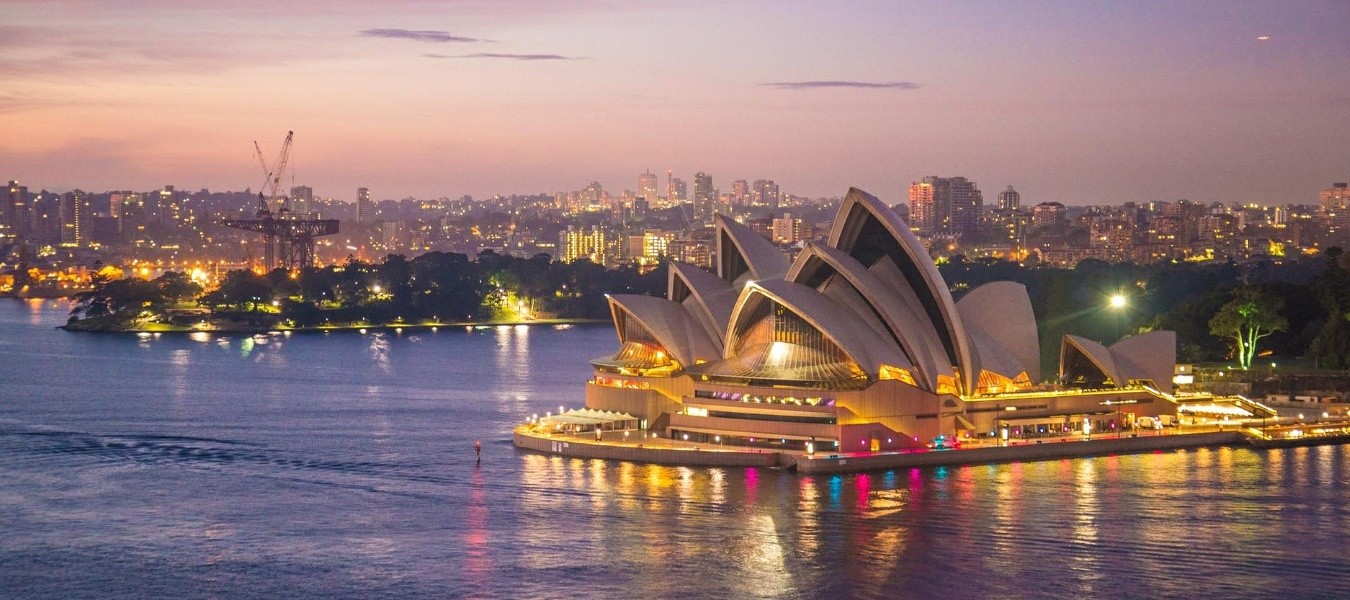
Sydney. Three to four days. The harbour is the reason to be there, and the coastal walk from Bondi to Coogee, about 4 miles (6 km), is the single best free thing in the city. The Blue Mountains work as a night rather than a day trip.
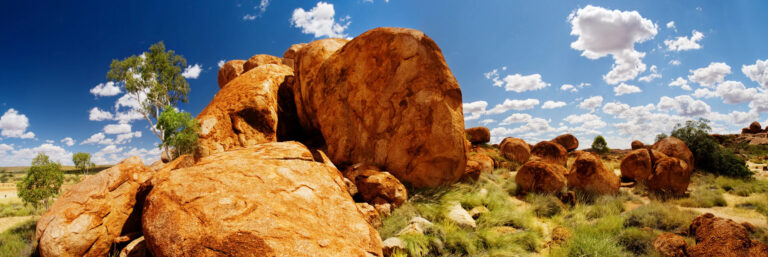
The red centre. Three nights minimum at Uluru and Kings Canyon. Uluru cannot be climbed and has not been since October 2019, at the request of the Anangu traditional owners, and this is not a loss. The base walk, Kata Tjuta’s Valley of the Winds and a guided day with an Anangu guide are all better than the climb ever was.
The Great Barrier Reef. Not one place. Port Douglas and Cairns for the northern ribbon reefs and the Daintree next door, the Whitsundays for sailing and Whitehaven Beach, and the southern coral cays such as Lady Elliot and Heron for the best remaining coral and the easiest snorkelling straight off a beach. We choose the port to match what you actually want.
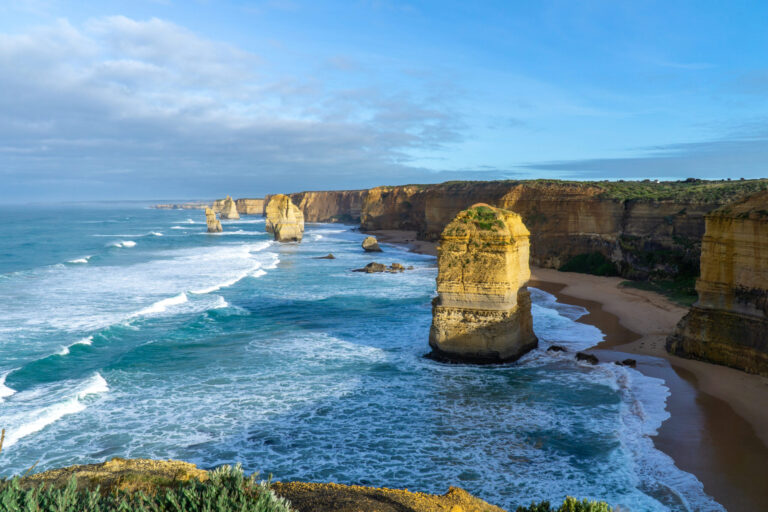
Melbourne and the Great Ocean Road. Melbourne is the food and coffee city and rewards a slow three days. The Great Ocean Road is about 150 miles (240 km) to the Twelve Apostles and takes far longer than it looks. Two nights on the road, not a day trip. There have never been twelve apostles, and there are fewer standing now than there were twenty years ago.
Tasmania. Our favourite third region for people who have already seen a reef somewhere. Cradle Mountain, Freycinet, the Bay of Fires, Bruny Island and Hobart’s art museum. Seven to ten days.
Kangaroo Island and South Australia. The Barossa for wine, Adelaide as an easy small city, and Kangaroo Island, which lost about half its vegetation to the 2019 and 2020 bushfires and is still visibly regenerating. It is worth going. It does not look the way older photographs show it.
The Top End and the Kimberley. Kakadu, Litchfield, the Bungle Bungles. Dry season only, and a trip in itself.
Western Australia. Perth, Margaret River and Ningaloo, where whale sharks are reliably present roughly March to July. Five hours of flying from the east coast, so it belongs in its own trip.
Practical notes
- Sun. The UV is genuinely stronger than most visitors are used to. Hat, long sleeves, high factor sunscreen, reapplied. This is not a formality.
- Water. Swim between the flags on patrolled beaches. Rip currents are the real risk on the surf coast, not sharks.
- Cards. Australia is close to cashless. Cards work almost everywhere, including small cafes and buses.
- Distances on signs. Everything is metric. A 400 km sign means 250 miles and roughly four hours.
- Wildlife timing. Most of it is nocturnal or crepuscular. A wildlife day that starts at nine in the morning sees very little.
- Flight home. Give yourself a night in a gateway city before a long-haul departure. We build that in.
How we build an Australia trip
Your file is owned by one named specialist from the first email to the day you land home, working with our partners in Sydney, Cairns and the Northern Territory. Our Head of Consulting Mai Est reviews the long routes.
Your $39 plan is written for you rather than pulled from a template, and if you want us to book the trip, the quote is free and carries no obligation. You see the actual hotels, the actual flight numbers, the actual reef operator and the reasoning behind the order of the days. Two rounds of changes are included, and we will tell you when something you have asked for is a bad idea.
While you travel, we open a WhatsApp group with your specialist here and our partners there. A cancelled reef day for wind, a delayed domestic flight, a road closed by rain in the north: you get a revised plan, not a helpline number.
Ready to plan it?
Tell us the shape of the trip you have in mind and we will build you a first outline. A plan written for you, and a free, no-obligation quote if you want us to book.
Keep reading
- The eight Australia itineraries we build most often
- Classic Australia in 15 days
- Australia in 21 days, the southern half
- How much does two weeks in Australia really cost?