The first is that this is a driving country and the drives take longer than the map says. The roads are genuinely good and genuinely slow: two lanes almost everywhere, constant curves, one-lane bridges, and long sections where overtaking is not possible. Add a third to whatever your mapping app tells you, then add the stops.
The second is that December to February is peak, and it is peak in a way that catches people out. Queenstown and the Milford area book out close to a year ahead, not three months. If you want a specific lodge in January, the time to ask is the January before.
The third is the Great Walks. The huts are allocated through a booking system that opens on one announced date each year, and the popular ones sell out in minutes. A walking trip to New Zealand is not planned around your annual leave. It is planned around that date.
This guide is the document our consultants open when a new New Zealand file lands on the desk, written out in full.
New Zealand at a glance
| Best months | November, and February to April |
| Comfortable trip length | 14 days for one island, 21 for both |
| Entry | NZeTA in advance for most visa-waiver nationalities, plus a visitor levy |
| Getting around | Self-drive, with the Cook Strait ferry between the islands |
| Land budget, per person per day | 200 to 800 US dollars |
| Our presence | Long-standing local partners, not our own office |
How we run New Zealand, and why we say so
We have dedicated local offices in Vietnam and India, our team in Japan, and local representatives in the Philippines. New Zealand is not one of them. It runs through partners we have worked with for years: an operator based in Christchurch, and specialists in Queenstown and Fiordland who hold summer capacity that is otherwise unobtainable.
New Zealand and Australia are the two destinations furthest from our own footprint, and we sell them mostly to two kinds of traveller. Those making New Zealand the far end of an Asia trip, with a stop in Japan, Singapore or Hong Kong on the way, which is a genuinely good way to break an enormous flight. And those who have already travelled with us elsewhere and want this one planned by someone they know. If what you need is a company with staff in Queenstown, that is not us. If what you need is a route planned honestly and the difficult bookings held on the day they release, that is.
When to travel
The seasons are reversed. December is high summer, July is deep winter.
December to February, summer and peak
Warmest, longest days, and the only reliable window for the alpine passes and the higher Great Walks. It is also the busiest and the most expensive by a wide margin, with domestic holidays layered on top of international visitors from late December into January.
The practical consequence: in Queenstown, Wanaka, Aoraki Mount Cook, Te Anau and Milford, the good accommodation and the boat and flight capacity book out close to a year ahead. We do not say that as a sales line. It is why a summer New Zealand enquiry that arrives four months out gets a different, honest answer about what is left.
March and April, our recommendation
Settled weather, warm days, cooler nights, dramatically fewer people, and autumn colour through Central Otago and around Arrowtown and Wanaka in late April, which is the most beautiful the South Island gets. Rates fall. Some alpine huts and shuttles wind down at the end of April, so a walking trip needs care in the second half of the month.
May to September, winter
Queenstown becomes a ski town and is busy again for it. The rest of the country is quiet, wet in the west, and cheaper. Several alpine roads close or need chains. The Great Walks leave their booked season and become genuinely serious undertakings rather than holidays. Milford Sound in winter, with snow on the walls and almost nobody there, is one of the best things in the country if you accept the weather.
October and November, spring
November is the other window we push hard. Warming up, long light, everything open, the Great Walk season underway, and the crowds not yet arrived. October is variable and the passes can still have snow.
A note on Milford Sound
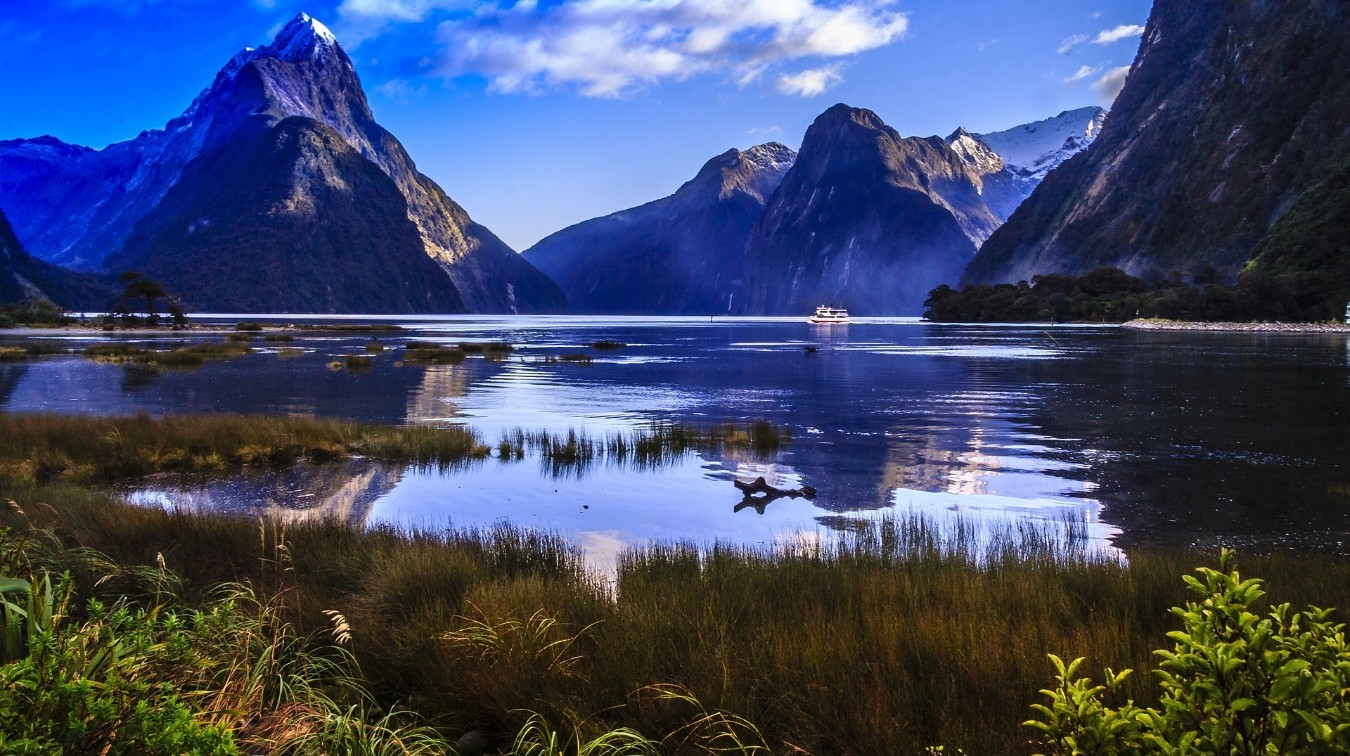
Milford is one of the wettest inhabited places on earth. It rains on roughly two days in three. This is not a reason to avoid it, because Milford in rain is arguably better: the walls run with hundreds of temporary waterfalls that are not there on a clear day. The thing to avoid is booking a single Milford day with no alternative.
How many days do you actually need?
- 7 to 10 days. One island. The South Island, from Christchurch to Queenstown and back, or the North Island loop. Not both.
- 14 days. The South Island properly, which is what we recommend most often. Or both islands at a pace that spends too much of itself in a car.
- 17 to 18 days. Both islands, honestly, with the North Island kept tight.
- 21 days. Both islands with room to stop, plus one of the Great Walks or Stewart Island.
The number that matters is nights per base. We aim for two or three nights in most places and we will push back on a route with six one-night stops, because in a self-drive country that means six mornings of packing.
Getting around
The car
Self-drive is the right answer for almost everybody. Cars are cheap, the roads are safe, fuel is available in towns and not between them, and the entire appeal of the country is what happens between the places.
New Zealanders drive on the left. The open road limit is 100 km/h, about 62 mph, and you will very rarely average it. Add a third to any estimate. Some of the roads people plan casually are serious: the Crown Range, Arthur’s Pass, the Haast Pass and the road into Milford all deserve respect and daylight.
Two more things. Phone coverage disappears between towns in Fiordland, the West Coast and the Catlins, so route notes need to be offline. And rental agreements typically exclude unsealed roads, including some that appear on maps as ordinary routes, which rules out a few short cuts.
The Cook Strait ferry
Wellington to Picton, roughly three and a half hours, crossing the strait and then threading through the Marlborough Sounds, which is the best part. It can be rough, and sailings are occasionally cancelled for weather, so we do not put a fixed commitment on the far side of an evening crossing.
The practical tip that saves real money: taking a hire car across is expensive. It is usually cheaper to drop the car in Wellington, cross as a foot passenger and pick up a new one in Picton. We arrange it that way by default and tell you when the exception applies.
Internal flights
Useful for one thing: skipping a long backtrack. Christchurch to Queenstown, Auckland to Queenstown, Wellington to Christchurch. On a two week trip, one flight can buy you two days. On a three week trip you usually do not need one.
Campervans
Popular, and not for everyone. They work if you want freedom and do not mind that a campervan is slower on every hill and every corner, that freedom camping is restricted and enforced, and that the good holiday parks in January are booked out too. We build them when asked and we are honest about the trade.
Entry requirements
Most travellers from visa-waiver countries need an NZeTA, the New Zealand Electronic Travel Authority, approved before they board. It is not issued on arrival, and airlines check it. Alongside it, most visitors pay an International Visitor Conservation and Tourism Levy. Australian citizens are treated differently, and Australian permanent residents differently again.
The levy amount has changed more than once, and the exemptions are specific. We confirm the current requirement, the current fee and the correct application route for your particular passport and travel dates before you book anything, and we send you the official link rather than a copy of a rule that might be a year old.
Biosecurity at the border is strict and taken seriously. Declare all food, and clean your hiking boots and tent pegs before you fly. Soil on footwear is a genuine issue and inspections do happen.
The Great Walks, and the date that decides everything
There are eleven Great Walks, the national network of multi-day tracks with maintained huts. Bookings for the whole season, which runs roughly from late October to late April, open on a single date announced each year by the Department of Conservation. Huts on the Milford Track and the Routeburn Track sell out within minutes of that opening. Kepler and Abel Tasman go quickly. Others are easier.
What that means practically: if a Great Walk is the reason for the trip, we plan the trip around the booking date, not around your calendar. That usually means agreeing your dates six to eight months before you travel, being online at the moment bookings open, and having a second and third choice of start date ready.
Two things soften it. First, several of the Great Walks have guided options with private lodges, which are booked separately and also fill far ahead but on a different system. The guided Milford Track is the obvious example. Second, some of the best walking in the country is not a Great Walk at all. The Hooker Valley Track at Aoraki, the Rob Roy Glacier track near Wanaka and the Tongariro Alpine Crossing are day walks, and the Crossing now has a parking limit and a shuttle system that we book for you.
What a trip to New Zealand costs
Land only, per person, based on two people sharing, excluding international flights. These cover accommodation, food, the hire car and fuel, the ferry, entries, activities and any guiding we would normally include.
| Style | Per day | 10 days | 14 days | 21 days |
|---|---|---|---|---|
| Careful: motels and good B&Bs, self-drive throughout | $200 | $2,000 | $2,800 | $4,200 |
| Comfortable: strong 4 star and country hotels | $310 | $3,100 | $4,340 | $6,510 |
| Boutique: small lodges, selected private days | $480 | $4,800 | $6,720 | $10,080 |
| Luxury: top lodges, private guiding, scenic flights | $800 | $8,000 | $11,200 | $16,800 |
Three things move that number:
- The month. January costs substantially more than March for the same room, and in Queenstown the gap is large.
- The activities. New Zealand’s signature days are expensive: a helicopter onto a glacier, a Milford overnight cruise, a jet boat, a heli-hike. Two or three of them is a real line in a budget and we cost them separately so you can choose.
- Where you sleep in Queenstown and Wanaka. The premium there is bigger than anywhere else in the country. Staying in Arrowtown or Glenorchy is often better and cheaper.
Food is reasonable, coffee is very good, and tipping is not expected.
The regions worth your time
Auckland. Two days, and it is mostly a gateway. Waiheke Island for wine and beaches is the best of it.
The Coromandel and the Bay of Islands. Beaches, coastal walks and, in the far north, Cape Reinga and the Hokianga. Two to four days, and the first thing we cut when time is short.
Rotorua and Taupo. Geothermal country and the heart of Maori cultural tourism. Rotorua smells of sulphur and is worth it anyway. A guided evening at a marae, the geothermal parks at Waiotapu or Orakei Korako, and Huka Falls. Two to three days.
Tongariro. The Alpine Crossing, about 12 miles (19.4 km) over volcanic terrain, is the best day walk in the country when the weather cooperates and dangerous when it does not. Build in a spare day.
Hawke’s Bay and Napier. Wine and an art deco town rebuilt after the 1931 earthquake. Two days.
Wellington. The best small city in the country and the national museum, Te Papa, is genuinely excellent. Two days, and it is where you catch the ferry.
Marlborough and Nelson. Sauvignon Blanc, the Marlborough Sounds and Abel Tasman National Park, where the coast track is walked in sections with water taxis. Three to four days.
Kaikoura. Sperm whales year round, dusky dolphins, and a coastline that was lifted several feet by the 2016 earthquake. One or two nights.
The West Coast and the glaciers. Franz Josef and Fox. Both have retreated significantly, and the valley walks no longer reach the ice: getting onto a glacier means a helicopter, weather permitting, and we always write down what you do instead if it does not fly. This is also the worst coast for sandflies in the country, and we mean that literally.
Aoraki Mount Cook and the Mackenzie. Lake Tekapo, Lake Pukaki and the Hooker Valley Track, about 6 miles (10 km) return and one of the great short walks anywhere. It sits inside an international dark sky reserve, so the night sky is a scheduled activity rather than a bonus.
Queenstown, Wanaka and Central Otago. The adventure capital, the wine region next to it, and Glenorchy at the head of the lake, which is where we would rather have you sleep. Four to five days.
Fiordland. Te Anau, Milford and Doubtful Sound. Doubtful is longer to reach, quieter and preferred by most people who do both.
The Catlins, Stewart Island and the deep south. Yellow-eyed penguins, sea lions, and on Stewart Island a genuine chance of seeing a wild kiwi at night. Three weeks or a dedicated trip.
Practical notes
- Sandflies. On the West Coast, in Fiordland and on the Abel Tasman beaches at dusk, they are relentless. They go for ankles and wrists, the bites itch for days, and repellent and covered skin are the only answers. We say this plainly because people arrive unprepared and it colours their trip.
- Sun. The UV here is unusually strong. Burn times are short even on cool days.
- Weather. Four seasons in a day is a real description in the mountains. Layers, and a waterproof, in every month.
- Fuel. Fill up in towns. The gaps in Fiordland, the West Coast and the Catlins are long, and there is no fuel between Te Anau and Milford.
- Cards. Accepted almost everywhere. Very little cash needed.
- Wildlife rules. Distance rules around seals, sea lions and penguins are legal requirements, not suggestions.
How we build a New Zealand trip
Your file is owned by one named specialist from the first email to the day you land home, working with our partners in Christchurch and Queenstown. Our Head of Consulting Mai Est reviews the long routes.
Your $39 plan is written for you rather than pulled from a template, and if you want us to book the trip, the quote is free and carries no obligation. You see the actual lodges, the actual roads with honest driving times, the ferry sailing and the reasoning behind the order of the days. Two rounds of changes are included, and we will tell you when a route you have found online does not work.
While you travel, we open a WhatsApp group with your specialist here and our partners there. A cancelled scenic flight, a closed pass, a ferry that does not sail: you get a revised plan rather than a helpline number.
Ready to plan it?
Tell us the shape of the trip you have in mind and we will build you a first outline. A plan written for you, and a free, no-obligation quote if you want us to book.
Keep reading
- The eight New Zealand itineraries we build most often
- The South Island in 14 days
- The Great Walks, 16 days
- How much do two weeks in New Zealand really cost?