In October 2023 the price of the nationwide Japan Rail Pass rose by roughly 70 percent overnight. The pass did not become bad value. It became conditional, and the condition is your route.
Since then we have priced every Japan itinerary both ways and put the difference in writing before the client decides. On a two-week trip that difference is frequently 200 to 400 dollars a person, and more often than not it runs against the pass. Here is the arithmetic, with three real routes.
What the pass costs now
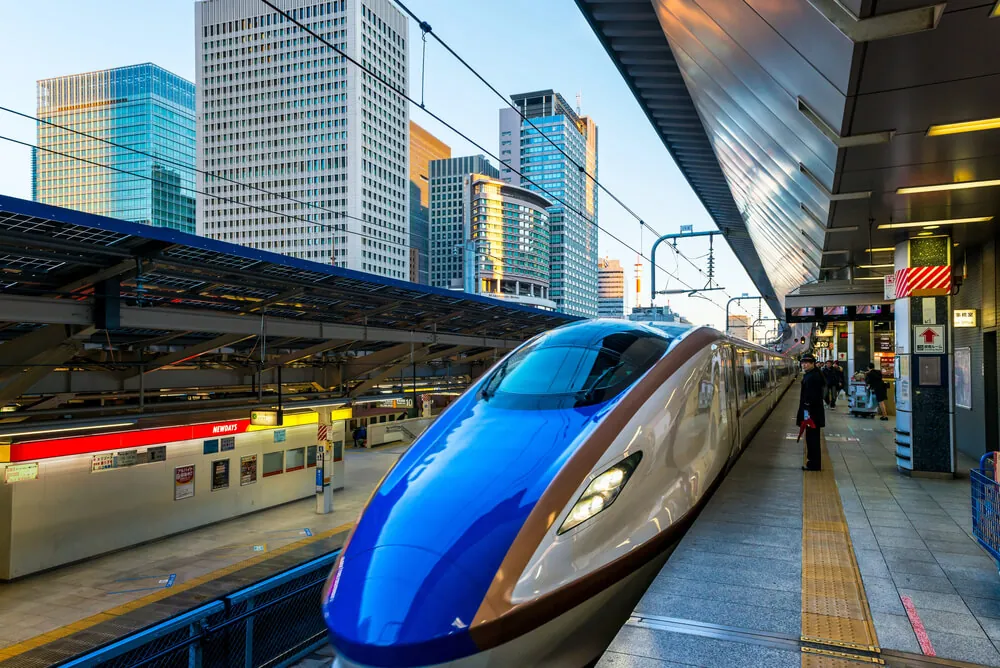
The nationwide pass comes in 7, 14 and 21 day versions, ordinary or Green Car, and JR sets the price in yen. These are the official prices as listed on the Japan Rail Pass website, checked in October 2026:
| Pass | Bought on the official site, adult | Bought through an overseas agent, adult |
|---|---|---|
| 7 days, ordinary | 50,000 yen | 53,000 yen |
| 14 days, ordinary | 80,000 yen | 84,000 yen |
| 21 days, ordinary | 100,000 yen | 105,000 yen |
| 7 days, Green Car | 70,000 yen | 74,000 yen |
| 14 days, Green Car | 110,000 yen | 116,000 yen |
| 21 days, Green Car | 140,000 yen | 147,000 yen |
Children aged 6 to 11 pay half the official-site price. Note the second column: the same pass costs more when it is sold through an overseas agent, by 3,000 to 7,000 yen depending on the version, so if you do buy one, buy it on the official site.
At about 158 yen to the dollar in early October 2026, the ordinary 7 day pass bought online works out at around $316, the 14 day at around $506 and the 21 day at around $633. The dollar figure moves with the exchange rate even when JR does not change its prices, which is why we confirm the current number for your dates rather than asking you to trust one in an article.
Two structural points that matter more than the exact price.
The pass runs on consecutive calendar days from activation, not on days of use. A 14 day pass covering a 14 day trip is really covering the four or five days you actually take a long train. Every rest day, every day you spend entirely inside Kyoto, is a day the pass is earning nothing.
And it does not cover the fastest trains on the busiest line. Nozomi and Mizuho services on the Tokaido and Sanyo Shinkansen require a supplement for pass holders, which is a change from the old rules. Without paying it you take Hikari or Sakura, which are perfectly good and roughly 20 to 40 minutes slower on the Tokyo to Kyoto run.
A note on the three worked routes below. We priced them in dollars when the yen was a little stronger than it is now. Both the individual fares and the pass are set in yen, so a weaker yen lowers both sides by the same proportion, and every verdict below still holds.
Route one: the compressed loop, where the pass still wins
Seven days. Tokyo, Kyoto, Hiroshima, Kanazawa, back to Tokyo. A lot of ground in a short time, which is exactly the shape the pass was designed for.
| Leg | Individual ticket, reserved |
|---|---|
| Tokyo to Kyoto | $105 |
| Kyoto to Hiroshima | $85 |
| Hiroshima to Kanazawa | $150 |
| Kanazawa to Tokyo | $100 |
| JR local trains and the Miyajima ferry | $30 |
| Total, individual tickets | $470 |
Against a 7 day pass at roughly $345, the pass saves about $125 per person. Buy it.
The reason it wins is density. Four long legs inside seven consecutive days is a high rate of travel. If your trip does that, the pass is still the right answer and the old rule of thumb still holds.
We would not usually recommend this itinerary. Four cities in seven days is a lot of train and not much Japan. But if that is the trip you want, the pass pays for it.
Route two: the standard first visit, where it loses
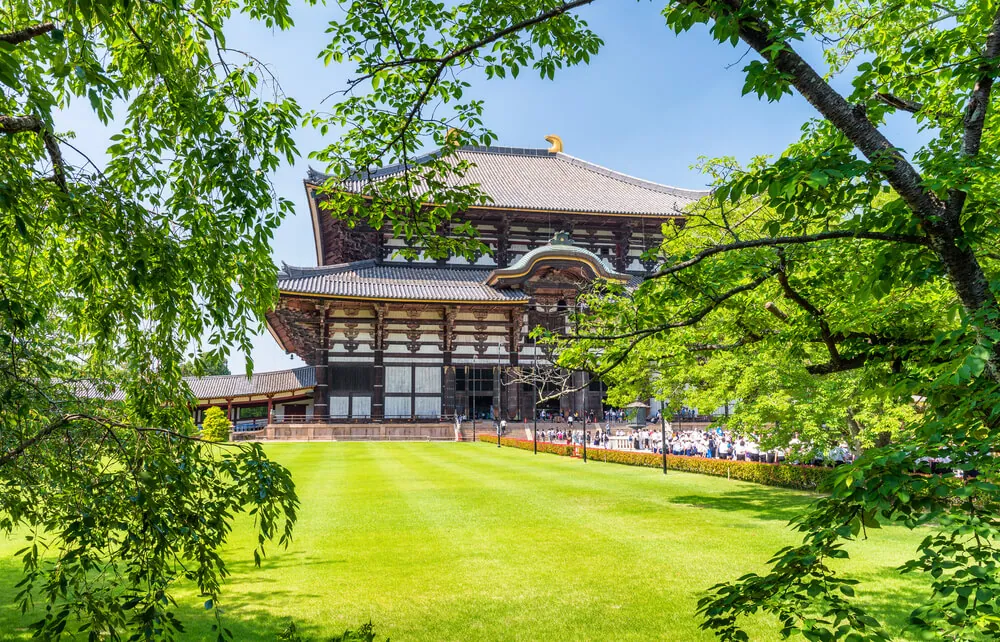
Fourteen days. Tokyo, Hakone, Kyoto with Nara, Osaka, Hiroshima and Miyajima, back to Tokyo to fly. This is the most common shape of first Japan trip and it is close to our own classic Japan in 14 days.
| Leg | Individual ticket, reserved |
|---|---|
| Tokyo to Odawara, for Hakone | $30 |
| Odawara to Kyoto | $95 |
| Kyoto to Nara, return | $18 |
| Kyoto to Osaka | $12 |
| Osaka to Hiroshima | $80 |
| Hiroshima to Tokyo | $135 |
| JR local trains, ferry, airport transfer | $70 |
| Total, individual tickets | $440 |
Against a 14 day pass at roughly $540, the pass loses by about $100 per person. For two people that is $200 left on the table, and the pass holder also takes the slower Hikari service unless they pay the Nozomi supplement.
Why it loses on a longer trip is simple. The extra week does not add long legs. It adds days in Kyoto and Tokyo, which the pass covers for nothing gained. The price roughly doubles from 7 to 14 days. The travel does not.
Route three: the slow inland route, where it loses badly
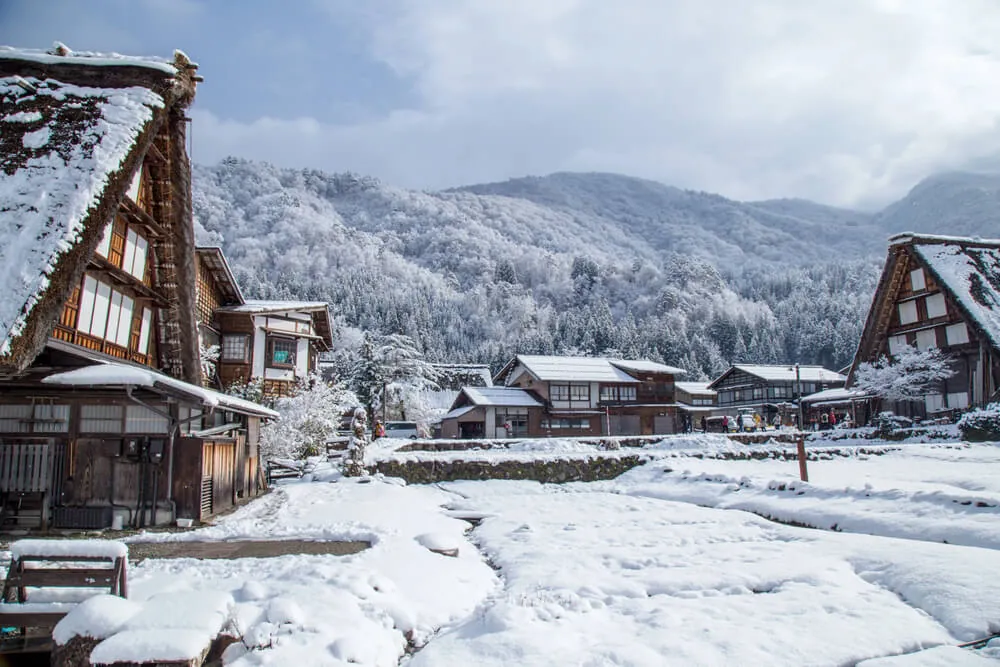
Fourteen days. Tokyo for four nights, Kanazawa, Takayama and Shirakawa-go, Kyoto for four nights, out of Osaka. Fewer cities, longer stays, which is how we would rather build it. See Japan in 14 days through the alps.
| Leg | Individual ticket, reserved |
|---|---|
| Tokyo to Kanazawa | $100 |
| Kanazawa to Shirakawa-go and Takayama, express bus, not a JR service | $32 |
| Takayama to Kyoto | $80 |
| Kyoto to Kansai airport, Haruka express | $22 |
| JR local trains and city transport | $60 |
| Total | $294 |
Against a 14 day pass at roughly $540, the pass loses by nearly $250 per person. And note the bus leg, which the pass does not cover at all. Two of the best days of that itinerary happen on roads a JR pass has no relationship with.
This is the pattern we see most: the better the itinerary, the worse the pass performs.
The rule of thumb, and when to stop trusting it
The pass is worth buying when your total point-to-point fares inside a single consecutive block of 7, 14 or 21 days exceed the pass price. In practice:
- A 7 day pass pays for itself with roughly one Tokyo to Kyoto to Hiroshima and back, or any three long legs.
- A 14 day pass needs about five or six long legs in fourteen consecutive days. Most good two-week itineraries have four.
- A 21 day pass is often the best value of the three, because the price does not rise proportionally, but only if you are genuinely covering the country.
The most useful trick, and the one most visitors never consider: buy a 7 day pass for the busy week of a 14 day trip, and individual tickets for the rest. On route two above, a 7 day pass covering the Kyoto to Osaka to Hiroshima to Tokyo stretch plus tickets for the first week comes to about $410, cheaper than either pure option.
Regional passes, which most visitors have never heard of
This is the part of the conversation that saves people the most money, and it barely appears in English-language planning.
JR is not one company. It is six regional operators, and each sells its own passes covering its own territory. They are far cheaper than the nationwide pass and they often fit a real itinerary better.
The ones we use most:
- JR East, Tohoku area. Five flexible days within fourteen, covering Tokyo north to Aomori. Ideal for a Tokyo plus Tohoku trip, and flexible days mean rest days cost nothing.
- JR East, Nagano and Niigata area. The alps, Matsumoto, the snow monkeys and the Sea of Japan coast, out of Tokyo.
- Hokuriku Arch Pass. Tokyo to Osaka the long way round via Kanazawa. Seven days, and it covers exactly the route a Tokyo, Kanazawa, Kyoto, Osaka trip takes.
- Takayama, Hokuriku Area Tourist Pass. Five days covering Nagoya, Takayama, Shirakawa-go, Kanazawa and Kyoto, and it includes the Shirakawa-go bus that the nationwide pass does not.
- JR West, Kansai and Hiroshima area. Kyoto, Osaka, Nara, Himeji, Okayama and Hiroshima, with the Miyajima ferry.
- JR Kyushu and JR Hokkaido. Both compact enough, or remote enough, to earn out fast.
Several of these use flexible days rather than consecutive ones, which is a significant advantage on a trip with rest days. A five-flexible-days-in-fourteen pass and a fourteen consecutive day pass are completely different products, and the flexible one is almost always the better fit.
Regional passes also stack. Two regional passes covering two halves of a trip frequently beat one nationwide pass, and they cost a fraction as much.
Reserved seats and the luggage rule
Two practical things that matter regardless of which way you buy.
Reserve your seats. It is free with a pass and included in the fare on a ticket, and on a busy line the difference between a reserved seat and the unreserved cars is the difference between reading a book and standing in a vestibule for two hours. In blossom season, at New Year and during Golden Week, unreserved cars fill completely, and on the Nozomi there are no unreserved cars at all during those peaks. The dates are in Japan month by month.
Oversized luggage needs its own reservation. On the Tokaido, Sanyo and Kyushu Shinkansen, any bag whose combined height, width and depth exceeds 160cm requires a seat in the oversized baggage area, booked in advance. Turn up without one and you pay a fee on board and stow the bag wherever the conductor finds space. These spaces are limited and they go early on popular services.
There is a better answer than fighting for them, which is not to travel with the case at all. Overnight luggage forwarding takes a suitcase hotel to hotel for around $15 to $20 a bag. We build it into every itinerary with more than three stops.
What we actually do
We price your route both ways, regional passes included, and show you the two numbers side by side with the trains named. Then our team in Japan books the reserved seats and the oversized baggage spaces, which is much easier from inside Japan than outside it. Sometimes the answer is the pass. More often now it is not.
Plan this trip
Tell us your dates and the places you want to see, and we build your trip as a $39 day-by-day plan, with recommended hotels by level and every train and transfer set out step by step, priced with and without the pass so you can see which is cheaper.
Keep reading
- Japan: the complete guide to planning your trip
- How much does two weeks in Japan really cost?
- Japan month by month: when to go
- Tokyo in four days, by neighbourhood rather than by sight
- Where to eat in Osaka without queueing for two hours
- Classic Japan in 14 days
- All our Japan trips