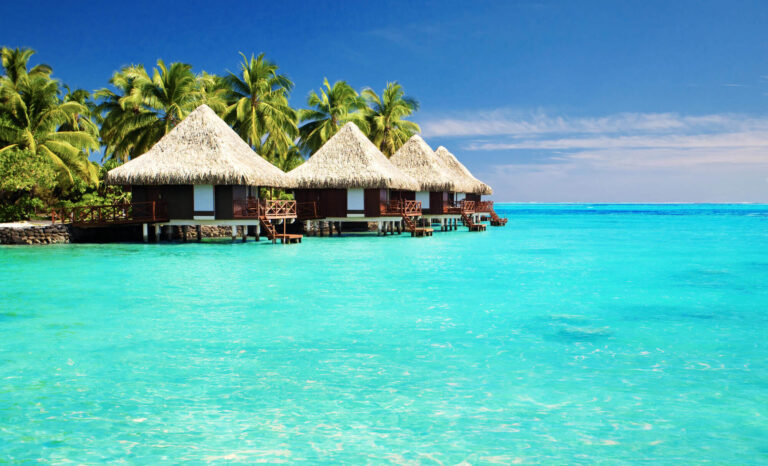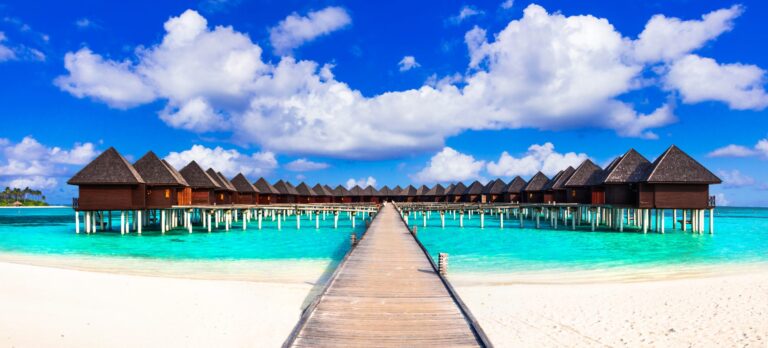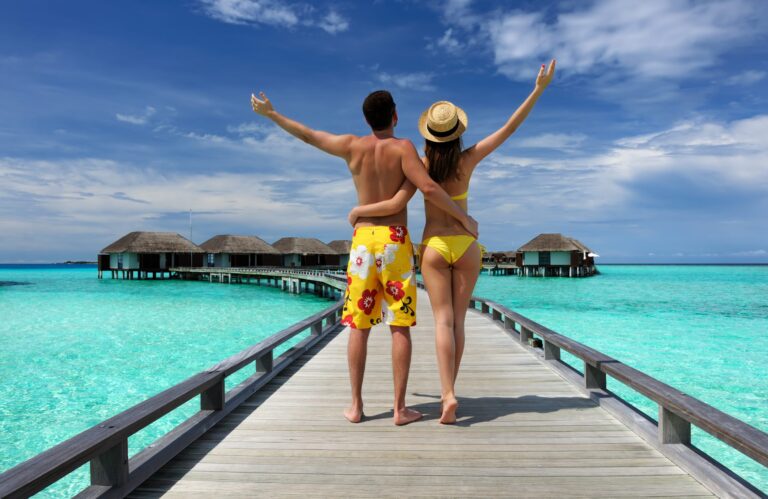
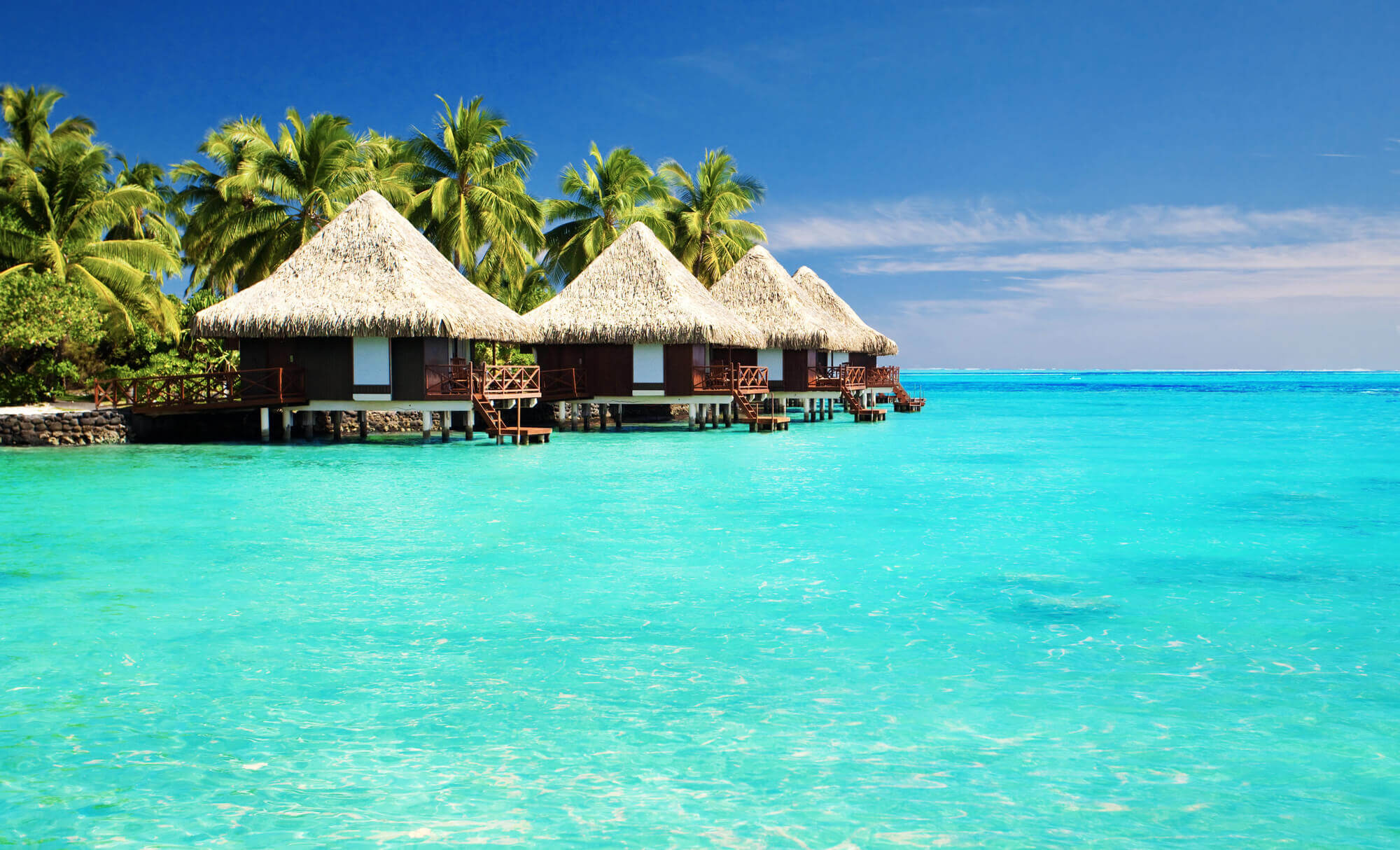
The first is the private resort island: one hotel occupying one island, staff outnumbering guests, alcohol served, swimwear unrestricted, everything charged to the room. That is the country as it was built between 1972 and 2009, when foreign tourists were kept deliberately separate from the Maldivian population.
The second began in 2009, when the law changed to allow guesthouses on inhabited islands. Several hundred small hotels have opened in Maldivian villages since, and you can now stay in a working community, eat what people there eat, take a shared boat to the same reefs the resorts use, and pay between a third and a fifth of the resort rate.
It is a genuinely good way to travel here and we arrange it properly. It is also not a cheap version of the same holiday, and pretending otherwise is how people end up disappointed.
The numbers first
| Guesthouse island | Comfortable resort | Boutique resort | Luxury resort | |
|---|---|---|---|---|
| Per person, per day, land only | $150 | $320 | $580 | $1,100 |
| Seven days | $1,050 | $2,240 | $4,060 | $7,700 |
| Room | Simple, air-conditioned, en suite, often no view | Beach villa | Design room, good reef access | Overwater villa with a pool |
| Food | Local restaurants and the guesthouse kitchen, $5 to $12 a meal | Half board on the island | Half board, better kitchen | Full board, several restaurants |
| Getting to the reef | Shared day boat, $30 to $70 a trip | House reef plus resort boats | House reef, usually excellent | House reef and private boats |
| Transfer from Malé | Public ferry $2 to $4, or speedboat $25 to $60 each way | Speedboat or domestic flight | Usually a seaplane | Seaplane, sometimes private |
| Alcohol | Not available on the island | Yes | Yes | Yes |
The bottom line is the one that surprises people: a week on a local island with daily boat trips costs less than two nights in an overwater villa.
The four islands we use most
Maafushi, South Malé Atoll. The original and by far the most developed, about thirty minutes by speedboat or ninety by public ferry from Malé. Dozens of guesthouses, a designated swimming beach, dive centres and a strip of small restaurants. Easy, cheap and well connected, and also crowded and built up in a way that has little to do with a quiet Maldivian village. We use it when convenience and price matter most, and we do not pretend it is peaceful.
Dhigurah, South Ari Atoll. Our first recommendation for most people. A long thin island with about two miles (3 km) of sand spit running off one end, a village at the other, and a few hundred residents. It sits on the whale shark reef, so the daily boat leaves from your own island rather than an hour away. Reached by domestic flight to Maamigili plus a short boat, or by public ferry. The best combination of village life and serious water.
Thulusdhoo, North Malé Atoll. The surf island. Two of the country’s best-known reef breaks are within sight, and the guesthouse scene is built around surfers, which gives it an atmosphere the others do not have. Close to Malé and easy to reach. Good from March to October, quieter outside it.
Fulidhoo, Vaavu Atoll. The smallest, and the one we send people to when they want the actual thing. A few hundred residents, a handful of guesthouses, sand streets, nurse sharks and stingrays at the jetty in the evening when the fishermen clean the catch, and bodu beru drumming that happens because people want to play rather than because a hotel scheduled it. There is very little to do and that is the point.
Our standard route uses two of these plus a night in the capital. See local islands and Malé in 8 days.
What a guesthouse trip actually is
A day looks like this. Breakfast in the guesthouse: mas huni and roshi with sweet tea, or an omelette. A shared boat at nine to a reef, a sandbank, a manta cleaning station or, in South Ari, out looking for whale sharks, with six to fourteen other guests from three or four houses on the island. Lunch at a village restaurant, rice and fish curry for five dollars. The afternoon on the swimming beach, or asleep. Grilled reef fish on the sand as it gets dark at around six, because this close to the equator the light goes early all year. Then the village: people out in the cool, children playing, a tea shop, drums some evenings and nothing at all on others.
The rooms are simple: air conditioning, a bathroom, clean linen, usually no view. The good ones are spotless and family run. The weak ones are damp. Which is which is not visible online, and it is the main thing our partners in Malé check for us.
The rules, which are not negotiable
These are inhabited Muslim communities and Maldivian law applies to residents and visitors equally. None of this is difficult and all of it needs to be known before you book.
Dress. In the village, cover shoulders and knees: a t-shirt and shorts to the knee, or a light dress. Swimwear is for the designated tourist beach only, usually a marked stretch at one end of the island. Walking through the village in a bikini is a genuine offence to the people living there and it is the mistake visitors make most.
Alcohol. Not sold on inhabited islands and it cannot be brought in. It is confiscated at Malé airport on arrival and returned on departure, and this applies to everyone. On a few islands, Maafushi among them, there are floating bars moored offshore that you reach by dhoni, which is the legal workaround and is not the same as a drink at your hotel. If a cold beer at sunset is part of your picture of this holiday, take a resort.
Ramadan. During the fasting month, daytime eating in public is restricted and many village restaurants close until sunset. Guesthouses still feed their guests, usually indoors, but the island is quiet by day and busy after dark. It is an interesting time to visit and not the easiest, and we will tell you if your dates fall inside it.
Fridays. Midday prayers empty the island for an hour or two, many public ferries do not run, and boat trips are scheduled around it.
Photography. Ask before photographing people. This is a village, not a resort.
The honest trade-offs
The beach is a public one. The designated swimming beach is shared with everyone else staying on the island, and on Maafushi that is a lot of people. It is a good beach. It is not your own.
The house reef is variable and often not walkable. Some local islands have excellent reef within swimming distance and some have a long shallow lagoon and nothing until you take a boat. Exactly the same question as on a resort island, and it matters just as much.
The boats are shared and weather dependent. In the green season a rough morning cancels the trip, and on a small island there may not be a second boat.
The food is narrow. Excellent, cheap, and much the same every day: fish, rice, curry, roshi and short eats. See what to eat in the Maldives. Vegetarians eat well but should say so at the booking stage rather than on arrival.
Getting between islands is slow. Public ferries are cheap and run to a government schedule designed for residents rather than visitors: usually one departure a day, often not on Fridays, sometimes not at all in poor weather. Private speedboat transfers cost $25 to $60 a person each way and are how we move anyone with a flight to catch.
Service is family hospitality, not hotel service. Warmer and less polished. Most people prefer it.
Who this suits, and who it does not
It suits independent travellers who have stayed in guesthouses elsewhere in Asia and liked it; divers and snorkellers, because the water is identical and the diving costs half as much; anyone who wants to have actually been to the Maldives rather than to a hotel that happens to be in it; families with older children; and anyone whose budget puts a resort out of reach and who would rather come properly than not come.
It does not suit anyone whose picture of this country is a private villa and a sunset cocktail, and there is no shame in that being the picture. It does not suit honeymooners looking for seclusion, because there is none, or anyone who wants a choice of restaurants, a spa or a beach to themselves. And it does not suit travellers who would find the dress and alcohol rules an imposition rather than simply the local law.
The answer for a lot of people is both
The combination we build most often for anyone curious about this is three or four nights on a local island followed by three or four on a resort. You get the village, the food, the cheap diving and the sense of the real country in the first half, and the beach, the room and the quiet in the second. The two halves make each other better, and it costs one extra transfer.
The order matters. Local island first, resort second. See local islands and Malé in 8 days, and if the resort half should be the strong one, boutique Maldives in 7 days.
Related
- Local islands and Malé in 8 days
- The Maldives: the complete guide to planning your trip
- What a trip to the Maldives costs
- What to eat in the Maldives
- All our Maldives trips