- Duration
- 14 days
- Pace
- Moderate
- Hotel changes
- 5
- Best months
- May, Jun, Jul, Aug, Sep
- From
- $2,450 per person
Fourteen days up the dry side of the island: the oldest of the ancient capitals, the Tamil north, an east coast that has almost no visitors on it, and then back down through the cultural triangle to Kandy. It is our answer to a July enquiry, and several people who booked it reluctantly have told us it was the better trip.
Who it suits: travellers with fixed summer dates, returning visitors who did the classic route, and anyone more interested in a country than a beach club.
Your specialist: your named Sri Lanka specialist, with our Delhi office and our representatives coordinating the northern ground team.
Day by day
Day 1: Arrive, night at Negombo. Twenty minutes from the airport. Nothing scheduled.
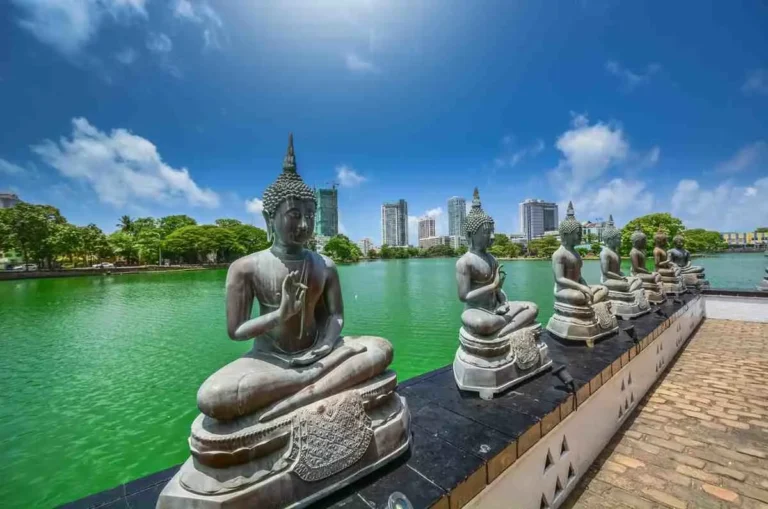
Day 2: Negombo to Anuradhapura. Around three and a half hours north on good road. Afternoon at leisure, then the Sri Maha Bodhi at dusk, the fig tree grown from a cutting of the tree the Buddha sat under, planted in the third century BC and continuously tended since, which makes it the oldest recorded planted tree on earth. White-clad pilgrims, oil lamps, and no coaches at that hour.
Day 3: Anuradhapura. The site is spread over several square miles, so bicycles from seven with a guide: Ruwanwelisaya, the Jetavanaramaya, which was one of the tallest structures in the ancient world, the twin ponds and the moonstones at Abhayagiri. It is a working pilgrimage centre, not a ruin, and dress accordingly. Afternoon off in the heat.
Day 4: To Jaffna. Around four hours north across the dry zone and over Elephant Pass, the causeway onto the peninsula, where the landscape becomes palmyra palm, lagoon and red soil and stops resembling the rest of the country. Three nights in Jaffna.
Day 5: Jaffna. The Nallur Kandaswamy temple at the morning puja, the rebuilt library, the fort and its Dutch walls, the market. Jaffna is Tamil and Hindu and its recent history is present rather than packaged, and a good guide here matters more than anywhere else on the island. Lunch is Jaffna crab curry, cooked with the northern curry powder, and it is worth the drive on its own.
Day 6: The islands. A morning across the causeways to Kayts and out to Nainativu, where a Buddhist shrine and a major Hindu temple sit a few hundred yards apart on the same small island. Alternatively, and we will ask which you want, the longer ferry to Delft, which has coral walls, a baobab and a population of wild ponies left by the Portuguese. Afternoon at Casuarina beach, which is shallow, calm and usually empty.
Day 7: Jaffna to Trincomalee. Four and a half to five hours down the eastern coastal road through Mullaitivu and Nilaveli. It is a quiet, strange and often beautiful drive through country that was inaccessible for a long time. Three nights at Nilaveli or Uppuveli.
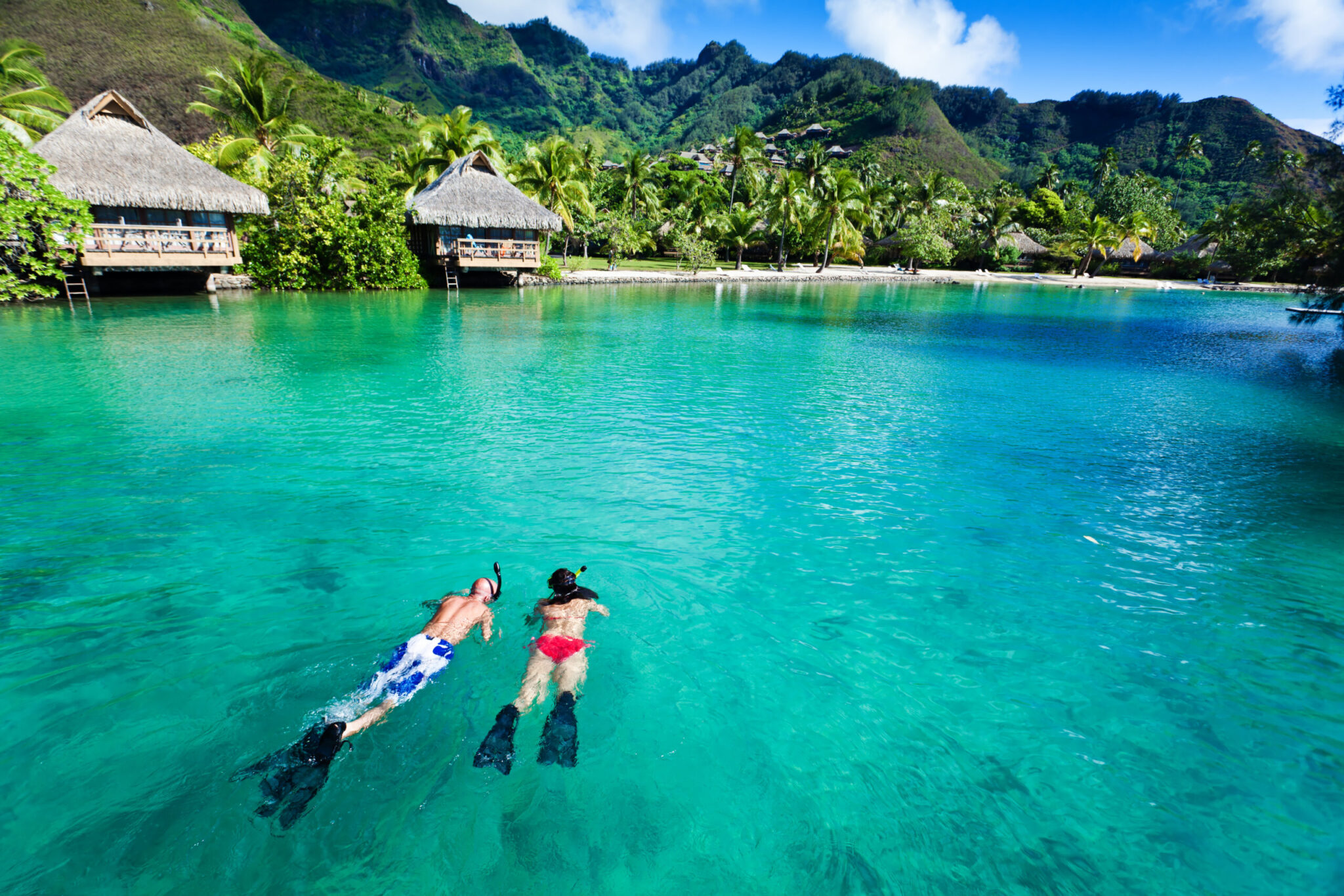
Day 8: Pigeon Island. A short boat at opening to the marine national park for the best snorkelling in the country, with reef sharks in the shallows. We go first thing because the island has a daily visitor cap that fills, and because the reef has taken damage from people standing on it. Afternoon at Koneswaram, the temple on the cliff above the harbour, and the hot wells.
Day 9: Trincomalee. Free. In this season, roughly May to September, blue whales and sperm whales pass off Trincomalee and an early boat is worth taking, on the understanding that no operator can promise you an animal. Otherwise the sea, which is flat here in these months, and a lagoon.
Day 10: Trincomalee to Sigiriya. About three hours inland. Afternoon at the Dambulla cave temples, five painted caves in the rock, which take an hour.
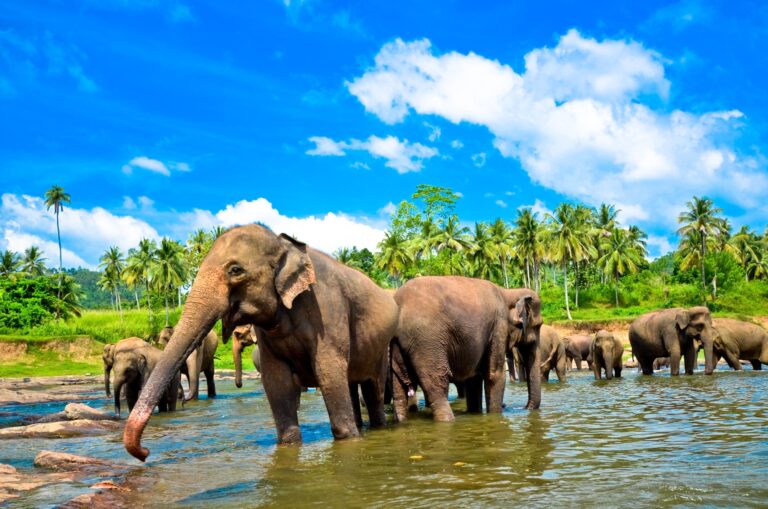
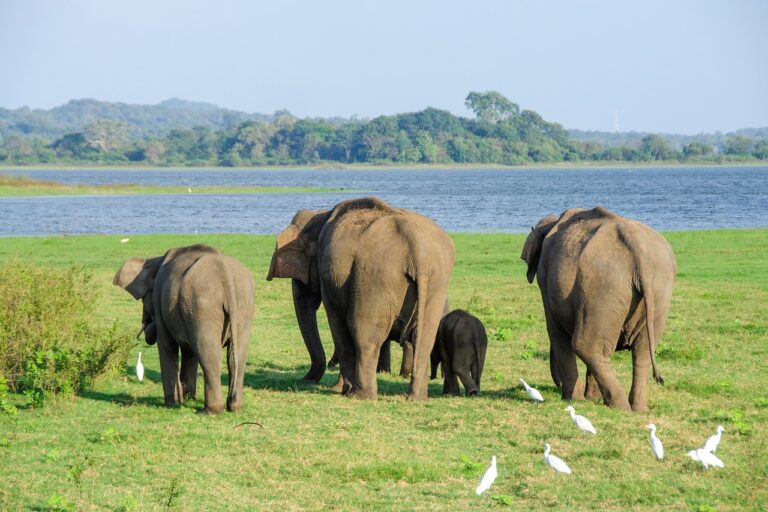
Day 11: Sigiriya, and the elephants. At the gate for opening: 1,200 steps, exposed metal staircases, a bottleneck near the top, and considerably less pleasant in the middle of the day. Back by ten. In the late afternoon, a drive at Minneriya or Kaudulla. These are the months when elephants gather on the receding grassland of the reservoirs, often in large numbers, and it is one of the best wildlife spectacles in Asia. The herds move between the two reservoirs and sometimes to a third depending on water levels, so our ground team checks on the day where they actually are rather than driving you to a name.
Day 12: Polonnaruwa, then Kandy. Bicycles at seven around the medieval capital and the Gal Vihara Buddhas, then three hours south to Kandy. Evening puja at the Temple of the Tooth.
Day 13: Kandy. Peradeniya gardens in the morning, the market, the lake. If your dates fall in July or August, the Esala Perahera procession may be running, in which case the city is full and we will have planned your nights around it months earlier.
Day 14: Departure. Kandy to the airport is around three and a half hours. For an early flight we move you to Negombo the night before.
What is included
Accommodation with breakfast throughout, a private air-conditioned car with a licensed English-speaking chauffeur guide, a Tamil-speaking guide in Jaffna and the north, bicycles and guides at Anuradhapura and Polonnaruwa, the island boats from Jaffna, the Pigeon Island boat and snorkelling equipment, a private jeep with tracker at Minneriya or Kaudulla, site guides at Sigiriya and Kandy, all entries and park fees, a document with real driving hours, and a WhatsApp group with your consultant and our local representatives.
Honest notes
This route only makes sense in its season. Roughly May to September, and the shoulder weeks either side are a judgement call we will make with you. Between November and February the northeast monsoon is on exactly this coast and this itinerary becomes the wrong one. The reverse of the argument that rules out the south in July.
The east coast is not the south coast. Fewer hotels, fewer restaurants, and the good properties are small and simple rather than polished. That is the trade for an empty beach. If you want a resort standard on this coast, there are two or three that deliver it and we will price them.
Jaffna is not scenic in the postcard sense. It is flat, hot, and its recent past is visible. It is also the most interesting three days on this itinerary and the reason we publish the route. Go with curiosity rather than a camera list.
The elephant gathering is seasonal and it moves. Large numbers are likely in the driest months, usually July through September or October, and nobody can promise a given count on a given evening. Outside those months we do not include it at all, and we will not describe a handful of elephants as a gathering.
The northern drive is long. Day 7 is close to five hours on a road with little on it. We break it at Mullaitivu. If you would rather not, we can fly Jaffna to Colombo and restructure, and we will price both.
No hill country train. This route reaches Kandy at the end rather than the beginning, and the hill line is a different trip. If you want it we add three days and finish at Ella, which makes this a seventeen day itinerary.