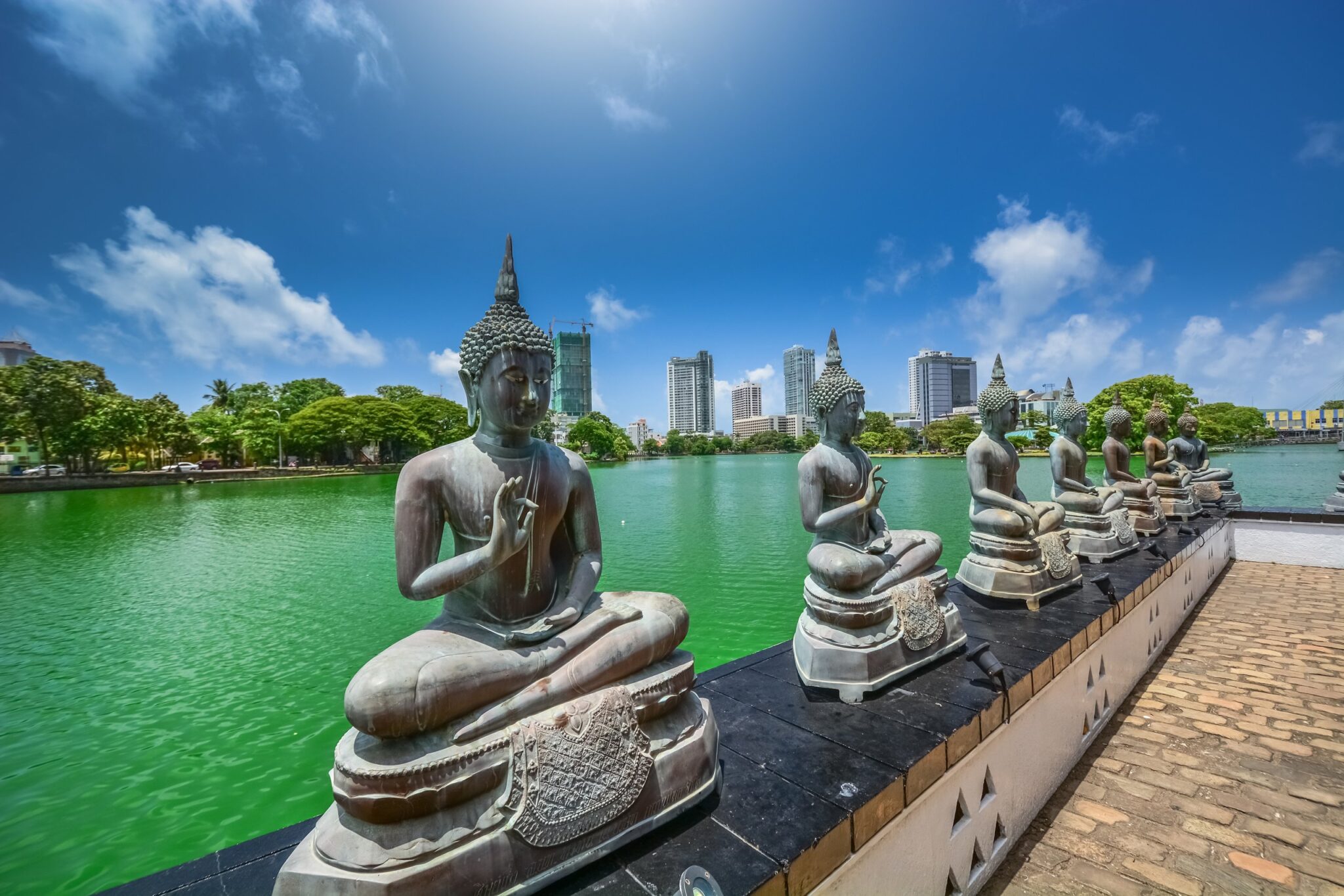
That is the first decision, not a detail to check at the end. It determines the shape of the route and which beach you finish on. A traveller with fixed August dates who is set on Galle and Mirissa is planning the wrong trip. The same traveller sent to Trincomalee and Jaffna gets a better holiday, in better weather, for less money.
This is the document our consultants open when a new Sri Lanka file lands on the desk. It is a set of decisions rather than a list of sights.
Sri Lanka at a glance
| Best months | December to March for the south, west and hills. May to September for the east and north. |
| Comfortable trip length | 12 to 14 days |
| Entry | An ETA obtained online in advance for most nationalities |
| Getting around | Private car with a licensed chauffeur guide, plus two or three train legs |
| Land budget, per person per day | 105 to 540 US dollars |
| Our presence | Run from our dedicated local office in Delhi, covering India, Nepal, Sri Lanka and Bhutan |
The island is about 270 miles (435 km) top to bottom and 140 miles (225 km) across, roughly the size of Ireland. That smallness misleads people into planning six stops in ten days. Away from the two expressways, main roads average 25 to 30 miles an hour, so a 90 mile leg is a half day. Ask any operator for driving hours rather than distances, and be suspicious of the ones who answer in distances.
When to travel
December to March, the main season
The dry window for the west and south coasts, the cultural triangle and most of the hill country. Hot lowlands at around 86°F (30°C), cool nights in the hills. This is when blue whales are off Mirissa, when Yala is at its driest and busiest, and when Adam’s Peak is in pilgrimage season. Rates peak over Christmas and New Year, and the good hill bungalows and small south coast properties go six to nine months ahead for those two weeks.
March and early April are our own favourite weeks: thinner crowds, calm sea, lower rates.
April, the transition
Hot, humid and genuinely good until mid-month. It also contains the Sinhala and Tamil New Year, usually around 13 and 14 April, when the country stops. Domestic travel spikes and many small businesses close for several days. A wonderful time to be invited into a family kitchen, a poor time to be covering ground.
May to September, the east and the north
The southwest monsoon arrives in May. The south and west coasts get heavy rain and, more importantly for swimmers, rough sea with dangerous rip currents. Meanwhile the east dries out. Trincomalee, Passikudah, Arugam Bay and Jaffna get their best months, and the cultural triangle usually stays workable because it sits in the dry zone.
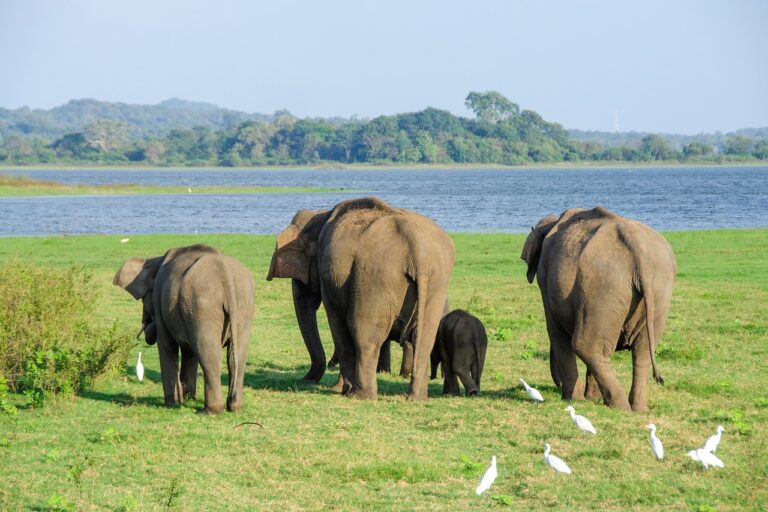
Two things happen only now. Arugam Bay’s surf runs roughly April or May to September or October. And elephants congregate on the receding grasslands of the Minneriya and Kaudulla reservoirs in the driest months, usually July through September or October. We will not sell you that gathering outside its season, and inside it we call it likely rather than certain, because the herds move between reservoirs depending on where the water has dropped.
If your dates are June, July or August, do not force a south coast trip. Take the east coast and Jaffna route instead.
October and November, the weeks we push people out of
The second inter-monsoon. Both sides can get rain, afternoon thunderstorms are common, and the sea is unreliable on both coasts. Prices are low for a reason. If these are your only dates we will still build you a good trip, weighted to the cultural triangle and the hills, and the proposal will say plainly what you are accepting.
How many days do you actually need?
- Under 8 days. One loop only. The cultural triangle and Kandy, or the hills and the south coast.
- 10 days. Cultural triangle, Kandy, tea country and one beach. It works, slightly tight.
- 12 days. What we recommend most. The above with a real rest at the coast, or a safari added properly.
- 14 days. Enough to add the east coast, or Jaffna, or a serious trek.
- 21 days. Both coasts, the quieter parks, and the freedom to stay an extra day because you liked it.
The number that matters is not total days but hotel changes. Above one move every two and a half days a Sri Lanka trip becomes a driving holiday, and these roads are not enjoyable enough to justify that.
Entry requirements
Most nationalities need an Electronic Travel Authorization, obtained online before departure, through the official Sri Lankan government portal. The commercial sites that outrank it in search results charge a mark-up for filling in the same form.
We are deliberately not printing a fee or a processing time. The system, the fee and the list of exempt nationalities have all changed more than once in recent years, including periods when the charge was waived for some passports. Your specialist confirms the rule that applies to your passport, on your dates, before we quote, and sends the current official link with your final documents.
Two things that do not change: six months of passport validity beyond arrival, and you will be asked for an onward or return ticket.
Getting around
Car and chauffeur guide. The standard answer and usually the right one. Sri Lanka has a well established system of licensed English-speaking drivers who stay with you for the whole trip. A good one changes the holiday. A bad one takes you to the spice garden, the gem shop and the batik factory that pay him commission. That commission culture is real. Our drivers are booked directly through our Delhi office and our ground team, briefed that there are no shopping stops unless you ask, and paid a proper day rate so they are not relying on the alternative.
Trains. Two lines are worth planning around. The coastal line from Colombo to Galle and Matara runs along the beach and beats a dull road leg. The hill country line from Kandy through Nanu Oya and Haputale to Ella is one of the best train rides anywhere, and it is genuinely popular.
Here is the part most guides leave out. Reserved seats on the hill line go on sale 30 days before departure and the good classes frequently sell out the same day in high season. There is no way to buy earlier through the railway. So we lock your plan, buy on the morning of release, and if your booking sits outside that window we hold the date and buy at day 30. Private carriages attached to some services can be booked further ahead at a higher price, and we use them if the standard classes have gone. If everything has gone, unreserved second class is always available and you may stand. That is survivable for the section that matters, Nanu Oya or Haputale down to Ella, which is under three hours. We would rather tell you now than at the station. One more thing: hanging out of the doorway for a photograph is how people are injured and killed on this line every year. Sit down.
Expressways and flights. The Southern Expressway makes the airport to Galle about two and a half hours, the single most useful road on the island. The Central Expressway shortens the run towards Kandy. Everything else is slow. Domestic flights and seaplanes exist and are occasionally worth it, most often to reach Jaffna. They are weather dependent with strict luggage limits, and we price them against the drive.
What a trip to Sri Lanka costs
Land only, per person, two people sharing, excluding international flights. Covers accommodation, food, the car and driver, park fees, entries and the guiding we would normally include.
| Style | Per day | 10 days | 12 days | 14 days | 21 days |
|---|---|---|---|---|---|
| Careful: simple guesthouses and small hotels | $105 | $1,050 | $1,260 | $1,470 | $2,205 |
| Comfortable: good 3 to 4 star, some guiding | $175 | $1,750 | $2,100 | $2,450 | $3,675 |
| Boutique: villas, estate bungalows, design hotels | $300 | $3,000 | $3,600 | $4,200 | $6,300 |
| Luxury: top tier throughout, private guiding | $540 | $5,400 | $6,480 | $7,560 | $11,340 |
Three things move that number more than anything else. The rooms: the gap between a good small hotel and a tea estate bungalow with a butler is larger here than any other line item. Park fees: foreign entry plus the jeep and tracker is a real daily cost, so three safari days is a different trip financially from one. Christmas and New Year: the supplements on the south coast and in the hills are not small.
Cheaper than people expect: food, trains and drivers. An outstanding rice and curry costs a few dollars. More expensive than people expect: the foreign visitor entry tickets to Sigiriya and the other cultural triangle sites, which add up quickly across a week.
The regions worth your time
The cultural triangle. Anuradhapura, Polonnaruwa, Sigiriya and Dambulla, in the dry zone north of Kandy. Anuradhapura is a living pilgrimage site spread over several square miles and best covered by bicycle early. Polonnaruwa is compact and better preserved, and the Buddhas at Gal Vihara are the finest carving on the island. Dambulla’s five painted cave temples take an hour and are often the thing people remember.
Sigiriya. The fifth century rock citadel on every cover. Worth the climb, and we will be honest about the climb: roughly 1,200 steps, much of it on exposed metal staircases bolted to the rock, with a narrow section where you move at the speed of the person in front. At midday it is both hot and heavily congested. We put you at the gate for opening, which solves most of it. If anyone is unhappy on stairs or in crowds, Pidurangala opposite is a shorter scramble with the better view, because it has Sigiriya in it.
Kandy. The last Sinhalese royal capital and home of the Temple of the Tooth. Go for one of the three daily pujas rather than mid-afternoon. The Esala Perahera procession in July or August is extraordinary and fills the city, so it is either the reason for your dates or a thing to plan around.
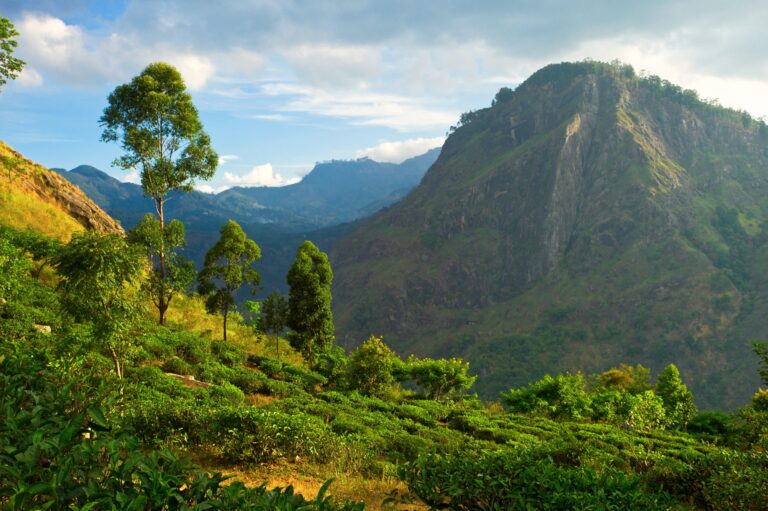
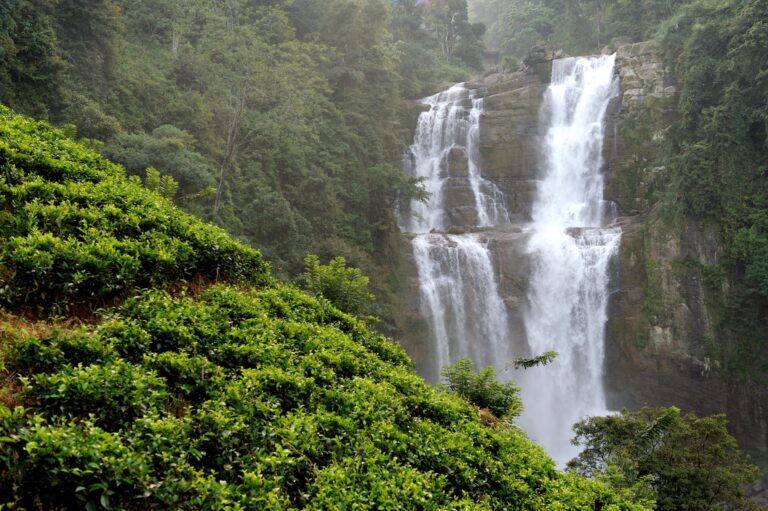
The hill country. Tea estates from around 3,000 to 6,000 feet, cool nights, the best walking in the country. Nuwara Eliya is colonial and slightly odd. Ella is beautiful and has become busy. Haputale and Deniyaya are quieter. Horton Plains and its 2,900 foot (880 m) cliff at World’s End needs a dawn start, because the mist usually closes in mid-morning and there is nothing to see after that.
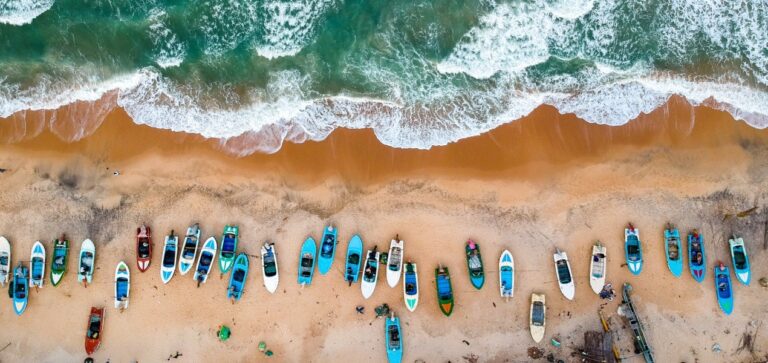
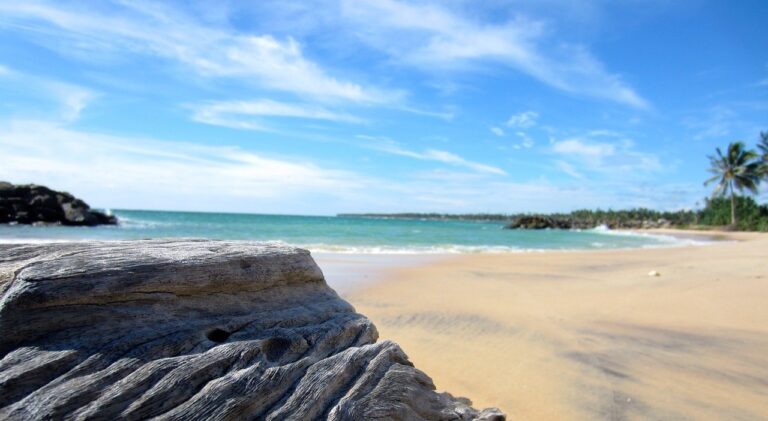
The south coast. Galle Fort is a walled Dutch town you can walk in an hour and should sleep inside rather than beside. East of it, a string of beaches from Unawatuna through Ahangama and Weligama to Tangalle. The stilt fishermen at Koggala are now largely a paid photograph rather than a working fishery, and we say so.
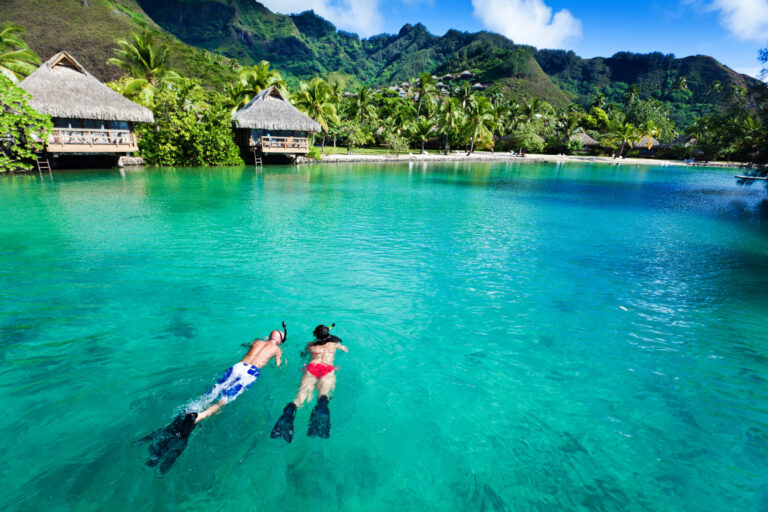
The east coast. Trincomalee, Nilaveli, Passikudah and Arugam Bay. Empty by south coast standards, flat sea from May to September, and the best snorkelling on the island at Pigeon Island, which we visit at opening because it fills and the reef has suffered for it.
The north. Jaffna and the peninsula: Tamil, Hindu, and culturally distinct from everywhere above, with its own food and its own recent history. About four hours from Anuradhapura. Not scenic in the postcard sense, and among the most interesting places we send people.
Wildlife, honestly
Sri Lanka’s wildlife is genuinely world class and the way it is sold frequently is not.
Leopards. Yala has one of the highest leopard densities anywhere, and block 1, where almost every visitor goes, can put a dozen jeeps around a single sighting. A sighting is likely across several dry season drives and it is not guaranteed. We often send people to Wilpattu instead: bigger, older, quieter, more forest than scrub, fewer vehicles, lower but still real odds. We give you the trade-off rather than choosing for you. Yala’s block 1 also usually closes for several weeks in the driest part of the year, generally September into October, and we check your dates against the current closure.
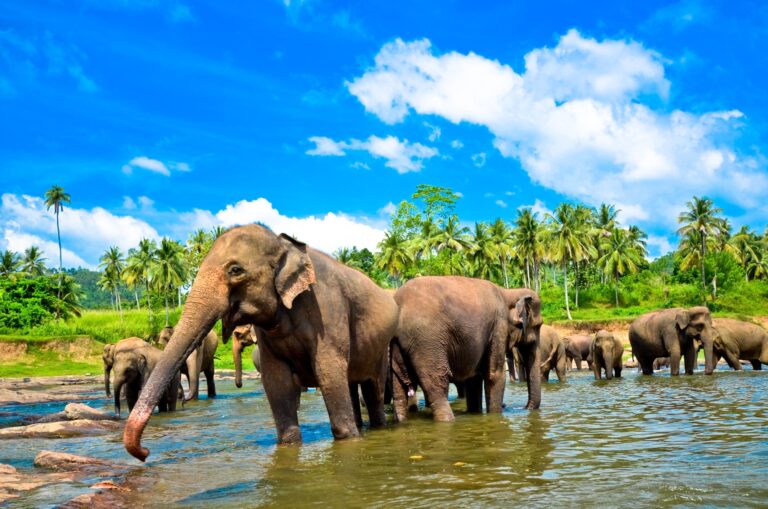
Elephants. Udawalawe is the reliable one, close to certain on a morning drive, year round, and a better first safari than Yala for most people. Minneriya and Kaudulla host the seasonal gathering in the dry months, usually July to September or October. We do not promise it outside that window.
What we do not include. The elephant orphanage on the Kandy road is on most group itineraries and is not on ours, and your proposal will say why. The same goes for most roadside turtle hatcheries. For turtles we use the community night watch at Rekawa in season, which is the real thing.
Whales. Blue whales pass Mirissa roughly December to April and Trincomalee roughly May to September. Sightings are good in both windows and not guaranteed, mornings are calmer, and the operator matters enormously because the cheap boats chase. We use ones that keep their distance.
Eating in Sri Lanka
Rice and curry is not a dish, it is a format: rice with three to a dozen accompanying curries, a coconut sambol and a papadam. The best version you eat will be in a family home or a small roadside place rather than a hotel buffet, and we build in both.
Four words will let you order well. Hoppers, bowl-shaped fermented rice pancakes, usually breakfast, best with an egg in the middle. String hoppers, steamed rice noodle nests with dhal and sambol. Kottu, chopped roti fried on a griddle, which you find after dark by the sound of the blades. Ambul thiyal, the sour dry fish curry of the south.
Regional differences are real: Jaffna cooking is hotter and uses its own curry powder, and the crab curry is worth the drive north on its own. Lamprais, rice and accompaniments baked in a banana leaf, is a Colombo Dutch Burgher speciality. Curd with kithul treacle is the correct end to a meal.
Vegetarians eat better here than in most of Asia, because a standard rice and curry is mostly vegetable anyway. Vegans need to watch for Maldive fish, a dried flake used as seasoning where you would not look for it. Tell us and we brief the kitchens in writing.
Practical notes from our Delhi office
- Poya days. Every full moon is a public holiday. Shops do not sell alcohol, some restaurants stop serving, and religious sites are at their busiest and most interesting. We flag the poya dates in your trip.
- Temple dress. Shoulders and knees covered, shoes and hats off. Bring socks: stone courtyards are very hot by ten.
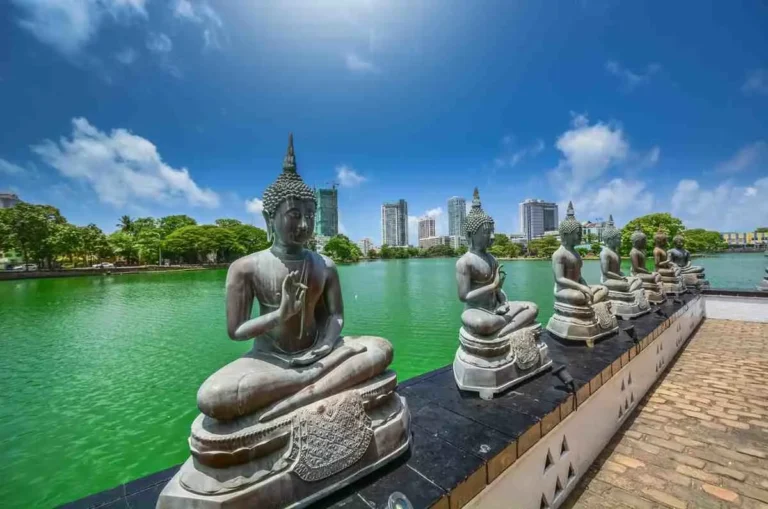
- Buddha images. Do not pose with your back to a Buddha statue, and think hard about a visible Buddha tattoo. Both have caused visitors serious trouble with the authorities, including refused entry.
- Cash. Cards work in hotels and city restaurants. Small places, tips, tuk-tuks and markets are cash.
- Sun and sea. The sun is stronger than the temperature suggests, and the currents on the monsoon-side coast are genuinely dangerous. Swim where we tell you to swim.
- Leeches. In the Knuckles, Sinharaja and the wet hills after rain they are part of the day. Socks and patience.
- Tipping. Modest and expected for your driver, the tracker and hotel staff. Current guidance goes in your final documents.
How we build a Sri Lanka trip
Sri Lanka is run from our dedicated local office in Delhi, which covers India, Nepal, Sri Lanka and Bhutan. You get a named Sri Lanka specialist for the whole process, with our Head of Consulting, Mai Est, behind them, and local representatives on the ground in Sri Lanka.
Your $39 plan is written for you rather than pulled from a template, and if you want us to book the trip, the quote is free and carries no obligation. You will see the actual hotels, the real driving hours, and which stop we removed from your brief and why. Two rounds of changes are included.
When you travel we open a WhatsApp group with your consultant and our local representatives, and it stays open from departure until you are home. A washed-out road, a cancelled train, a hotel that got your room wrong: handled by someone who can call the property, in the right language, that morning.
Ready to plan it?
Tell us your dates and the shape of the trip you have in mind, and we will build you a first outline. A plan written for you, and a free, no-obligation quote if you want us to book.
Keep reading
- The eight Sri Lanka itineraries we build most often
- Sri Lanka’s two monsoons, explained
- How much does two weeks in Sri Lanka cost?
- The Kandy to Ella train: how to actually get a seat
- Yala or Wilpattu, and your real odds on a leopard