- Duration
- 13 days
- Pace
- Moderate
- Hotel changes
- 6
- Best months
- Dec, Jan, Feb, Mar, Apr
- From
- $2,275 per person
Thirteen days built around kitchens: a Colombo market, a village hearth in the dry zone, a Kandyan family, a tea factory that explains grading properly, a cinnamon smallholding and a Galle fort kitchen. The sites are still here, because you cannot understand what people eat in this country without understanding who they are, but the itinerary is organised around meals.
Who it suits: travellers who plan holidays around what they will eat, and anyone who has had Sri Lankan food abroad and suspected they were missing something.
Your specialist: your named Sri Lanka specialist, with our Delhi office and our Colombo representatives arranging the private kitchens.
Day by day
Day 1: Arrive, night at Negombo. Twenty minutes from the airport. If you land in the morning, the Negombo fish market at low tide and a lagoon crab lunch.
Day 2: Colombo. The Pettah on foot in the early morning: the wholesale vegetable lanes, the spice merchants, the Muslim quarter around the red and white mosque, and a stop where the sacks are labelled in three scripts. Lunch is lamprais, rice and accompaniments baked in a banana leaf, a Dutch Burgher dish that exists nowhere else. Late afternoon on Galle Face green for isso vadai and a walk, then a short eats crawl through the older streets after dark.
Day 3: Colombo to Sigiriya. Around four hours north. We do not stop at the roadside spice gardens that pay commission. We do stop at a curd and treacle stall in the buffalo country outside Kurunegala, which is the correct pudding in this country and costs almost nothing. Afternoon at the Dambulla cave temples.
Day 4: Sigiriya, and the dry zone kitchen. At the rock for opening: 1,200 steps, exposed staircases, and a slow section near the top, so being first matters. Back by ten. The afternoon is a village lunch cooked over three stones in a clay pot: jak curry, dried fish, a snake gourd, a pol sambol pounded in front of you, and rice from the paddy fifty yards away. You cook, then you eat with your right hand, which changes how the food tastes more than anyone expects.
Day 5: Polonnaruwa, and freshwater fish. Bicycles at seven around the ruined capital, the Gal Vihara Buddhas, back by lunch. Afternoon at the tank with the fishermen who work it, and a dinner built on freshwater fish and lotus root, which is dry zone food and quite unlike the coast.
Day 6: To Kandy. Three hours. A working cinnamon and pepper smallholding on the way, where the bark is stripped and rolled by hand, and where you learn why Ceylon cinnamon and the cassia in most supermarkets are not the same plant. Evening puja at the Temple of the Tooth.
Day 7: Kandy, in the kitchen. The covered market at eight with the family you will cook with, buying what is good rather than what is on a list. Then four hours in a home kitchen making a full rice and curry, hoppers on a hopper pan, and a pol sambol on a stone. Lunch is what you made. The afternoon is free and you will not want dinner.
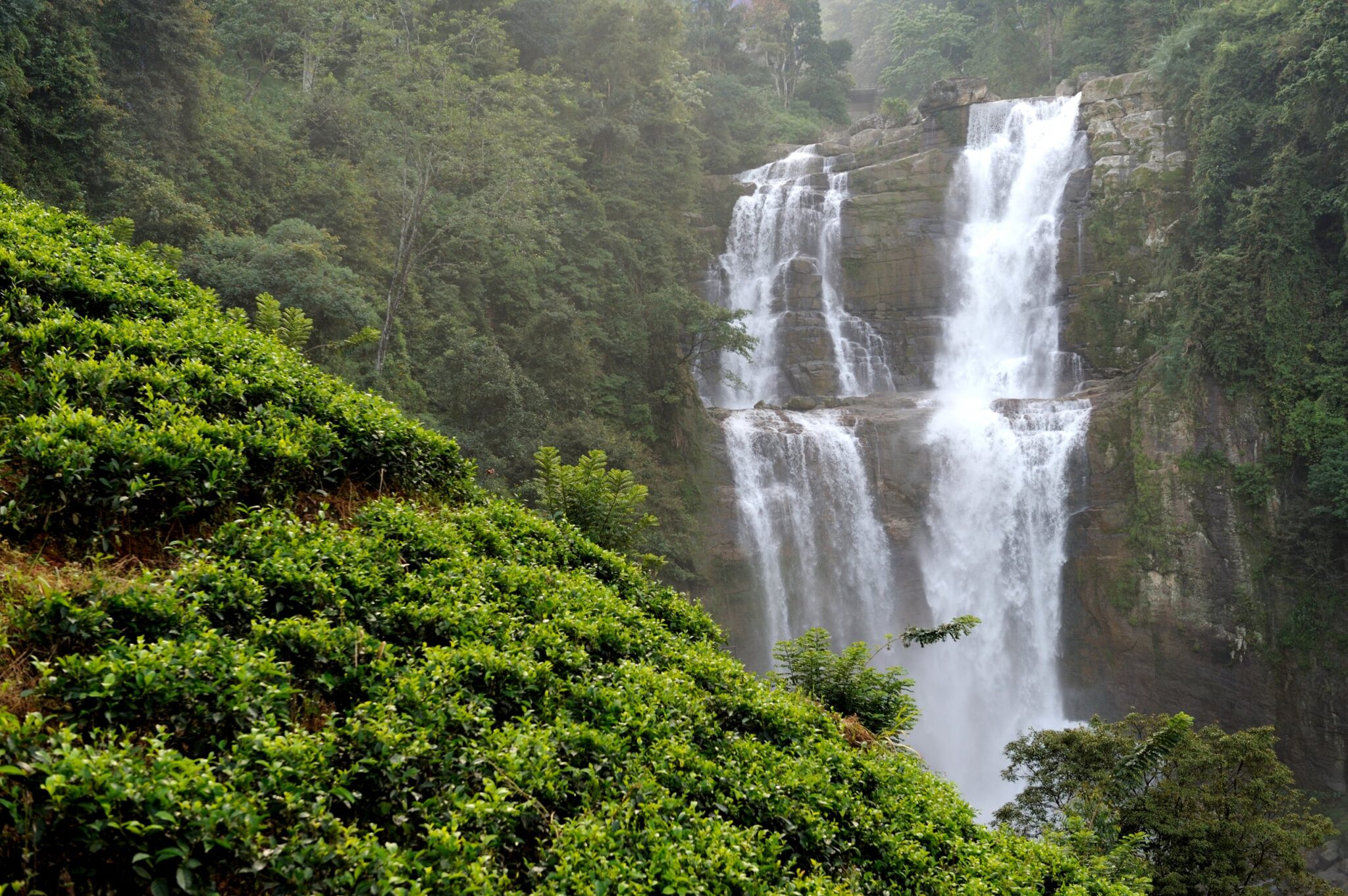
Day 8: The hill country train, and tea properly. The hill line from Kandy to Nanu Oya, roughly four hours in reserved seats. Two nights on a working estate. Afternoon in the factory at the hour the leaf actually comes in, with someone who will explain withering, rolling, oxidation and the grade names, and then a tasting across four grades from the same garden so the words mean something.
Day 9: The estate, and the Uva difference. A morning walk with the pluckers, then a comparative tasting between a high-grown from this estate and an Uva-grown from the other side of the hills, which taste nothing alike. Afternoon free by the fire.
Day 10: Down to Ella and the south. The Nanu Oya to Ella train, under three hours and the best part of the line, then on down to the coast near Ahangama or Weligama. The food changes completely at the bottom of the hill: coconut, chilli, and fish.
Day 11: The coast, and ambul thiyal. The morning fish auction at Weligama or Mirissa when the boats come in, then a kitchen that makes ambul thiyal, the sour dry fish curry preserved with goraka that is the signature dish of the south. Afternoon free. Evening kottu, made on a griddle with two blades, which you find by the noise.
Day 12: Galle. The fort in the early morning while it is cool, the ramparts, the Dutch warehouses and the spice trade history that explains why any of this is here. Afternoon cooking in a fort house kitchen: Burgher and Moor influences, a black pork curry, a seeni sambol. Last evening on the walls.
Day 13: Departure. Two and a half hours to the airport on the expressway.
What is included
Accommodation with breakfast including two nights on a working tea estate and a night inside Galle Fort, a private air-conditioned car with a licensed English-speaking chauffeur guide, reserved train seats on both hill country legs, the Colombo market walk and street food evening, the village kitchen lunch, the Kandy family cooking class, the factory visit and two guided tastings, the cinnamon smallholding, the Galle fort cooking session, site guides at Sigiriya, Polonnaruwa, Kandy and Galle, all entries, and a WhatsApp group with your consultant and our local representatives.
Honest notes
The spice gardens on the Kandy road are a shop. They are staffed by people in white coats, they end in a sales room, and the driver is paid a percentage. Ours are not. A real smallholding is less polished and considerably more interesting.
Sri Lankan food is hot. Not uniformly, but more than most visitors expect, and the heat is in the sambols and the fish curries rather than everywhere. Every kitchen on this route will cook to your tolerance if we ask in advance, and we do ask.
Vegetarians do well, vegans need us. A standard rice and curry is mostly vegetables. The problem is Maldive fish, a dried flake used as seasoning in sambols and in dishes where you would not look for it. We brief every kitchen in writing.
Sigiriya is still a climb. This is a food itinerary and day 4 still involves 1,200 steps in the heat if you go late. We go at opening.
Poya days. Every full moon is a public holiday and alcohol is not sold in shops, with many restaurants stopping too. If a poya falls in your trip we tell you which day, and hotels can usually arrange something in the room.
What we cut. Most food itineraries add Jaffna for the crab curry. It deserves the trip and it is eight hours from here in the wrong season. It belongs on the fourteen day northern route instead.