- Duration
- 10 days
- Pace
- Moderate
- Hotel changes
- 3
- Best months
- May, Jun, Sep, Oct
- From
- $2,100 per person
The monasteries are the reason to come, and ten days gives you the four that matter most, each of a different order and a different school, in a sequence that actually explains something rather than repeating itself.
The food is not the reason to come. Tibetan cooking is narrow, honest, high-altitude food built out of barley, yak and very little else, and a page that pretends otherwise is lying to you. What it is instead is genuinely interesting to eat once you understand why it looks the way it does, and Lhasa has enough Sichuan, Nepali and north Indian cooking that nobody goes hungry. We build the food side of this trip around understanding rather than around a list of restaurants, and we are straight about it in the notes.
Who it suits: travellers interested in Buddhism, architecture and the culture of the plateau, and returning visitors to Asia.
Your specialist: Asaf Zamshtein, who runs our China desk, with your named Tibet specialist and our licensed Lhasa partner team.
A note on who is on the ground. We have dedicated local offices in Vietnam and India, our team in Japan, and local representatives in the Philippines. Tibet is not one of them and could not be, because only a locally licensed operator can hold the permits. Your guide and driver are Tibetan, from a Lhasa partner we have worked with for years, and on this route the guide is chosen specifically for knowing the monastic material properly.
Day by day
Day 1: Arrive Lhasa. Met and driven in, about an hour. Nothing scheduled. Water, an early dinner, an early night.
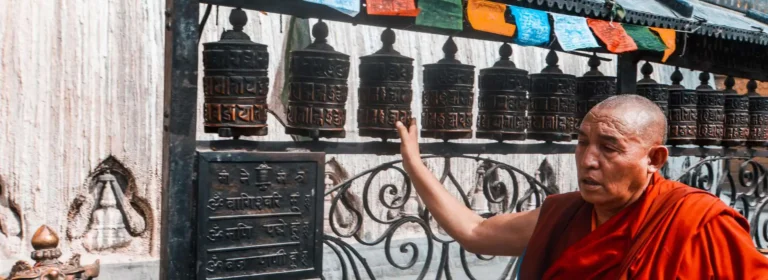
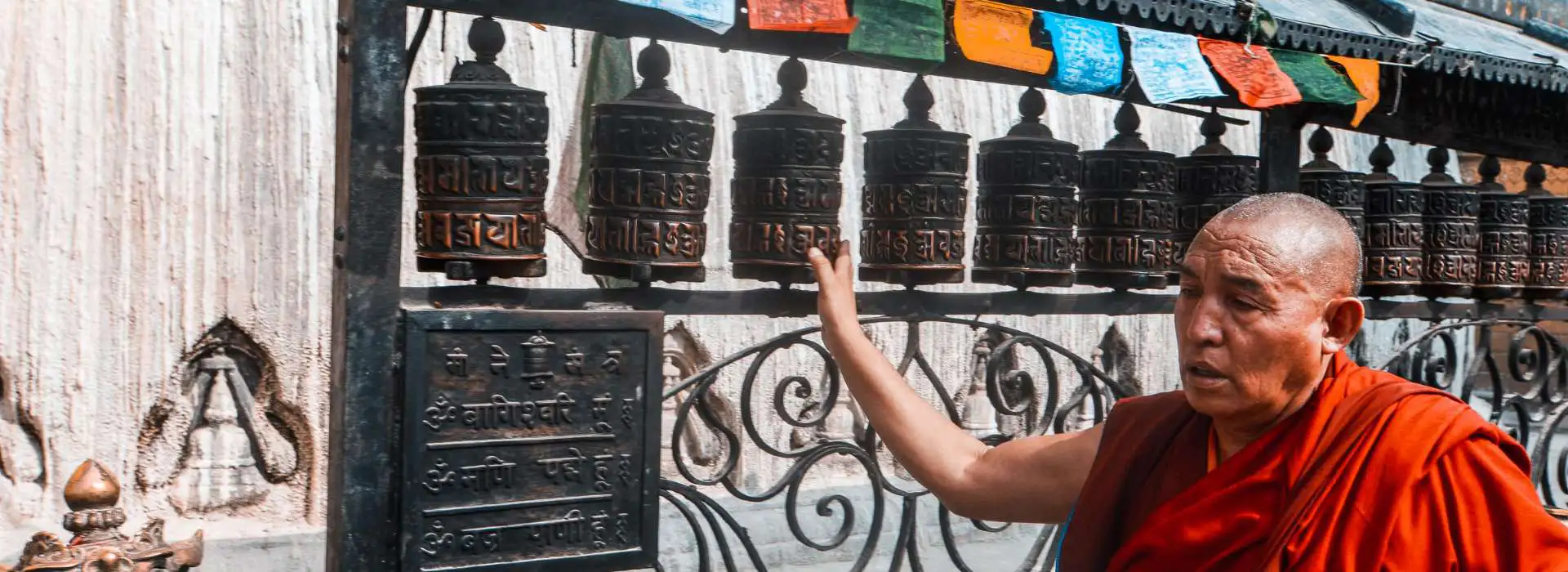
Day 2: The Barkhor, and how a kora works. A late start and a short day. One hour walking the pilgrimage circuit around the Jokhang, clockwise, and an explanation of what everyone around you is actually doing: the prostrations, the prayer wheels, the yak butter offerings, and why the direction of travel matters.
A sweet tea house afterwards, which is the working social institution of Lhasa: sweet milk tea by the flask, ordered by the thermos, at a shared table.
Day 3: The Jokhang, and Sera. The Jokhang at opening, the oldest and most revered temple in Tibet, and the place to explain the seventh century foundation and what came before Buddhism here.
Afternoon at Sera for the debating courtyard, where the formal philosophical debate with its clapping gesture is not a performance for visitors but the actual pedagogy of the tradition. Our guide explains the structure of a debate before you go in, which changes it completely.
Day 4: The Potala and Drepung. The Potala Palace in the morning, timed and capped, about an hour inside and several hundred steps.
Afternoon at Drepung, once the largest monastery in the world and effectively a monastic city. Driven high, walked down. Late afternoon at the monastery kitchen, where the butter tea and the tsampa for several hundred monks are still made in quantity, which is the best introduction to Tibetan food anyone gets.
Day 5: Ganden, and a nomad lunch. Ganden monastery, an hour and a half east on a high ridge, the seat of the Gelug school and the most dramatically sited of the four. The kora around it takes about ninety minutes at an easy pace.
Lunch with a herding family in the valley below, arranged through our partner rather than staged for visitors: yak butter tea, dried meat, tsampa mixed by hand in a bowl, and a genuinely educational hour about how food works when nothing grows above 13,000 feet (3,960 m).
Day 6: Lhasa to Gyantse over Kamba La. The first driving day, six to seven hours. Kamba La pass at about 15,700 feet (4,790 m), Yamdrok Lake below it at about 14,600 feet (4,450 m), the Karo La glacier at around 16,400 feet (5,000 m).
Afternoon at Pelkor Chode in Gyantse and the Kumbum, a stepped stupa of many chapels that is the finest of its kind anywhere and is unusual in housing three schools under one roof. Night in Gyantse at about 13,050 feet (3,977 m).
Day 7: Gyantse to Shigatse, and Tashilhunpo. Ninety minutes on the road, then the whole afternoon at Tashilhunpo, the seat of the Panchen Lamas and a working monastic town of whitewashed lanes, assembly halls and gilded roofs. Give it three hours, which almost nobody does.
Evening in Shigatse: the local market, and dinner at a Tibetan restaurant that cooks for Tibetans.
Day 8: Shigatse to Lhasa, and the kitchen. The northern road down the Yarlung Tsangpo valley, about five hours. Afternoon in Lhasa with a momo cooking session in a home kitchen: the dough, the pleating, the yak and the vegetarian fillings, and the chilli sauce that makes the difference.
Day 9: The Barkhor by taste. A morning food walk through the old town with your guide: the barley flour mills, the butter and cheese sellers, the dried yak stalls, the noodle shops, the bakeries doing Tibetan and Nepali bread, and two more tea houses. Then the afternoon free.
Day 10: Departure. Transfer to the airport, about an hour.
What is included
All permits obtained and delivered before travel, accommodation with breakfast in three hotels, a licensed English-speaking Tibetan guide chosen for the monastic material and a private vehicle with driver throughout, all entries including the timed Potala ticket, the nomad family lunch, the momo cooking session, the food walk, bottled oxygen in the vehicle, a written descent plan for every night, a VPN and the Chinese payment apps set up and tested before you fly, a day-by-day document with what you are looking at and why, and a WhatsApp group with your consultant and our Lhasa team, with WeChat alongside as a local fallback.
What we would change, and when
- Vegetarian? Workable in Lhasa, where there are good Nepali, Indian and Chinese vegetarian options, and constrained on the road. The nomad lunch and the monastery kitchen both work vegetarian. Tell us early and we brief every stop.
- Twelve days? Add Tsedang and Samye, the first monastery built in Tibet and the one that explains the origin of everything else on this route. It is the single best addition here.
- Fourteen days? Add Sakya, west of Shigatse, which is architecturally unlike anything else in Tibet and belongs to a different school again.
- July or August? The monasteries are unaffected and the driving day over Kamba La is cloudier. This is one of the few Tibet routes where the wet months cost you very little.
Honest notes
Monastery fatigue is real. Four great monasteries in ten days is deliberate, and it is also close to the limit. We space them, we give each a different frame, and we build in the free afternoons rather than adding a fifth.
Tibetan food is repetitive by design, because at this altitude the growing season is short and the options are barley, dairy, yak and what is trucked in. Butter tea is salty and takes most people three attempts. Nobody has to eat only Tibetan food, and Lhasa’s Sichuan restaurants are genuinely good.
Photography inside chapels is often restricted or charged, and at checkpoints and near installations it is not permitted at all. Your guide will tell you where the lines are.
Some chapels close without notice for ritual reasons, and monastic timetables are not published for visitors. Our guide reworks the order of a morning rather than treating it as a problem.
Built by Asaf Zamshtein, who runs our China desk, and checked with our licensed Lhasa partner before it goes out.