- Duration
- 12 days
- Pace
- Active
- Hotel changes
- 8
- Best months
- Apr, May, Sep, Oct
- From
- $1,380 per person
It is not a hard trip physically. The walking is three to six hours a day on hill paths at low altitude. What it asks for is tolerance: of simple accommodation, of long drives on bad roads, and of a landscape that is one of the great environmental catastrophes of the twentieth century.
Who it suits: travellers who would rather see how a country works than photograph its best buildings. Reasonable fitness, no technical difficulty, no altitude.
Your specialist: a named Central Asia specialist here, with our Tashkent partner running the ground, a walking guide in the Nuratau and a Karakalpak driver on the Aral section.
Day by day
Day 1: Arrive Tashkent. Transfer, and nothing. Kit and route briefing in the evening.
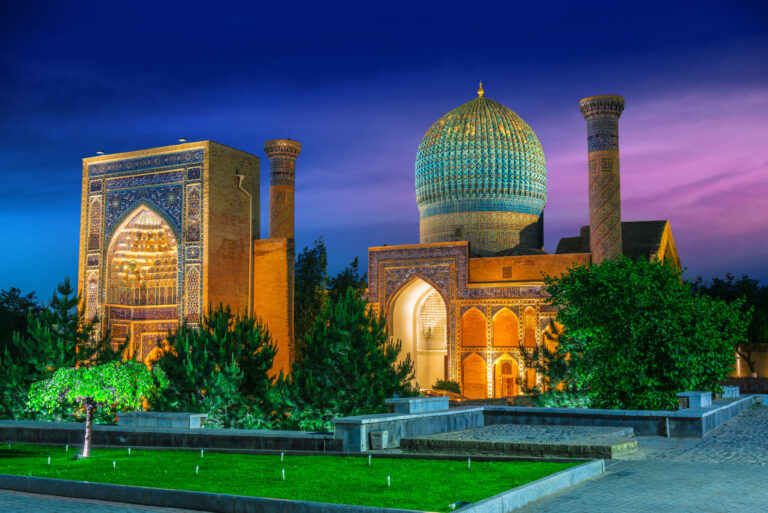
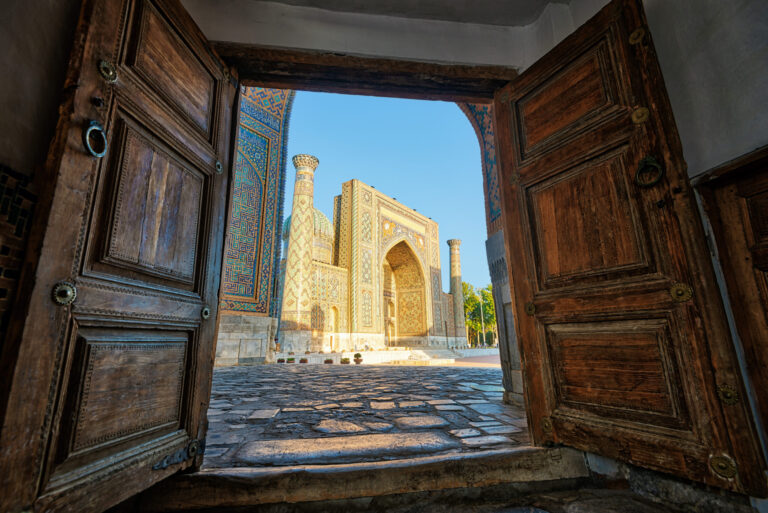
Day 2: Tashkent, and the train to Samarkand. The metro and Chorsu bazaar in the morning, the Afrosiyob after lunch. Evening at the Registan when it is lit.
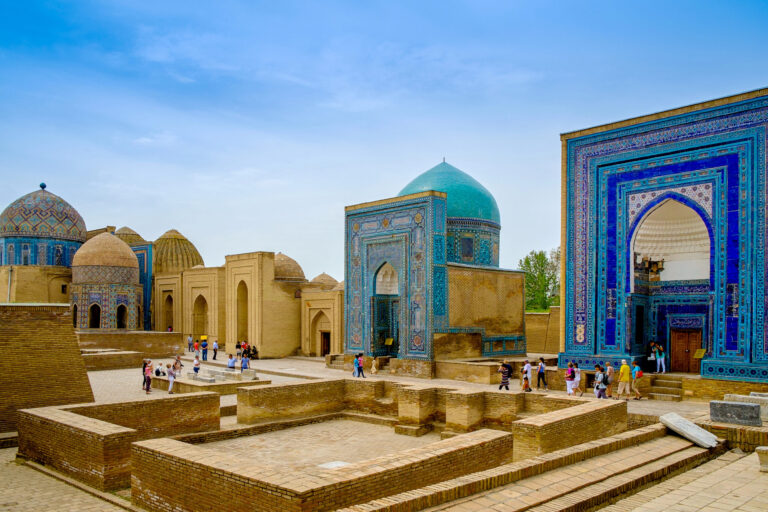
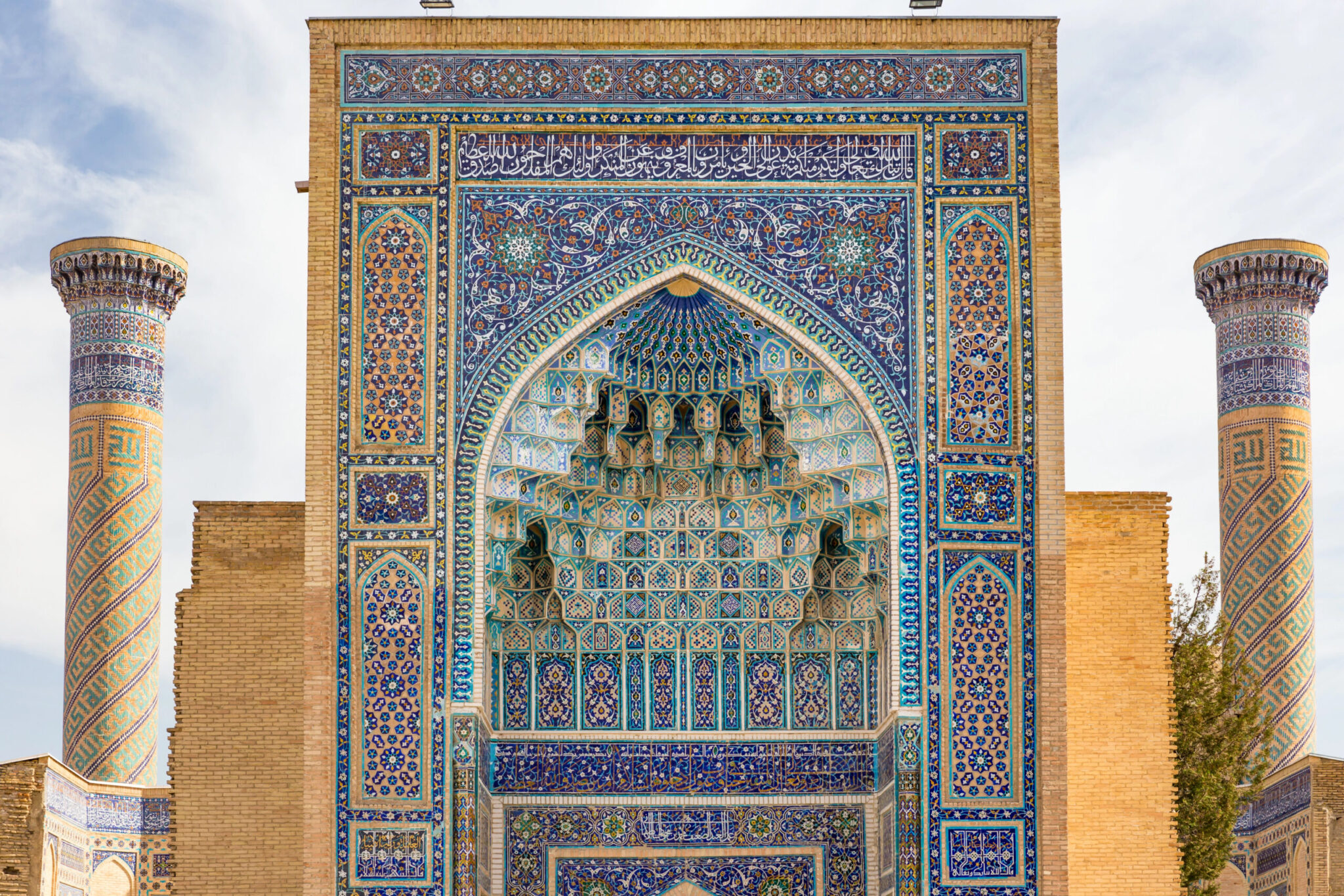
Day 3: Samarkand. One full day: Shah-i-Zinda at eight, the Registan, Gur-e-Amir, and Ulugh Beg’s observatory. Enough to understand what the cities are, before leaving them.
Days 4 to 6: The Nuratau mountains. Three hours north-west into the hills above the Nurata ridge. Three nights in village guesthouses, walking between them.
Day four: to the first village, an afternoon walk to the petroglyph fields, prehistoric rock carvings of ibex, hunters and sun symbols. Dinner with the family.
Day five: five to six hours over a low pass to the next valley, through walnut groves and terraced barley, with a shepherd’s lunch on the way. Guesthouse in the second village.
Day six: a shorter walk out to the reservoir and back, then the afternoon in the village, which is the point of staying three nights rather than one. There is a hot spring at Nurata and the remains of a fortress attributed to Alexander, which is a claim we would treat carefully.
Days 7 and 8: Lake Aydarkul and the Kyzylkum. Down out of the hills to the yurt camps on the edge of the desert. Camels at a walk, a swim in the lake in season, and an evening with a dombra player who is genuinely a musician rather than a performer for tables. Day eight is a full day: a long walk into the dunes at dawn, the heat of the day in the shade of the yurt, and a second night.
Day 9: To Bukhara. Four hours west. An afternoon and evening in the old town, which after five nights of village houses and felt tents is a considerable contrast, and which is the best walking city in the country.
Day 10: The desert crossing to Khiva. About six hours west across the Kyzylkum, following the Amu Darya. Arrive Khiva late afternoon, for the walled city at dusk.
Day 11: Khiva to Nukus, and Muynak. North into Karakalpakstan. The Savitsky Museum in Nukus first, which holds one of the world’s great collections of Soviet avant-garde painting, assembled and hidden by one man precisely because Nukus was 1,200 miles from Moscow. Then three hours north to Muynak, which was a fishing port and is now about 100 miles (160 km) from the water. The ship graveyard sits on the old seabed. Night in a yurt camp on the plateau or in a simple hotel at Muynak, depending on your dates and the road.
Day 12: Muynak to Nukus, and fly to Tashkent. Back south, and the flight. Home the same night or a last night in Tashkent.
If you have two more days, we drive on from Muynak over the Ustyurt plateau to the current shoreline and camp there. It is four to five hours on rough tracks each way from Muynak and it is a serious undertaking. We will lay out exactly what it involves and let you choose.
What is included
Accommodation throughout with full board in the Nuratau villages and the yurt camps and breakfast elsewhere, a licensed English-speaking walking guide for the Nuratau section, city guides in Samarkand, Bukhara and Khiva, all Afrosiyob train seats booked the day the window opens, the Nukus to Tashkent flight, private 4×4 and driver for the Aral section, all other private ground transport, the Savitsky Museum and all site entries, the camel ride, and a WhatsApp group with your consultant and our Tashkent partner team throughout.
Honest notes
Village guesthouses and yurt camps are simple. In the Nuratau, that means a mattress on a raised platform in a family room or a small bedroom, a shared washing block outside, an outdoor toilet at some houses, and no heating beyond a stove. In the yurt camps it means a felt tent, shared facilities and electricity for part of the evening. Both are clean. Neither is a hotel and we cannot upgrade them, because there is nothing to upgrade to.
The Aral section is long, hot and uncomfortable, and it is the reason some people come. Muynak is a town that lost its sea. The ships sit in sand where the harbour was, the local population has among the worst health outcomes in the region, and the dust that blows off the exposed seabed carries salt and agricultural chemicals. It is not a photograph opportunity, it is a place to understand something. We send people, and we prepare them.
The drives are long. Khiva to Nukus is about three hours, Nukus to Muynak another three, and the Bukhara to Khiva desert crossing is six. The roads in Karakalpakstan are poor in places.
Summer is impossible on this route. The desert exceeds 100°F (38°C) in June, July and August and the Nuratau walking becomes unpleasant by ten in the morning. April, May, September and early October are the windows. The yurt camps close for winter, usually from November to March.
There is no altitude issue. The Nuratau tops out at about 6,000 feet (1,830 m) and you walk considerably lower than that.
Water and dust. Carry more water than you think and something to cover your face on the Aral days.
Built by your named Central Asia specialist, checked by our Tashkent partner team before it goes out.