- Duration
- 12 days
- Pace
- Moderate
- Hotel changes
- 5
- Best months
- Apr, May, Sep, Oct
- From
- $2,220 per person
This route goes where the making happens. It includes the four Silk Road cities, because the craft is not separable from them, and it gives roughly half its days to workshops.
Who it suits: anyone who buys things and wants to understand what they are buying, and anyone who has ever wanted to see a loom, a kiln or a dye vat working.
Your specialist: a named Central Asia specialist here, with our Tashkent partner running the ground and guides who know the workshop families personally.
Day by day
Days 1 and 2: Tashkent. Arrival, then a full day. The applied arts museum in the morning, which is the right primer: suzani, ceramics, ikat and metalwork under one roof, with a guide who can explain the regional differences you will then see in person. Chorsu bazaar and the metro in the afternoon.
Days 3 to 5: The Fergana valley. East over the Kamchik pass, about five hours, into the most fertile and the most craft-dense part of the country.
Day three: Kokand and the Khudayar Khan palace, which is a nineteenth-century khan’s residence with an extraordinary tiled facade, then on to Margilan.
Day four: Margilan, which is silk. The Yodgorlik factory, where the whole process runs by hand: cocoons boiled, thread reeled, warp threads bound and dyed for ikat, then woven. Ikat is dyed before it is woven, which is why the pattern has that blurred edge, and watching the binding is the only way that fact becomes real. Afternoon at a smaller family atelier and in the Kumtepa bazaar, if it is a market day.
Day five: Rishtan, which is ceramics. About forty minutes from Margilan. The distinctive blue and turquoise comes from an ishkor glaze made from ash of a local plant, and there are several hundred working potters in the town. We visit two workshops: one master whose work is in museums, and one family operation where you can throw a pot badly under supervision. Afternoon back over the pass, or the domestic flight, to Tashkent.
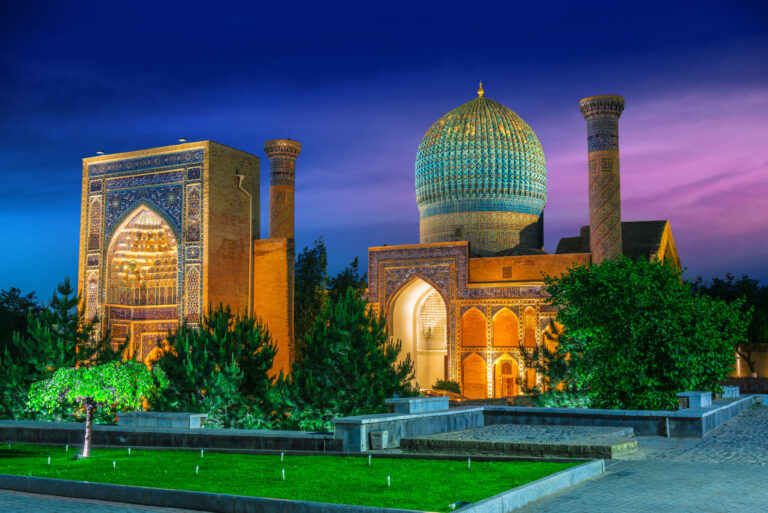
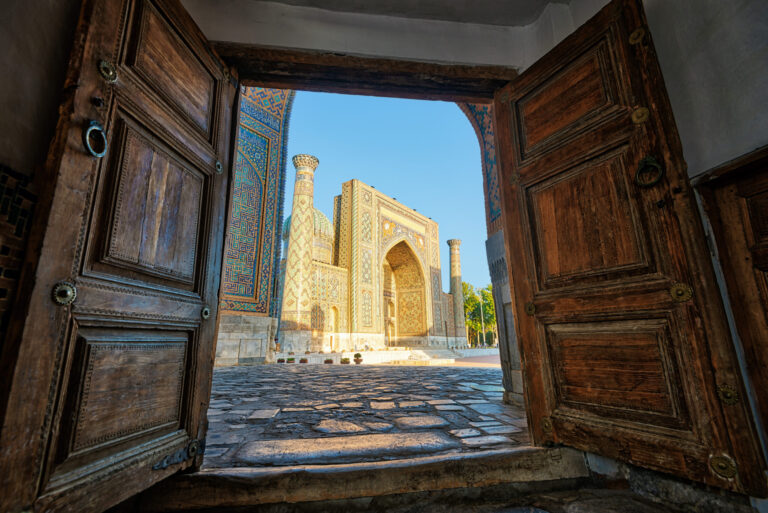
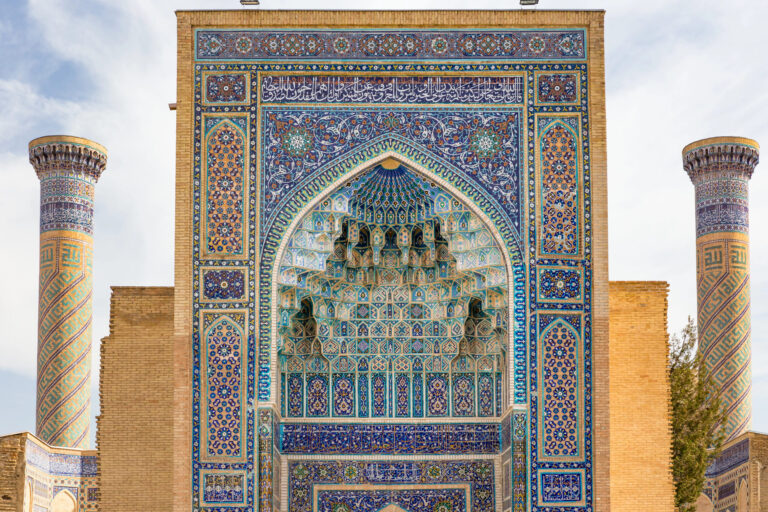
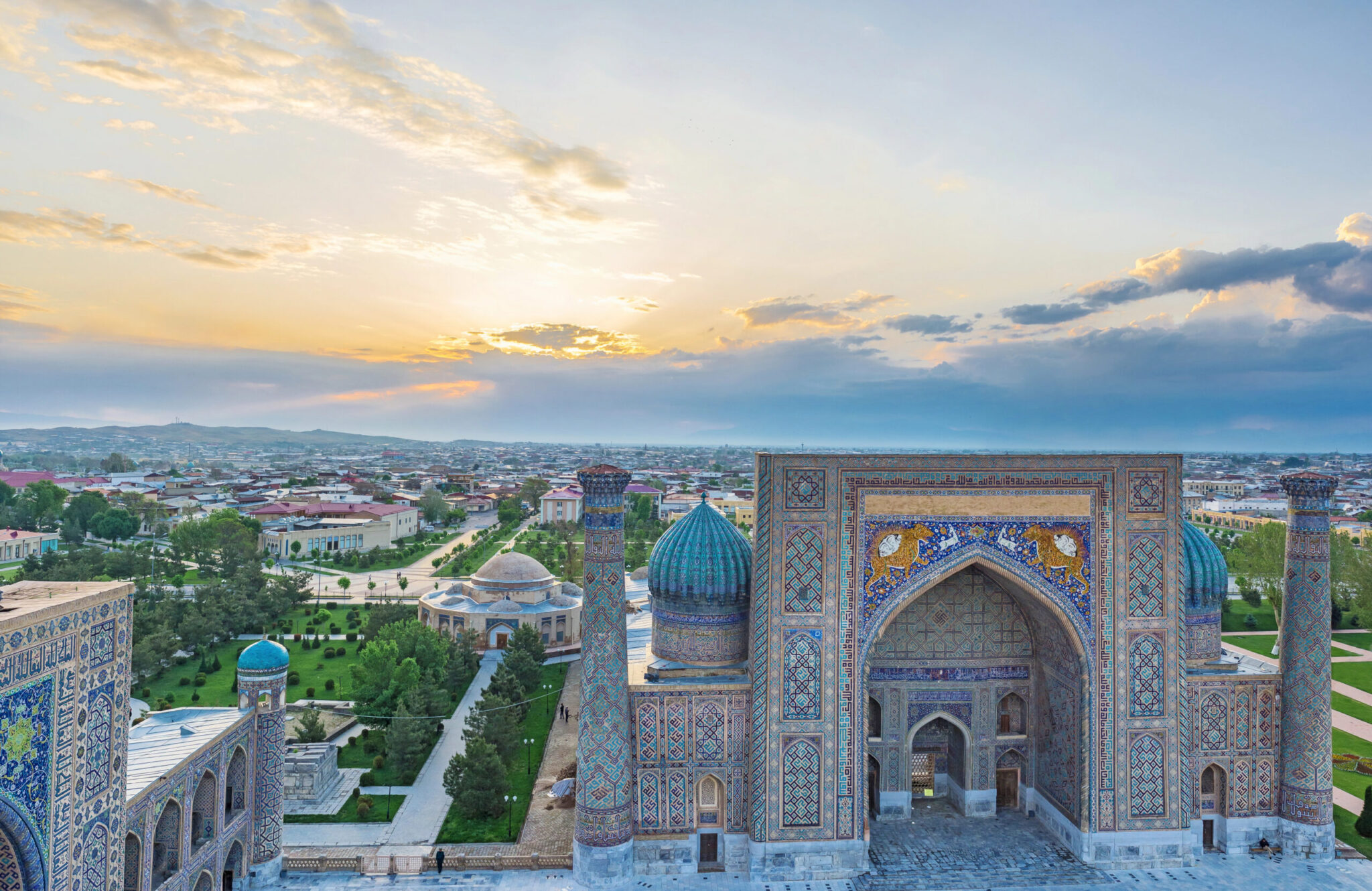
Days 6 and 7: Samarkand. The Afrosiyob train. The Registan, Shah-i-Zinda at eight in the morning, and Gur-e-Amir.
Day seven is the craft day: the Konigil paper mill, where mulberry bark is boiled, pounded by a water-driven trip hammer and formed into sheets by hand, using a method reconstructed from historical sources; and the Hujum carpet workshop, where silk carpets are knotted by hand at a density that takes months per piece and where the wages and conditions are worth asking about.
Days 8 to 10: Bukhara. The train, an hour and a half.
Day eight: the city itself. Poi Kalyan, the minaret of 1127, the Ark, the Samanid mausoleum, and the trading domes, which were built as specialised markets and still divide by trade.
Day nine: suzani. Large embroidered cotton or silk panels, made as dowry pieces, with regional designs that a good dealer can date and place within a decade. We take you to a workshop where they are stitched and to a dealer who handles antique pieces and will explain what makes one worth ten times another. Afternoon with a gold embroiderer, which is a Bukharan speciality, or a coppersmith.
Day ten: miniature painting and bookbinding in the morning, then free. Bukhara also has the best chaikhana afternoons in the country.
Days 11 and 12: Khiva, and out. The desert crossing, six hours, arriving late afternoon for Ichan Kala at dusk. Day twelve is a guided morning inside the walls, including the Juma mosque with its carved wooden columns, and a woodcarving workshop, which is the Khivan craft. Then Urgench and the flight to Tashkent.
What is included
Accommodation with breakfast throughout, all Afrosiyob train seats booked the day the window opens, the Urgench to Tashkent flight, private cars with drivers including the Kamchik pass and the desert crossing, licensed guides on eight days, ten workshop visits arranged in advance with the makers rather than with showrooms, hands-on sessions at a Rishtan pottery and the Konigil paper mill, all museum and site entries, help with shipping anything you buy, and a WhatsApp group with your consultant and our Tashkent partner team throughout.
What we would change, and when
- Serious about textiles? We add a second Margilan day and a day in the Nurata area, where suzani design is distinct, and drop Khiva.
- Short on time? Cut Fergana, which is the biggest single block, and this becomes a good nine days. You lose the silk and the ceramics at source, which is most of the point.
- Buying seriously? Say so at the enquiry stage. We will build in time with two dealers rather than one, and we will not take you anywhere that pays a commission to guides.
- Travelling in summer? Workshops are indoors and often cooler than the sites, so a July craft trip suffers less than a July monument trip. It still passes 100°F (38°C) outside.
Honest notes
Commission is the thing to watch in this country. A great many guides and drivers are paid a percentage by the shops they bring you to, and it distorts everything you are shown. Our Tashkent partner works with people we have used for years on a fee basis, and we ask them not to take commission. If you are ever taken somewhere you did not ask to go, tell us on the WhatsApp group the same day.
Not all of it is what it says. There is machine-made ikat sold as hand-woven, chemical dye sold as natural, and new suzani aged with tea. Some of it is openly sold as reproduction and that is fine. The problem is the pieces sold as something they are not, and the only defence is to buy where you have seen the work happening.
Rishtan and Margilan are working towns, not attractions. They are dusty, ordinary and not arranged for visitors, which is why they are worth the drive. Do not expect a craft village.
The Kamchik pass is a real mountain road and it closes occasionally in winter. It is about five hours from Tashkent to Kokand. There is also a train through the tunnel, which we will use if the schedule fits.
Shipping. Carpets and large suzani can be shipped and it works. Get a receipt with the seller’s details and photograph the piece before it is wrapped.
Built by your named Central Asia specialist, checked by our Tashkent partner team before it goes out.