- Duration
- 21 days
- Pace
- Moderate
- Hotel changes
- 6
- Best months
- Nov, Dec, Jan, Feb, Mar
- From
- $4,100 per person
Twenty-one days is the shortest length at which this works without becoming an airport tour: six hotel changes, four flights, and four nights at Angkor rather than the usual two. Our Hanoi office covers all three countries, which means one team, one document and one WhatsApp group rather than three suppliers handing you between them at each border.
Who it suits: travellers with three weeks who would rather do this once and properly, and first-timers to Asia who want range rather than depth in a single country.
Day by day
Day 1: Arrive in Hanoi. Transfer, an early dinner nearby, nothing scheduled.
Day 2: Hanoi. Out early while jet lag helps. A guided morning through the Old Quarter’s trade streets and the Temple of Literature, bun cha for lunch, afternoon free, and bia hoi on a plastic stool at five.
Day 3: Hanoi. The Museum of Ethnology, which sets up the whole trip by explaining who lives in this region and who used to, then Hoa Lo Prison and the French Quarter on foot.
Day 4: Hanoi to Lan Ha Bay. Two and a half hours east, aboard a small vessel at midday, kayaking among the karst before dinner. We use Lan Ha rather than central Halong, which carries several hundred boats on the same route.
Day 5: Lan Ha Bay. A full day on the water. Swimming, a cave at low tide, an empty beach on Cat Ba.
Day 6: Lan Ha Bay to Luang Prabang. Disembark mid-morning, drive to Hanoi, then the afternoon flight west, an hour and ten minutes, into a different century.
Day 7: Luang Prabang. The alms round at dawn if you want it, and an honest briefing first: it is a genuine daily religious practice that has been badly damaged by visitors photographing monks at close range. We take you to a quiet street, at a distance, or we skip it. Then the Royal Palace, the temples on the peninsula, and Mount Phousi for the last of the light.
Day 8: Luang Prabang. A boat up the Mekong to the Pak Ou caves and their four thousand abandoned Buddha images, then the Kuang Si waterfalls in the afternoon: turquoise limestone pools you can swim in, and the reason to bring a costume to a landlocked country.
Day 9: Luang Prabang. Free. The morning market, a cooking class, the UXO visitor centre which explains why Laos is the most heavily bombed country per head in history, or a bicycle and nothing else.
Day 10: Luang Prabang to Hoi An. Fly back east, connecting in Hanoi, into Danang and on to Hoi An by car. A travel day, arriving in the late afternoon.
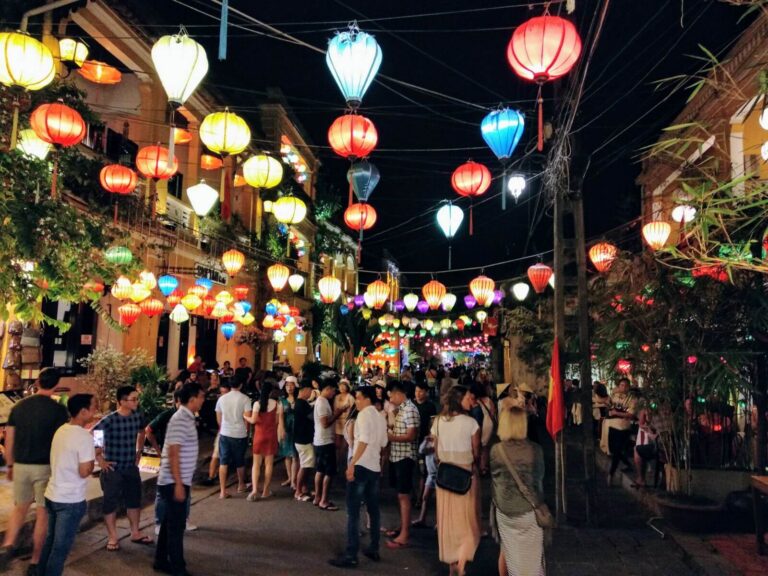
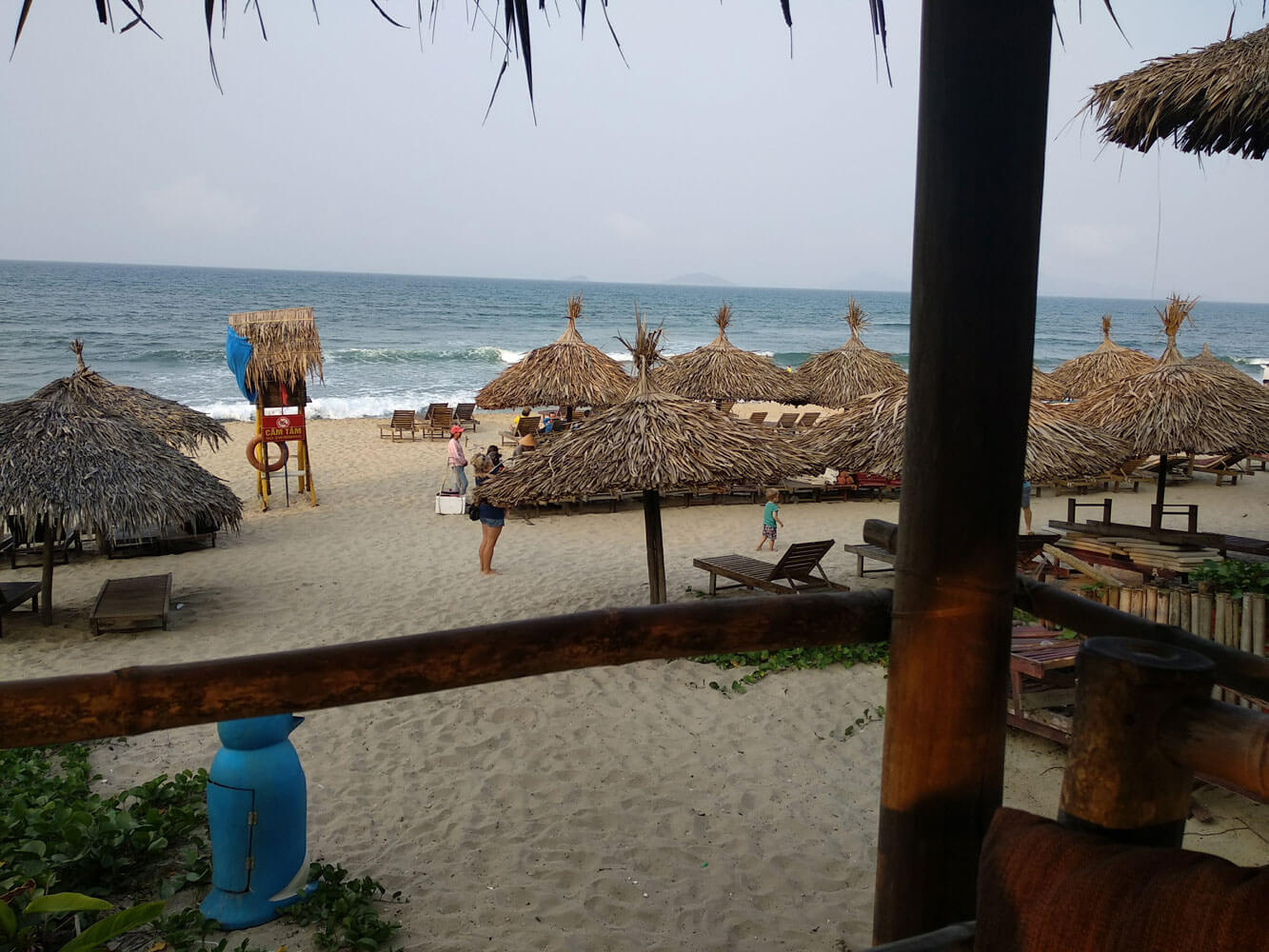
Day 11: Hoi An. The Ancient Town at seven, when it is a working Vietnamese town rather than a lantern-lit stage set. Guided walk through the merchant houses and the Japanese bridge, back by ten, afternoon at An Bang beach.
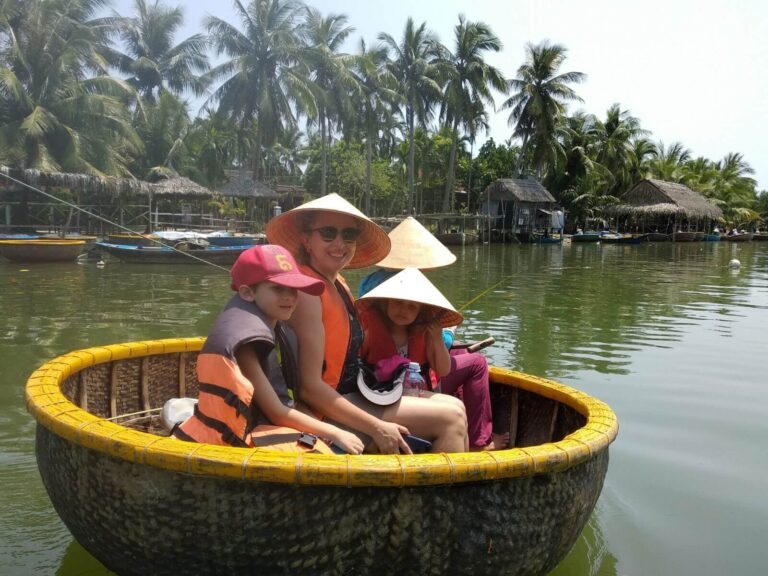
Day 12: Hoi An, free. A cooking session from the market, bicycles through the rice fields, My Son at the 6.30 opening, or the beach. A suit needs 48 hours, so today is the last day to start one.
Day 13: Hoi An to Hue. By car over the Hai Van Pass rather than through the tunnel, three hours with stops. Afternoon arrival.
Day 14: Hue. The Imperial Citadel in the morning and two royal tombs in the afternoon. Hue cooks the most refined food in Vietnam and we book accordingly.
Day 15: Hue to Ho Chi Minh City. Morning free, then the afternoon flight south. Evening walk through District 1.
Day 16: Ho Chi Minh City. The War Remnants Museum, one-sided by design and still essential, then the Cu Chi tunnels at the quieter Ben Duoc section, or Cholon. Evening food walk.
Day 17: Ho Chi Minh City to Siem Reap. Late morning flight, an hour and ten minutes. Afternoon at the hotel, and a first sunset from the terrace rather than from a temple, because everyone else is at the temple.
Day 18: Angkor, the core. Angkor Wat early, Bayon and its 200 faces, Ta Prohm and the strangler figs. A long, hot morning, an afternoon off, and back out at four.
Day 19: Angkor, the outer temples. Banteay Srei, the small pink sandstone temple with the finest carving in the empire, forty minutes out of town. Beng Mealea, unrestored and half swallowed, in the afternoon.
Day 20: Siem Reap, free. A stilt village on the Tonle Sap lake, a countryside cycle, a cooking class, or a third temple day if you have the appetite. Most people do not, and that is what the day is for.
Day 21: Departure. Fly home from Siem Reap.
What is included
All accommodation with breakfast across the three countries, two nights full board on a Lan Ha Bay vessel, all four international and domestic flights, private air-conditioned cars with English-speaking drivers on every transfer day, licensed local guides on eight days, the three-day Angkor pass and all other entrance fees on guided days, all visa arrangements for Laos and Cambodia and guidance on the Vietnamese e-visa, a single day-by-day document covering the whole trip, and one WhatsApp group with your consultant and our representatives in all three countries.
The visa trap
This route leaves Vietnam for Laos on day 6 and comes back on day 10. That means you need a multiple-entry Vietnamese e-visa, not the single-entry one most people apply for by default. It is the single most common and most expensive mistake we see on Indochina trips, and it is not fixable at the airport. Laos is a visa on arrival, roughly $30 to $45 depending on nationality. Cambodia is an e-visa or a visa on arrival at around $30 plus a processing fee. Our Hanoi office handles both and sends you the correct Vietnamese portal link.
Honest notes
The best month is February. Laos and Cambodia are dry and cool from November to February; Vietnam’s centre is dry from February. In November and December Hue and Hoi An can still be wet, and in March and April northern Laos fills with agricultural haze that makes the hills disappear and the air unpleasant. February and early March are the window where all three work.
Angkor is hot and it is big. Even in February you are walking on unshaded stone from seven in the morning. Four nights and two temple days is deliberate: three consecutive temple days defeats most people, and we would rather build in the recovery than watch you take it.
Phnom Penh is not on this route. Tuol Sleng and the killing fields at Choeung Ek are the most important thing a visitor can do in Cambodia and we have left them out, because adding them properly means two more nights and a flight. If you want them, we build the 24-day version and put them before Siem Reap so the trip does not end on them.
Laos does not do much. That is the point of it, and it is also why people either love it or find it slow. If you want a full day, four nights in Luang Prabang will feel long, and we would rather swap two of them for Cambodia’s coast.
Built by Osnat Angerman, our Southeast Asia specialist, with our Hanoi office, which runs all three countries.