- Duration
- 14 days
- Pace
- Moderate
- Hotel changes
- 5
- Best months
- Feb, Mar, Apr, May
- From
- $2,520 per person
That is a real decision and it costs you something. Hanoi is the more interesting of the two big cities and the limestone bays are the image most people arrive with. What you get in exchange is two nights in the Mekong instead of a day trip, three nights on Phu Quoc, three in Hoi An and two in Hue, with the water coconut palms, the floating market at dawn and the Hai Van Pass, and no day that is only a transfer.
Who it suits: second visits to Vietnam, travellers coming from Thailand or Cambodia who have already done the north, anyone travelling between February and May when the centre is dry, and people who would rather stay put than tick off.
Day by day
Day 1: Arrive in Ho Chi Minh City. Private transfer, a hotel in District 1 within walking distance of dinner. Nothing scheduled.
Day 2: Ho Chi Minh City. The War Remnants Museum in the morning, which is one-sided by design and still the most important two hours you will spend in the city. Reunification Palace, frozen in 1975, afterwards. Late afternoon in Cholon, the Chinese quarter, and its temples. Evening street food.
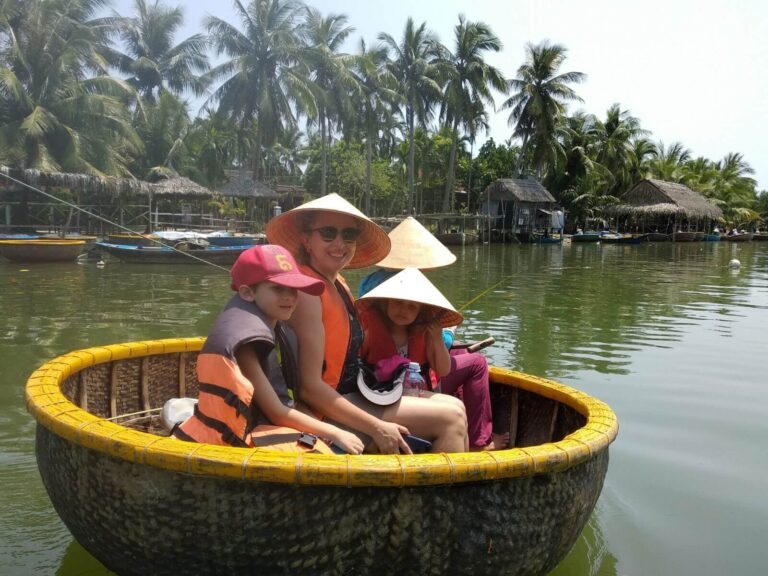
Day 3: Ho Chi Minh City to Ben Tre. Two hours south-west into the delta proper, past My Tho where the day-trip buses stop and on to the smaller canals. A sampan under the coconut palms, a brick kiln, a coconut candy workshop that is a genuine business rather than a demonstration, and a night in a lodge on the water. Frogs, not traffic.
Day 4: Ben Tre to Can Tho. Slowly west through the delta by road and boat, with a rice paper workshop and lunch at a canal house. Afternoon in Can Tho, the delta’s capital, and its riverfront.
Day 5: Cai Rang, then Phu Quoc. Out at half past five for the Cai Rang floating market, where wholesalers sell from boat to boat with a sample of their produce tied to a pole. Honest context: the market has shrunk considerably as roads replaced the waterways, and it is a working market with a tourist fringe rather than the spectacle the photographs suggest. It is still worth the alarm clock. Late morning flight to Phu Quoc.
Day 6: Phu Quoc. Nothing. The beach on the quieter north-west of the island at Ong Lang.
Day 7: Phu Quoc. A private boat to the An Thoi islands for snorkelling and lunch, or a second day of nothing. A pepper farm and a fish sauce house in the late afternoon if you want a reason to leave the sand.
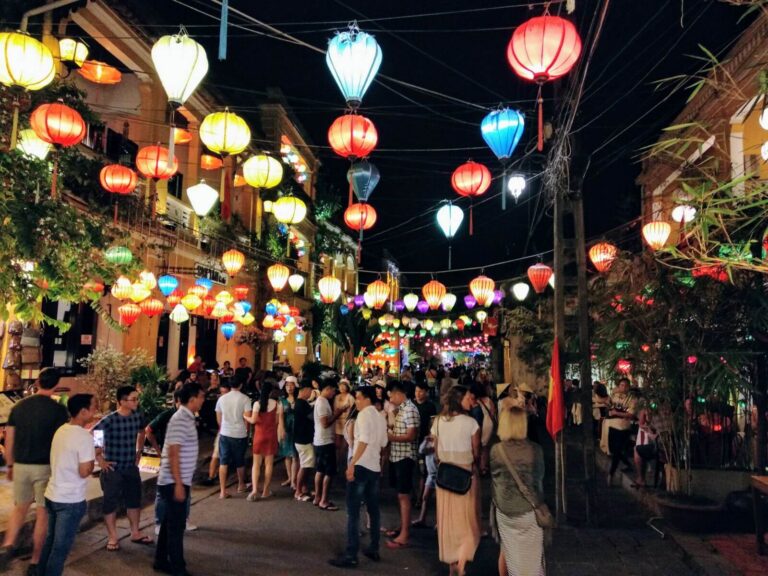
Day 8: Phu Quoc to Hoi An. The travel day: a flight north via Ho Chi Minh City to Danang, then twenty minutes by car. Arrival mid-afternoon. Evening in the Ancient Town.
Day 9: Hoi An. Out at seven, when the Ancient Town is a Vietnamese town rather than a lantern-lit stage set, for a guided walk through the merchant houses and the Japanese bridge. Back by ten. Afternoon at An Bang beach. Start a suit today if you want one: 48 hours and two fittings.
Day 10: Hoi An, free. A cooking session that starts in the market at six, bicycles through the rice fields to Tra Que herb village, the Cham ruins at My Son at the 6.30 opening, or a day on the beach.
Day 11: Hoi An to Hue. By car over the Hai Van Pass rather than through the tunnel, which is the whole point: three hours with stops at Lang Co lagoon and the pass itself. Afternoon arrival in Hue.
Day 12: Hue. The Imperial Citadel in the morning with a guide who can make walls into a story, then two royal tombs in the afternoon. Minh Mang for the setting and Khai Dinh for how strange it is. Dinner is where Hue earns its reputation as the best food city in the country.
Day 13: Hue, free. Thien Mu pagoda at opening, the Abandoned Water Park if you like that sort of thing, a monastery lunch, or a day at Lang Co on the coast. Or nothing.
Day 14: Departure. Fly out of Hue or transfer to Danang for international connections.
What is included
Accommodation with breakfast throughout, all domestic flights with a real baggage allowance, private air-conditioned car and English-speaking driver on every transfer day including the Hai Van Pass, the two delta nights with meals and all boats, the Cai Rang market boat, guides on four days, all entrance fees on guided days, a day-by-day document with drive times and flight numbers, and a WhatsApp group with your consultant and our Hanoi office throughout.
What we would change, and when
- First visit to Vietnam? Take our classic 16 days instead. This route is better, and it is better second.
- Travelling between September and December? Do not run this route. The centre floods and Hue and Hoi An are where nine of these nights are. We will build you the north instead.
- Want a country crossing? Days 3 to 5 can become a slow boat up the Mekong from Chau Doc into Cambodia and on to Phnom Penh, which turns this into a two-country trip and needs six more days. It also needs a single-entry Vietnam visa rather than multiple, since you do not come back.
- Prefer somewhere quieter than Phu Quoc? Con Dao, from March to September. Fewer flights a day, more weather cancellations, and a much more interesting island.
Honest notes
Day 8 is two flights. Phu Quoc to Danang has no reliable direct service, so you connect in Ho Chi Minh City. It is a five-hour door-to-door day and there is no better way to do it.
The delta is not spectacular. It is flat, green, hot and slow, and its pleasure is entirely in the pace and the canals. People who want scenery are disappointed by it. People who want to see how the country actually lives are not.
Phu Quoc’s south end is a building site. We put you in the north-west for that reason.
Built by our Hanoi office and reviewed by our consultants.