- Duration
- 12 days
- Pace
- Relaxed
- Hotel changes
- 4
- Best months
- Oct, Nov, Mar, Apr
- From
- $1,800 per person
What is left is more than enough. Rhinos at close range in Chitwan, a lake with boats, a two-day walk through hill villages that a nine-year-old can complete without complaining much, and three medieval cities that are essentially outdoor museums with children playing football in them.
Who it suits: families with children roughly 6 to 16. Under 6 works with the walking days removed.
Your specialist: your named Nepal specialist, with our Delhi office on the ground.
Day by day
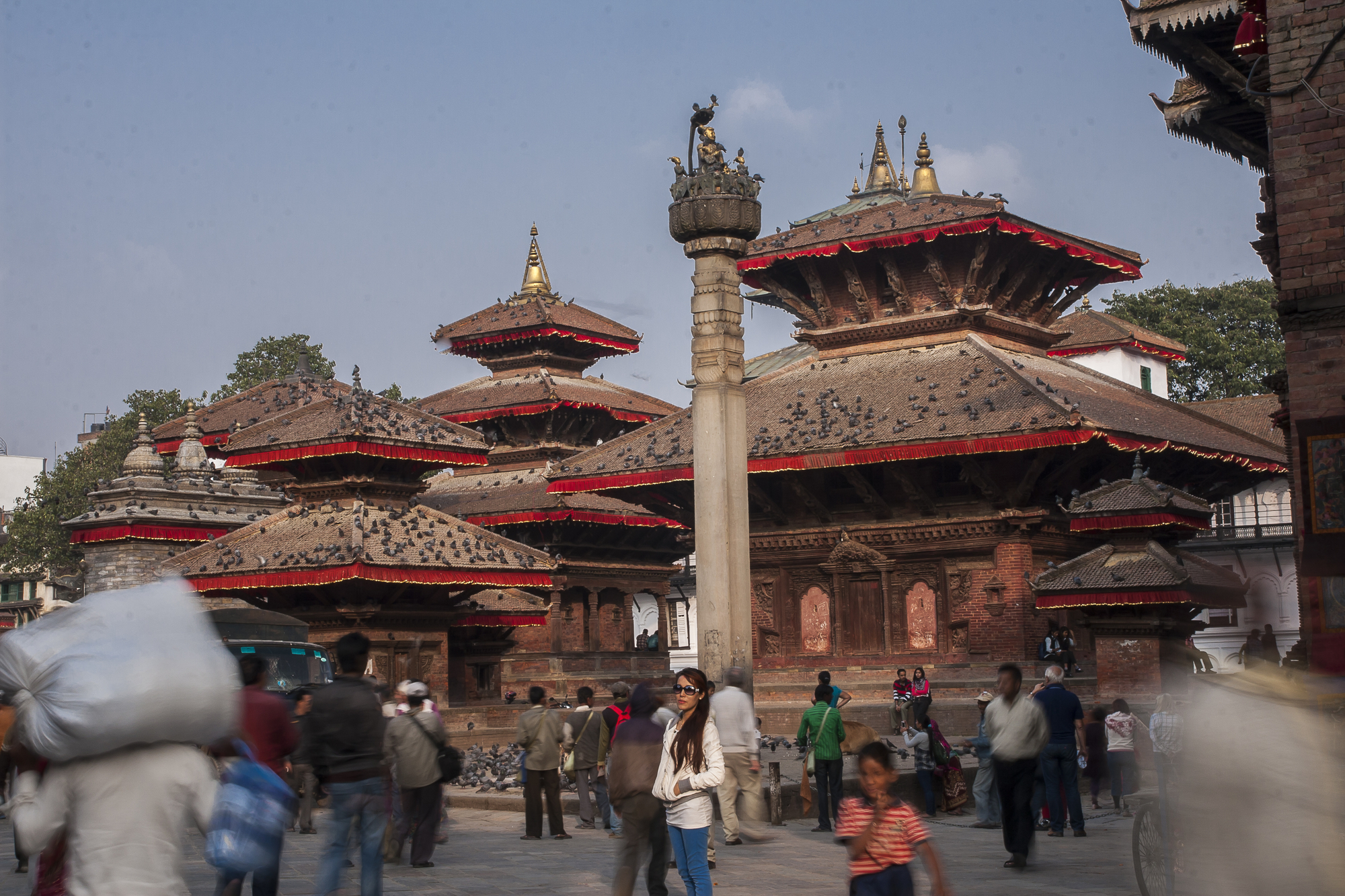
Day 1: Arrive Kathmandu. Private transfer. Nothing scheduled. We use Patan rather than Thamel: quieter, greener, and easier with children.
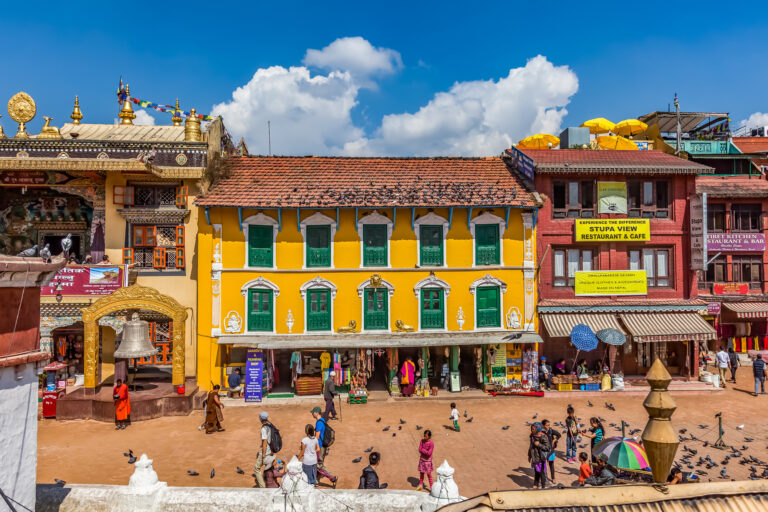
Day 2: Patan and Boudhanath. A short, well-paced morning at Patan Durbar Square with a guide who works with families, then the metal-casting and mask-making workshops behind the square, where children can watch things being made and usually have a go. Afternoon at the hotel. Boudhanath at dusk, which is a big open space where a child can run in circles while the adults walk round the stupa.
Day 3: Bhaktapur. East to Bhaktapur for two nights, staying inside the old city. It is traffic-free in the centre, which changes everything with children: they can walk ahead. Potters’ Square, where they will be given clay and a wheel, the woodcarving workshops, and juju dhau, the local yoghurt, which children universally approve of.
Day 4: Bhaktapur and Nagarkot. A free morning in the city, then up to the valley rim at Nagarkot in the afternoon, at 7,100 feet (2,175 m). A short ridge walk before dinner. Early night, because tomorrow starts before sunrise.
Day 5: Sunrise, then to Pokhara. Up for the Himalayan skyline at dawn, then west. Six hours by road with proper stops, or a short flight from Kathmandu if the drive is too long for your family, which for children under about eight it usually is. Afternoon on Phewa Lake in rowing boats, which they will want to row.
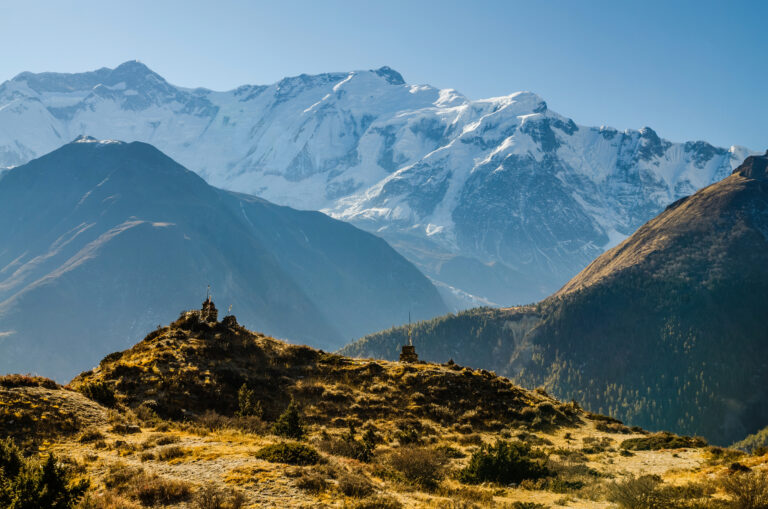
Day 6: Pokhara. Sarangkot at dawn for the Annapurna sunrise, and we will be honest that this is a hard sell with a seven-year-old and worth it anyway. Back for a long breakfast. Afternoon free: the lake, the Mountain Museum, or paragliding for teenagers over about fourteen with a tandem pilot.
Days 7 and 8: A two-day walk in the hills. Out of Pokhara by road to a trailhead, then a genuinely gentle two-day walk between hill villages at around 5,000 to 6,500 feet (1,500 to 2,000 m): three to four hours each day, on stone paths, through terraced fields and rhododendron forest, with the Annapurnas along the horizon. One night in a simple lodge or a village homestay, with a shared bathroom and no heating, which most children think is the best night of the trip. Porters carry everything. A licensed guide and permits are required and we arrange both.
Day 9: Pokhara to Chitwan. Five hours south, or a short flight to Bharatpur. Afternoon at the lodge, and a Tharu village walk before dinner.
Day 10: Chitwan, the big day. Dawn canoe on the Rapti past crocodiles, then a jeep safari through the grassland where rhino sightings are close to reliable. Afternoon at the elephant breeding centre, where the animals are observed rather than ridden. We do not book elephant-back safaris anywhere, and we will explain why to your children better than a leaflet would.
Day 11: Chitwan to Kathmandu. A morning bird walk or a second drive, then north, five to six hours by road or 25 minutes by air. Last evening in Kathmandu.
Day 12: Departure.
What is included
Accommodation with breakfast throughout in family or connecting rooms, full board at the Chitwan lodge and on the two walking days, private air-conditioned car with driver on all transfers, licensed guides briefed for children on six days, a licensed trekking guide and porters for the two-day walk, all trekking permits, all monument and national park fees, the canoe, jeep safari and lake boats, a day-by-day document with drive times, and a WhatsApp group with your consultant and our Delhi office.
What we would change, and when
- Children under 6? Remove the two walking days and add a night each in Pokhara and Chitwan. Nothing else changes.
- Teenagers who want a real trek? The Ghorepani and Poon Hill loop is four to five days and reaches about 10,500 feet (3,200 m). That is high enough to need proper altitude briefing and slow enough to be safe, and we would discuss it with you and with them.
- Long drives a problem? Fly Kathmandu to Pokhara and Bharatpur to Kathmandu. It costs more and removes eleven hours in a vehicle.
- Travelling in the monsoon? We would move your dates. Wet stone paths, leeches in the forest, no mountain views, and a jungle lodge in heavy rain is a long week with children.
Honest notes
We do not take children to Everest Base Camp or to the Annapurna Sanctuary, and we will decline to build it. Altitude sickness affects children as it does adults, they are less able to describe the symptoms, and the standard advice is a slower ascent than a family holiday schedule can carry. If your teenagers are 15 or over and genuinely want a high trek, we will talk about it properly and build a slower route.
The village lodge on day 7 is basic. Twin beds, a shared bathroom, no heating, a stove in the dining room, and dinner is dal bhat. It is our favourite night on this itinerary and it is not a hotel.
Nepali roads are slow and winding, and children who get carsick will get carsick. Tell us at the proposal stage and we will fly the legs that matter.
Pashupatinath, the cremation site in Kathmandu, is not on this itinerary. It is one of the most important places in the country and it involves watching open-air funerals. With teenagers, we will add it after a conversation. With younger children we leave it out.
Built by your named Nepal specialist, and checked by our Delhi office before it goes out.