- Duration
- 21 days
- Pace
- Active
- Hotel changes
- 13
- Best months
- Oct, Nov, Mar, Apr
- From
- $3,990 per person
Two weeks lets you do one of them properly and glance at another. Three weeks lets you do all three, and it is the length we recommend to anyone who is making the journey once.
Who it suits: fit walkers with time. There is a real trek in the middle of this, ten days of it, and the rest of the route is built around recovering from it and putting it in context.
Your specialist: your named Nepal specialist, with our Delhi office holding the permits and a licensed Nepali guide on the trekking section.
Day by day
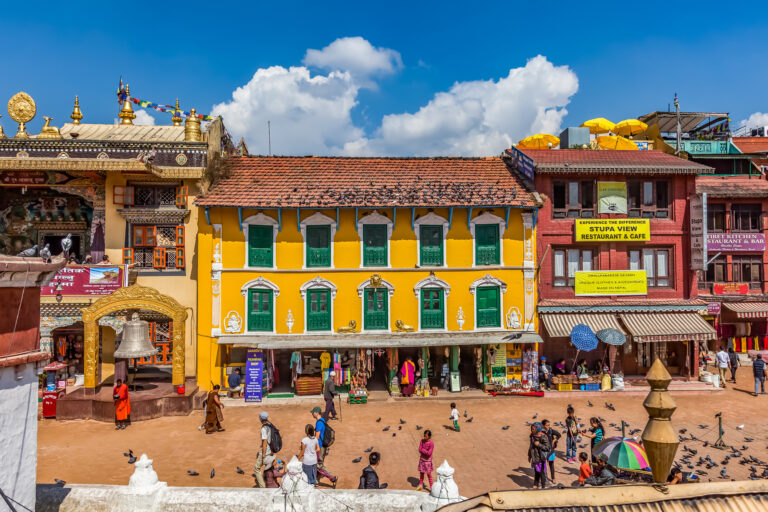
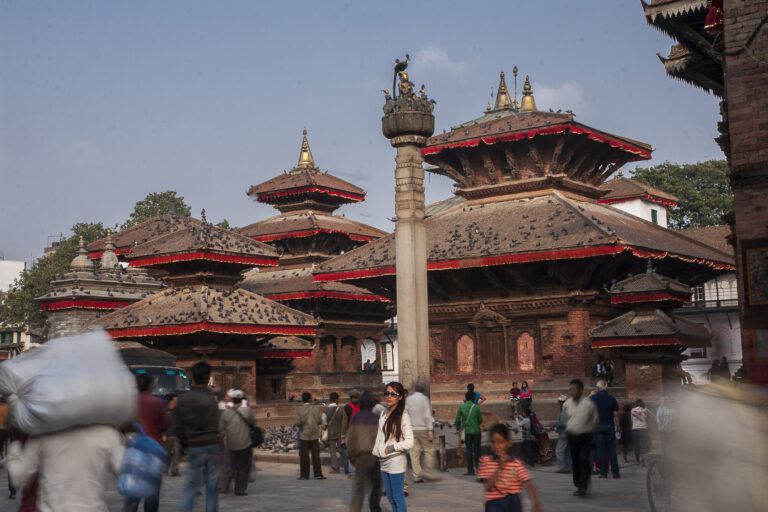
Days 1 and 2: Bhaktapur. Arrive, transfer past Kathmandu to the old city. A guided morning through Durbar Square and Potters’ Square, then free time. Kit check with your guide on the second afternoon.
Day 3: Patan and the valley. The metalworkers’ city, its courtyards, and the museum that is the best in the country. Night back in the valley.
Day 4: Fly to Pokhara, drive to the trailhead. Twenty-five minutes in the air rather than seven hours on the highway, then a drive to Nayapul.
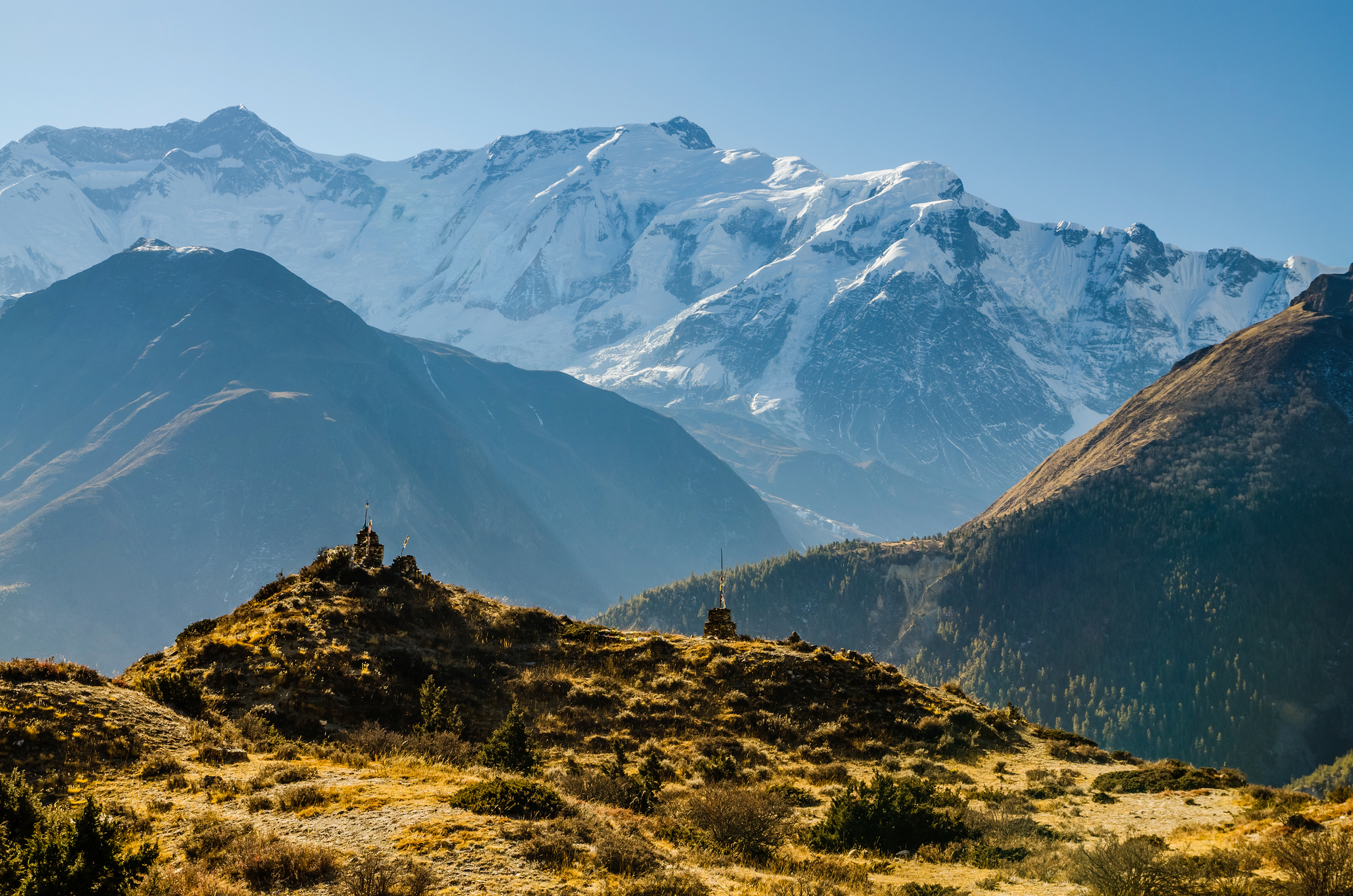
Days 5 to 14: The Annapurna Sanctuary trek. Ten days in, up and out. Ghandruk and the Gurung villages on the way up, then the long climb through bamboo and rhododendron into the Sanctuary itself, a glacial amphitheatre ringed by peaks over 22,000 feet. Two nights at Annapurna Base Camp at 13,550 feet (4,130 m), with a dawn on the third morning that is the reason for the whole itinerary. Then four days down, finishing at the hot springs at Jhinu Danda.
Walking days average five to six hours. There is one long descent day of about seven. The maximum altitude is 13,550 feet, which is high enough to need care and low enough that most people manage it comfortably on this schedule.
Day 15: To Pokhara. Out to the road, then a good hotel, a bath and a day off your feet.
Day 16: Pokhara. Nothing scheduled. A boat on the lake, a massage, and the first meal in ten days that was not cooked in a teahouse.
Day 17: Pokhara to Bandipur. Two and a half hours east to the flagstone hill town on the ridge, which is the right decompression between the mountains and the lowlands.
Day 18: Bandipur to Chitwan. Four hours south into the heat. A lodge on the park boundary.
Days 19 and 20: Chitwan. Game drives, a walk with a naturalist, a canoe on the Rapti and an afternoon in a Tharu village. Rhino are close to guaranteed, tiger are not.
Day 21: Fly to Kathmandu, departure. Short flight north, transfer to the airport.
What is included
A licensed English-speaking guide and porters throughout the trekking section, all teahouse accommodation and meals on trek, the Annapurna Conservation Area permit and TIMS card, hotels with breakfast on all non-trekking nights, full board at the Chitwan lodge, two internal flights, all private ground transport, the Chitwan park permits and naturalist, a pulse oximeter carried by the guide, and a WhatsApp group with our Delhi office and our Kathmandu team for three weeks.
Honest notes
The trek is the hard part and it is unavoidable. Ten days of five to seven hours on hill paths, sleeping in teahouses with plywood walls and shared bathrooms. If that does not appeal, say so at the enquiry stage and we will build you a lodge-based three weeks instead, which is a genuinely good trip and a completely different one.
Altitude. The Sanctuary at 13,550 feet is high enough that some people feel it. The schedule ascends slowly, which is why it takes ten days rather than seven. Worsening headache, vomiting or confusion means descent, and our guides descend without debating it.
Seasons. October and November are the most reliable, March and April are excellent and busier on the trail. Monsoon closes the mountain views from June to September, and we do not run this route then. December and January are clear but the Sanctuary is cold and snow can close the upper section.
Chitwan in April and May is genuinely hot, in the mid nineties Fahrenheit (about 35°C). It is also when the grass is cut and the wildlife viewing is at its best. That trade-off is yours to make, and we will lay it out before you choose your dates.