- Duration
- 14 days
- Pace
- Moderate
- Hotel changes
- 6
- Best months
- May, Jun, Sep, Oct
- From
- $3,010 per person
It is a long way. The distances are continental and the answer is rail, which in China is excellent, plus two internal flights where the train would cost you a day.
Who it suits: second visits to China, travellers who liked Uzbekistan and want the eastern half of the same story, and anyone whose interest is history rather than cities.
Your specialist: Asaf Zamshtein, our China desk, with our long-standing partner in Xian coordinating the ground.
Day by day
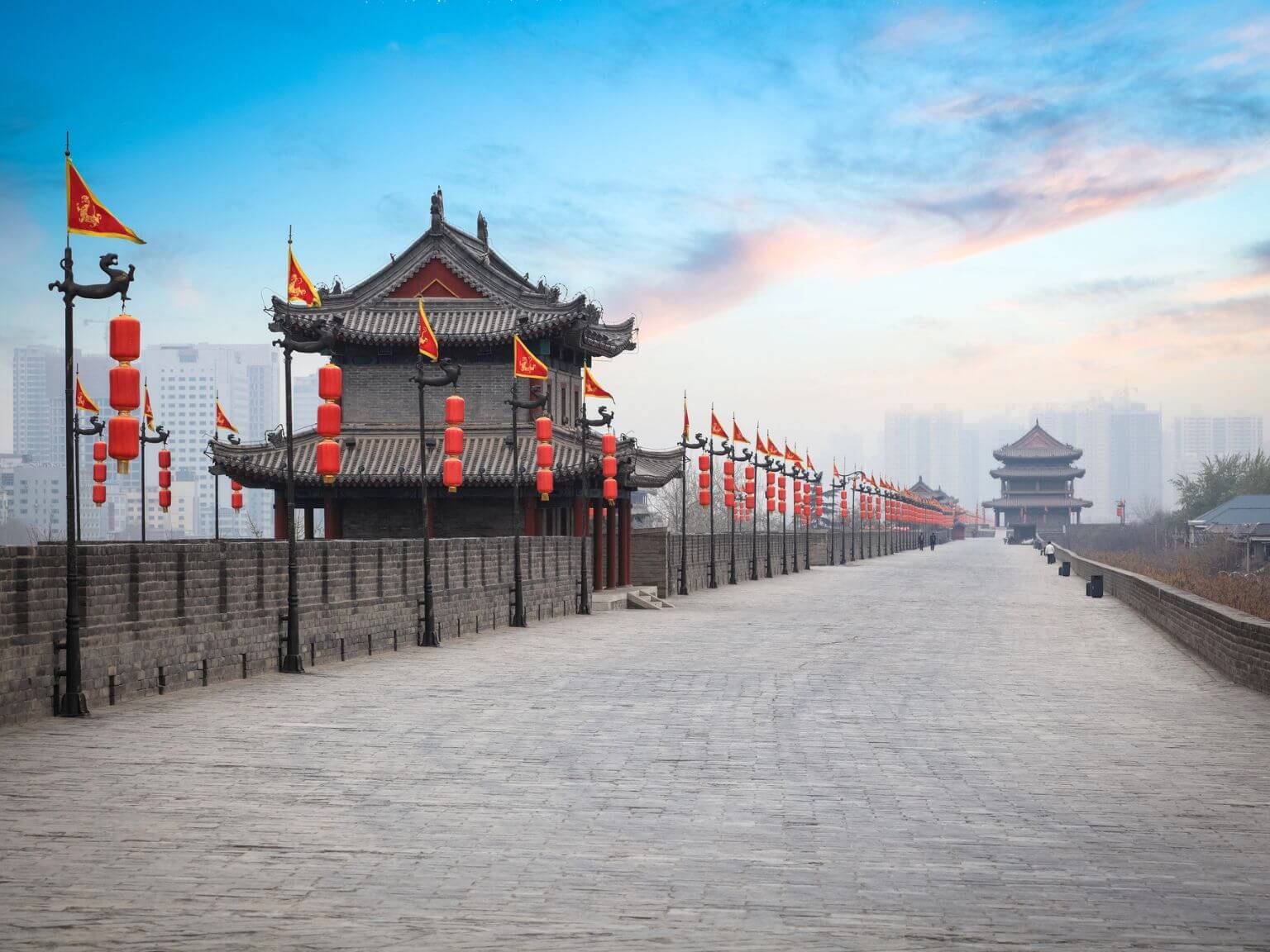
Days 1 and 2: Xian. Arrive, and take the city seriously rather than treating it as a stop on the way to the warriors. The Muslim quarter, the Great Mosque, the city walls by bicycle at dusk, and the Shaanxi History Museum.
Day 3: The Terracotta Army. Early, before the coaches. A guided morning at the pits, then the afternoon free. The site is genuinely worth the reputation, and it is also the most crowded place on this route by a wide margin.
Day 4: Xian to Zhangye. High-speed rail north-west into Gansu. The Danxia landform park in the late afternoon, when the striped hills actually show colour, rather than at midday when they do not.
Day 5: Zhangye to Jiayuguan. The western end of the Great Wall, which is a fort in the desert rather than a wall on a ridge, and reads completely differently from the Beijing sections. The overhanging wall in the afternoon.
Days 6 and 7: Dunhuang. The reason for the whole route. The Mogao caves hold a thousand years of Buddhist painting in nearly five hundred grottoes, entry is timed and capped, and we book it well ahead. Also the Crescent Lake and the Mingsha dunes at sunset, which are a tourist set piece and still worth an evening.
Day 8: Dunhuang to Turpan. Into Xinjiang. Turpan sits below sea level in a depression and is the hottest place in China in summer, which is why this route runs in spring and autumn. The karez irrigation tunnels, the Emin minaret and the ruined city of Jiaohe.
Day 9: Turpan to Urumqi. Half a day on the road, then the Xinjiang Regional Museum with its desert mummies, and a night in the city.
Days 10 to 12: Kashgar. Fly west. Three nights, which sounds like a lot and is not: the Sunday livestock market is one of the great markets in Asia, the old town rewards two slow mornings, and Karakul Lake up the Karakoram Highway is a full day with the Pamirs on the horizon.
Day 13: Kashgar to Urumqi to Xian. Flights east, a long travel day, and a final night in Xian.
Day 14: Departure.
What is included
All accommodation with breakfast, all high-speed rail in first class, the three internal flights, private vehicles and drivers on every road section, licensed English-speaking guides in Xian, Dunhuang, Turpan and Kashgar, timed entry to the Mogao caves booked in advance, all site entries, and a WhatsApp group with our China desk and the ground team, set up before you fly, with WeChat alongside it as a local fallback.
Honest notes
Mogao is capped and rationed. Entry is timed, the number of caves shown per visit is limited, and in the peak weeks the good tickets are gone months ahead. This is the one date on the route that we book first and build the rest around.
Xinjiang has checkpoints. Travel there involves identity checks and occasional delays that are simply part of the day. Our guides handle the paperwork. We say this so that nobody is surprised by it, and we plan longer transfer times because of it.
Access can change at short notice. Regional access rules in western China change without much warning. We confirm the current position before you commit anything, and if a section cannot be run properly we will say so and reroute rather than take you there and hope.
Seasons matter more than usual. Turpan reaches over 105°F (40°C) in July and August, and winter on this route is severe. May, June, September and October are the windows, and there is not much flexibility around that.
Payments, VPN and apps. Almost nothing on this route takes a foreign card at the counter, and your usual apps are blocked on a local connection. We set up your payment app and a working VPN before you fly and test both with you, and our guides carry local payment for anything that needs it. This removes the single most common frustration visitors report in China.