
This China travel guide is the document our consultants open when a new China file lands on the desk. It is not a list of sights. It is the set of decisions that determine whether your trip feels like travel or like admin.
The short version. Go in spring or autumn, plan around the two national holiday weeks, use the high-speed rail rather than the airport, get your payment apps working before you fly, and be honest with yourself about whether you want the famous circuit or the better one.
China at a glance
| Best months | April to May, and September to November |
| Comfortable trip length | 12 to 16 days |
| Entry | Rules change often, we confirm yours in writing |
| Getting around | High-speed rail, with one or two internal flights on long routes |
| Land budget, per person per day | 130 to 620 US dollars |
| Our presence | Long-standing Chinese partner teams, not our own office |
On who is on the ground. We have dedicated local offices in Vietnam and India, our team in Japan, and local representatives in the Philippines. China is not one of them. We run China through partner teams in Beijing, Chengdu and Kunming that we have worked with for years. Their staff meet you, drive you and take the call when something goes wrong. We say this plainly on every China page because the alternative is implying a presence we do not have.
The two things that catch visitors out
Payments
China moved from cash to phone payment in about six years and largely skipped the credit card. In practice: international cards work at the airport, in international hotel chains and in a shrinking number of restaurants. Almost everywhere else, from the noodle shop to the temple ticket window to the taxi, the transaction is a QR code.
Cash is still legal tender and you should carry some, but you will meet vendors who have no change and occasionally vendors who wave you away rather than deal with a note.
The fix is straightforward and it has to be done before you travel. Alipay and WeChat Pay both accept international cards from foreign visitors now, and both work well once linked. Setting one of them up takes about twenty minutes at your kitchen table and is close to impossible in a taxi queue at Beijing Capital at eleven at night. We send you a written walkthrough with screenshots at the booking stage, and our partner team checks it works on your first morning.
Apps and connectivity
Several of the services you use daily are not reachable from inside the mainland. That includes some of the mapping, search and messaging tools most travellers assume will simply be there. Practically, this means two things.
First, set up what you need before you fly: a VPN, an offline map, a translation app that works without a connection and your payment app. We install and test the VPN with you at the booking stage, which is why our travellers keep using their normal apps in China rather than learning new ones. Second, your travel group runs as it always does, a WhatsApp group with Asaf here and our partner team there, opened before departure. We add a WeChat group alongside it if you want a local fallback, and on the day a train is cancelled you will be glad of both.
When to travel
Spring, April to May
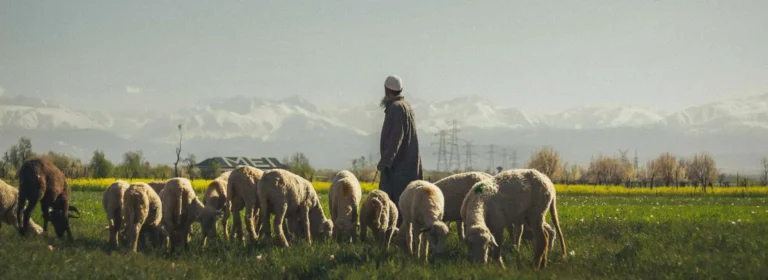
Our first choice alongside autumn. The north warms up and clears, the south is not yet unbearable, and the countryside in Yunnan, Guizhou and Guangxi is green. Rapeseed flowers in the southwest peak in late February and March, terraces in Guangxi and Yunnan are flooded and mirror-like in April and May.
The first week of May is a national holiday. Domestic travel volumes are extraordinary, sites are at capacity and rates rise. We plan around that week rather than through it.
Summer, June to August
Hot and humid across the east and the south. Shanghai, Nanjing, Wuhan and Chongqing are genuinely uncomfortable in July and August, in the mid nineties Fahrenheit (mid thirties Celsius) with high humidity. It is also the domestic school holiday, so the famous sites are at their fullest.
Summer is, however, the season for the high country: the Sichuan and Gansu grasslands, the Yunnan mountains, Inner Mongolia and the far northwest. If your dates are fixed to July or August, we move the trip up in altitude and north in latitude, and we accept some afternoon rain.
Autumn, September to November
The best window in the country, and the one we recommend when someone is free to choose. Clear air in Beijing, comfortable temperatures, autumn colour in the mountains through October, and the harvest in the terraced regions of the southwest.
The first week of October is the National Day holiday and it is the single busiest travel week in the world. We do not build itineraries through it. If your dates are locked to it, we tell you what that costs you and we route you away from the headline sites.
Winter, December to March
Cold and dry in the north, mild in the far south. This is when air quality in Beijing, Xi’an and the north China plain is at its least reliable, driven by heating demand and still winter weather. It is much better than a decade ago and it is still a real planning factor: expect some clear cold days and some grey ones.
Winter has real arguments in its favour. The Great Wall in snow with nobody on it. Harbin’s ice festival in January. Yunnan, which sits high enough to be sunny and dry all winter and is one of the better January destinations in Asia. Rates in the big cities are at their lowest of the year.
Entry requirements
This is the section where we will not give you a number, because the number keeps changing.
Over the last two years China has expanded unilateral visa-free entry to a growing list of nationalities, extended transit exemptions at a long list of ports of entry, and adjusted the conditions attached to both, including permitted duration, which cities you may enter through and whether you need an onward ticket to a third country. Some of these are trial schemes with end dates that have been extended more than once.
What that means for you: whether you need a visa depends on your passport, your route, your entry point and the month you travel, and anything we published here would be out of date within months. So we confirm the current requirement for your specific passport and your exact dates in writing before you book anything, and we check it again about a month before you fly. If a visa is needed we tell you what the application involves and how much lead time to allow.
Two things that do not change. Your passport is the document that runs your trip in China: you need it to buy a rail ticket, to board a train, to check into a hotel and to enter many sites. Carry it, not a copy. And hotels must be licensed to accept foreign guests, which is why we do not book the cheapest room on a booking site in a small town and hope.
Getting around
High-speed rail
This is the answer to China, and it is the single biggest change in how the country travels in the last fifteen years. The network is the largest in the world, well over 25,000 miles (40,000 km), the trains are quiet and punctual, and they run city centre to city centre.
The legs that matter:
- Beijing to Xi’an, about 700 miles (1,130 km), from around four and a half hours
- Beijing to Shanghai, 819 miles (1,318 km), from about four and a half hours
- Xi’an to Chengdu, from about three hours
- Shanghai to Hangzhou, about an hour
- Guangzhou to Guilin, from about two and a half hours
- Hong Kong West Kowloon to Guangzhou, under an hour
Tickets are sold under your passport number, seats are allocated, first class is worth the modest difference on legs over three hours, and business class rarely is. Booking opens a set period ahead and popular legs around holidays sell out. We hold the reservations and hand you the numbers.
Flights
Still necessary for the genuinely long jumps: Beijing or Shanghai to Kunming, to Urumqi, to Lhasa, or a Chengdu to Kashgar type of leg. Domestic flying in China is competent and reasonably priced, and delays are common enough that we do not schedule anything important for the evening of a flying day.
Cars and drivers
In the cities, no. Traffic is heavy, parking is difficult and the metro systems in Beijing, Shanghai, Chengdu and Guangzhou are excellent. In the countryside, a private car with a local driver is how our itineraries work: Guizhou’s village roads, the Yunnan mountain routes, the Sichuan grasslands. Self-drive is possible with paperwork and we almost never recommend it.
What a trip to China costs
Figures below are land only, per person, based on two sharing, and exclude international flights. They cover accommodation, food, ground transport, entries and the guiding we would normally include.
| Style | Per day | 10 days | 14 days | 21 days |
|---|---|---|---|---|
| Careful: good local three star, mostly independent | $130 | $1,300 | $1,820 | $2,730 |
| Comfortable: strong four star, guides on the days that need them | $215 | $2,150 | $3,010 | $4,515 |
| Boutique: design hotels and heritage courtyards | $360 | $3,600 | $5,040 | $7,560 |
| Luxury: top-tier city hotels, private guiding throughout | $620 | $6,200 | $8,680 | $13,020 |
What moves the number:
- Beijing and Shanghai hotel rates. They behave like New York and London rather than like the rest of the country. A night in Chengdu or Kunming at the same standard costs a fraction.
- How much private guiding you take. A licensed English-speaking guide with a car in a rural province is a real cost and, on maybe four days of a two-week trip, is the difference between seeing a village and understanding one.
- Rail class and flight legs. Marginal in the scheme of things, and worth spending on the four-hour legs.
What is cheaper than people expect: food, intercity transport and entry tickets. You can eat extremely well in Chengdu or Xi’an for the price of a sandwich at home.
The regions worth your time
Beijing. Three full days minimum. The Forbidden City, a properly chosen section of the Great Wall rather than the coach-park section, the hutong lanes, the Temple of Heaven at dawn when the city is exercising in it. We plan Beijing by district and by time of day, because the famous sites are transformed by when you arrive.
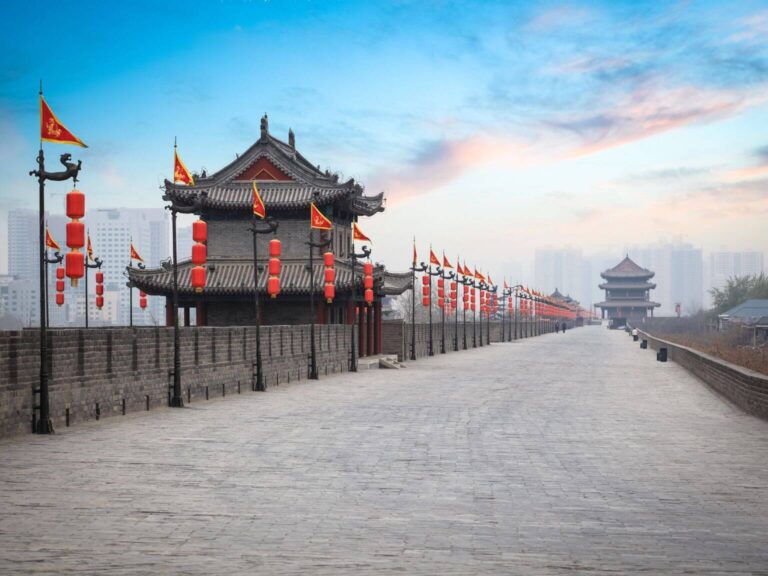
Xi’an. Two days. The Terracotta Army earns its reputation and is better with a guide who can explain what you are looking at. The Muslim Quarter is the best street eating in northern China and the city walls are the best two hours on a bicycle in the country.
Shanghai. Two to three days. Not an old city and not trying to be. The former concession streets, the Bund at both ends of the day, contemporary art, and the water towns an hour out.
Suzhou and Hangzhou. The Jiangnan classics. Suzhou’s gardens are worth a guide and an early start. Hangzhou’s West Lake is beautiful and extremely popular, so we go early or we go in the evening.
Chengdu and Sichuan. Our favourite base in China. The pandas at Dujiangyan or Bifengxia rather than only the city breeding centre, teahouses, the best food culture in the country, and, to the west, the Tibetan grassland towns of Danba, Tagong and Litang.
Yunnan. The province we send returning travellers to. Kunming, Dali and the Erhai lake, Lijiang and its old town, the Tiger Leaping Gorge trek, the tea mountains of Xishuangbanna, and the eastern Himalaya at Deqin.
Guizhou and Guangxi. Miao and Dong villages with wooden drum towers and wind and rain bridges, the Longji rice terraces, and the karst rivers around Yangshuo, which is the most photographed landscape in China and still worth it if you get away from the town centre.
The Gansu corridor. Dunhuang’s Mogao Caves and the singing sand dunes, the striped hills at Zhangye, the fort at Jiayuguan where the Great Wall ends. The best third week in China for anyone who likes history and space.
How we build a China trip
Every China itinerary we write is put together by Asaf Zamshtein, our Southeast Asia and China specialist and the person who runs our China desk, with Mai Est, our Head of Consulting. You get a named person for the whole process.
Your $39 plan is written for you rather than pulled from a template, and if you want us to book the trip, the quote is free and carries no obligation. You will see the actual hotels, the actual train numbers and the reasoning behind the order of the days.
Before you fly we set up your payment app and your VPN, confirm your visa position in writing, and open a WhatsApp group with your consultant here and our partner team there, with WeChat alongside it as a local fallback. It stays open until you are home.
Ready to plan it?
Tell us the shape of the trip you have in mind and we will build you a first outline. A plan written for you, and a free, no-obligation quote if you want us to book.
Keep reading
- The eight China itineraries we build most often
- What two weeks in China really costs
- Paying for things in China
- How Chinese high-speed rail actually works