This is the article we would hand you before you book, written as the things we wish first-time visitors knew in advance rather than a list of what to see.
1. You cannot travel independently, and that is the rule
Bhutan does not permit independent tourism. Your visa is applied for in advance by a licensed Bhutanese operator against a confirmed and paid itinerary, and a licensed Bhutanese guide and a driver travel with you throughout. There is no visa on arrival, no form you fill in the night before, and no version of this where you hire a car and drive to Punakha yourself.
Two consequences. First, the booking sequence is the reverse of most countries: the itinerary is confirmed and paid before the visa exists. That means you commit earlier than you are used to. Second, the quality of that guide is most of the difference between a good Bhutan trip and an average one, which is why we choose ours by name rather than accepting an allocation.
We are also honest that some people find the constant company wearing by about day six. The fix is not to pretend otherwise. It is to build quiet days in, where the guide meets you at ten rather than at eight, and to say so at the planning stage rather than at the hotel. Nobody is offended.
2. The daily fee is the biggest line, and it is not a markup
Every foreign visitor pays a Sustainable Development Fee to the Bhutanese government for every night in the country, per person, on top of everything else. At the time of writing it is 100 US dollars per adult per night for most nationalities, with children under six exempt and six to twelve at half. Indian passport holders pay a lower amount under a separate arrangement.
Take that as guidance rather than a quote. It has changed more than once since 2022 and we confirm the rate for your passport and your exact dates before pricing anything.
What matters for a first visit is what it does to your decisions. A cheap trip to Bhutan is not possible. The fee sets a floor under the whole country, so the meaningful choices are how many nights you stay and how good the hotel is, and because the floor is high, upgrading the hotel is proportionally better value here than anywhere else we work. The full arithmetic is in what a trip to Bhutan really costs.
3. The distances are lies and the drive times are the truth
Bhutan is small on a map and slow on the ground. Paro to Thimphu is an hour. Thimphu to Punakha is three hours over the Dochula pass at 10,170 feet (3,100 m). Punakha to Gangtey is four. Paro to Bumthang is about 165 miles (265 km) and it is two days.
The roads are decent by Himalayan standards, they are also switchbacks over passes, and motion sickness is common on them. Arrive prepared for it rather than discovering it on the Dochula descent. We sit people who suffer in the front, stop more often than the schedule needs, and build to a maximum of one long driving day in three.
4. You arrive at altitude on day one
Paro is at about 7,300 feet (2,225 m). Thimphu is at about 7,660 feet (2,335 m). You land at the first and often sleep at the second, having gained altitude and crossed time zones on the same morning.
That is high enough for a headache and a bad first night’s sleep, and low enough that acclimatisation days are not normally needed. What we do instead is put nothing on day one. Not a temple, not a museum, not a walk. People who ignore that advice pay for it on day two.
The standard circuit sits between about 4,300 and 10,200 feet (1,310 to 3,110 m). Treks are a different matter entirely.
5. Tiger’s Nest is harder than the photographs suggest
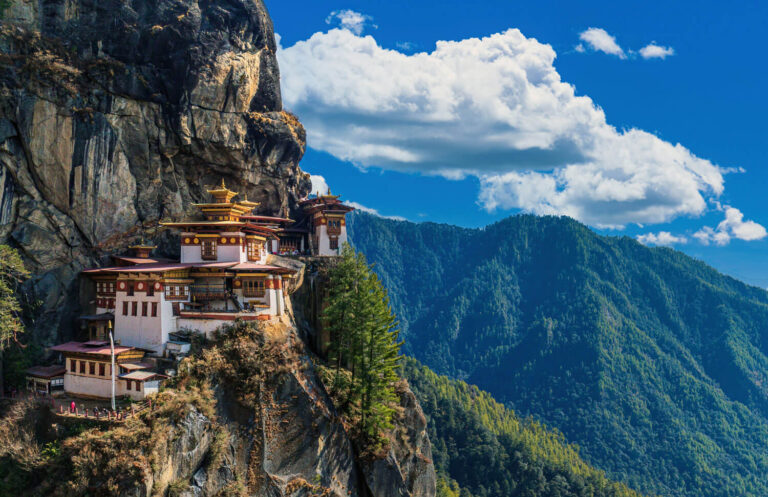
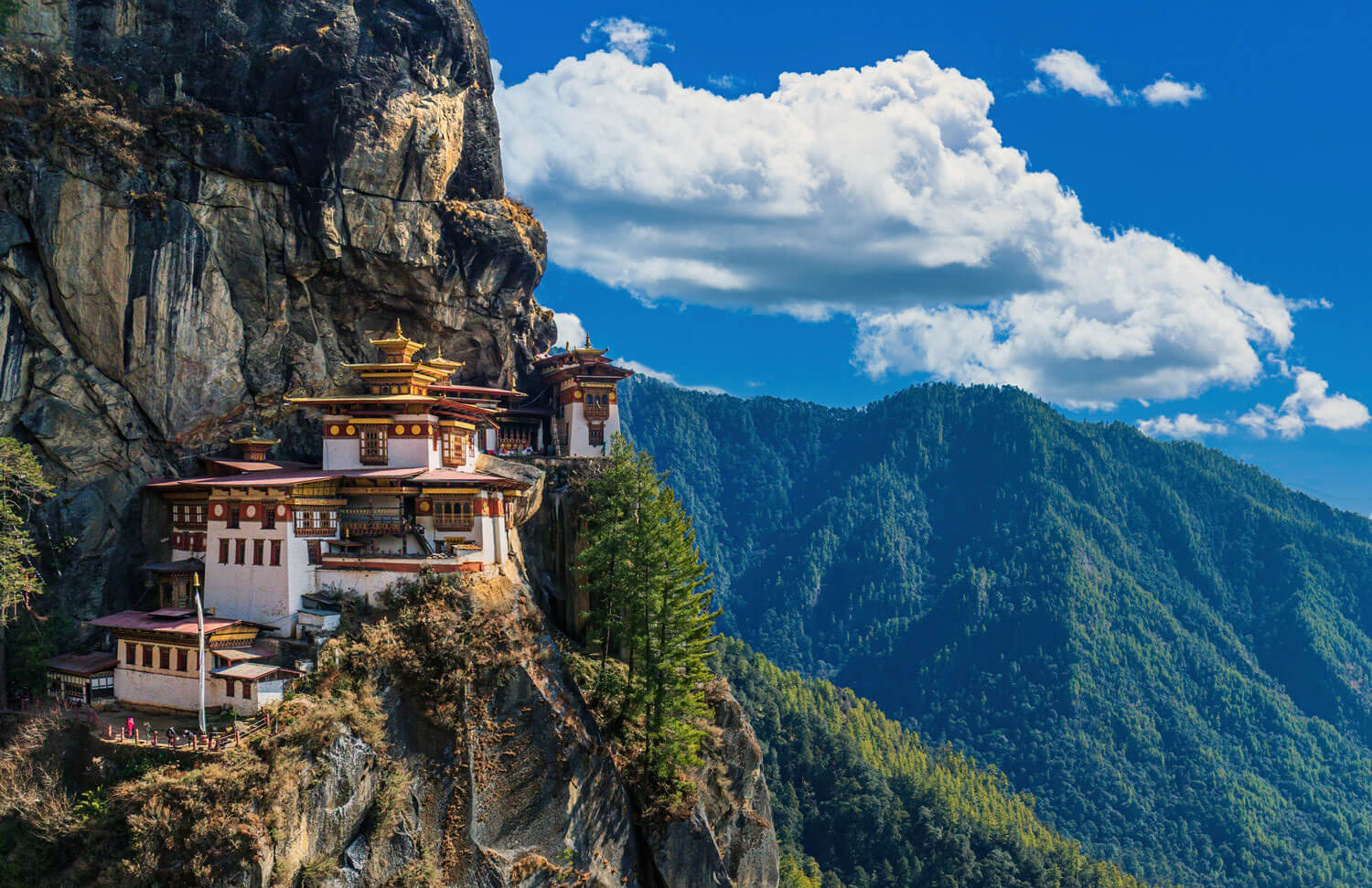
Paro Taktsang is roughly 1,700 feet (520 m) of ascent on a rough, dusty, switchbacking path, finishing at about 10,200 feet (3,120 m). Two to three hours up, an hour and a half down. Ponies can carry you to the cafeteria at the halfway point and no further.
The part people find hardest is not the climb. It is the stone stairs at the end, which go down into a gorge and then back up to the monastery buildings.
Most reasonably fit people manage it. Some do not, and we schedule it late in the trip, on legs that have acclimatised, and build the day so that stopping at the viewpoint is a perfectly good outcome rather than a failure. The full honest description is here.
6. Meals are included, and that is not entirely good news
Almost every Bhutan arrangement is full board, which surprises people who are used to quoting hotels and food separately. Hotels serve buffets, and the buffets are repetitive by day five: the same rice, the same two curries, the same cabbage.
The fix is easy and it has to be asked for. Tell your specialist you want farmhouse lunches and a couple of proper restaurant dinners built in, and we will do it. Ask your guide on the day and he will usually make it happen too. Bhutanese food is genuinely interesting when it is not being cooked down for visitors, and what to eat in Bhutan covers what to ask for.
What we would do differently on a first visit
Take eight days rather than six. The difference between a rushed western circuit and a comfortable one is one night in Punakha and one spare day, and both are worth the fee.
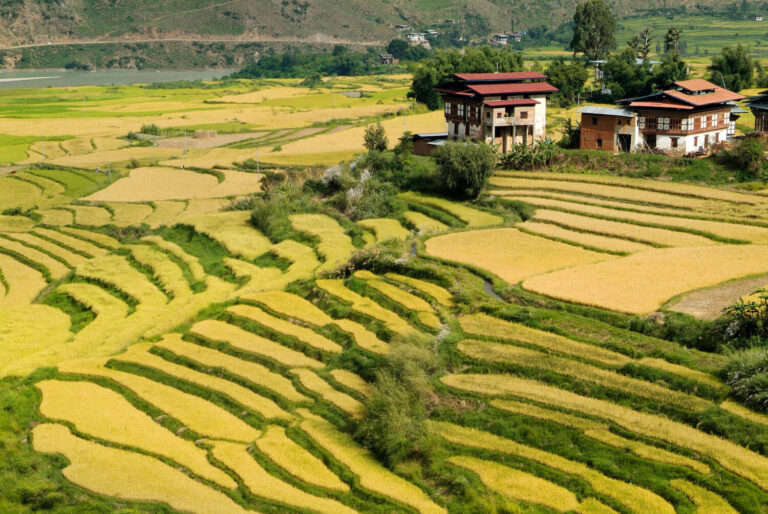
Sleep two nights in Punakha. It is lower, warmer and greener than the west, it has the finest building in the country at the confluence of two rivers, and it is the valley people are still talking about a year later. One night is a photograph. Two nights is a place.
Put Tiger’s Nest at the end. Always.
Say what you want before you go. Slower mornings, more walking, less driving, fewer temples, more time with people. Bhutan is a fully arranged country, which means the arrangement can be shaped, but only if someone knows what you want. Our proposals are written rather than templated for exactly this reason.
Do not try to see everything. The east exists, Bumthang exists, and neither belongs on a first eight day trip. What we would skip in Bhutan is the honest version of this argument.
Practical things worth knowing
- Cash. The ngultrum is pegged to the Indian rupee. Cards work in better hotels and almost nowhere else. Bring US dollars in cash to change.
- Dress. Shoulders and knees covered in dzongs and temples, shoes off inside. Bring a layer you can put on and take off quickly.
- Photography. Generally fine in dzong courtyards, generally not inside temples. Your guide will tell you where.
- Chilli. Ema datshi, chillies cooked in cheese, is the national dish and it is not mild. Hotels cook it down for visitors, which is why hotel food is bland. Say what you want.
- Shoes. Proper walking shoes if you intend to climb to Tiger’s Nest. The path is dusty in autumn and slippery after rain.
- Flights. Two airlines fly into Paro on thin schedules, the approach is flown visually in daylight only, and delays in poor visibility are normal. We never schedule an onward international connection on the same day you fly out of Paro.
Plan this trip
Tell us your dates and the places you want to see, and we build your trip as a $39 day-by-day plan, with recommended hotels by level and every transfer set out step by step.
Keep reading
- Bhutan: the complete guide to planning your trip
- What does a trip to Bhutan really cost?
- The climb to Tiger’s Nest, honestly described
- What to eat in Bhutan, and where
- Classic Bhutan in 8 days
- All our Bhutan trips