This is how we build the central days, in what order, and what we leave out.
The geography, in one paragraph
Hue sits on the Perfume River in the north of the region. Ninety minutes south, over the Hai Van Pass, is Danang, the airport and the beaches. Half an hour beyond that is Hoi An, an old trading port on a river delta. An hour inland from Hoi An is My Son, a Cham temple site. Four hours north-west of Hue is Phong Nha and the caves. Everything is close, and the road between Hue and Hoi An is one of the best drives in the country.
The flood window, which decides your route
From September to December the central coast takes its rain in one concentrated block, typhoons make landfall between September and November, and Hoi An floods. Not as a figure of speech: the Ancient Town goes under water most years, shopkeepers move their stock upstairs and carry on, and the lanes are worked by boats. Roads close and flights into Danang are cancelled. October and November are the worst of it.
Meanwhile October and November are the best two months of the year in northern Vietnam. That collision is the central problem of Vietnamese itinerary planning, and we deal with it in three ways: we build the central days so they can move, we sometimes put Hoi An early in an autumn route so a flood has somewhere to go, and we say all of this before you book rather than after. Our month by month article sets out the whole calendar.
February to August is dry, and April to June is the sweet spot for the centre: bright, hot, with a warm sea and a town that has not yet been rained on.
Hoi An: the same town at two different hours
Hoi An is the most charming town in Vietnam and it is also the busiest. Both statements are true and the resolution is timing rather than avoidance.
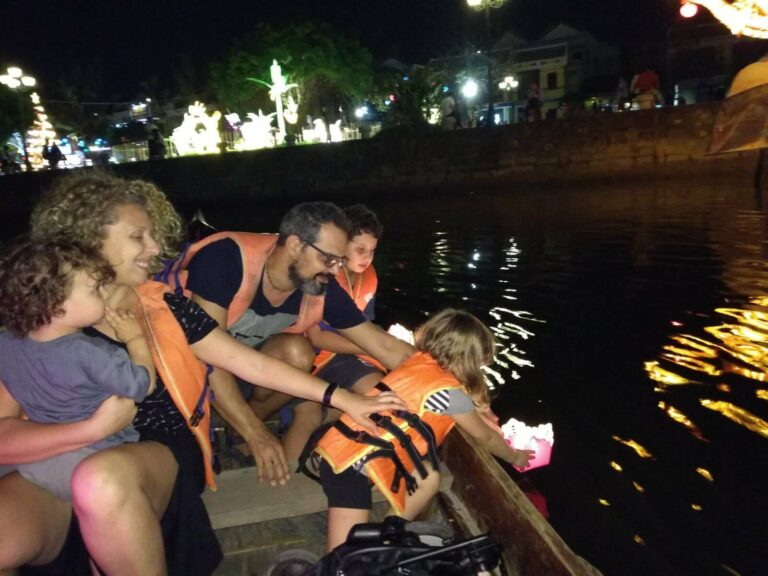
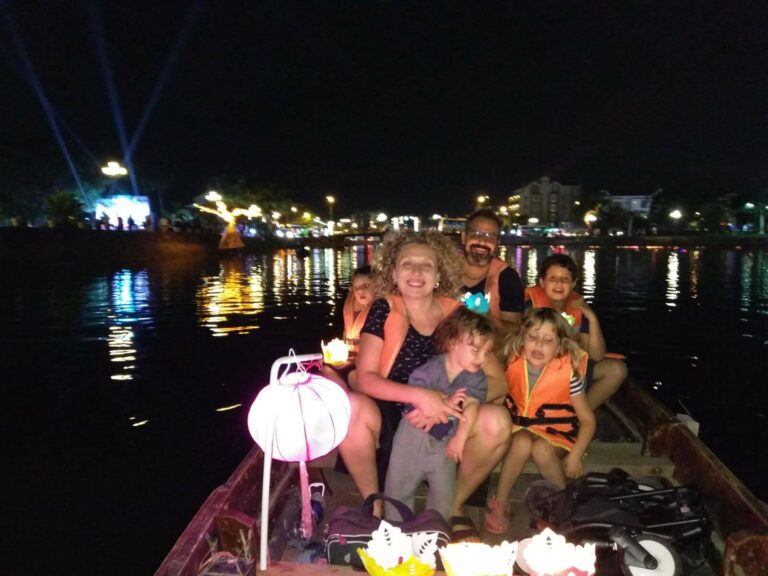
The Ancient Town at seven in the morning is a different place from the same streets at eight in the evening. At seven there are market traders, people eating breakfast on stools, light coming down the lanes and almost no visitors. At eight in the evening there are lanterns, crowds and a river full of paper boats, which is beautiful in its own way and is a different experience entirely. See both, deliberately, and do not judge the town on the evening alone.
The ticket. Entry to the Ancient Town is by a ticket that includes a set number of coupons for the heritage houses, assembly halls and the Japanese Covered Bridge. The price and the coupon count are reviewed periodically and we confirm the current arrangement in your documents. Three or four of the houses are genuinely interesting and the rest are variations.
Three nights, not two. One day for the town at both ends of the clock, one for the beach and the countryside, one for a cooking session, My Son or simply nothing.
An Bang beach is fifteen minutes by bicycle and is a real beach with restaurants on the sand. Winter brings serious erosion and rough water in places, so ask locally rather than assuming.
Bicycles. The delta around the town is flat, quiet and full of vegetable gardens, and most hotels lend bicycles.
Tailoring. Hoi An has hundreds of tailors and the quality range is enormous. The honest guidance: a 24-hour suit is a 24-hour suit, and it will look like one. Allow three days and two fittings, expect to pay more than the first quoted price for good cloth, and understand that many shops are shopfronts for a shared workshop. We name the two or three we use and we do not take a commission for it, which is not the norm in this town.
Eating. Cao lau, a noodle made only here with water from a particular well, chewy and dark and unlike anything else. White rose dumplings. Banh mi in the two famous places and in ten unfamous better ones. Com ga Hoi An, chicken rice with turmeric. The food here is southern-leaning, sweeter than Hanoi, and lighter than Hue.
Hue, which people cut and regret
Hue was the imperial capital from 1802 to 1945 and it is where the country’s most complex cooking comes from, a legacy of a court that expected many small dishes rather than a few large ones.
The Citadel and the Imperial City. Large, partly ruined from the fighting in 1968, and slowly being restored. Two hours minimum, in the morning, with a guide who can explain what was where.
The royal tombs. Three are worth your time and they are entirely different from one another: Minh Mang, formal and symmetrical in a garden setting; Tu Duc, romantic and overgrown, built as a retreat before it was a tomb; Khai Dinh, a concrete and mosaic collision of French and Vietnamese taste that people either love or dislike intensely. Half a day by car.
Not by dragon boat. The boat trip on the Perfume River is sold everywhere and is a slow way to reach a small number of sites, usually with a shopping stop attached. Take the car and use the time on the tombs.
The food. Bun bo Hue, the spicy beef and lemongrass noodle soup, is the famous one. The banh family, small steamed and fried rice cakes eaten with a dipping sauce, is what to order in the evening. Hue also does the country’s best vegetarian cooking, from its Buddhist temple tradition.
Two nights. One is enough to see the citadel and one tomb, and it will feel like a stop rather than a place.
The Hai Van Pass, and the train
The old road over the Hai Van Pass climbs above the sea between Hue and Danang, and there is now a tunnel underneath it. Take the pass. It adds around forty minutes and it is the best hour of driving in central Vietnam.
The alternative, and it is a genuine alternative rather than a compromise, is the train. The stretch between Hue and Danang is about two and a half hours along the coast and is one of the finest short rail journeys in Asia. We book it on almost every itinerary passing through, on the seaward side, and send the car ahead with the luggage.
Danang, My Son and Phong Nha
Danang is a modern city with a long beach, good seafood and an excellent Cham sculpture museum, which is the right preparation for My Son. Most travellers use it as an airport and a beach rather than a base, and that is a reasonable choice.
Ba Na Hills and the golden bridge held by two stone hands is a French-themed hilltop amusement complex reached by a long cable car. It photographs well and it is a theme park. We would skip it, and we say so.
My Son, the Cham temple site, is an hour inland. Go at opening, before the coaches and before the heat. It is a modest site by the standards of Angkor and it is the best surviving evidence of a Hindu kingdom that ran this coast for a thousand years. Ninety minutes with a good guide.
Phong Nha is four hours north-west of Hue and is a different kind of trip: the largest cave systems on earth, overnight caving expeditions, and an area that still feels rural. The biggest expeditions book roughly a year ahead and cost several thousand dollars a person. Shorter overnight cave treks are far more accessible and are one of our favourite third-week additions.
How we sequence the central days
A five-night central block that works, in the dry season:
- Fly into Hue. Afternoon at the citadel.
- Tombs in the morning, food in the evening.
- Train to Danang, car over the last stretch to Hoi An. Afternoon in the town.
- Hoi An at seven in the morning, beach and bicycles in the afternoon, lanterns after dark.
- My Son at opening, cooking session in the afternoon, or a free day.
- Fly out of Danang.
In an autumn route we would reverse the order of the regions rather than the days, putting the centre early so that a flood has somewhere to move to. This is the block inside classic Vietnam in 16 days, and it is the region our centre and south route gives most of its time to.
Plan this trip
Tell us your dates and the places you want to see, and we build your trip as a $39 day-by-day plan, with recommended hotels by level and every transfer set out step by step.
Keep reading
- Vietnam, the complete guide to planning your trip
- Vietnam month by month, region by region
- Eating your way through Hanoi in three days
- What does a trip to Vietnam cost?
- Classic Vietnam in 16 days
- Vietnam in 14 days, centre and south