We will get to that properly below and we will not dress it up. First, the practical ground, because if you do go, these are the things that catch people out.
Where we stand, before anything else
Myanmar is available from us on request and subject to conditions on the ground. Since 2021 the country has been under emergency rule and in a state of internal armed conflict. Parts of it are open and functioning and can be travelled well. Parts of it are not, and we do not go there.
We assess every Myanmar enquiry against the situation at the time and for your specific dates and route, before we quote. We decline these enquiries regularly. We would rather lose a booking than run a trip we are not confident in, and if a region cannot be run properly we will say so plainly rather than substitute something and hope you do not notice.
The regions we do not route through are Rakhine State, Chin State, Kachin State, the northern and eastern parts of Shan State, Sagaing Region, Kayah State, Kayin State and parts of Magway Region. Mrauk U, which was one of the best things in the country, is in Rakhine and is not reachable. Ngapali beach, also in Rakhine, has been intermittently cut off and we do not treat it as available. That list changes in both directions and we check it against your dates rather than against the date this page was written.
The full account is in our complete Myanmar guide.
Should you go at all
There is no clean answer to this and anyone who gives you one is selling something.
The case against is straightforward. Most Western governments currently advise against all, or all but essential, travel to Myanmar or to substantial parts of it. That advice has real consequences and you should read it in full, in your own government’s words, rather than have a tour operator summarise it for you. Beyond that, money spent in a country reaches that country’s state as well as its citizens, and some travellers are not willing to make that trade under the present circumstances. That is a reasonable position and we have never tried to talk anyone out of it.
The case for is that the guides, drivers, hotel staff, cooks and boatmen who used to make a living from visitors have very little else now, and that the money you spend with privately owned businesses reaches them directly.
What we control is where the money goes. We use privately owned hotels, independent guides employed by our partners rather than sourced on the day, local restaurants, and no state-linked operators. There are specific things we will not book for that reason and we name them in what we would skip in Myanmar. That reduces the problem. It does not remove it, and we will not pretend otherwise.
How we handle the question in practice: if you ask us about Myanmar, we will tell you what our partners on the ground are reporting for your dates, we will tell you what your own government’s advice says, and we will tell you whether we are willing to run the route. Then you decide. We are not going to make the ethical decision for you, and we are also not going to run a trip we think is a bad idea because you have already decided.
What surprises people
How little of it is set up for you. Myanmar had a short tourism boom that ended abruptly. What is left is a country where you are unusual rather than expected, where the infrastructure built for visitors is half used, and where a great deal of what happens around you is not happening for your benefit. Most people find that is the best thing about it.
The cash. This is the practical shock. International cards work in very few places, ATMs cannot be relied on, and you will carry US dollars in notes that have to be clean, flat, unmarked and recent. A crease is enough to have a note refused. There is a full account in what a trip to Myanmar costs, and every client we send gets a written cash briefing before departure.
Shoes and socks off, everywhere. At every pagoda, including the outer platforms and the long covered stairways, not just the inner shrine. Barefoot on stone in April is genuinely painful. Wear something you can remove in two seconds and expect to do it fifteen times a day.
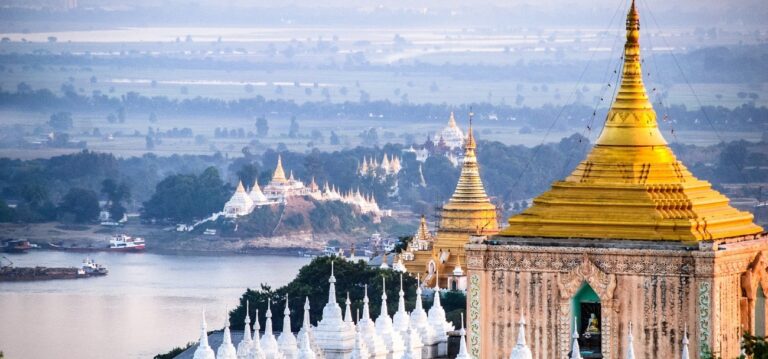
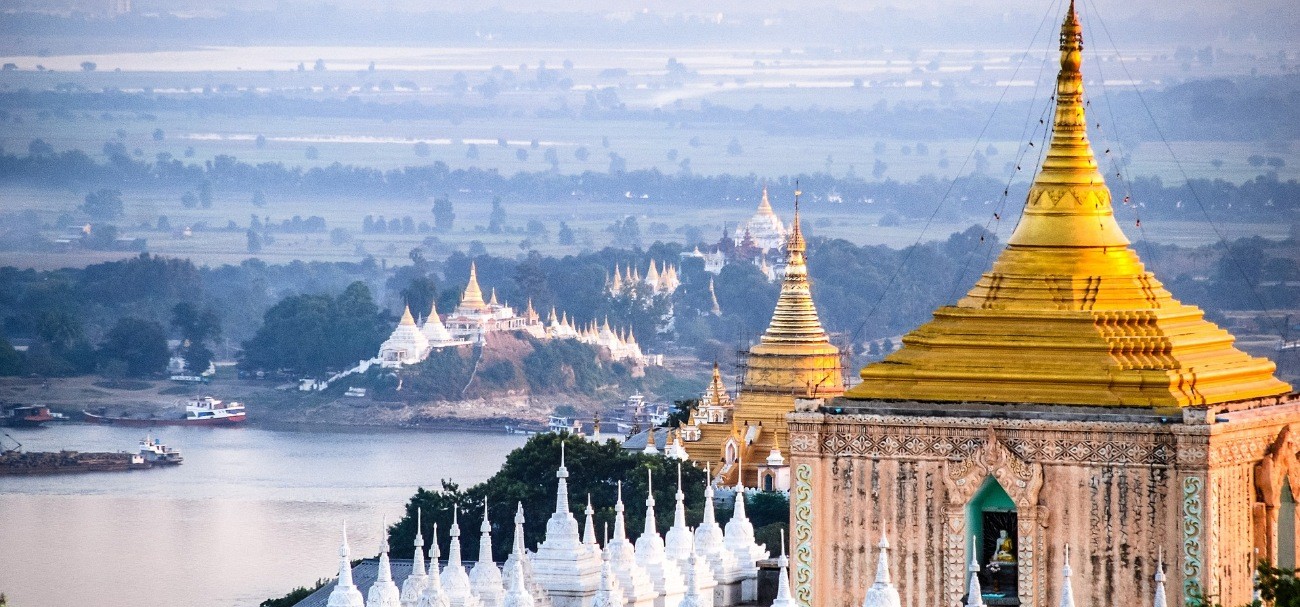
The heat, specifically the heat at Bagan. The central plain in March, April and May regularly passes 104F (40C). The middle of the day is not usable. See Myanmar month by month.
How good the guiding is. Guides in Myanmar are cheap, well trained and often underemployed, and a good one changes the whole trip. It is the best value line in the budget and we would put money there before a better hotel room.
How good the food is, and how unlike Thai food. Fermented, sour, oily in a deliberate way, salad-led, with real Indian and Chinese layers in it. See what to eat in Myanmar.
How thin the top end is. There are maybe four genuinely lovely properties in the whole workable corridor. In Mandalay, the best hotel in town is a good four star hotel and no more. Money buys less at the top here than anywhere else in Southeast Asia.
How unreliable the flying is. Fewer carriers, fewer routes, short-notice schedule changes and cancellations. It is normal and it is planned for. It is not a sign that something has gone wrong.
Things to settle before you commit
| Question | Why it matters |
|---|---|
| Your dates | November to February is the season by a wide margin. April is very hard work |
| Your passport | Myanmar requires a visa for essentially all tourist visitors, usually a tourist e-visa applied for online in advance. Rules, fees, validity and accepted entry points have all changed more than once since 2021, and we confirm the current requirement for your passport and dates before you commit |
| Your route | Some places you may have read about are not available to us. Ask before you fall in love with an itinerary |
| Your international flights | Do not book them before we have assessed the route. This is the mistake that costs money |
| Who is travelling | Medical facilities outside Yangon are limited, and that changes our advice about children and about anyone with a significant medical condition |
| Your own government’s advice | Read it yourself, in full, before you decide |
The rules that are not optional
These are not etiquette suggestions. They are the ones we brief every client on and they matter.
Do not photograph soldiers, police, checkpoints or government buildings. This is a serious matter rather than a courtesy, and it applies to phones in pockets pointed vaguely in a direction as much as to cameras raised deliberately.
Do not raise politics with anyone who has not raised it first, and that includes your guide and your driver. Do not post about the situation while you are in the country. A conversation you will have forgotten by the following week can carry a real cost for the person you had it with. If a guide chooses to tell you something, listen and leave it there.
Cover shoulders and knees at religious sites, and expect it to be enforced. A longyi, the wrapped cloth both men and women wear, is sold everywhere for a few dollars and solves the problem in the heat.
Assume you will be less connected than you are used to. Internet access is restricted and intermittent in places, and some services are blocked.
Take what you need medically. Pharmacies outside Yangon are limited and stock is unpredictable.
What a first trip should look like
Ten days, four places, two internal flights, one buffer day. Yangon, Bagan, Mandalay and Inle Lake. Three nights in Bagan rather than two. A guide every day. See classic Myanmar in 10 days, and the argument about length in how many days do you need in Myanmar.
If food and markets are what you travel for, the same corridor built around kitchens and monastery meals works very well: food and culture, 11 days.
What a first trip should not look like is nine days with five internal flights, or a seven day version of the ten day route, or an itinerary that includes somewhere we have already told you we do not go.
Related
- Myanmar: the complete guide to planning your trip
- What we would skip in Myanmar
- How many days do you need in Myanmar?
- What a trip to Myanmar costs
- All our Myanmar trips