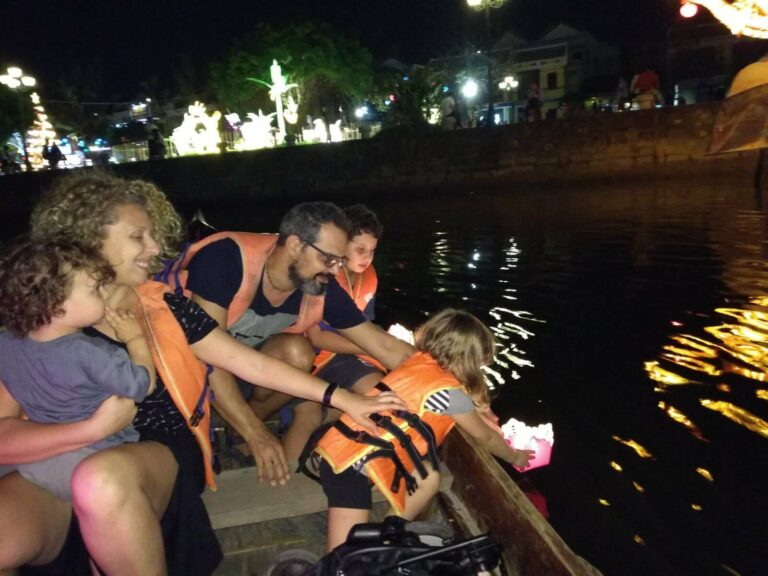

A first trip to Vietnam goes wrong in predictable ways: too many stops, the wrong month for the wrong region, a single-entry visa on a route that leaves the country, and a motorbike nobody should have rented. Here is what our travellers tell us caught them out, what has changed in 2026, and what we would do differently on a first visit. Facts checked in October 2026.
One: it is much longer than it looks
Vietnam runs 1,025 miles (1,650 km) from the Chinese border to the mouth of the Mekong and is barely 30 miles (50 km) wide at its narrowest point. Hanoi to Ho Chi Minh City is about two hours and ten minutes in the air and 33 to 36 hours on the Reunification Express.
The practical consequence is the thing first-timers resist hardest: a two-week trip covering north, centre and south needs internal flights, usually two of them. There is no version of this route that works by road in the time available. Hanoi to Da Nang is one hour twenty in the air; Da Nang to Ho Chi Minh City about one hour thirty-five. We book Vietnam Airlines by default rather than the low-cost carriers, mainly for the baggage allowance and the schedule discipline, and we never put a turboprop flight to Phu Quoc or Con Dao on the same day as an international departure. One update for 2026: Bamboo Airways stopped selling scheduled flights in August 2026 and now flies only charters, so if an older guide lists it as the third option, cross it out.
If you want one train ride, make it Hue to Da Nang: around two and a half to three hours along the coast and through the Hai Van Pass, which is the most scenic stretch of the whole line. The overnight SE trains from Hanoi reach Hue in about thirteen hours, which is a long night for a first visit.
Two: the weather at one end has nothing to do with the other
The north has a real winter. Hanoi sits at 57 to 72 F (14 to 22 C) from December to February under grey cloud and drizzle, and the mountains are colder. The south has no winter at all: Ho Chi Minh City runs at 32 to 35 C all year, dry from December to April and wet from May to November. The centre is the odd one out. Da Nang and Hoi An take their heaviest rain from September to December, with October averaging more than 600 mm, and typhoons track through in the same months. The Ancient Town of Hoi An goes under water most years.
Which means there is no month that is perfect everywhere, and anyone who tells you otherwise is describing a third of the country. March and April come closest. October and November give you the best north of the year and a real risk in the centre, which we route around. The full breakdown is in Vietnam month by month.
Three: Tet moves, and it changes the trip
Vietnamese Lunar New Year falls between late January and mid February and the date moves each year with the lunar calendar. The next one, Tet 2027, is on Saturday 6 February 2027, and the official public holiday runs from 4 to 10 February. Around it, family restaurants close, museums shut for several days, domestic flights and trains sell out weeks ahead at higher fares, and staff go home to their villages. In practice the slow-down starts two or three days before the holiday and the country is fully back about a week after.
We check where your dates sit and tell you plainly. Travelling through Tet knowingly, with fewer moves and lower expectations of the restaurant scene, can be memorable: the flower markets in the week before are worth the trip on their own. Travelling through it unknowingly is a bad week.
Four: crossing the road is a technique
There are tens of millions of motorbikes in Vietnam and at a busy Hanoi junction they do not stop for pedestrians in the way you expect.
The method, which sounds like a joke and is the most useful thing anyone tells you here: walk out slowly, keep a constant speed, do not stop, do not run and do not step backwards. The bikes flow around you. Hesitation is what causes accidents, because a rider cannot predict you. The other traffic rule is about your bag: snatching from passing motorbikes happens in both big cities, so wear it across the body and on the side away from the road.
Five: the food changes completely as you go south
Northern cooking is restrained: clear pho with almost no garnish, black pepper and vinegar rather than sugar and chilli, and bun cha, which belongs to Hanoi alone. The centre, and Hue in particular, cooks the most complex food in the country, a legacy of the imperial court. The south is sweeter, more abundant and more herb-heavy, with fruit you will not have seen.
First-time visitors often arrive expecting the Vietnamese food they know at home, which is mostly southern, and find the north austere by comparison. Give it three days. The north wins most people over.
Six: Ha Long is three bays, not one
Ha Long, Bai Tu Long and Lan Ha are named parts of one continuous seascape with wildly different boat traffic. The main Ha Long cruising route carries several hundred vessels. Lan Ha, off Cat Ba island and reached via Haiphong, and Bai Tu Long to the north east are the same karst with a fraction of the boats. Since the UNESCO listing was extended in 2023 the whole area is formally “Ha Long Bay and Cat Ba Archipelago”, and from April 2026 a handful of licensed operators run overnight routes that cross from Ha Long into Lan Ha, which was not allowed before.
Two nights on the water beats one, because the first day is mostly transfer: Hanoi to the piers is about two and a half hours on the expressway. Two things we now insist on after the 2025 capsizing of a day boat in a summer squall: a licensed overnight operator with a proper safety record, and respect for the season, because the bay authority closes the water when storms come through. We go through the choice properly in Ha Long, Bai Tu Long or Lan Ha.

Seven: Sapa is not what the photographs show
Sapa town has been overbuilt into something close to a building site, and we say so to everyone who asks for it by name. The Muong Hoa valley below is still beautiful and the walking is good. The Fansipan cable car runs daily from 7:30 to 17:00 and takes you to the roof of Indochina in fifteen minutes, which is either the point or exactly what you came to avoid.
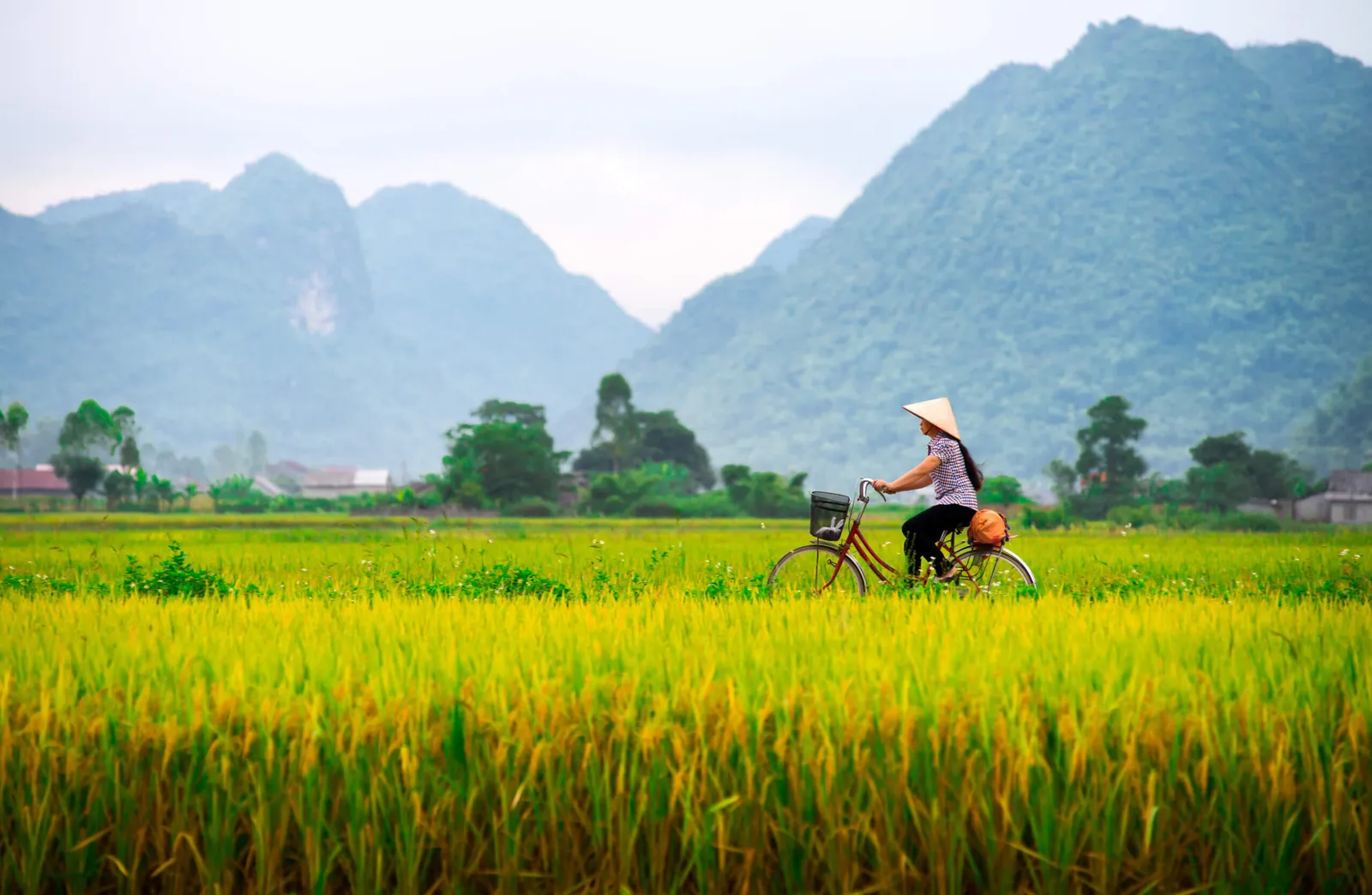
If you want the northern mountains properly, Ha Giang is the answer: a 220-mile (350 km) loop through the Dong Van karst plateau, over the Ma Pi Leng pass above the Nho Que river, with markets that are not staged. It needs four days and it is worth them. For a gentler taste of the north with no mountain roads at all, Ninh Binh is 95 km and under two hours from Hanoi: limestone towers rising out of rice fields, rowing boats through the Trang An caves, and a bicycle for the rest.
Eight: we will not rent you a motorbike
Vietnam is a party to the 1968 road traffic convention, so a 1968-format international driving permit with a motorcycle category is in theory valid. In practice most of our travellers cannot use one: the United States, Canada and Australia are not parties to that convention, so their permits are not recognised at all, and a car-only permit does not cover a bike. Ride without a valid licence and your travel insurance is void the moment something goes wrong, on top of fines that were raised sharply in January 2025. The accident rate is high and rural medical provision is thin.
On our northern trips we put you on the back of a bike with an experienced local rider, or in a car with a driver. We will not organise a self-drive motorbike trip and we would rather lose the booking than take it. The three options are compared honestly in motorbike or car in northern Vietnam.
Nine: the hotel moves matter more than the days
Above one hotel change every two days, a Vietnam trip becomes transit. Road speeds are low, so transfer days are longer than the map suggests: Hanoi to the bays is two and a half hours, Hanoi to Pu Luong four, Da Nang airport to Hoi An forty-five minutes, and Hue to Hoi An three hours if you take the old Hai Van Pass road rather than the tunnel, which you should.
This is why we would rather build ten good days in two regions than thirteen scattered ones in three.
Ten: the small practical things, 2026 edition
- The dong runs in large numbers. At the October 2026 rate of roughly 25,900 dong to the dollar, 100,000 dong is a little under $4. Check the zeroes on every note for the first two days; the 20,000 and 500,000 notes are both blue.
- ATMs cap each withdrawal. Most banks allow 2 to 5 million dong per transaction, with a local fee of around 20,000 to 55,000 dong on top of what your own bank charges. Always choose to be charged in dong, not in your home currency.
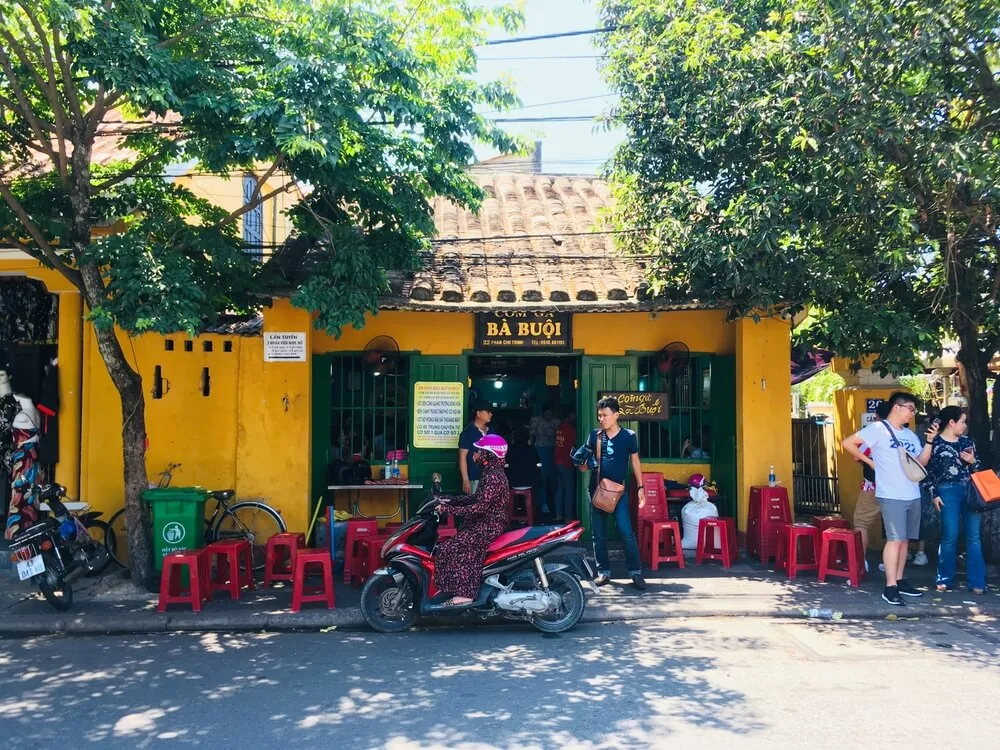
- Cards work in cities and hotels. Carry cash for markets, rural areas and anything sold from a stool. QR payments are everywhere but mostly need a Vietnamese bank account.
- Do not drink the tap water, including for teeth if you are cautious. Ice in established places is factory-made and fine.
- Grab and Xanh SM, the ride-hailing apps, remove the fare negotiation entirely. Book the whole ride in the app and ignore anyone at the airport who says they are “from Grab”. Hanoi and Ho Chi Minh City both have metro lines now, cheap and clean, but they serve a few corridors, not the sights.
- The e-visa is applied for online in advance, costs $25 for single entry or $50 for multiple, takes three working days officially, and is valid for up to 90 days. Apply only through the two official government portals, evisa.gov.vn and thithucdientu.gov.vn, not a lookalike site charging four times the fee. Allow two to three weeks, and more around Tet, when the office closes.
- Choose multiple entry if your route leaves Vietnam and comes back. Any itinerary that dips into Cambodia or Laos and returns needs it, and this is the most common expensive mistake we see.
- Some passports get 45 days visa-free instead. As of October 2026 that covers 24 European and Asian countries, among them the UK, Germany, France, Italy, Spain, the Netherlands, Switzerland, Poland, the Nordics, Japan and South Korea. American, Canadian, Australian and Israeli passport holders all need the e-visa. The list changes, so we confirm your exact passport before quoting.
- Dengue is the health risk that matters, and 2026 has been a record year for it, with the peak in the rainy season. There is no routine vaccine for first-time visitors; long sleeves at dusk and repellent are the answer. Hepatitis A and typhoid jabs are the standard recommendation; nothing is required for entry.
- A local SIM is cheap. Viettel has the best coverage outside the cities; a 30-day tourist SIM is roughly $8 to $12 at the airport and less in town, and an eSIM bought before you fly costs a little more per gigabyte but saves the queue.
- The heat governs mornings. Plan the outdoor half of the day for before ten.
- English is thin outside tourism and Vietnamese is tonal and hard. That is what a guide is for on the days you need one.

What we would do differently on a first visit
Fewer places, longer stays. Three nights in Hanoi rather than two, because the city takes a day to make sense. Two nights on the water rather than one. Three nights in Hoi An with a bicycle and an early morning in the Ancient Town before the coaches arrive; the heritage ticket is 80,000 or 120,000 dong and lasts three days. Two nights in Hue, which people cut first and regret. A night in the Mekong Delta at Can Tho or Ben Tre rather than the day trip from the city, which is a conveyor belt.
And one thing people never plan and always mention afterwards: an empty afternoon in the middle, with no guide, no transfer and nothing booked.
Plan this trip
Tell us your dates and the places you want to see, and we build your trip as a $39 day-by-day plan, with recommended hotels by level and every transfer set out step by step.
Keep reading
- Vietnam, the complete guide to planning your trip
- Vietnam month by month, region by region
- What does a trip to Vietnam cost?
- Ha Long, Bai Tu Long or Lan Ha?
- Classic Vietnam in 16 days
- All our Vietnam trips