Nothing on this list is bad. Korea does not really do bad. Everything here is either overrated relative to what it costs you in time, or badly matched to the trip most people are actually taking, or good only under conditions nobody tells you about. Where we would skip something, we say what we would do with the day instead. If you disagree, tell us and we will build it anyway.
The big ones
Jeju, on a ten-day first trip
The single most common thing we talk people out of.
Jeju is a volcanic island with a distinct culture, its own dialect, the haenyeo diving women, lava tubes, a 6,388 foot (1,947 metre) volcano and a network of numbered coastal walking routes. It is genuinely worth going to. What it is not worth is three days and two internal flights carved out of a ten-day first visit to the mainland.
Here is what happens. You fly an hour, you lose the departure morning and the arrival afternoon to airports, you rent a car because the buses are slow, you drive a coast road, you visit a waterfall and a lava tube and a museum, and you fly back. What most people describe afterwards is a pleasant island resort break inside a trip that was not about resorts.
Skip it if you have ten days and this is your first visit to Korea.
Do it properly if you have fourteen days or more, or if you want the Olle trails, which are the best multi-day walking in Korea and a completely different proposition, or if you want three days of doing nothing at the end of a busy trip. Then give it four nights, not two, and go in May, June or October rather than August, when the island is full of Korean holidaymakers and the room rates roughly double.
Instead: the extra days go to Japan, two hours away, which is the argument in Korea and Japan in two weeks, or into a real week of walking, or into slowing the mainland route down.
A second and third mid-size city
Daegu, Daejeon, Gwangju, Ulsan. All perfectly pleasant, all well fed, none of them different enough from what you have already seen to justify a night and a hotel change.
This is the trap of a country with fast, cheap trains: adding a city costs almost nothing, so people add cities. The cost is not the ticket. It is that a trip is remembered by its average, and an excellent ten days diluted into a good fourteen is a real loss even though nothing goes wrong.
Instead: more nights in fewer places. Four in Seoul rather than three, three in Busan rather than two, and a day with nothing in it.
The five palaces
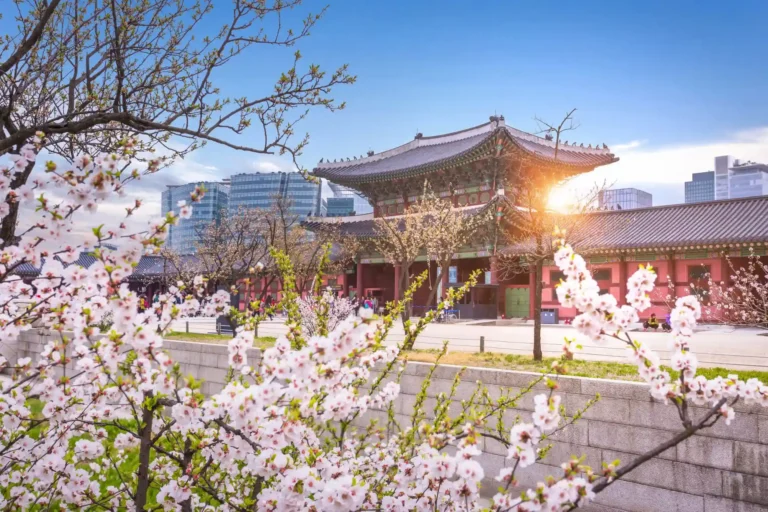
Seoul has five royal palaces and visitors try to see three or four of them. Two is the right number: Changdeokgung, with a timed ticket for the Huwon rear garden booked in advance, and Gyeongbokgung early in the morning before the coaches.
Deoksugung is pleasant to walk past, Changgyeonggung is quiet and pretty and essentially a repeat, and Gyeonghuigung is largely a reconstruction.
Instead: the saved half day goes on Seochon, on the Naksan stretch of the old city wall, or on the National Museum of Korea, which is one of the great museums of Asia and is under-visited by foreign travellers. The full Seoul sequencing is in Seoul in four days.
The tourist-facing things
Myeongdong, Hongdae street food and the shopping streets
Myeongdong is a shopping district now aimed largely at visitors, and Hongdae’s street food is corn dogs and cheese-covered novelties. Both are fun for twenty minutes.
Instead: Gwangjang Market for the real version, Euljiro for the evening, and Seongsu or Mangwon for the shops young Seoul actually uses.
The N Seoul Tower observation deck
The walk up Namsan is good, the park is good, the view from the base is good. The paid deck adds a lift queue and a slightly higher version of the same view.
Instead: walk up at dusk, stay at the base, and skip the ticket. Or take the Naksan wall at sunset, which is free and better.
Nami Island
A small river island near Chuncheon, famous for an avenue of trees that appeared in a television drama in the early 2000s, and now a heavily managed day trip with an entrance fee and a zipwire. Two hours each way for a pretty avenue and several thousand other people.
Instead: walk Bukhansan inside the city limits, or go to Suwon’s fortress walls, a genuine and under-visited world heritage site an hour away.
Live octopus, and the cafe crawl
We will book the octopus if you want it and we will not pretend it is a meal. Most people who order it are ordering a story, and the stories are better in what to eat in South Korea. As for the cafes: Korean coffee is serious and there are more cafes per head here than almost anywhere on earth, and a day built around three photogenic ones is still a day not spent eating Korean food.
The ones that need conditions attached
These are not skips. They are things that are excellent under specific circumstances and disappointing outside them, and nobody tells you which is which.
The DMZ
Worth doing once, and we build it into most first trips. But understand what it is: a coach, a fixed route, timed stops at Imjingak, the Third Infiltration Tunnel and an observatory, a scripted commentary, a gift shop. It is not a walk along a fence and you will not be alone.
Joint Security Area access, the part with the blue huts, is a separate arrangement that has been suspended and restored more than once. We confirm its status at the time rather than promising it, and we tell you if it is closed rather than substituting quietly.
Skip it if the twentieth century does not interest you and you would rather walk up a mountain. That is a legitimate choice and we will not push back.
The temple stay
One of the best things available in Korea and not for everyone. A working mountain temple, a simple room, vegetarian meals, chanting at three in the morning, and long stretches of silence. People who want it find it the highlight of the trip. People who booked it because it was on a list find it a lost night and a lost following day.
Do it if the idea appeals to you as it is described, with the wake-up time. Skip it if you are reading that description and negotiating with it.
Seoraksan in the third week of October
The best two weeks of the Korean year and one of the busiest mountains in Asia during them. The Ulsanbawi staircase becomes a queue, the cable car becomes unbookable and the bus from Sokcho becomes standing room only.
Do it if you want the autumn colour and will go on a weekday at first light. Skip it if you want a mountain to yourself, and go in May, or go to Jirisan in the south, where the colour arrives two weeks later and the crowds never do.
The practical skips
Renting a car, anywhere except Jeju. Korean cities are hard to drive and park in, the rail is fast and cheap, and Google Maps navigates badly inside the country because Korean mapping data cannot be exported. On Jeju a car is the right answer, with an International Driving Permit alongside your home licence.
The KORAIL Pass, bought without doing the arithmetic. A standard route runs three or four legs on a network where individual tickets are inexpensive, so the pass usually loses. Unlike Japan, where the sum is close, here it generally is not. We price it both ways anyway.
Booking a guide for every day. Our default is two or three days out of ten: Seoul for the palaces and the history, a market and food day, and Gyeongju. Guiding throughout roughly doubles the daily rate in a country that is straightforward to navigate.
Stretching ten days to fourteen inside Korea. The whole argument is in South Korea in ten days, and it remains the most useful thing we tell people about this country.
What we would add instead
Since a skip list without an add list is just complaining.
- A fourth night in Seoul. The most reliable improvement to any Korea trip.
- A hanok night in Gyeongju or Jeonju. Timber, a courtyard, a heated floor. The night people describe afterwards.
- A guided market evening. The single guided day clients thank us for most.
- Jeonju for its food, for one night, if the food is why you came.
- The southern islands, Tongyeong, Namhae and Yeosu, which see almost no foreign visitors and are the part of Korea we most enjoy adding to a third week. They are in deep Korea, 21 days.
- A day with nothing in it. In a country this easy to move around, an unscheduled day is not a wasted one.
Plan this trip
Tell us your dates and the places you want to see, and we build your trip as a $39 day-by-day plan, with recommended hotels by level and every transfer set out step by step.
Keep reading
- South Korea in ten days, and why that is enough
- Seoul in four days, neighbourhood by neighbourhood
- Korea and Japan in two weeks
- Classic Korea in 10 days
- Deep Korea, 21 days
- South Korea: the complete guide