For a first trip to Japan, the two best windows are late March to mid-May and mid-October to early December. Both give mild walking weather and a landscape that changes week by week, blossom in spring and maple colour in autumn. Summer is hot, humid and opens with a rainy season. Winter is cold but bright and dry in the cities, with deep snow in Hokkaido and the alps. What decides a good trip more than the month, though, is Japan’s own holiday calendar, and that is where most of this article goes.
Every figure below was checked against the Japan Meteorological Agency, JR and the official holiday calendar in October 2026. Temperatures are Tokyo’s long-term averages; Kyoto runs a degree or two warmer in summer and colder in winter.
The year at a glance
| Month | Tokyo, average high | Tokyo, average rain | Character | Our verdict |
|---|---|---|---|---|
| January | 50F (10C) | 60mm | Cold, dry, clear. Ski season in the north | Good after the 3rd, quiet in the cities |
| February | 52F (11C) | 57mm | Coldest feel, best snow, plum blossom late in the month | Right for skiing and onsen, not for a first visit |
| March | 58F (14C) | 116mm | Warming fast. Blossom reaches Tokyo in the last week | Excellent at the end, book early |
| April | 67F (19C) | 134mm | Blossom in Kyoto early, then the north. Golden Week from the 29th | Very good, and the most expensive |
| May | 74F (24C) | 140mm | Green, warm, settled | Our favourite month after the first week |
| June | 79F (26C) | 168mm | Rainy season from about the 7th, hydrangeas | Fine if you can live with grey days |
| July | 86F (30C) | 156mm | Rain ends around the 19th, then real heat. Gion Matsuri, Fuji opens | Good in the north and the mountains |
| August | 88F (31C) | 155mm | Hottest month, fireworks, Obon in the middle | Avoid the cities around Obon |
| September | 82F (28C) | 225mm | Still hot, typhoon peak, one of the two wettest months | The month we steer people away from |
| October | 72F (22C) | 235mm | Wet first half, then clearing. Colour in the mountains | Very good from mid-month |
| November | 62F (17C) | 96mm | Dry, crisp, colour arrives in Tokyo and Kyoto late in the month | Excellent, our joint favourite |
| December | 54F (12C) | 58mm | Last colour early on, illuminations, then the New Year shutdown | Good until about the 27th |
Average daily highs and monthly rainfall for Tokyo, JMA climate normals 1991 to 2020.
One thing in that table surprises almost everyone: Tokyo’s wettest months are not June but September and October. The autumn rain front and the tail of the typhoon season stack on top of each other. It is the main reason we build autumn trips from the middle of October onwards rather than from the first of the month.
Spring: blossom, and why a fixed date is a mistake
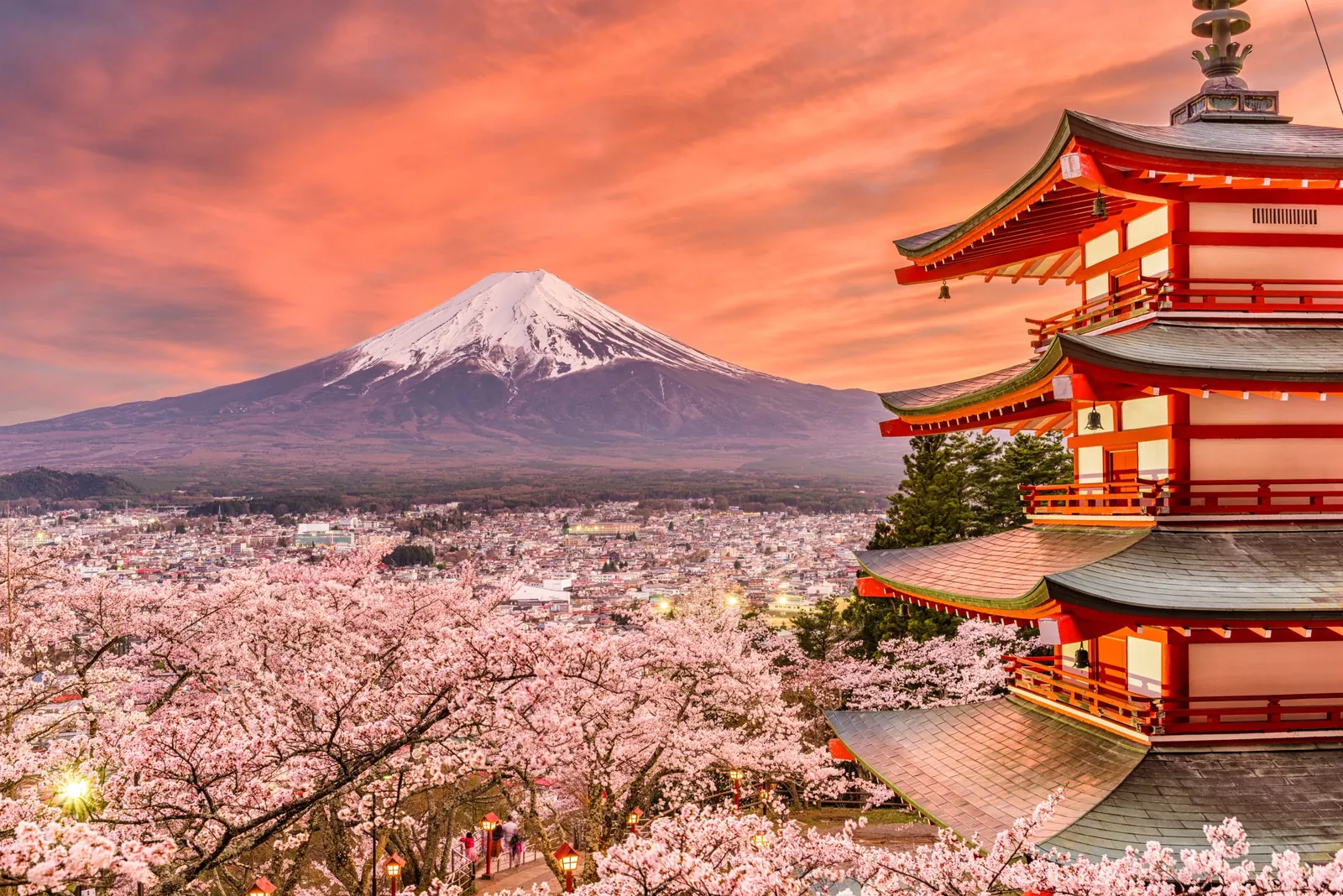
Cherry blossom moves north through the country over about six weeks, and full bloom in any one city lasts roughly a week. The long-term averages are a sensible starting point: full bloom around 31 March in Tokyo, around 4 April in Kyoto, around 26 April in Aomori and around 6 May in Sapporo. The real date moves a week or more either way with the winter, and the first forecasts for 2027 will not appear until the new year.
So we never build a blossom trip around one day. We leave two or three flexible days and keep the order of cities open, so that if the season runs early, Kyoto comes first, and if it runs late, Tokyo does. For the full region-by-region picture, see cherry blossom, region by region.
A detail for 2027 in particular: Easter Sunday falls on 28 March, in the same week as Tokyo’s average full bloom. Families on Easter school holidays have an unusually good chance of seeing Tokyo in flower, but so does everyone else, and Kyoto hotels for that fortnight are worth securing nine months out.
May, the month nobody talks about
Once Golden Week ends, from about 6 May into early June, Japan is green, warm and noticeably calmer. The rainy season has not started, the heat has not arrived and the queues at the famous temples shorten. For a first visit to Tokyo, Kyoto and the Japanese Alps, it is one of the best windows in the year, and it rarely costs what April does.
Summer: rain first, then heat
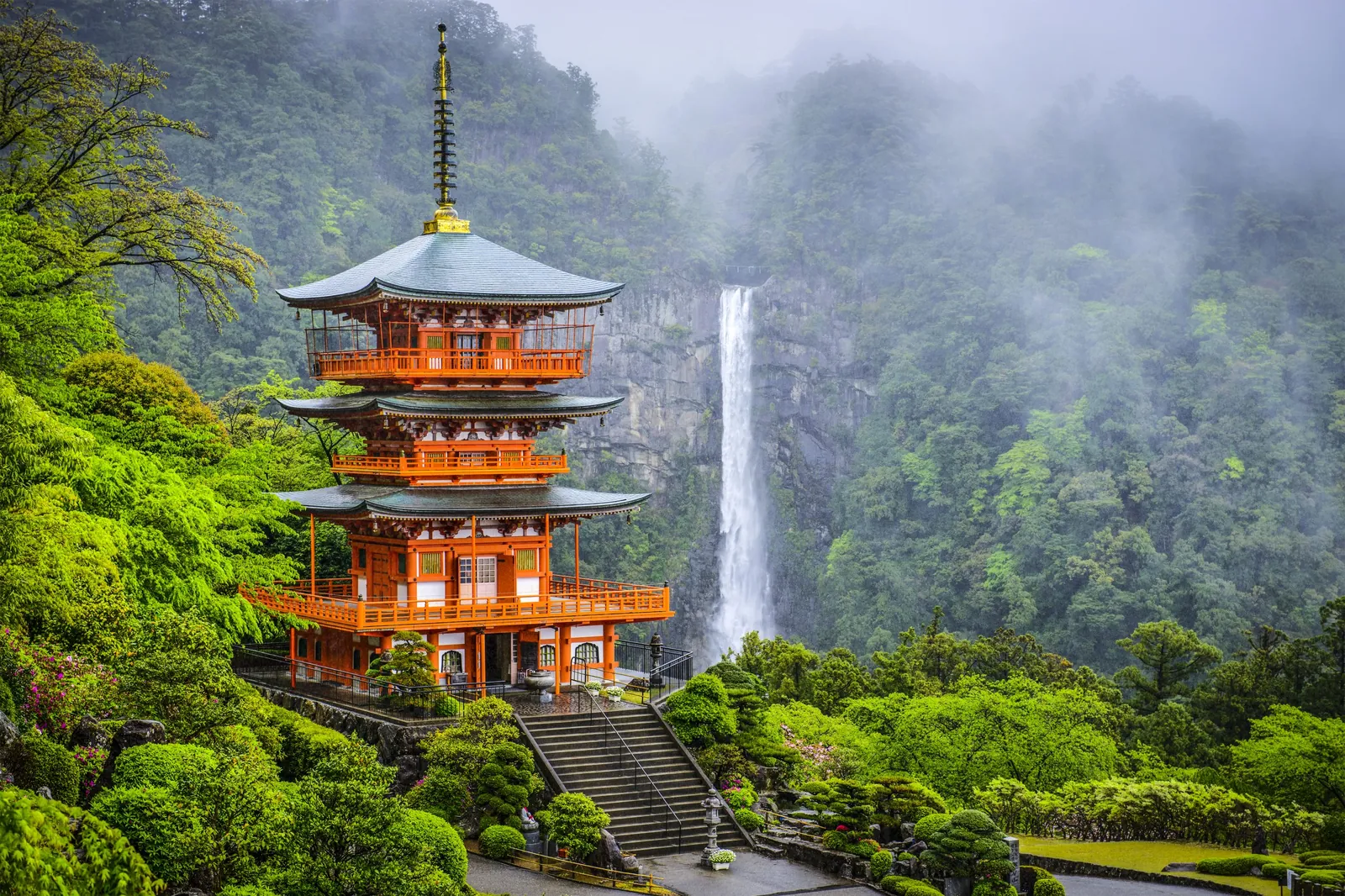
The rainy season, tsuyu, reaches Tokyo and the Kyoto and Osaka region around 7 June on average and lifts around 19 July. Okinawa runs earlier, roughly mid-May to late June, and Hokkaido has almost none. Tsuyu is not constant rain. It is a run of grey, humid days with showers, and the reward is fewer visitors and the hydrangea season at temples in Kamakura and Kyoto.
From late July the heat is serious. Tokyo averages 88F (31C) in August with high humidity, and Kyoto, in its basin, often feels hotter. A summer trip works if it is built for it: early starts, a long break in the middle of the day and a share of the route in Hokkaido, where Sapporo averages about 79F (26C) in August, or in the Japanese Alps. Summer is also festival season, with Gion Matsuri running through July in Kyoto and fireworks across the country.
Mount Fuji can only be climbed in the official season. In 2026 the Yoshida and Subashiri trails opened on 1 July, the other two on 10 July, and all four closed on 10 September. The Yoshida trail charges a 4,000 yen climbing fee and limits daily numbers. Mountain huts sell out early once bookings open in spring.
Autumn: the colour comes down from the mountains
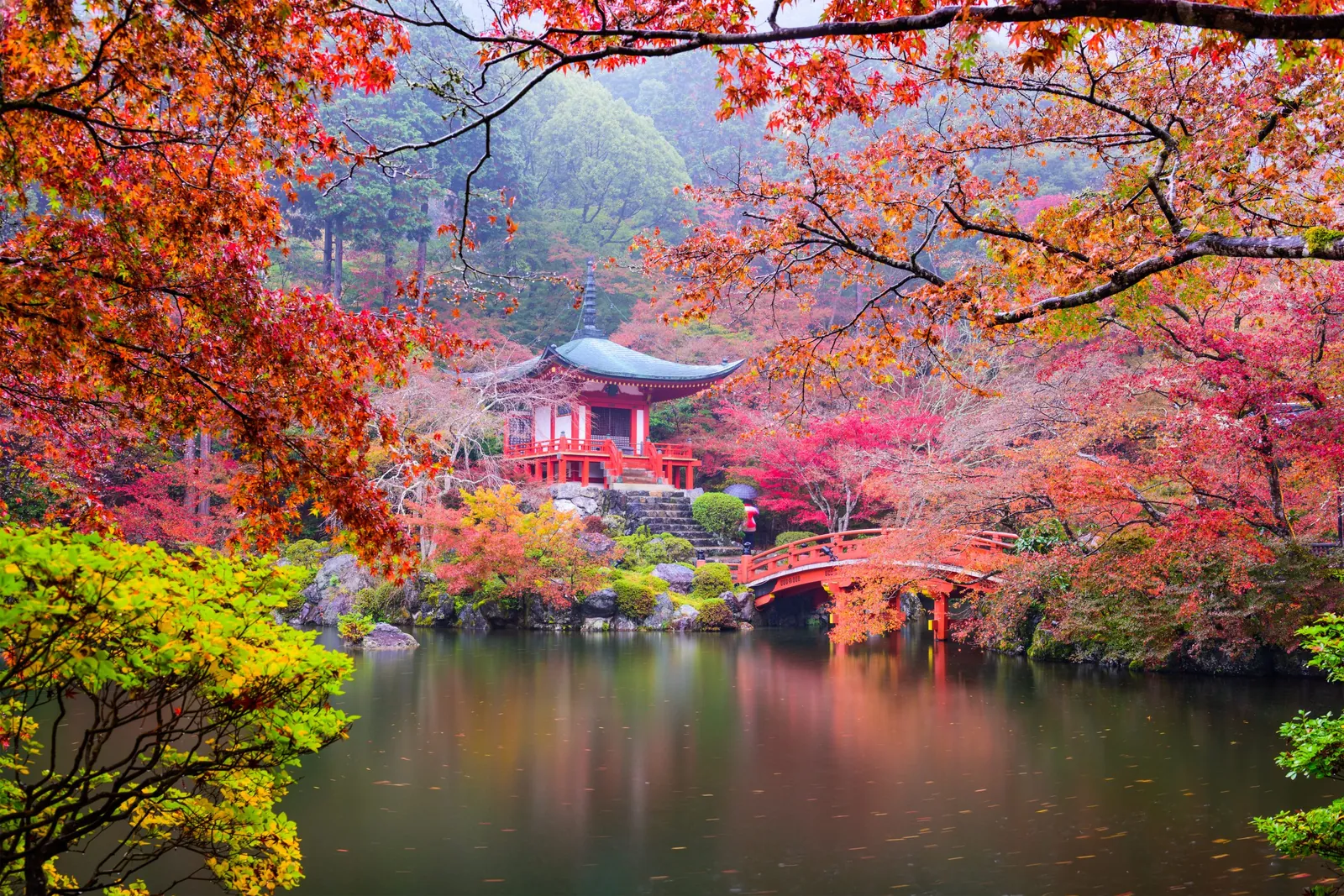
Autumn colour travels the opposite way to the blossom, from north to south and from the high ground down. It starts in Hokkaido’s Daisetsuzan in mid to late September, reaches the alps and Tohoku through October, and arrives in Tokyo and Kyoto late in November, running into early December in recent years.
That gives an autumn trip a natural shape: mountains first, cities last. A route that starts in the alps or Nikko in late October and finishes in Kyoto at the end of November follows the colour for three or four weeks. We go through the Kyoto end of it in detail in Kyoto in autumn, week by week.
For September and early October, we keep one free day before the flight home and never schedule a long rail transfer on the morning of departure. A typhoon usually disrupts transport for a day or two rather than a week, but that day or two is exactly the one you cannot afford at the end of a trip.
Winter: snow in the north, clear skies in the cities
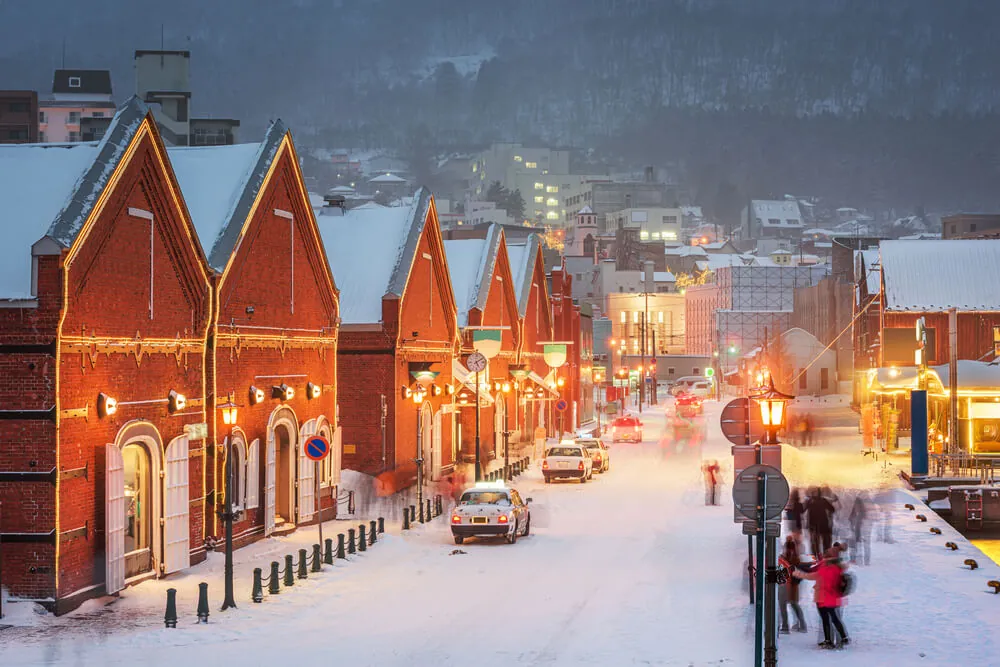
Winter in Tokyo is dry and sunny, with highs around 50F (10C) in January. It is also the season when Mount Fuji is most reliably visible from the city, because the air is clear. Hokkaido and the alps get heavy, dry snow; the ski season runs December to March, with the best conditions usually in January and February. The Sapporo Snow Festival takes place in early February.
Christmas is a normal working day in Japan, which makes the week before it a good time to travel. The problem is the week after. From 29 December to 3 January many museums, restaurants and shops close, and the trains fill with Japanese families travelling home. A December trip that ends by the 27th avoids both.
The three weeks we plan around: Golden Week, Obon and New Year
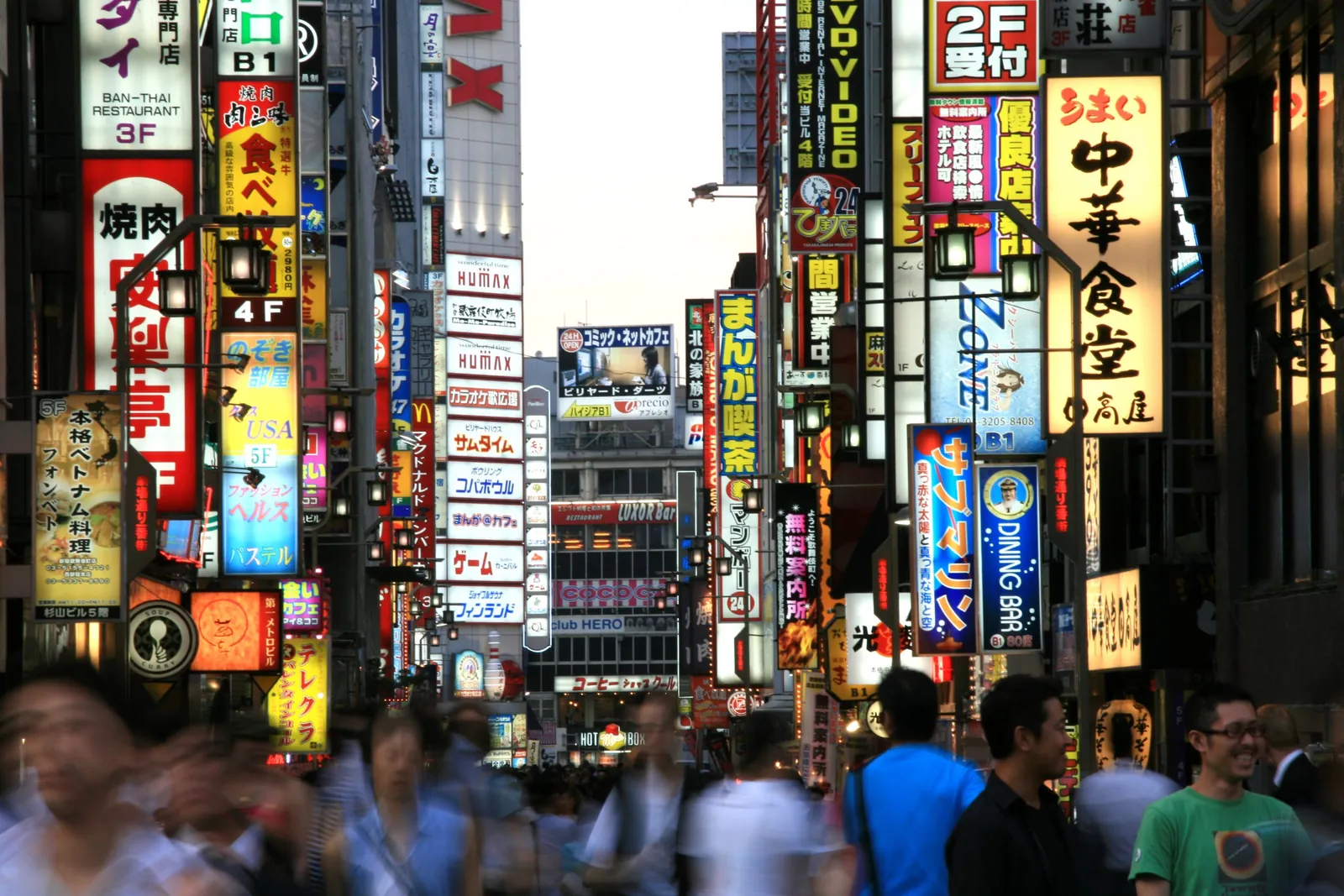
These are the periods when Japan itself goes on holiday. Hotels fill, prices rise and the well-known sights are at their most crowded. The next dates:
- Golden Week 2027: Thursday 29 April, then Saturday 1 May to Wednesday 5 May. The second block is the heavier one.
- Obon 2027: roughly 13 to 16 August.
- New Year: 29 December 2026 to 3 January 2027, and the same dates the following winter.
A practical point that catches visitors out: during these peaks, every seat on the Nozomi, the fastest service on the Tokyo, Kyoto, Osaka and Fukuoka line, is reserved. There are no unreserved cars, so anyone without a booking waits for a slower train. JR Central publishes the exact peak dates on its Nozomi page. Seat reservations open one month before travel, and for these weeks we book on the day they open. If your dates cannot avoid a peak, the better move is to be somewhere less visited on the busiest days, not in Kyoto. Whether a rail pass still makes sense for your route is a separate calculation, set out in is the Japan Rail Pass still worth it?
So when should you go? By kind of trip
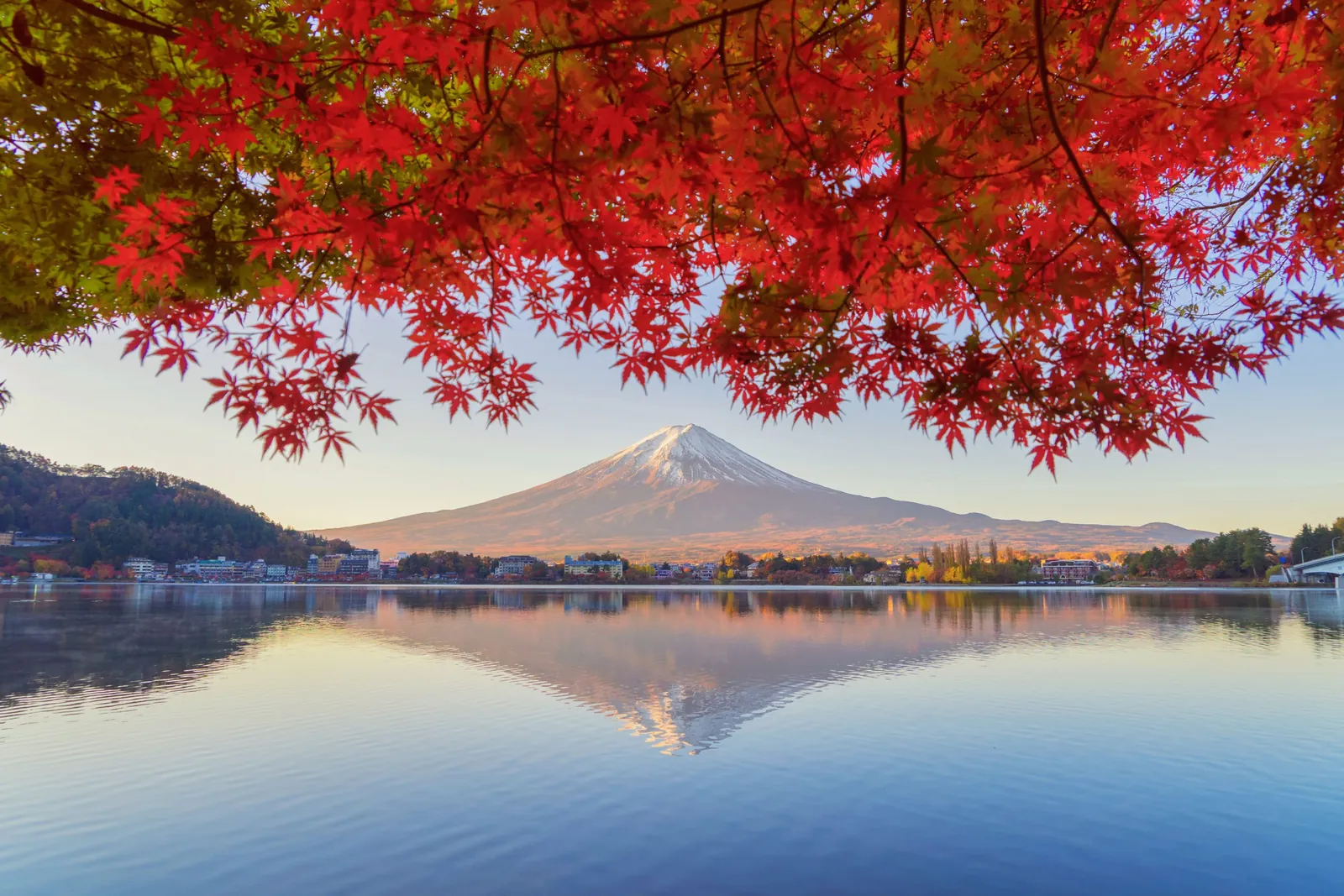
- First trip, cities and culture: the last week of March to mid-April, or mid-October to early December. If blossom is not essential, May and November give the same comfort with fewer people.
- Families in the summer holidays: July, weighted towards Hokkaido and the alps, and out of the big cities in mid-August.
- Skiing: mid-January to late February for the most reliable snow.
- Walking: spring and autumn for routes like the Kumano Kodo, July to early October for the high alps.
- Fewer crowds: January after the 3rd, early March, May after Golden Week, and June if you do not mind rain.
How far ahead to book
- Kyoto hotels in blossom and colour weeks: six to nine months. Small ryokan with private hot-spring baths go first.
- Shinkansen seats: bookings open one month ahead. In peak weeks, book on opening day.
- Ghibli Museum in Tokyo: tickets for the following month go on sale on the 10th, and popular dates sell out quickly.
- Fuji mountain huts: as soon as the season’s bookings open, usually in spring.
Plan this trip
The same two weeks in Japan look completely different in April, July and November: the order of cities, the regions, the hotels and the pace all change with the season. Tell us roughly when and for how long, and we build your trip around that season as a $39 day-by-day plan, with recommended hotels by level and every train and transfer set out step by step. For the wider picture, start with our Japan trips and how many days you need in Japan.
Keep reading
- Cherry blossom, region by region
- Kyoto in autumn, week by week
- How much does two weeks in Japan really cost?
- Classic Japan in 14 days
- All our Japan trips