
Yes, Hokkaido is worth the cold, as long as you go for what winter adds rather than in spite of it. Sapporo averages -3.2°C in January with about 137 cm of fresh snow over the month, so this is a trip of snow festivals, drift ice, powder slopes and steaming onsen, not sightseeing in a coat. The window that matters most is late January to mid-February: the Sapporo Snow Festival runs 4 to 11 February 2027, the Otaru candle festival follows it, and the Abashiri icebreaker starts sailing on 20 January. Nine days covers the island’s winter highlights without rushing.
Who this is for: couples and families planning a first winter trip to Japan’s northern island, with 7 to 12 days, who want to know what is genuinely worth doing, when to go, how to move around in snow, and how cold it really gets.
Updated October 2026 · Doron Reichman, founder, Go East Travel
How cold is Hokkaido in winter, really?
Cold enough that you need proper boots, not cold enough to spoil the day if you dress for it. The figures below are the Japan Meteorological Agency’s 30-year normals (1991 to 2020) for Sapporo, checked October 2026.
| Sapporo | December | January | February |
|---|---|---|---|
| Mean temperature | -0.9°C | -3.2°C | -2.7°C |
| Average daily high | 2.0°C | -0.4°C | 0.4°C |
| Average daily low | -4.0°C | -6.4°C | -6.2°C |
| Total snowfall in the month | 113 cm | 137 cm | 116 cm |
| Deepest snow on the ground | 47 cm | 76 cm | 95 cm |
Source: Japan Meteorological Agency, Sapporo climate normals (checked October 2026).
What the table does not show: Asahikawa, Furano and the Okhotsk coast are noticeably colder, and dawn at the drift ice is the coldest moment of the trip. The cold is dry and mostly still, though, and most visitors find a January afternoon in Sapporo easier than they feared. Bring insulated, waterproof boots with real grip (pavements are packed ice for weeks), a long down coat, a thermal base layer, hat, gloves and a neck warmer, and buy strap-on ice cleats in any Sapporo convenience store on day one; they prevent the fall that ruins a trip. Indoors is overheated, so wear layers you can shed on the train.
Is the Sapporo Snow Festival worth planning around?
Yes, if you are travelling with children or have never seen it; it is the one week when the whole island feels like an event. The 77th Sapporo Snow Festival runs Thursday 4 to Thursday 11 February 2027 at all three sites, Odori Park, Susukino and Tsudome, according to the official festival site (checked October 2026; the programme is still being updated). Odori has the large sculptures and the evening lighting, Susukino the ice carvings, and Tsudome, at the northern end of the subway, is the family site with snow slides and the fewest crowds in the first hour of the morning.
The practical consequence: Sapporo hotels for those eight nights are booked out early and priced accordingly. If the festival is a must, we lock hotels before flights; if it is a nice-to-have, the week after gives you the same snow at lower prices. Hokkaido in winter is also a demanding first trip to Japan, so if it is your first, read our first-timer’s guide alongside this one.
What is the Otaru Snow Light Path, and does it need an overnight?
It is a candle festival along the canal and the old railway line of Otaru, a port town a short train ride from Sapporo, and no, it does not need an overnight. The Otaru Tourism Association lists the 2027 festival as starting on 6 February (checked October 2026), and the organising committee has set 6 to 13 February as the window; the festival’s own site had not yet published the full schedule when we checked. The candles are lit after dark, so the day runs: early afternoon train from Sapporo, the canal and glass workshops in daylight, a sushi dinner (Otaru’s reason for being), the candles, and a late train back. The last trains to Sapporo are crowded on festival nights, and the two festivals overlap, which is why we make Otaru a day trip rather than an overnight.
Is the Asahiyama Zoo penguin walk worth the detour?
For families, yes; for couples without children, it depends on how you feel about zoos. Asahiyama Zoo in Asahikawa walks its king penguins along a snow course, usually from late December to mid-March and usually twice a day, with a single walk when there is less snow, according to the zoo’s own FAQ (checked October 2026; exact times are posted on the zoo’s site when the season starts). Winter hours are 10:30 to 15:30 with last entry at 15:00, the zoo is closed 30 December to 1 January, and adult admission is 1,000 yen; children of junior-high age and under pay nothing.
The mistake people make: a morning train from Sapporo, 1 hour 25 minutes on the Lilac or Kamui limited express, then the 40-minute bus from Asahikawa station, lands them at the gate around 12:30, after the morning walk. Either sleep in Asahikawa the night before and be there at 10:30, or plan the day around the afternoon walk. One extra for 2027: the zoo has announced evening opening until 20:30 on 5, 6 and 7 February, so a night in Asahikawa then lets you see the animals in the snow after dark.
Is the drift ice worth the long journey east?
Yes, if you accept that ice is a natural event, not a scheduled one. Each winter the Sea of Okhotsk ices over and the wind pushes the floes onto Hokkaido’s north-east coast, where Abashiri’s icebreaker Aurora sails into them. The operator lists the season as 20 January to 31 March, with one-hour cruises several times a day at 7,000 yen for adults and 3,500 yen for primary-school children, plus two-hour cruises on the smaller Aurora III from mid-February (checked October 2026; a separate 2027 schedule had not been posted). The detail most sites skip: when there is no ice in the bay, the large ship switches to a plain coastal cruise to Cape Notoro and the small ship does not sail at all, and the operator asks you to book one sailing only, not several as insurance. The ice is most reliable in February; in late January and March it comes and goes with the wind.
Getting there is the price. The Okhotsk limited express takes about 5 hours 20 minutes from Sapporo to Abashiri on JR Hokkaido’s own timetable, so our routes reach the coast from Asahikawa instead and then fly home from the regional airport near Abashiri. Further along the coast is Shiretoko, a World Heritage peninsula, where guides from Utoro take you walking on the ice in a dry suit; we do not quote dates for that, because operators open and close with the ice.
Niseko or Furano: which is better for a first ski trip?
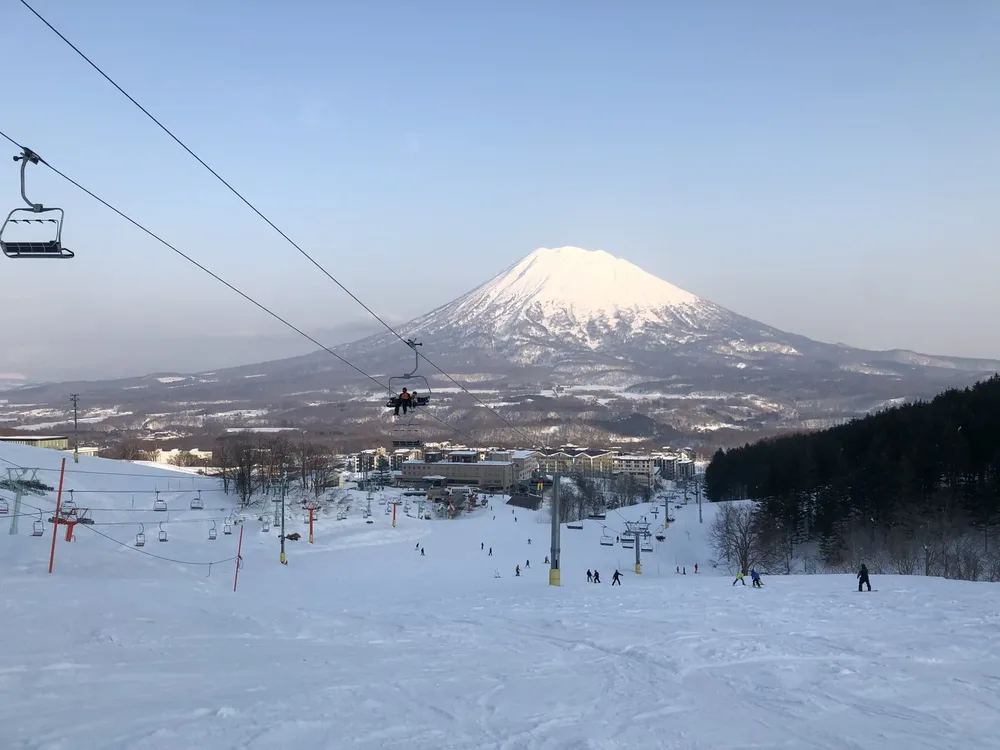
Niseko for an international resort with English everywhere, Furano for a quieter Japanese town with a ski hill attached. Niseko United’s four areas are scheduled to open on 28 November 2026, with Grand Hirafu and Annupuri running to 5 May 2027 and night skiing from 12 December to 22 March, according to the resort’s pages (checked October 2026). Furano Ski Resort is scheduled to begin winter operations on 28 November 2026, per a Prince Hotels notice dated October 2026. Both are opening dates, not promises: early-season cover can be thin, and the deep, consistent powder Hokkaido is known for is a January and February thing.
For families who do not ski but want a snow day, Furano sits next to Biei, whose farmland becomes a white sea in winter and can be toured by taxi in half a day. For couples who want a village with good restaurants and a bar after the lifts close, Niseko wins, at a cost. Either slots into a private Japan itinerary as a three-night block.
How do you get around Hokkaido in winter?
By train between cities and by taxi or a local driver within them; we rarely recommend self-drive in winter to first-time visitors. Storms close highways, whiteouts on the Biei and Furano back roads are real, and a rental car stuck in town by a blizzard is money wasted. Where a car genuinely helps, such as a day in Biei or on the Shiretoko coast, a driver who knows the roads is the better version of the same idea.
Trains run through ordinary snow and are delayed or cancelled in heavy storms, usually a few days each winter. Two recent changes matter. Since 14 March 2026 every JR Hokkaido limited express is fully reserved; there are no non-reserved cars, so the Sapporo to Asahikawa seat must be booked, not boarded on the day. And the Hokkaido Rail Pass, 22,000 yen for 5 days, 28,000 yen for 7 and 37,000 yen for 10 when bought before arrival (1,000 yen more at a station in Japan), does not cover the Hokkaido Shinkansen, the Sapporo subway or the Hakodate tram, per JR Hokkaido’s pass page (checked October 2026). For Sapporo, Asahikawa, Abashiri and back, the 7-day pass pays for itself; for Sapporo, Otaru and a ski resort it does not. The same logic applies nationally, and we work through it in whether the Japan Rail Pass is worth it.
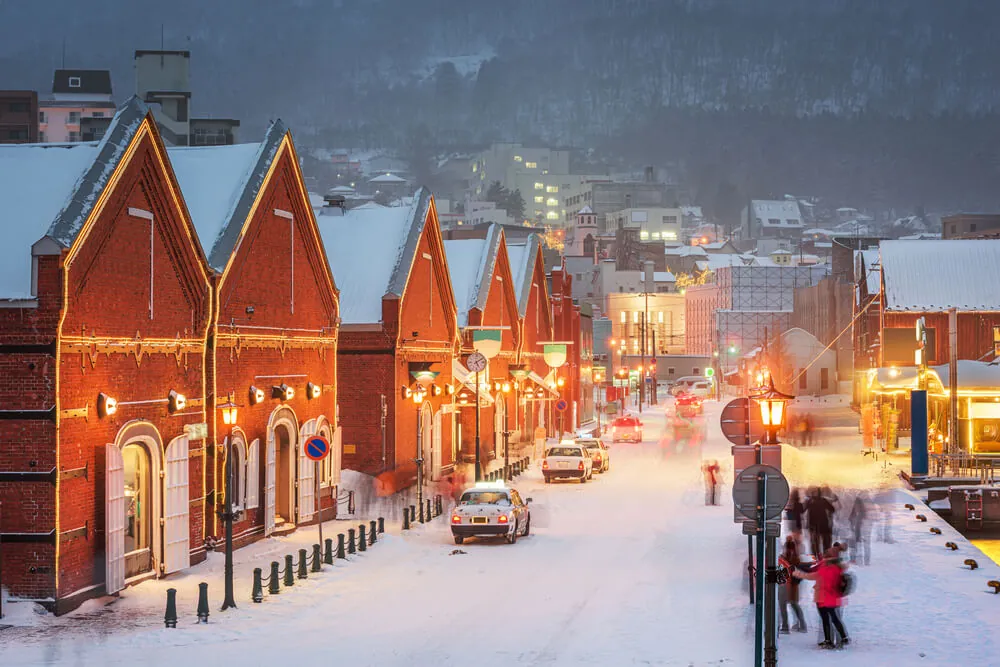
Arriving by Shinkansen from Tokyo is possible but long: the fastest Hayabusa reaches Shin-Hakodate-Hokuto in 3 hours 57 minutes, then a 15 to 22 minute connecting train to Hakodate, and Sapporo is still a long ride further north. For a 9-day trip we fly into New Chitose, 37 minutes from Sapporo station by rapid train, and keep Hakodate as an optional ending for those continuing to Tokyo.
How many days do you need?
Seven days covers Sapporo, Otaru, Asahikawa and either the ski resort or the drift ice; nine covers both; twelve adds Hakodate or Shiretoko without a single long travel day. The limit in winter is not distance but daylight and weather margin: with short January days and the chance of a storm, a route with no slack will break. Every winter plan we build has one flexible day, usually in Sapporo, which absorbs a cancelled train or simply a morning in the onsen. If you are still weighing winter against another season, Japan month by month sets out the trade-offs.
A 9-day Hokkaido winter route
- Day 1, Sapporo. Fly into New Chitose, rapid train to the city, buy ice cleats, early dinner of miso ramen or soup curry.
- Day 2, Sapporo. Snow Festival sites by day (Tsudome first with children), Odori lit up after dark. Outside festival week: Mount Moiwa ropeway and the beer museum.
- Day 3, Otaru day trip. Canal, glass workshops, sushi, Snow Light Path candles, late train back.
- Day 4, Asahikawa. Morning limited express, afternoon penguin walk at Asahiyama Zoo, evening in the ramen alleys.
- Day 5, Biei and Furano. Private driver through the white hills of Biei, an afternoon on the Furano slopes or a sledding hill, night in Furano or Asahikawa.
- Day 6, Abashiri. Train east, afternoon icebreaker cruise if the ice is in, the Ryuhyo Museum and the old prison museum as weather alternatives.
- Day 7, Shiretoko. Drive the frozen coast to Utoro, guided drift ice walk, night in an onsen hotel facing the sea.
- Day 8, back west. Return to Abashiri and fly from the regional airport, or train back to Sapporo via Sounkyo’s ice-fall festival.
- Day 9, Sapporo. Nijo fish market, rapid train to New Chitose, home.
Families who want slopes more than ice swap days 6 to 8 for three nights in Niseko. Travellers continuing to Tokyo end in Hakodate and take the Shinkansen south. Hotel and transfer details for each option are in our Japan guide.
Plan this trip
Tell us your dates and what you want from the winter, and we build your trip as a $39 day-by-day plan, with recommended hotels by level and every transfer set out step by step.
Keep reading
- Our Japan travel guide
- Japan month by month: when to go
- Japan with children
- Is the Japan Rail Pass worth it?