Japan in winter runs from December to early March, and it is two trips in one: the snow country of Hokkaido, Tohoku and the Japan Alps, where Sapporo averages −3.2°C in January and gets about 137 cm of snow in that month alone, and the cities of the Pacific side, where Tokyo averages 5.4°C, the skies are clear and the queues at Kyoto’s temples are the shortest of the year. The big dates for 2027 are already set: the Shirakawa-go light-ups on 11, 17, 24 and 31 January, the Nozawa Onsen Fire Festival on 15 January, and the Sapporo Snow Festival from 4 to 11 February. Here is how we build a winter trip around them, what it costs to get around, and where the cold is worth it.
Updated: November 2026 · May Ast
Who this is for: couples and families planning 10 to 16 days in Japan between December and March, who want snow, onsen and a festival or two without giving up Tokyo and Kyoto. If Hokkaido is the whole point, read Hokkaido in winter instead; this article takes the whole-country view.
What is the weather actually like in Japan in winter?
It depends entirely on which side of the mountains you are standing. The Sea of Japan side takes the Siberian air and turns it into some of the heaviest snowfall of any inhabited region on earth. The Pacific side, where Tokyo, Kyoto, Osaka and Hiroshima sit, is cold, dry and bright. The figures below are the Japan Meteorological Agency’s 1991 to 2020 normals for January, the coldest month.
| City | January mean | Typical high / low | What it means |
|---|---|---|---|
| Sapporo | −3.2°C (26°F) | −0.4 / −6.4°C | Deep snow all month; about 137 cm falls in January and the snowpack averages 76 cm at its peak |
| Kanazawa | 4.0°C (39°F) | 7.1 / 1.2°C | Grey, wet snow and sleet; the Kenrokuen garden under its rope supports is the winter picture of Japan |
| Kyoto | 4.8°C (41°F) | 9.1 / 1.5°C | Cold mornings, dry days, occasional light snow that melts by noon; the temples are nearly empty |
| Tokyo | 5.4°C (42°F) | 9.8 / 1.2°C | Mostly clear; the clearest Mount Fuji views of the year are on winter mornings |
Source: Japan Meteorological Agency climate normals, checked November 2026. The practical reading is simple. Pack for −10°C in the north and for a brisk autumn day in the cities, and never plan a winter route that assumes a mountain pass will be open on a given day.
When exactly is winter in Japan?
December is the quiet month. Snow is reliable in Hokkaido from the middle of the month, the city illuminations are on, and prices are low until the year-end holiday starts around 28 December. The week from 29 December to 3 January is the opposite: trains, inns and flights fill with Japanese families going home, and many restaurants and small museums close for New Year. We route around it rather than through it.
January is the sweet spot between snow and space. The light-ups, the fire festival and the drift ice all start this month, and the second half of January is the cheapest fortnight of the whole year for a ryokan stay in the snow country.
February is peak winter and peak festival. The Sapporo Snow Festival, the snow huts of Yokote, the sea ice off Abashiri and the fullest snow on the Zao and Hakkoda slopes all fall here. It is also the month the Australian and Southeast Asian school holidays empty into Niseko and Hakuba, so ski-town hotels need booking six months ahead.
Early March is the tail. The lowlands thaw, plum blossom opens in Kyoto and Tokyo, and the first ten days still give you snow in Hokkaido and the Alps at shoulder prices. By the second half of the month the country is turning towards cherry blossom and a different kind of crowd.
Which winter festivals are worth building a trip around?
Four, in our experience, and they fall neatly in sequence, so a trip of about two weeks in late January can take in two of them without rushing.
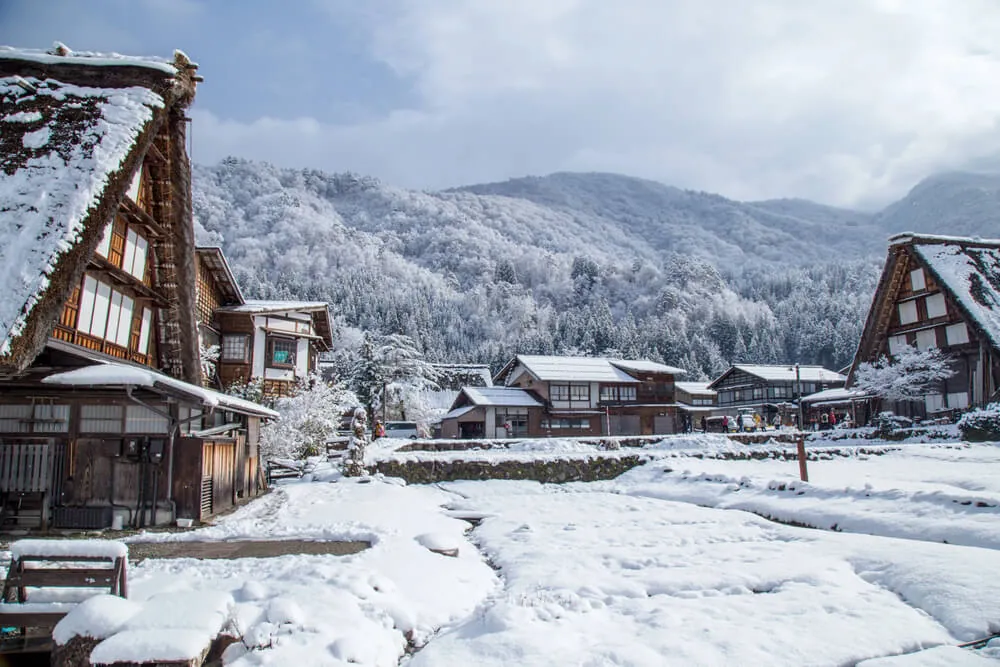
- Shirakawa-go light-up, 11, 17, 24 and 31 January 2027. The thatched gassho-zukuri farmhouses of the UNESCO village are lit from 17:30 to 19:30 on four evenings only, and entry is strictly by advance reservation: there are no tickets on the day. The options are a lottery for a night in a village farmhouse (applications closed on 31 October 2026, winners notified 10 November), a reserved parking space for a private car (the second round opens 1 December 2026 at ¥7,000 for up to five people), or a bus tour from Takayama or Kanazawa. We hold bus-tour seats for our clients as soon as each date goes on sale, because they sell out within days. The event is cancelled in a severe cold wave, so we never make it the only reason for the detour.
- Nozawa Onsen Fire Festival, 15 January every year. One of Japan’s three great fire festivals: the village’s 25- and 42-year-old men defend a wooden shrine against torch-bearing villagers, fuelled by a great deal of sake, until the whole structure burns. It is loud, chaotic and unforgettable, and it sits inside one of the most likeable small ski villages in the country, so the day on the slopes and the night at the fire come as a pair.
- Sapporo Snow Festival, 4 to 11 February 2027. Giant snow sculptures along Odori Park, an ice-sculpture street in Susukino and a snow-slide site at Tsudome. The dates for 2027 are confirmed on the festival’s Japanese site; the English page still shows 2025 at the time of writing, so check the Japanese one. Sapporo hotels for that week sell out months ahead and the rate roughly doubles.
- Yokote Kamakura Festival, mid-February. Hundreds of snow huts across the town of Yokote in Akita, each with a small altar and children handing out sweet sake and rice cakes. The town holds it in mid-February each year; 2026 was 13 and 14 February, and the 2027 dates had not been published when we checked in November 2026. The Abashiri drift ice is at its most reliable in the same fortnight, so a northern loop can do both.
Where is the snow country, and what do you actually do there?
Hokkaido is the obvious answer and the one we cover in its own article. The short version: Sapporo for the festival and the food, Niseko or Furano for skiing, Abashiri for the drift ice. The icebreaker Aurora sails from Abashiri from 20 January to 31 March (adult fare ¥7,000 in the 2026 season), and the ice itself is most reliable from mid-February to early March; a cruise in late January can sail through open water, and the operator says so.
The Japan Alps are where we send most first-time winter visitors, because they sit between Tokyo and Kyoto and do not need a flight. Nagano gives you the snow monkeys of Jigokudani, who sit in their hot spring while you stand in the snow photographing them: the park is open 9:00 to 16:00 from November to March, adult entry was ¥800 in 2026 and the operator has announced a price change from 1 December 2026. Add a night in a ryokan at Nozawa Onsen or Shibu Onsen, the 15 January fire festival if the dates fit, and Takayama as the base for Shirakawa-go.
Tohoku is the quiet one. Zao Onsen in Yamagata is known for its “snow monsters”, conifers encased in rime ice that are typically at their fullest from late January through February and can be seen from the ropeway, with evening light-ups on selected dates that the operator publishes each season. Ginzan Onsen, a single street of wooden inns lit by gas lamps under the snow, is the other Tohoku picture, and it has a dozen rooms, so it is booked the day a date opens. Yokote and the kamakura huts complete the loop.
Kanazawa and the Sea of Japan coast give you winter without a ski lift: the Kenrokuen garden with its pines roped against the snow, winter seafood at its peak (snow crab season runs from November to March), and a direct train on to Kyoto.
Why are the cities better in winter than people expect?
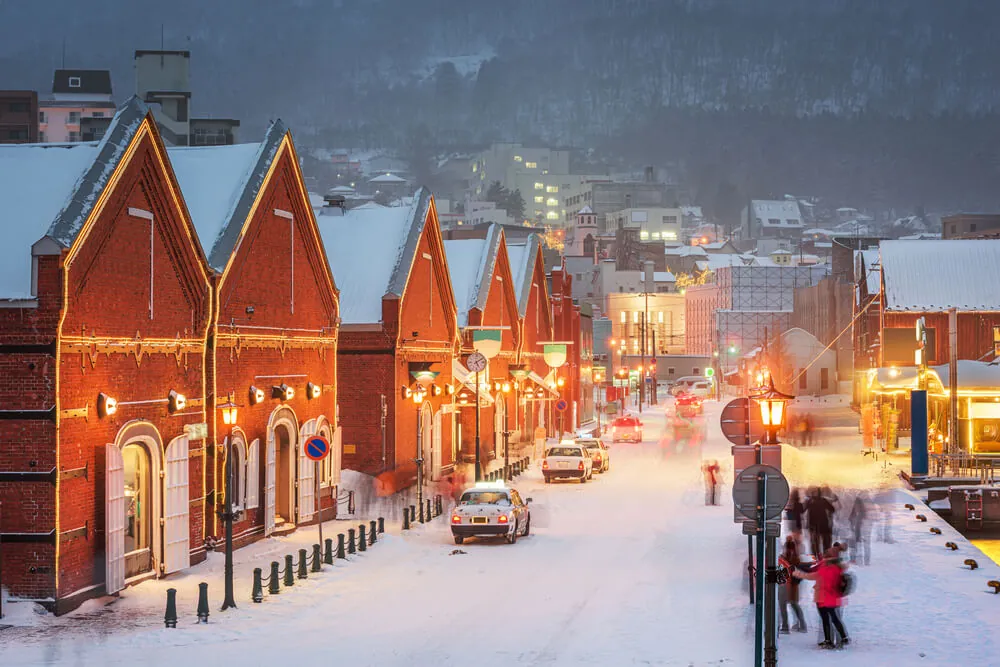
Because the crowds are gone and the air is clear. Kyoto in late January is the only time of year we can get a 9:00 slot at the popular temples without a queue, the gardens look the way they were designed to look under a dusting of snow, and the city’s winter dishes, from kaiseki with hot pots to the yudofu tofu restaurants around Nanzen-ji, are at their best. Tokyo gives you Mount Fuji from the observation decks on most winter mornings, the illuminations until mid-February, and sumo’s January tournament at Ryogoku. Hiroshima and Miyajima are cold but empty. The usual warning about winter in Japan, that it is “off season”, is true only of the mountains’ resort towns in the week after New Year. For the cities it is simply the uncrowded season.
How do you get around Japan in winter, and does the rail pass pay off?
By train, as always, and winter changes the arithmetic in two ways. First, the Japan Rail Pass costs ¥50,000 for seven days of ordinary-car travel when bought online (¥53,000 through an overseas agent), and a route of Tokyo, Nagano, Kanazawa and Kyoto in a week comes close to that figure in single tickets, so the pass is worth running the numbers on for a snow-country loop and rarely worth it for a Tokyo-and-Kyoto-only trip. Second, the Hokuriku Shinkansen to Kanazawa and the Tohoku and Hokkaido Shinkansen run reliably through heavy snow, which the buses and the mountain roads do not. We keep the long moves on rail and use buses only for the last stretch, such as Takayama to Shirakawa-go, with a buffer in the plan for the day a road closes.
Three practical points we repeat to every winter client. Shoes with real grip, because Sapporo’s pavements and Kyoto’s temple steps are both ice at 8:00 in the morning. A coin-locker or forwarding plan for the suitcase, because carrying luggage through a snowstorm between a station and a ryokan is the moment most people regret packing heavy; Japan’s overnight luggage-forwarding service (takkyubin) moves a case between hotels for a few thousand yen. And a booked seat on any train on 29 December to 3 January and over the Sapporo festival week, because the unreserved cars on those days are standing room.
What does a two-week winter route look like?
This is the shape we build most often for late January, when the light-ups, the fire festival and the lowest ryokan prices coincide. The order can run in either direction.
| Days | Where | Why |
|---|---|---|
| 1 to 3 | Tokyo | Fuji views, illuminations, the January sumo tournament if the dates fit |
| 4 to 5 | Nagano and Shibu Onsen | Snow monkeys in the morning, a ryokan with nine public baths at night |
| 6 | Nozawa Onsen | A ski day, and the fire festival on 15 January |
| 7 to 8 | Takayama and Shirakawa-go | The old town, and a light-up evening if a Sunday falls here |
| 9 to 10 | Kanazawa | Kenrokuen in snow, the fish market, crab season |
| 11 to 13 | Kyoto and Nara | Empty temples, hot-pot dinners, a day trip to the deer park |
| 14 | Osaka | Last night near Kansai airport |
Families usually swap Nozawa for a second night at Shibu Onsen, and couples who want Hokkaido replace days 4 to 8 with Sapporo, Otaru and Niseko and fly back to Tokyo. Both versions, with hotels by level and every transfer set out, are in our Japan itineraries.
Plan this trip
Tell us your dates and whether you want snow, cities or both, and we plan your trip with you day by day, free of charge, with recommended hotels by level and every transfer set out step by step.
Keep reading
- Japan private tour: custom itineraries at your pace
- Japan: the complete guide to planning your trip
- Hokkaido in winter: what is worth the cold
- Japan month by month: when to go
- Ryokan etiquette, without the anxiety
- Japan for the first time: what actually surprises people