- Duration
- 12 days
- Pace
- Active
- Hotel changes
- 8
- Best months
- Apr, May, Oct, Nov
- From
- $4,080 per person
Two things to be clear about before you read further. There are no teahouses in Bhutan, so this is a full camping trek with a cook, a camp crew and pack animals. And the Druk Path is short but it is high: you sleep above 11,500 feet (3,500 m) on four consecutive nights, which is what makes it hard rather than the distance.
The twelve days include four in the valleys either side, which are there for acclimatisation and for the parts of Bhutan you would otherwise miss.
Who it suits: fit walkers comfortable with five to seven hours a day on rough ground, and with cold nights under canvas. No technical skill required. Previous altitude experience helps.
Your specialist: your named Bhutan specialist, with our Delhi office arranging permits and the licensed Bhutanese trekking crew.
Day by day
Day 1: Fly into Paro. Arrival at about 7,300 feet (2,225 m), transfer, and nothing else. You have gained altitude already.
Day 2: Paro. The Rinpung Dzong, the National Museum, and the drive up to Chele La at 12,400 feet (3,780 m), which is deliberate: a few hours high and then back down to sleep is the best acclimatisation available from a road.
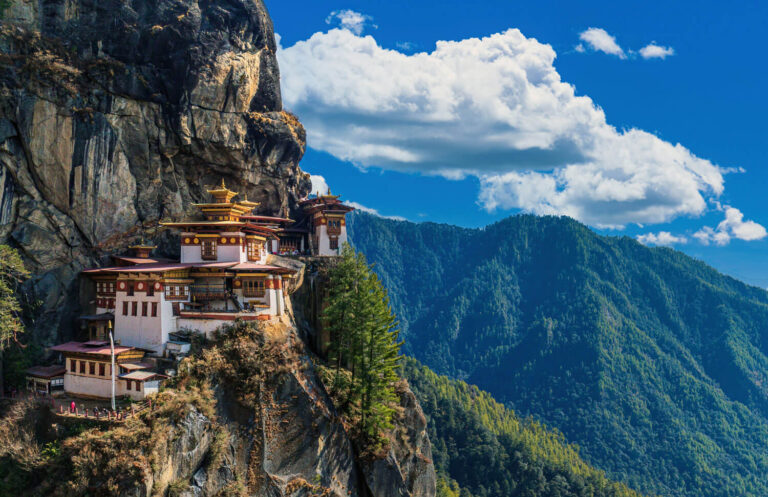
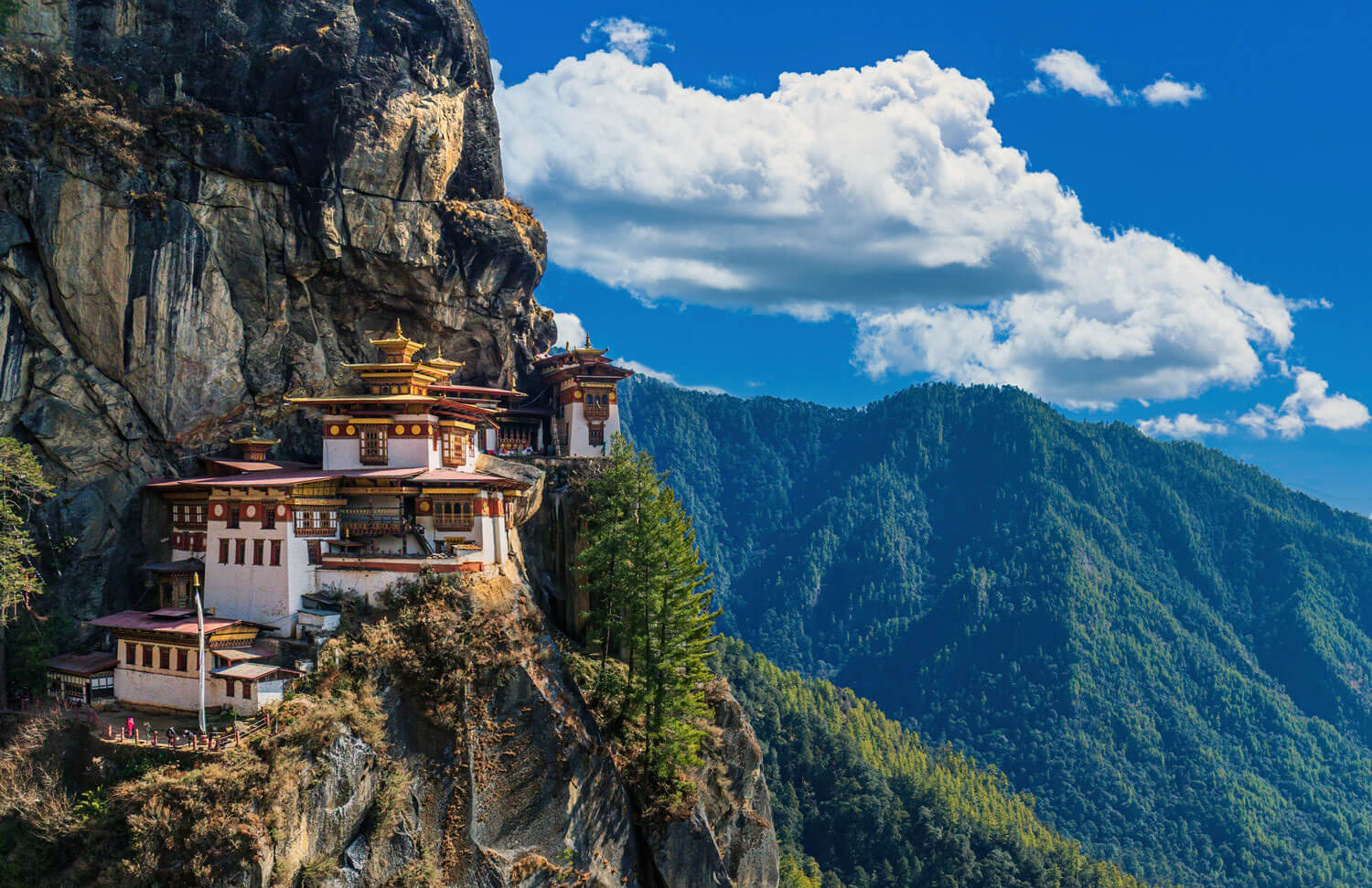
Day 3: Tiger’s Nest. Paro Taktsang, around 1,700 feet (520 m) of ascent to roughly 10,200 feet (3,120 m). Placed here as a training day and an acclimatisation day. If this feels very hard, tell your guide, because the trek is harder.
Day 4: Kit check and rest. A short walk in the valley, a full equipment check with your trek guide, and an early night. We weigh and repack. The pack animals have limits and they are enforced.
Day 5: Paro to Jele Dzong. The first walking day and a steep one, about four hours and roughly 3,400 feet (1,040 m) of ascent to camp below the ruined dzong at about 11,600 feet (3,540 m). Short in distance, hard in ascent, and a real introduction to what your legs are in for.
Day 6: Jele Dzong to Jangchulakha. Four to five hours along the ridge, through rhododendron and past yak herders’ camps. Camp at about 11,800 feet (3,600 m).
Day 7: Jangchulakha to Jimilang Tsho. Four hours on the ridge with the Himalaya to the north when the cloud allows. Camp beside the lake at about 12,300 feet (3,750 m), which holds trout and is very cold at dawn.
Day 8: Jimilang Tsho to Simkotra Tsho. Four to five hours past Janetsho lake and a small settlement, to the highest camp at about 13,000 feet (3,960 m). This is the night people find hardest.
Day 9: Simkotra Tsho to Phajoding, over Phume La. The long day, five to six hours. Up over the high point at about 13,800 feet (4,200 m), with the Himalaya north and, on a clear day, the Thimphu valley opening below. Then down to the monastery complex at Phajoding at about 11,800 feet (3,600 m).
Day 10: Phajoding to Thimphu. Three hours of steep descent through blue pine to the road head above the capital, and then a hotel with a bath. The last walking day, and downhill all the way.
Day 11: Thimphu. A recovery day that is also a proper day: the Buddha Dordenma, the textile museum, the dzong in the late afternoon, and a long lunch.
Day 12: Thimphu to Paro, departure. An hour’s drive and out.
What is included
A licensed Bhutanese trekking guide, a cook and camp crew, pack animals, all tents, mats, dining tent and toilet tent, all meals on the trek, hotel accommodation with full board in Paro and Thimphu, private vehicle and driver on all road legs, all entry fees and trekking permits, the visa application, the Sustainable Development Fee for all eleven nights itemised per person per night, a pulse oximeter carried by the guide, and a WhatsApp group with your specialist and our Delhi office for the road sections.
What we would change, and when
- Want longer? The Jomolhari trek is the next step up: seven to nine walking days, higher, with a base camp view of a 24,000 foot peak. Add a week.
- Want the same route with more margin? We can add a spare day at Jimilang Tsho, which gives a rest at altitude and a contingency for weather. Twelve becomes thirteen.
- Not sure about camping? The two-day Bumdrak walk out of Paro gives one night up high and comes down past Tiger’s Nest. It fits inside a nine day trip.
- Travelling in monsoon? We do not run this route between June and September. Cloud, rain and mud, and the ridge is the whole point.
Honest notes, and please read them
Altitude is the real difficulty. You sleep above 11,500 feet (3,500 m) for four nights running and cross 13,800 feet (4,200 m) on day 9. Most people get headaches and sleep badly. That is normal. Worsening headache that painkillers do not touch, vomiting, confusion or breathlessness at rest are not, and they mean descending immediately. Our guides descend rather than argue. The valley days at the start of this itinerary exist to give you a head start and they are not padding.
It is a camping trek, not a lodge trek. A two-person tent, a foam mat, a toilet tent, and washing from a bowl of hot water your crew heats for you. There is no shower for five days. Nights at the high camps drop below freezing, often well below, even in October.
Cold is the second difficulty. A sleeping bag rated to about 5 Fahrenheit (minus 15 C) is the right choice, not a summer bag. We send a kit list and we mean it.
The first day is the hardest single day. Roughly 3,400 feet of ascent from Paro to Jele Dzong, with legs that have not walked yet. It gets easier after that, apart from the pass.
Water and weather. The lakes freeze at the edges in late autumn and the ridge is fully exposed. A single bad weather day can turn a four hour walk into a six hour one.
The fee still applies. The Sustainable Development Fee is charged for every night you are in Bhutan, including the nights you spend in a tent on a mountain.
Built by your named Bhutan specialist, and checked by our Delhi office before it goes out.