So here is the year as our partner team describes it, with the months we would move you out of said plainly.
The short version
| Period | What it is like | Our verdict |
|---|---|---|
| Late October to December | Dry, clear, mid seventies falling to sixties Fahrenheit (mid twenties to high teens Celsius) | The window. Book it if you can |
| January and February | Cool, sometimes grey, around 60F (16C). Cheaper rooms | Excellent, especially for walking |
| March to May | Warm, wet air, fog on the hills for days at a time | Workable, with the viewpoints made flexible |
| June to September | Around 90F (32C), very humid, typhoon season | The months we warn you about |
Late October to December, the window
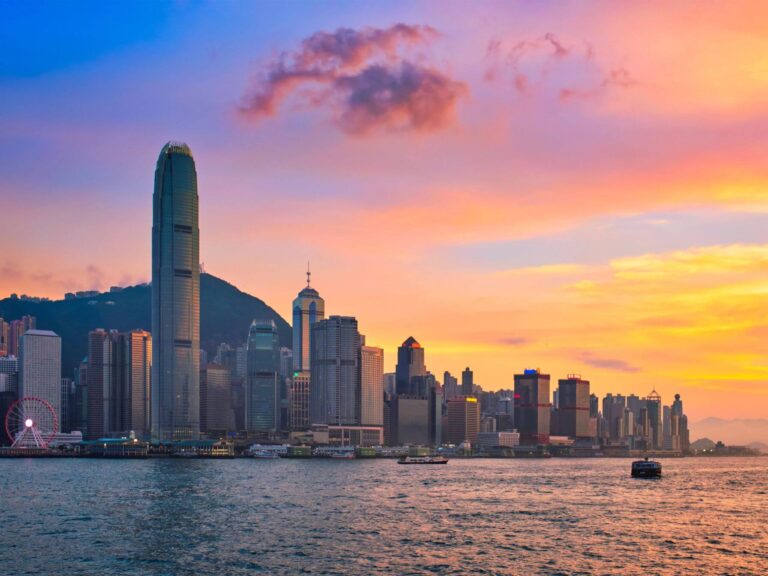
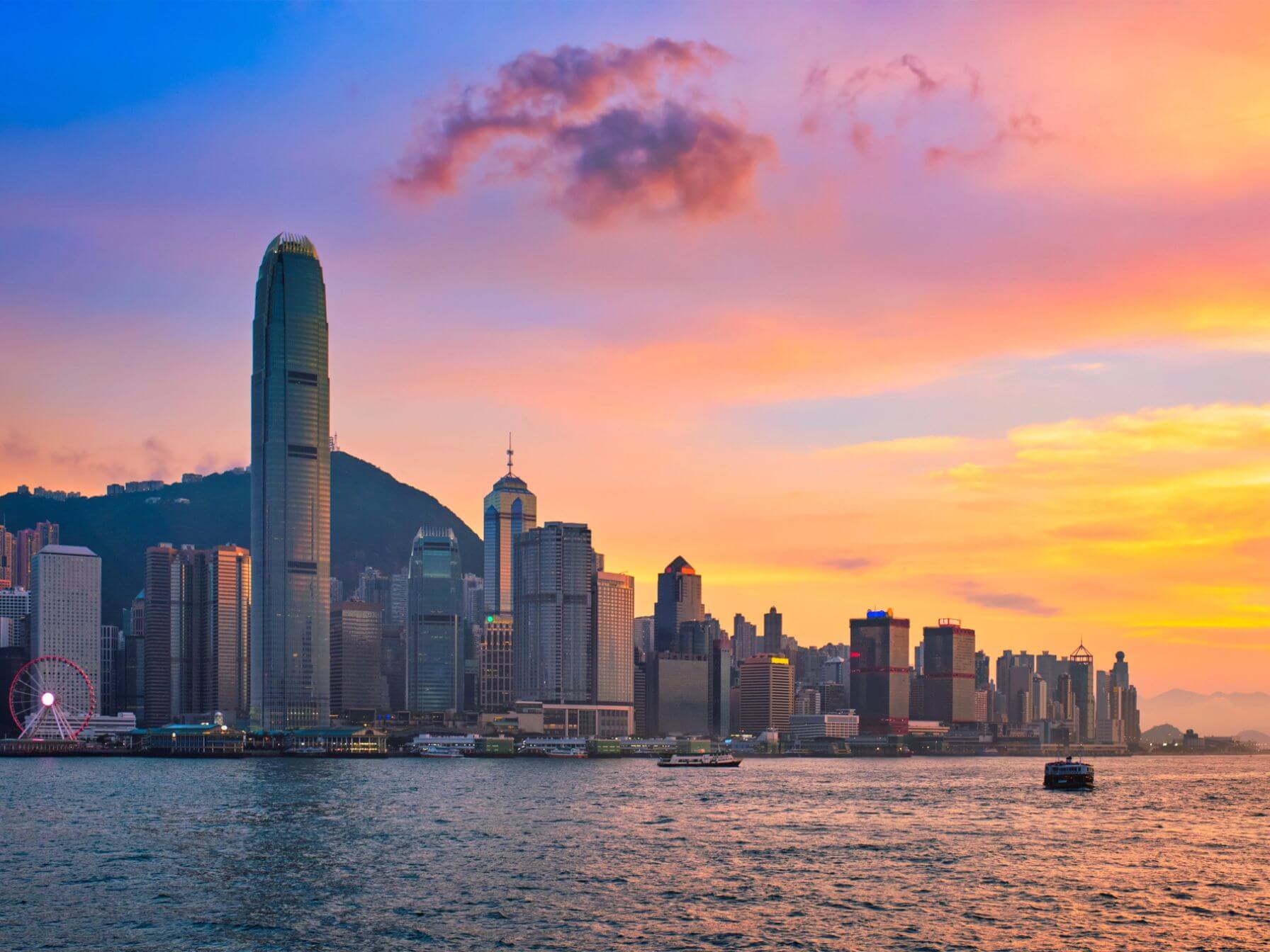
If your dates are open, take them here. The humidity drops out of the air within a couple of weeks in late October, the sky clears, and the long-range visibility from the Peak and across the harbour is the best it gets all year. Daytime temperatures sit in the mid seventies Fahrenheit (mid twenties Celsius) and fall into the sixties (high teens Celsius) by December.
This is also when hill walking stops being an endurance event. The Dragon’s Back, Lantau Peak at dawn, the Sai Kung coast and the sections of the MacLehose Trail that visitors never see are all at their best in these weeks. Our hiking article covers which ones are worth your legs.
The cost is popularity. November is the busiest month of the year for hotels, the convention calendar is full, and rates behave accordingly. If you want the clear season at a better price, the second half of December, outside the Christmas week itself, is the quiet corner of it.
January and February, cool and quiet
Cooler than people expect. A run of grey damp days around 60F (16C) is normal, and a cold snap can put the hilltops close to 50F (10C) with wind. Bring a proper jacket, which almost nobody does.
In exchange you get the cheapest rooms of the good half of the year, walking conditions that are close to perfect, clear light on many days, and a city that belongs to the people who live in it.
The one date that decides everything is Chinese New Year, which falls in late January or February depending on the year. Three things happen. The city fills with visitors from the mainland and from across the region. Many family-run restaurants and small shops close for several days, including some of the ones you came to eat at. Hotel rates move sharply for about a week.
Against that, it is the single best week to see Hong Kong being itself: flower markets running through the night, temples packed at midnight, lion dances in office lobbies, the harbour fireworks on the second day of the year. We plan it deliberately in one direction or the other. Either we build the trip around the festival and warn you what will be shut, or we place you a clear week either side of it.
March to May, the season nobody warns you about
This is the surprise in the Hong Kong calendar and we would rather say it before you book than after.
Warm, wet southern air moving over a still-cold sea produces fog, drizzle and a dripping humidity that can sit on the hills for days. Temperatures climb from the high sixties to the low eighties Fahrenheit (high teens to high twenties Celsius), which sounds ideal and is not the problem. The problem is visibility. The Peak tram runs perfectly well and delivers you into a cloud. The Big Buddha on Lantau spends much of the spring with its head in one. Walls sweat, laundry does not dry and the marble floors of shopping centres are covered in warning signs.
We still build very good trips in March and April. We simply build them differently: weighted toward markets, food, museums, temples and the low-level walks, with the viewpoint days left flexible rather than fixed to a date. If the sky clears on a Tuesday morning we move the Peak to Tuesday evening. That flexibility is written into the document rather than left to luck.
May is the transition. Hotter, still humid, and the first typhoon signals of the year are possible from around the middle of the month.
June to September, the honest warning
Hot, around 90F (32C), and humid enough that a ten minute walk uphill will soak a shirt through. Air-conditioning inside is fierce, so you spend the day alternating between a sauna and a fridge. Thunderstorms are common and heavy.
This is also the heart of typhoon season, which runs roughly May to November and peaks between July and September.
A typhoon in Hong Kong is not a rainy day. When the observatory raises a signal 8, the city stops: reduced MTR service, ferries suspended, shops and restaurants closed, offices shut, and you stay in the hotel. It usually lasts under a day. The city is extremely well drilled for it, nobody is in danger, and the practical effect on a five day trip is that you lose a day and gain a story.
If your dates are fixed to summer, we say so up front and then build for it. Covered alternatives inside every day. Island and hiking days placed late in the trip where they can be moved. Outdoor activity scheduled before ten in the morning and after five in the afternoon, and we mean it. A hotel with somewhere decent to spend eight hours if the city closes. And a written contingency for the affected day that our partner team reworks while it is happening.
What we will not do is tell you that August is a good month to walk the Dragon’s Back.
Month by month, in one table
| Month | Temperature guide | What we would plan |
|---|---|---|
| January | 60F (16C), can feel cold | Walking, markets, museums. Watch for Chinese New Year |
| February | 62F (17C), often grey | As January. Cheapest good-season rooms |
| March | 68F (20C), fog begins | Food and city days. Keep viewpoints flexible |
| April | 75F (24C), humid, hill fog | Islands at low level, markets, Macau |
| May | 82F (28C), first typhoon signals | Early starts. Sea rather than hills |
| June | 88F (31C), wet and humid | Indoor-weighted. Ferries early, dinner late |
| July | 90F (32C), typhoon peak begins | We warn rather than sell |
| August | 90F (32C), peak humidity | The hardest month to enjoy outdoors |
| September | 88F (31C), still typhoon season | Improving late in the month |
| October | 82F (28C), clearing | The turn. Second half is excellent |
| November | 76F (24C), dry and clear | The best month, and the busiest |
| December | 68F (20C), clear and cool | Excellent. Quiet outside Christmas week |
Temperatures are typical daytime highs and vary year to year, so treat them as guidance rather than a forecast.
What the season changes about the trip
The viewpoints. In November, Victoria Peak at dusk is one of the great city views on earth. In April it is a queue, a tram and a shopping centre inside a cloud. This is why our documents give you hours rather than only places, and why we will tell you to skip the Peak entirely on a genuinely foggy day and rearrange the evening.
The islands. Cheung Chau, Lamma and Peng Chau are all-year places, but a ferry deck in February is a pleasure and a ferry deck in July is a decision. Beaches, on the other hand, only make sense from May to October.
Macau. The least seasonal part of the trip, since the old town is walkable in most weather and the interiors are all interiors. If your dates fall in a bad month, Macau is the part of the week that does not suffer. See Macau in one night or two.
The price. Summer is cheaper and there is a reason. Our cost article sets out what the difference actually is.
Plan this trip
Tell us your dates and the places you want to see, and we build your trip as a $39 day-by-day plan, with recommended hotels by level and every transfer set out step by step.
Keep reading
- Hong Kong: the complete guide to planning your trip
- What a trip to Hong Kong really costs
- The Hong Kong hiking trails almost no visitor finds
- How many days do you need in Hong Kong?
- Hiking and islands in 7 days
- All our Hong Kong trips