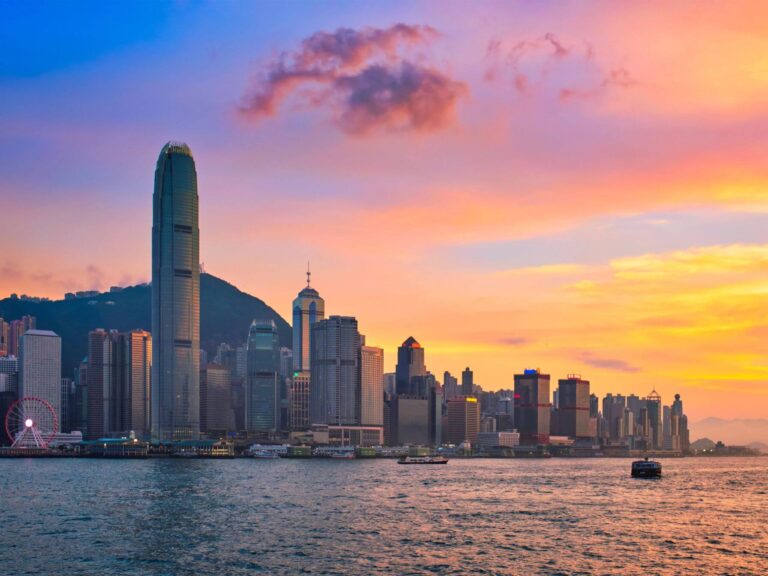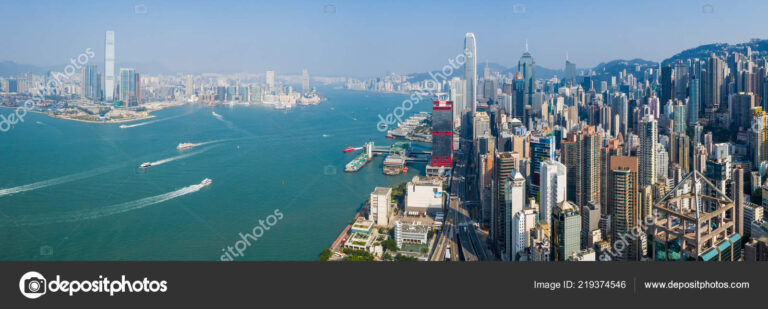

The city is dense because it is confined. Twenty minutes from the densest part of it, reached by a bus that costs a dollar, you can be on a ridge path with nobody else on it, looking at the South China Sea.
Almost no first-time visitor does this. Here is what is worth your legs, with honest distances, honest difficulty and the months that make each one work.
The season, first
This decides everything. Late October to February is the walking season: dry, clear, mid seventies down to sixties Fahrenheit (mid twenties down to high teens Celsius), with the long-range visibility that makes ridge walking worthwhile.
March to May brings warm wet air over a cold sea, which means fog sitting on the hills for days at a time. The paths are fine and you will see forty yards.
June to September is around 90F (32C) with humidity that turns a moderate climb into an ordeal, plus typhoon season. We do build walking days in summer and we build them before ten in the morning, at low level, near water, and we say plainly that August is not the month to walk a ridge. The detail is in Hong Kong month by month.
The five walks worth planning a day around
The Dragon’s Back, the one everyone should do
About 5 miles (8 km), two to three hours, easy.
A ridge above the south east coast of Hong Kong Island, reached by bus from Central in under an hour. You climb a few hundred feet through low woodland onto an open crest, and then walk it, with Shek O and Big Wave Bay and the sea on one side and the reservoirs and hills on the other. Paragliders launch from the top on good days.
It is not hard, it does not need boots, and it ends at a road where a bus takes you down to Shek O for a beach and lunch. If you do one walk in Hong Kong, do this one, and do it early: it is the busiest trail in the territory at weekends and almost empty on a weekday morning.
Lantau Peak at dawn, the serious one
About 4.5 miles (7 km) up and over, three to four hours, hard.
Lantau Peak is 3,064 feet (934 m), the second highest point in Hong Kong, and the standard version of this walk starts in the dark from Ngong Ping and gets you to the summit for sunrise over the sea and the outlying islands.
Be clear about what it is. The ascent is a relentless staircase of stone steps, several thousand of them, in the dark, and the descent afterwards is harder on the knees than the climb is on the lungs. It is a genuinely demanding morning and it is spectacular in clear weather and pointless in cloud, which spring routinely provides. We check the forecast and we tell you the night before whether it is on.
Come down to Po Lin monastery for a plain vegetarian breakfast at the point most visitors are queuing for the cable car.
The Sai Kung coast and Tai Long Wan
Six to nine miles (10 to 14 km) depending on the version, four to six hours, moderate.
Sai Kung in the eastern New Territories is where Hong Kong keeps its best coastline. The classic day walks a section of the MacLehose Trail out to Tai Long Wan, a bay of four white sand beaches backed by hills and reached only on foot or by boat, with a couple of tiny villages selling noodles and beer to walkers.
The logistics are the real content. You take a taxi or a hired boat to the trailhead at Sai Wan Pavilion, walk the coast, and either walk back or arrange a sampan to collect you, which is the version we usually build because it turns a long day into a good one. Add a seafood dinner in Sai Kung town on the way home.
This is the walk that convinces people Hong Kong is not a city with some parks in it.
The MacLehose Trail, in sections
62 miles (100 km) total across ten sections, one to two days each.
The MacLehose runs the length of the New Territories from Sai Kung in the east to Tuen Mun in the west, and it is a serious long-distance trail with a serious reputation: the annual team event on it is one of the harder endurance races in Asia.
Nobody on a five day city trip should attempt the whole thing. What works is one section. Section two, along the Sai Kung coast, is the most beautiful. Sections four and five cross the high ground behind Kowloon with the entire city laid out below, and section four includes the climb to Ma On Shan.
For a walking-led trip we build two or three sections across a week, with transport meeting you at each end and a real lunch in the middle. See hiking and islands in 7 days.
Lamma island, end to end
About 3 miles (5 km), ninety minutes, easy.
The gentlest walk in this article and the one we recommend most often to people who did not come to Hong Kong to walk. A ferry from Central drops you at Yung Shue Wan, a village of a few hundred people with no cars. You walk a paved path across the island, over a low hill, past a beach and a power station that is oddly photogenic, and arrive at Sok Kwu Wan for a seafood lunch on a pontoon over the water. Then a ferry back.
Two hours of walking, a good lunch, and a complete change of tempo. It works in almost any weather and with almost any level of fitness.
Three more, for a longer trip
Victoria Peak, Lugard Road loop. Flat, paved, about an hour, and free. The views are better and quieter than the paid viewing terrace above it, which is a sentence worth reading twice before you buy a ticket.
Cheung Chau, the Mini Great Wall. A short coastal path around the headland of a car-free fishing island, past rock formations and a beach, with the town’s seafood restaurants at the end of it. Ninety minutes at a slow pace.
Tai Mo Shan. The highest point in Hong Kong at 3,140 feet (957 m). A road walk more than a trail, cold and windy at the top by local standards, and worth it on the clearest winter days for a view across the entire territory.
What to bring, and what people get wrong
Water, more than you think. There are no shops on a ridge. Two litres a head in warm months.
Trail shoes rather than boots. The paths are largely good, and stone steps in humidity are the actual hazard. Ankle support matters less than grip.
Sun protection. The ridges are open, the sun is subtropical and the reflection off the sea is strong.
A light waterproof. Weather changes fast on the hills.
No hire car. Bus, taxi and MTR reach every trailhead in this article, and parking at the popular ones is nonexistent.
The mistakes we see: starting too late in the day, which is the big one and the dangerous one in summer heat. Underestimating the humidity, which affects people far more than the gradient. And planning a ridge walk on a fixed date in spring, when fog can remove the view entirely. We keep the walking days movable for exactly that reason.
Safety, plainly
Hong Kong trails are well marked, well used and mostly within phone signal, with distance posts on the main routes that emergency services use to locate people. The country parks are genuinely well managed.
The real risks are heat exhaustion in summer, which is common and sends people to hospital every year, and being caught out by an early sunset in winter, when it goes dark around six. Neither is dramatic and both are avoidable by starting early.
Snakes exist and are almost never seen. Wild boar exist, are increasingly urban, and should be walked away from rather than photographed.
How we build a walking trip
Two or three walks across a week rather than seven, with rest days and city days between them. Transport arranged to and from each trailhead, because the trailheads are the fiddly part. A guide on the longer coastal days, from our long-standing partner team in Hong Kong. We have dedicated local offices in Vietnam and India, our team in Japan, and local representatives in the Philippines, and Hong Kong runs on a partner relationship we would rather name than dress up.
Walking days are always placed where they can move. From May to November that is a typhoon precaution, and in spring it is a fog precaution.
Plan this trip
Tell us your dates and the places you want to see, and we build your trip as a $39 day-by-day plan, with recommended hotels by level and every transfer set out step by step.
Keep reading
- Hong Kong: the complete guide to planning your trip
- Hong Kong month by month
- Hong Kong in four days, district by district
- What a trip to Hong Kong really costs
- Hiking and islands in 7 days
- All our Hong Kong trips