This is the document our consultants open when a new Japan file lands on the desk, written out in full. It is not a list of sights. It is the set of decisions that determine whether your two weeks feel like a holiday or a logistics exercise.
Japan at a glance
| Best months | Late March to May, and October to November |
| Comfortable trip length | 12 to 16 days |
| Entry | Visa-free for most Western passports, 90 days |
| Getting around | Rail, with one internal flight on longer routes |
| Land budget, per person per day | 180 to 650 US dollars |
| Our presence | Our team in Japan, year round |
Japan is four islands and about 1,900 miles from end to end. That length is the single fact most first itineraries ignore. Tokyo to Sapporo is further than London to Rome. Plan the country as a corridor, not as a circle.
When to travel, by season and by region
The most expensive mistake in Japanese travel planning is treating the country as one climate with one calendar. It has neither.
Spring, late March to May
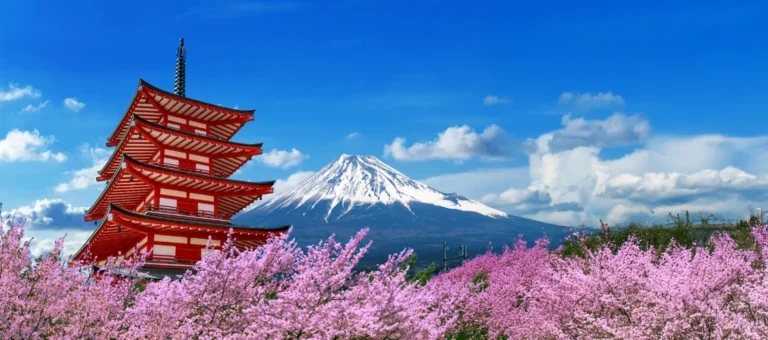
Cherry blossom is not a date, it is a wave. It opens in Kyushu in the far south around the third week of March and reaches Hokkaido in early May, moving north at roughly 15 miles a day. A trip built around blossom should be built around that corridor. If you are locked to the first week of April, Kyoto and Tokyo are the safe bet. If you have flexibility, we will usually push you a week or two later, when the crowds thin, the rates fall and the countryside is at its best.
Late April and early May contain Golden Week, a run of national holidays when the whole country travels domestically. Rail fills, hotel rates spike and popular ryokan are unavailable. We plan around it rather than through it.
Summer, June to August
June is the rainy season across most of the country, though Hokkaido escapes it. July and August are genuinely hot and humid in the cities, in the low nineties Fahrenheit with high humidity. This is not the season for Kyoto temples in the afternoon.
It is, however, the only season for the Japanese Alps, for hiking in Hokkaido, and for the summer festivals, which are among the best things Japan does. If your dates are fixed to July or August, we move the trip north and up.
Autumn, October to November
Our own favourite window, and the one we recommend when someone is free to choose. Clear skies, comfortable temperatures, autumn colour running south from Hokkaido in late September to Kyoto in the last week of November, and noticeably fewer foreign visitors than spring. Rates are lower than April almost everywhere.
Winter, December to February
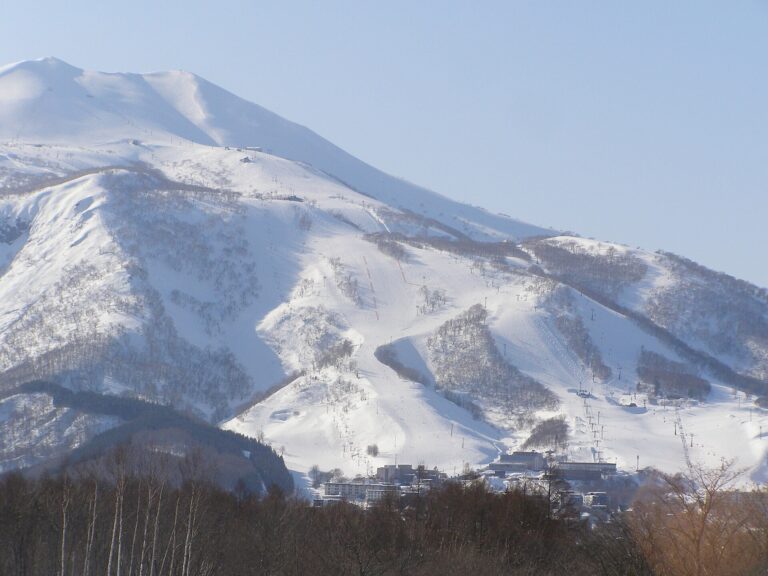
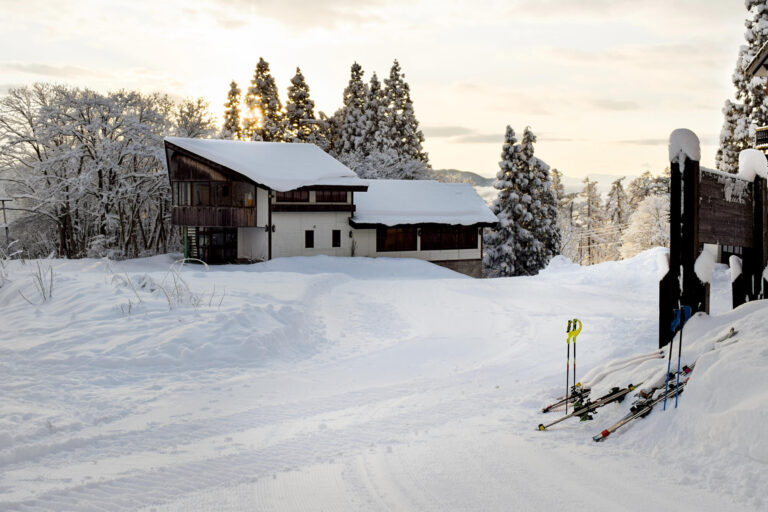
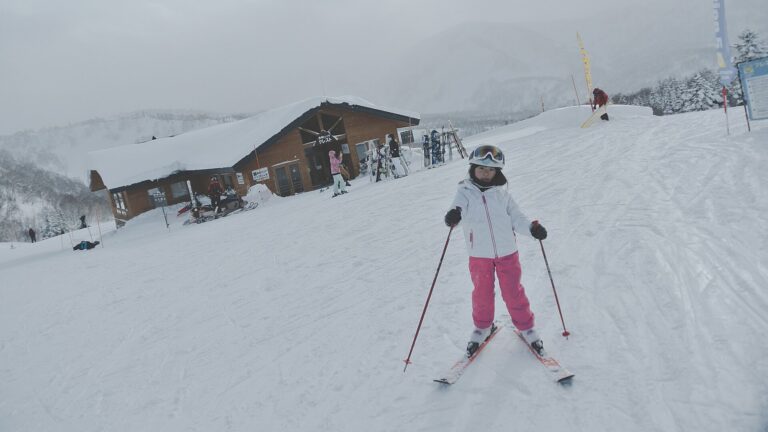
Cold in the north, mild in the south, and the cheapest hotel rates of the year in the cities. Snow country is spectacular: Hokkaido has some of the most reliable powder in the world, the snow monkeys at Jigokudani are at their best, and Kanazawa and Takayama under snow are quieter and more atmospheric than at any other time. Daylight is short, so days need to be planned tighter.
How many days do you actually need?
- Under 8 days. One region. Tokyo and a day trip, or Kyoto and Osaka. Trying to do both properly in a week means spending your holiday on trains.
- 10 days. Tokyo, Kyoto and one thing in between, usually Hakone or Kanazawa. This works and does not feel rushed.
- 14 days. The sweet spot. The above plus Hiroshima and Miyajima, or the Kii Peninsula, or Takayama and the alps, and a genuine rest day.
- 18 to 21 days. Japan opens up. Tohoku in the north, the Setouchi art islands, Kyushu, or a proper stretch in Hokkaido.
The number that matters is not total days, it is the number of hotel changes. Above one move every two and a half days, a trip starts to feel like work. We build to that ratio.
Entry requirements
Most Western passports, including the UK, all EU states, the United States, Canada and Australia, receive a 90 day visa exemption on arrival for tourism. There is no advance visa application and no fee.
What does change from year to year is the digital pre-arrival paperwork: the online immigration and customs declaration, which saves a long queue at the airport if you complete it before you fly. We send you the current links with your final documents rather than publishing them here, because they move.
If you hold a passport that is not visa-exempt, tell us early. The application is straightforward but it needs lead time, and we will confirm the requirement for your specific nationality before we quote.
Getting around
Rail
Japanese rail is the reason the country is such a pleasure to travel. Shinkansen between the major cities, dense local networks within them, and a punctuality that is not a cliché.
The question we get most is whether to buy a nationwide Japan Rail Pass. Since the 2023 price increase, the answer is often no. It depends entirely on your route. A Tokyo to Kyoto to Hiroshima to Tokyo trip may still justify it. A slower itinerary with three or four long legs almost certainly does not. We price every itinerary both ways, with the pass and with individual tickets, and show you the difference in writing before you decide. Regional passes, which fewer visitors know about, are often the better answer.
Reserved seats matter more than most visitors realise, particularly with luggage. Large suitcases now require a reserved oversized-baggage space on some Shinkansen routes. Our team in Japan books these for you.
Internal flights
For anything involving Hokkaido or Kyushu on a trip of under three weeks, a flight saves a day that is better spent elsewhere. Domestic fares are reasonable and the airports are efficient.
Car
Rarely necessary and often a liability in cities. Genuinely useful in three places: Hokkaido, the Noto and Izu peninsulas, and rural Kyushu. If your route includes them we will tell you.
Luggage forwarding
The service almost no first-time visitor knows about, and one of the best things about travelling in Japan. Your suitcase goes from hotel to hotel overnight for around 15 to 20 dollars a bag while you travel with a small overnight bag. We build this into every itinerary with more than three stops.
What a trip to Japan costs
The figures below are land only, per person, based on two people sharing, and exclude international flights. They cover accommodation, food, ground transport, entries and the guiding we would normally include.
| Style | Per day | 10 days | 14 days | 21 days |
|---|---|---|---|---|
| Careful: business hotels, mostly independent | $180 | $1,800 | $2,520 | $3,780 |
| Comfortable: good 3 to 4 star, some guiding | $285 | $2,850 | $3,990 | $5,985 |
| Boutique: design hotels, two ryokan nights | $430 | $4,300 | $6,020 | $9,030 |
| Luxury: top-tier, guided throughout | $650 | $6,500 | $9,100 | $13,650 |
Three decisions move that number more than anything else:
- The month. The same hotel room in Kyoto can cost double in the first week of April compared with the second week of May.
- Ryokan nights. A proper ryokan with kaiseki dinner and a private onsen is one of the great travel experiences and costs three to four times a city hotel. Our advice is almost always two nights, not seven.
- How the rail is priced. See above. On a two-week itinerary the difference between a nationwide pass and correctly chosen individual tickets is frequently 200 to 400 dollars a person.
What is cheaper than people expect: food. An excellent bowl of ramen is around seven dollars. A very good set lunch in Kyoto is fifteen. You do not need to spend heavily to eat extremely well.
The regions worth your time
Tokyo. Not one city but a collection of districts with almost nothing in common. Three full days minimum, four if you like cities. We plan Tokyo by neighbourhood rather than by sight.
Kyoto and Nara. The cultural core. Kyoto rewards early mornings and late afternoons and punishes the middle of the day at the famous temples. Three to four days, with Nara as a half day rather than a rushed morning.
Hakone and the Fuji region. The classic first ryokan stop, an easy leg out of Tokyo, and the one place a view of Fuji is genuinely likely. Weather-dependent, so we build in an alternative.
Kanazawa and the alps. Takayama, Shirakawa-go and Kanazawa make an excellent three-day inland detour between Tokyo and Kyoto, and they are where the classic route stops feeling classic.
Hiroshima and Miyajima. Worth the leg. One night, not a day trip, so you see Miyajima after the day visitors leave.
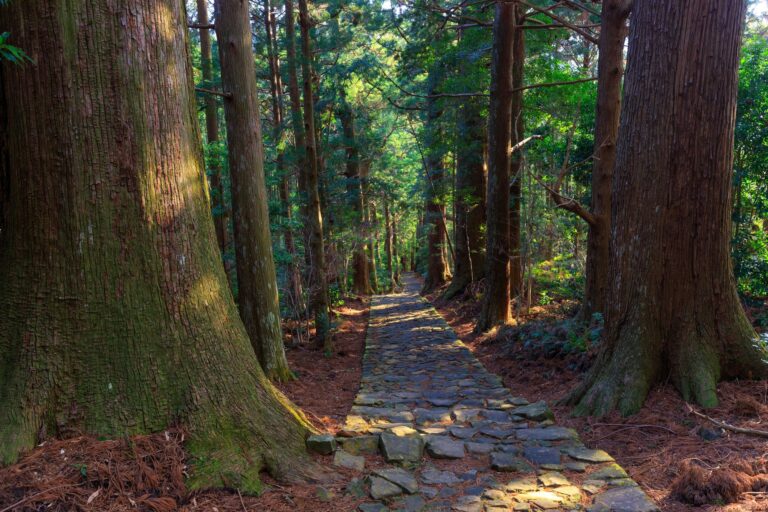
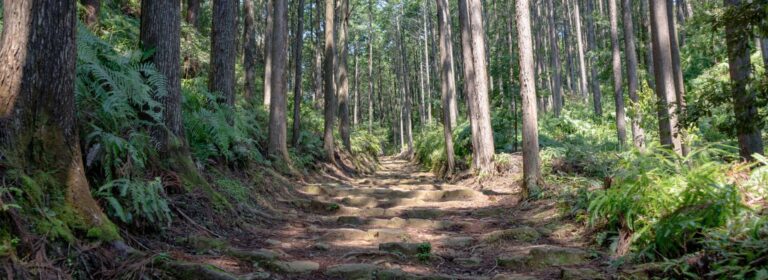
The Kii Peninsula. Koyasan’s temple lodgings and the Kumano Kodo pilgrimage trails. Our single favourite addition to a second week.
Setouchi and Naoshima. The art islands. Slow, and better for it.
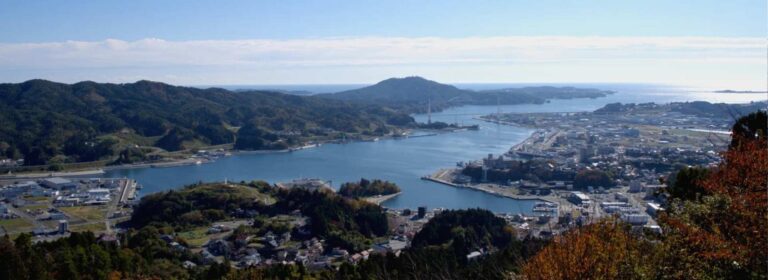
Tohoku and Hokkaido. Big landscape, hot springs, snow, and very few foreign travellers. Three weeks or a dedicated trip.
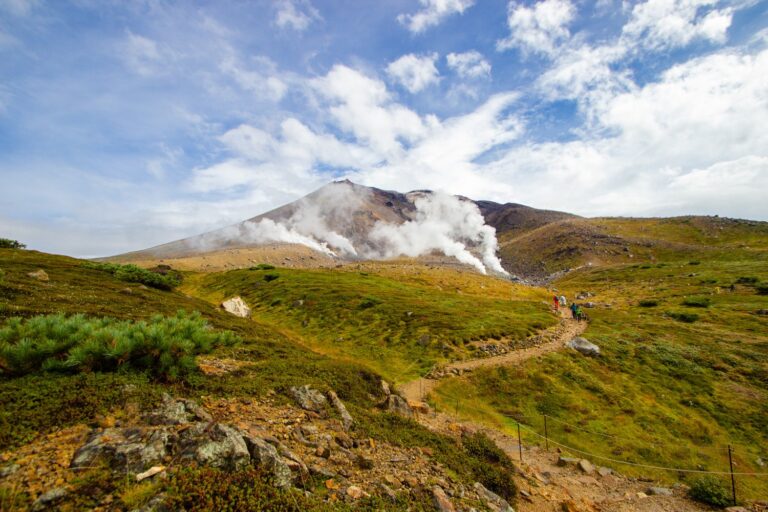
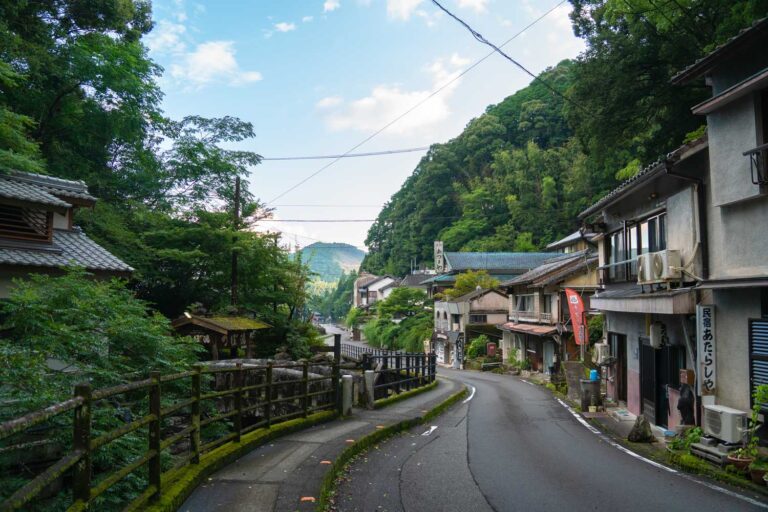
Kyushu. Volcanoes, onsen towns and the best of Japanese food culture outside the big three cities. Underrated and easy to reach by air.
Eating well without queueing
The counters worth eating at seat eight people and take reservations by phone, in Japanese, sometimes only 30 days ahead. This is the single most concrete thing a local office does for you. Our Tokyo team books them.
Two practical notes. Lunch at a serious restaurant costs a third of dinner and is frequently the same kitchen. And department store basements, the depachika, are among the best casual eating in the country and almost never appear in guidebooks.
Dietary requirements are workable, but only in advance. Vegetarian is harder than most visitors expect because dashi, a fish stock, is in almost everything. Allergies need to be communicated in Japanese, in writing. Tell us early and we handle it.
Practical notes from our team in Japan
- Cash. Japan is far more card-friendly than it was, but small restaurants, temples and rural buses are still cash only. Carry more than feels necessary.
- Data. Get connected at the airport. Navigation and train apps are what make independent days work.
- Shoes. You will remove them several times a day. Bring shoes that come off easily.
- Tattoos. Still a barrier at some public onsen. We book private onsen or tattoo-friendly facilities where it matters.
- Tipping. Not done and can cause confusion. Do not.
- Luggage size. Japanese hotel rooms are small and station lockers are limited. One medium case each travels far better than one large one.
How we build a Japan trip
Every Japan itinerary we write is put together by one of four people: our Head of Consulting Mai, our Japan specialists Sapir and Asaf, or Lior, our team member who lives in Tokyo. You get a named person for the whole process, not a queue.
Your $39 plan is written for you rather than pulled from a template, and if you want us to book the trip, the quote is free and carries no obligation. You will see the actual hotels, the actual train legs and the reasoning behind the order of the days. Two rounds of changes are included.
When you travel, we open a WhatsApp group with your consultant here and our team in Japan there. It stays open until you are home. A missed connection, a closed restaurant, a typhoon that moves your plans: it is handled by someone who is in the country.
Ready to plan it?
Tell us the shape of the trip you have in mind and we will build you a first outline. A plan written for you, and a free, no-obligation quote if you want us to book.
Keep reading
- The eight Japan itineraries we build most often
- How much does two weeks in Japan really cost?
- Cherry blossom, region by region
- Is the Japan Rail Pass still worth it?