- Duration
- 14 days
- Pace
- Moderate
- Hotel changes
- 6
- Best months
- Mar, Apr, May, Oct, Nov
- From
- $4,760 per person
It is the point where Bhutan stops feeling like a circuit. It is also two more days in a car than the classic route, and the road east is the reason fourteen days is the minimum rather than eleven.
Who it suits: second-time visitors, and first-timers with time who would rather go deep than wide. Comfortable with long drives. One hard walking day.
Your specialist: your named Bhutan specialist, with our Delhi office arranging the visa, the domestic flight if you take it, and the ground.
Day by day
Day 1: Fly into Paro, transfer to Thimphu. An hour to about 7,660 feet (2,335 m). Nothing else.
Day 2: Thimphu. The Buddha Dordenma, the National Textile Museum, the arts school, and Tashichho Dzong late in the afternoon. The weekend market if your dates land on one.
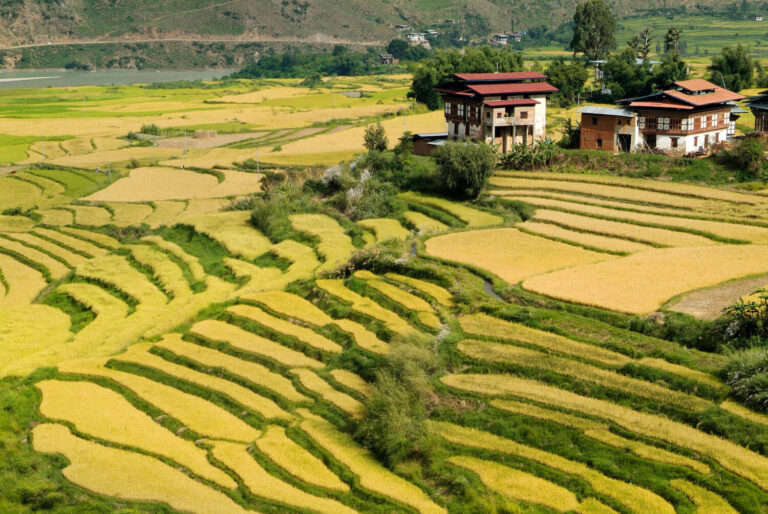
Day 3: Thimphu to Punakha. Three hours over Dochula at 10,170 feet (3,100 m), then the descent to about 4,300 feet (1,310 m). Chimi Lhakhang across the rice fields in the afternoon.
Day 4: Punakha. The dzong at the confluence in the morning. Afternoon: the climb to Khamsum Yulley Namgyal Chorten, or the Mo Chhu float, or the suspension bridge.
Day 5: Punakha to Phobjikha. Four hours east and up to about 9,800 feet (3,000 m). Gangtey Goenpa and the Gangtey Nature Trail, an easy ninety minute walk down the valley. Cranes from late October.
Day 6: Phobjikha to Trongsa. Four hours over the Pele La pass at about 11,050 feet (3,370 m), through yak pasture and dwarf bamboo. Trongsa Dzong sits above a gorge and is the largest in the country, the ancestral seat of the royal family, and it is worth the whole afternoon. The Ta Dzong watchtower above it is now the royal heritage museum and it is the best museum in Bhutan.
Day 7: Trongsa to Bumthang. Three hours east over the Yotong La at about 11,150 feet (3,400 m), through the Chumey valley where the yathra wool weaving is done, and into Jakar at about 8,500 feet (2,600 m). Afternoon at Jakar Dzong.
Day 8: Bumthang, the Chokhor valley. The oldest sites in Bhutan, on foot where possible. Jambay Lhakhang, said to be seventh century. Kurjey Lhakhang, three temples in a row against the cliff. Tamshing, with wall paintings that have not been repainted. The walk between them along the river takes about two hours and is the best flat walking in the country.
Day 9: Bumthang, the Tang valley. A rough drive north east, then a walk to Ogyen Choling, a former manor house now run as a museum by the family that owns it, which is the single best explanation of pre-modern Bhutanese life anywhere. The Burning Lake on the way back, which is a pool in a gorge rather than a lake and matters for reasons your guide will explain properly.
Day 10: Bumthang, free. Deliberately empty. Options: the Ura valley, the highest and coldest of the four at about 10,200 feet (3,110 m); the Swiss farm and the country’s first brewery; a cheese maker; or a day of nothing in a valley that suits it.
Day 11: Bumthang to Punakha, or fly to Paro. The road option is a long day, eight to nine hours back over both passes with a lunch stop at Trongsa. The flight option is a twenty five minute hop from Bathpalathang to Paro, which saves a full day and costs a fare. We build in the road as the fallback, because these flights are small aircraft on weather-dependent schedules.
Day 12: To Paro. If you drove, this is the second half of the return, four to five hours from Punakha over Dochula. If you flew, this is a full spare day in Paro: Chele La at 12,400 feet (3,780 m), the Drukgyel ruins, or the Haa valley over the pass.
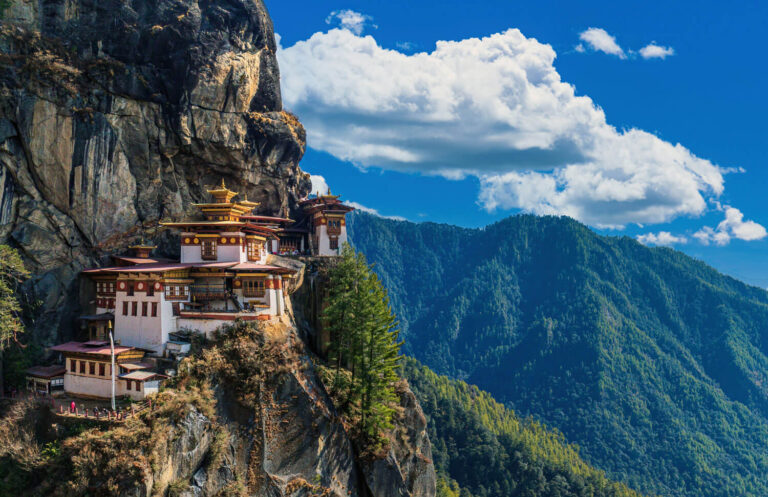
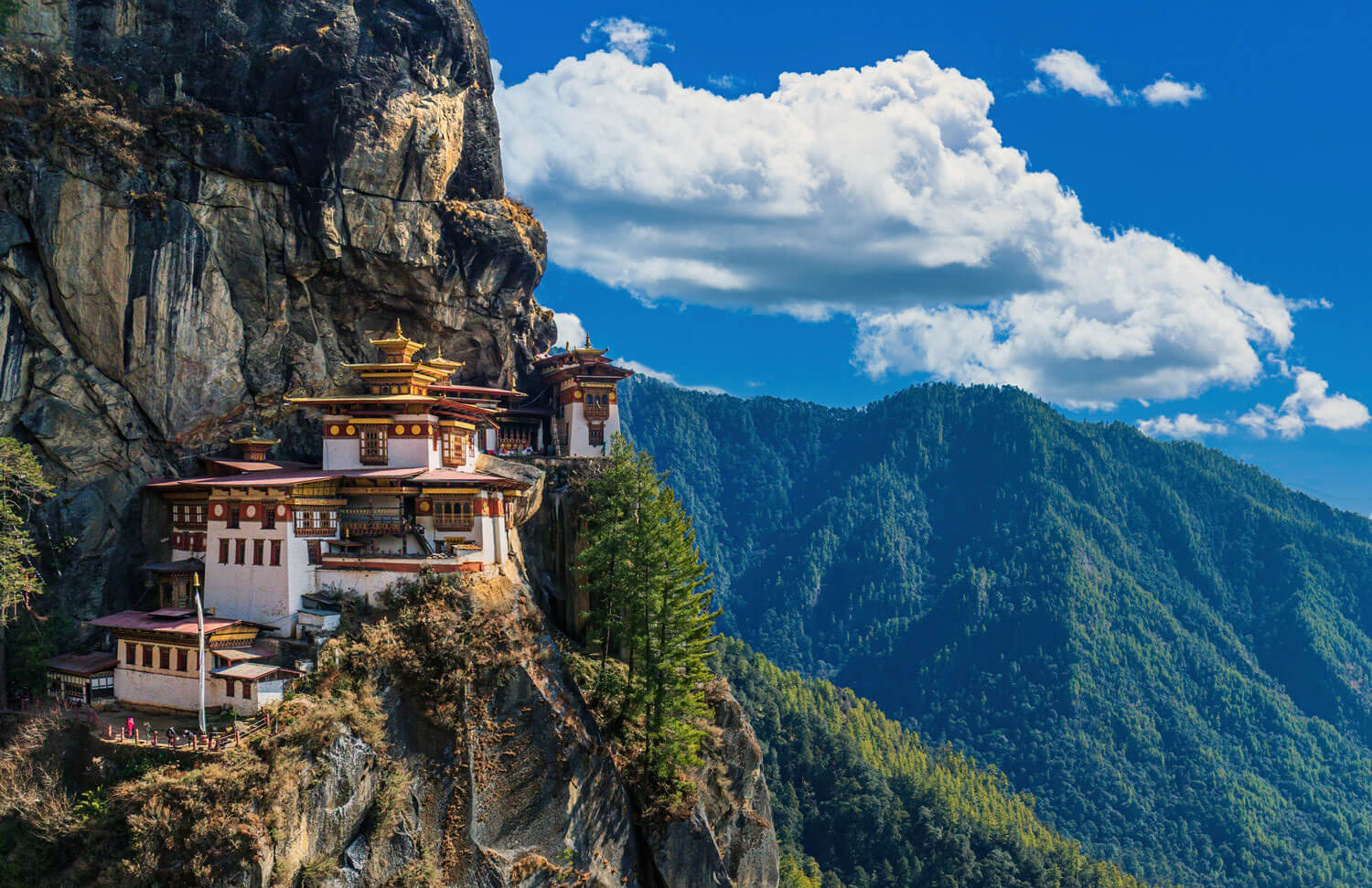
Day 13: Tiger’s Nest. Paro Taktsang at about 10,200 feet (3,120 m), roughly 1,700 feet (520 m) of steep ascent, two to three hours up. Placed at the end, when you are properly acclimatised. Afternoon free.
Day 14: Departure. Transfer to Paro airport.
What is included
Full board throughout, private vehicle with a Bhutanese driver for every leg, a licensed English-speaking guide throughout, all entry fees including the royal heritage museum and Ogyen Choling, the visa application, the Sustainable Development Fee for all thirteen nights itemised per person per night, and a WhatsApp group with your specialist and our Delhi office. The Bathpalathang to Paro flight is quoted separately so you can see what the day is worth.
What we would change, and when
- Want the east proper? Continue to Mongar and Trashigang, and out through Guwahati in India. Add five days, expect simple hotels and see almost no other visitors.
- Short on days? Fly into Bumthang at the start rather than out at the end, and drive west. Fourteen becomes twelve and the driving is downhill in effort terms.
- Want the Bumthang festival? Jambay Lhakhang Drup falls in October or November on the lunar calendar. It is the strangest and least visited of the major tshechus. Tell us early.
- Travelling in winter? Bumthang in January is genuinely cold and some hotels there are not heated well. We would move the route or move the dates.
Honest notes
The road east is the whole cost of this itinerary. Four passes, a lot of switchbacks and drive times that look absurd against the distances on a map. Paro to Bumthang is about 165 miles (265 km) and it is two days. Motion sickness is common and worth preparing for.
Hotels in Bumthang and Trongsa are simpler than in the west. There are good ones, including two of the international lodges, but the middle of the market is basic and the heating is unreliable. We say which is which in the proposal.
The domestic flight on day 11 saves a day and is not a certainty. Small aircraft, weather-dependent schedules and occasional cancellations. We always keep the road plan live.
The Sustainable Development Fee applies to all thirteen nights per person. Adding days in Bhutan adds the fee, which is why a fourteen day Bhutan trip costs what it does and why many people pair a shorter Bhutan section with another country instead.
June to August is monsoon and the east to west road takes landslides. We do not recommend this route in those months.
Tiger’s Nest is genuinely steep. Two to three hours of uphill at altitude on a rough path, and stairs down and up at the end.
Built by your named Bhutan specialist, and checked by our Delhi office before it goes out.